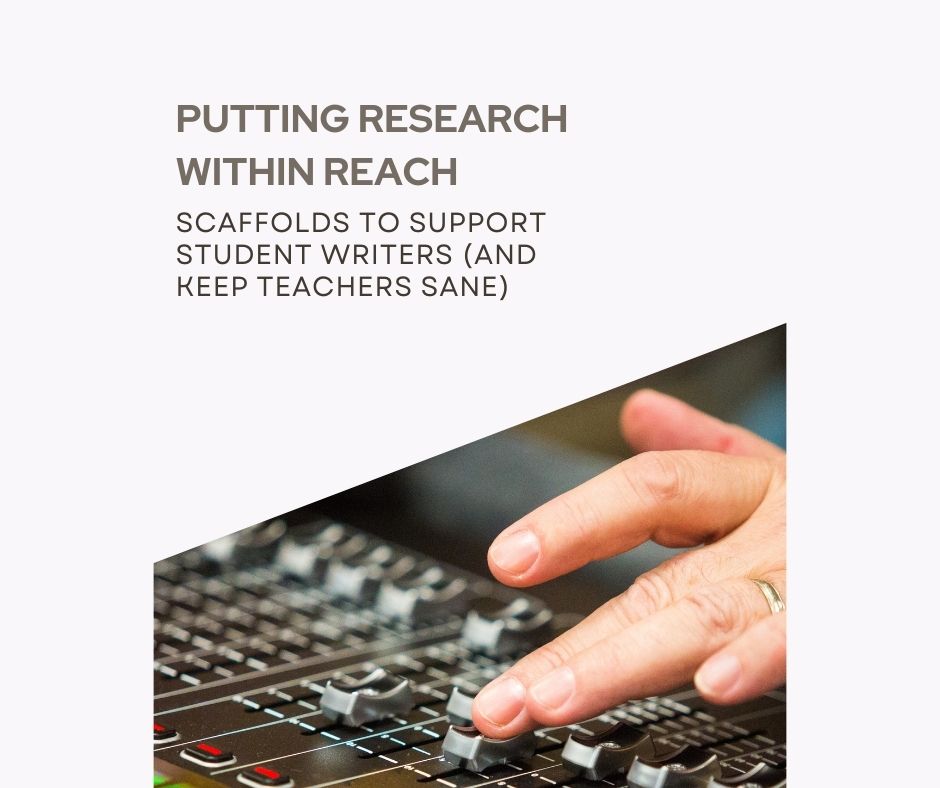
We can provide rich, authentic research experiences for our writers while also scaffolding to avoid the “messiness.” The answer lies in adjusting the parameters of our expectations–much like a DJ using a soundboard–to tailor our teaching to what students need.
Category: differentiation

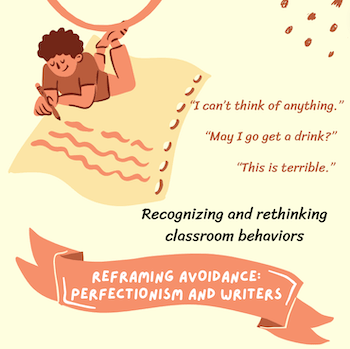
Reframing Avoidance: Writers and Perfectionism
Task-avoidant behavior is as much a part of the writing environment as pencils, sticky notes, and writing journals. Rather than seeing struggles as a lack of motivation or work ethic, students can learn that their behaviors may stem from other causes: namely, the struggles that many writers face. Giving students that knowledge, and the strategies to manage their feelings, goes a long way towards building confidence and self-efficacy in writing.
Share this:

Share this:
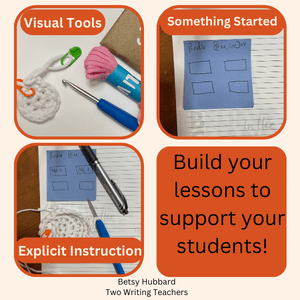
From Woobles to Workshop: Building Accessible Lessons
Learning to crochet this summer helped me revisit my teaching practices when introducing new skills. Try out these three tips to get the most out of each lesson.
Share this:

Share this:
Accommodating the Workshop: From the Archives
Visit these archive posts aimed toward accessibility for all.
Share this:

Share this:
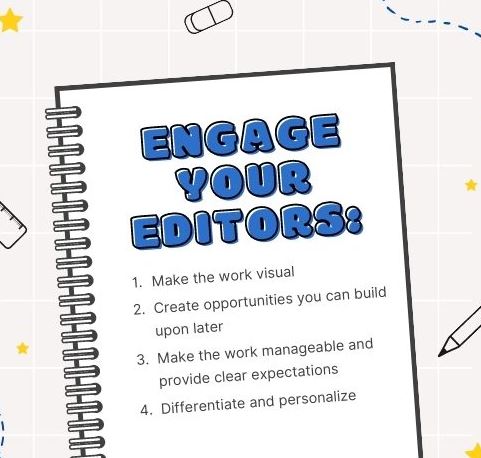
A Few Ideas for Engaging Reluctant Editors
Do you have writers who are reluctant to edit (or avoid it altogether)? Here are three approaches to make this part of the writing process more manageable for writers of all ages and abilities.
Share this:

Share this:
Imagination Bait: Meet (and Hook) Advanced Writers Where They Are
My strategy for meeting the needs of advanced writers: personalization. Strategic, pre-planned opportunities, set like a vision trap to capture the imagination of each writer. Once caught, these writers can be reeled in to a level of complexity they had no idea they were ready (and willing) to try.
Share this:

Share this:
Thoughts on a Way Forward: An Interview with Cornelius Minor
When the COVID-19 crisis hit, probably like many of us, I sought out voices of hope. For me personally, I knew one of those voices would be Cornelius Minor. I knew him to be the kind of teacher with the capacity to help us all see things in a new way during this unfamiliar period of virtual teaching. Fortunately, I was able to reach him by text. We sat down recently on a Zoom call to discuss his views on teaching remotely, his book, and a way forward.
Share this:

Share this:
Planning for Independent Writing Time: A Middle School Solution
With the volume of students most middle school writing teachers serve, how is one to plan for differentiation? Using a basketball analogy, here is one play you can run...
Share this:

Share this:
Everyone Gets What They Need: Reaching Your Writers
How a story about babies and bandages helped kids and families differentiate between equity and equality....and what it looks like for everyone go get what they need during writing workshop.
Share this:

Share this:
Curating an Array of Mentor Texts
If we’re committed to differentiating instruction, then it’s important to use a variety of mentor texts to meet students’ needs.
Share this:

Share this:
Differentiating the Writer’s Notebook for Every Stage K-8: Notebooks as a Writer’s Tool
If you can't sketch quickly or jot words quickly, or the lines in on the paper feel too small, or you find it difficult to organize your ideas on a blank page, then perhaps there might be other tools that are a better fit for you.
Share this:

Share this:
Coaching Writers in the Small Group
Coaches of young athletes often offer tips, reminders, and suggestions from the sidelines in hopes of eliciting the best possible performance from the team. As teachers of writing, we can borrow this structure in our small group settings.

