The other day, I did it again. I drafted an email to my bosses. Read it. Reread it. Hit send. Got distracted. Then… saw it. The error. These moments of regret keep me humble! And so, when I notice students not applying taught spelling and grammar concepts, I remind myself that they are not defiantly… Continue reading Editing Along the Way…Often in 5 Minutes or Less
Category: editing

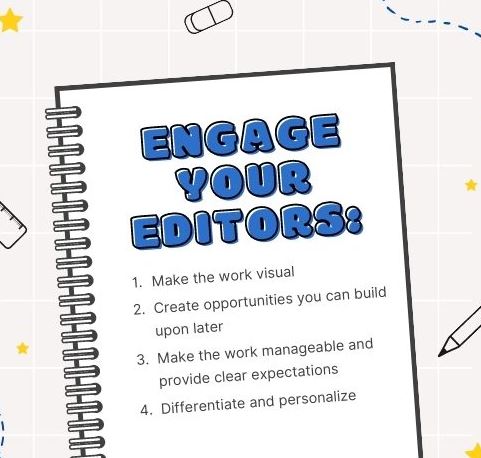
A Few Ideas for Engaging Reluctant Editors
Do you have writers who are reluctant to edit (or avoid it altogether)? Here are three approaches to make this part of the writing process more manageable for writers of all ages and abilities.
Share this:

Share this:
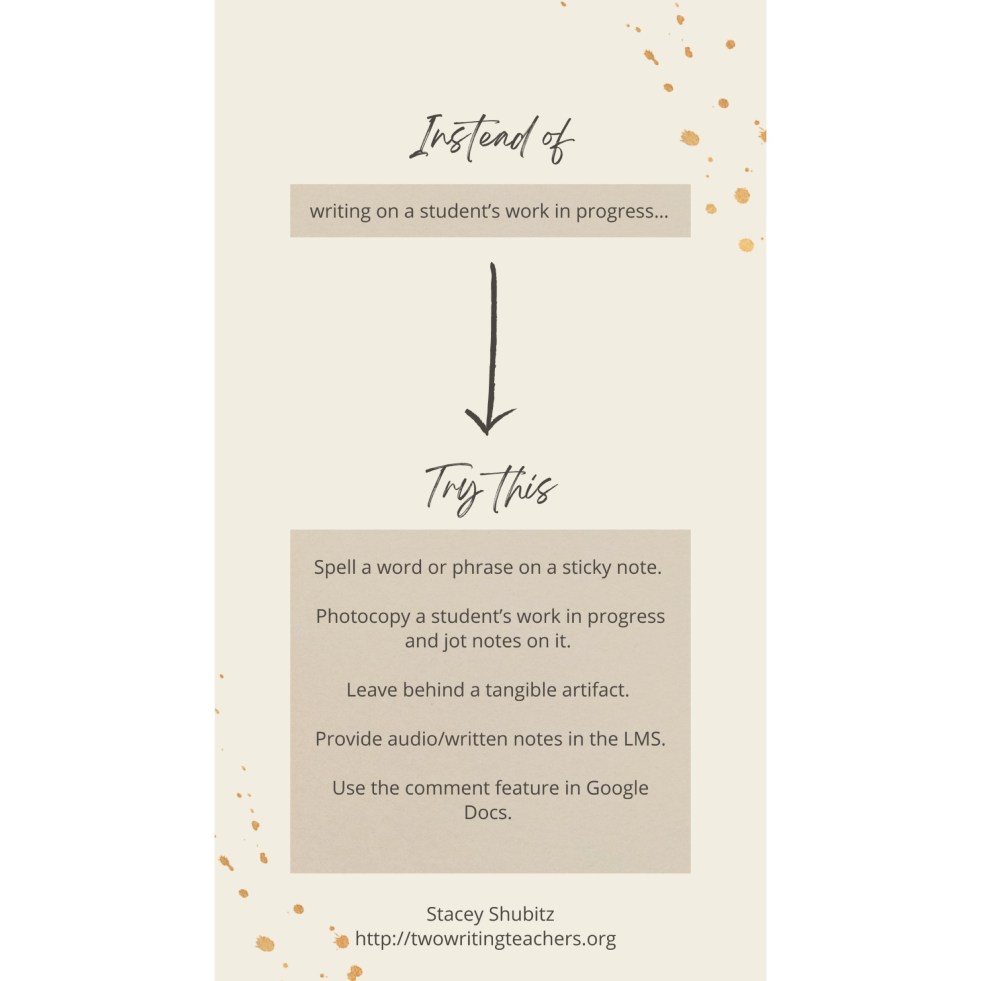
Writing on Students’ Work in Progress: Resetting Our Workshop Practices
I used to write on my students’ writing. NOW I believe if I’m the person writing down what I think a child should write, then I remove lots of that child’s agency.
Share this:

Share this:

Be the first reader of your writing!
It's important to take a beat before sharing one's writing. With practice and reminders, children can learn how to become the first readers of their work.
Share this:

Share this:
Many Reasons to Love the Oxford Comma
I love the Oxford comma. But not for the reasons you might think.
Share this:

Share this:

Spinach in a Writer’s Teeth: To Point it out, or not to Point it Out?
When this scenario happened to me (years ago), it did give me pause. As a teacher of writers, I am not the conventions police—I have always been the kind of writer who values content over conventions in the workshop. This is not to say I do not teach conventions or have high expectations for their use. However, it would be fair to say that this particular situation challenged me to think about grammar, punctuation, and spelling differently—shifting the way I approached conventions in the classroom going forward.
Share this:

Share this:
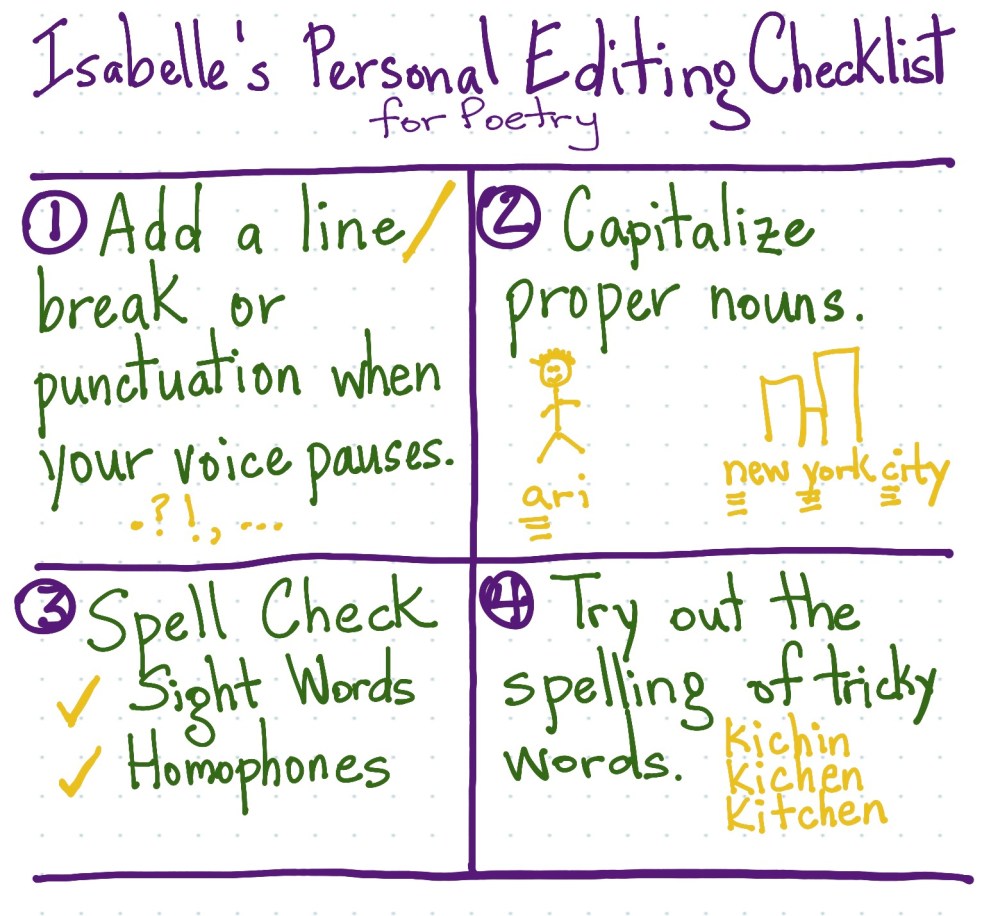
Using Personal Editing Checklists At-Home
Many caregivers believe that grammar, usage, mechanics, and spelling is what matters most when reading their child's writing. Children’s writing should be readable, not perfect. What matters most RIGHT NOW is that kids are engaging in the act of putting words on the page or on a screen. Therefore, we can teach young writers how to use a personal editing checklist to help them make their writing more readable anytime they finish crafting a piece of writing.
Share this:

Share this:

Something Do-Able to Try: The Editing Minute
Most of us probably do it without even thinking much about it, but our young writers might not have developed this important habit.
Share this:

Share this:
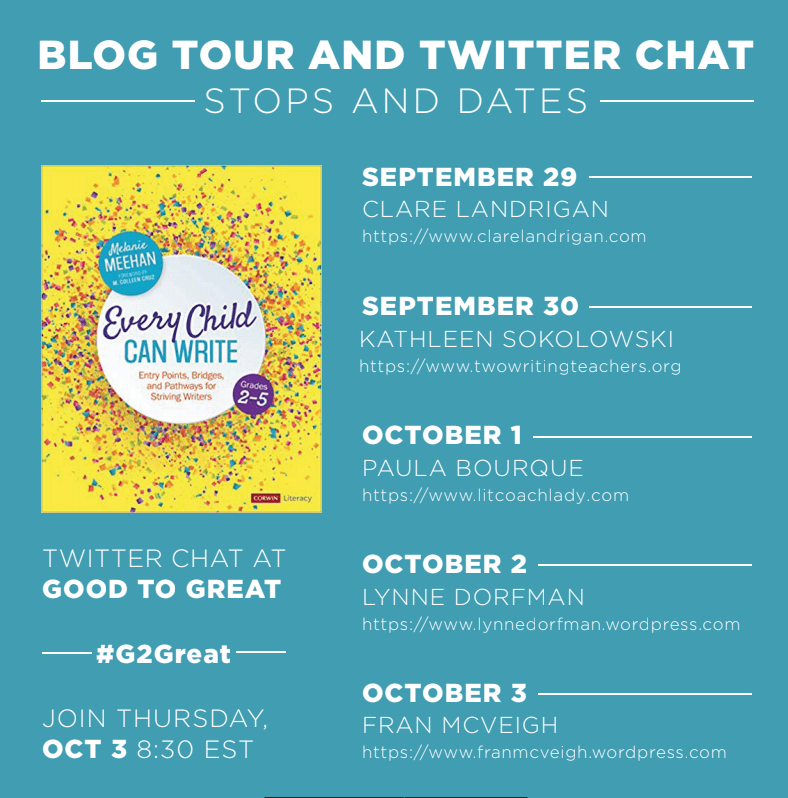
Every Child Can Write Blog Tour: Focus on Spelling and Conventions (Giveaway)
Welcome to the next stop on Melanie Meehan's Every Child Can Write blog tour! Today's focus is on Chapter 8, which has excellent ideas for educators when it comes to teaching striving writers about spelling and conventions. Be sure to comment on this post for a chance to win your own copy of Every Child Can Write! (You are going to want a copy of this book ASAP! It is THAT good!)
Share this:

Share this:
Three Ways to Introduce Personal Editing Checklists in Writing Workshop
Here are three different ways you might introduce individual editing checklists to your students.
Share this:

Share this:
Three Reasons Spelling Lessons Aren’t Transferring into Writing Workshop–and What You Can Do
The same kids who are successful with spelling patterns during word study time are sometimes not applying that spelling pattern to their independent writing. Why?
Share this:

Share this:

Responding to Reflection: Editing
Professional writers often reach for professional editors in the writing world. Why not create the opportunity for students to be the professionals?

