Writing involves the integration of so many skills and cognitive processing that it’s understandable when conventions don't show up! Here are some ideas that I hope you can use in your instruction right as the year starts-- and then any time thereafter.
Category: conventions


Spinach in a Writer’s Teeth: To Point it out, or not to Point it Out?
When this scenario happened to me (years ago), it did give me pause. As a teacher of writers, I am not the conventions police—I have always been the kind of writer who values content over conventions in the workshop. This is not to say I do not teach conventions or have high expectations for their use. However, it would be fair to say that this particular situation challenged me to think about grammar, punctuation, and spelling differently—shifting the way I approached conventions in the classroom going forward.
Share this:

Share this:
Grammar and Conventions: Meet Writers Where They Are
Have you ever wondered what to do if some of your students don't understand a grade-level grammatical skill? This post will help you determine how to move those children towards the end-of-year expectations for your grade level.
Share this:

Share this:

More Barriers Along a Writer’s Pathway… And More Ways Around
When writers appear to be unable to do something, then the work of teachers gets going! So here come more roadblocks and ideas for dealing with them.
Share this:

Share this:
Using Personal Editing Checklists At-Home
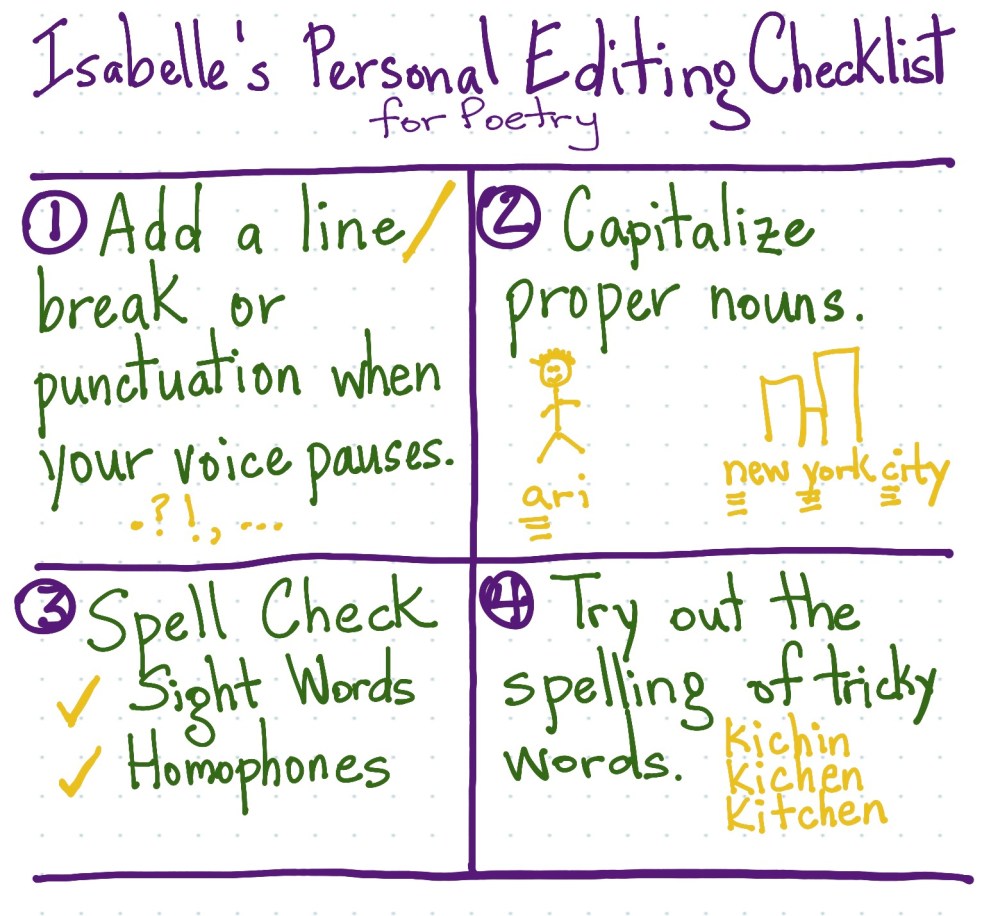
Many caregivers believe that grammar, usage, mechanics, and spelling is what matters most when reading their child's writing. Children’s writing should be readable, not perfect. What matters most RIGHT NOW is that kids are engaging in the act of putting words on the page or on a screen. Therefore, we can teach young writers how to use a personal editing checklist to help them make their writing more readable anytime they finish crafting a piece of writing.
Share this:

Share this:
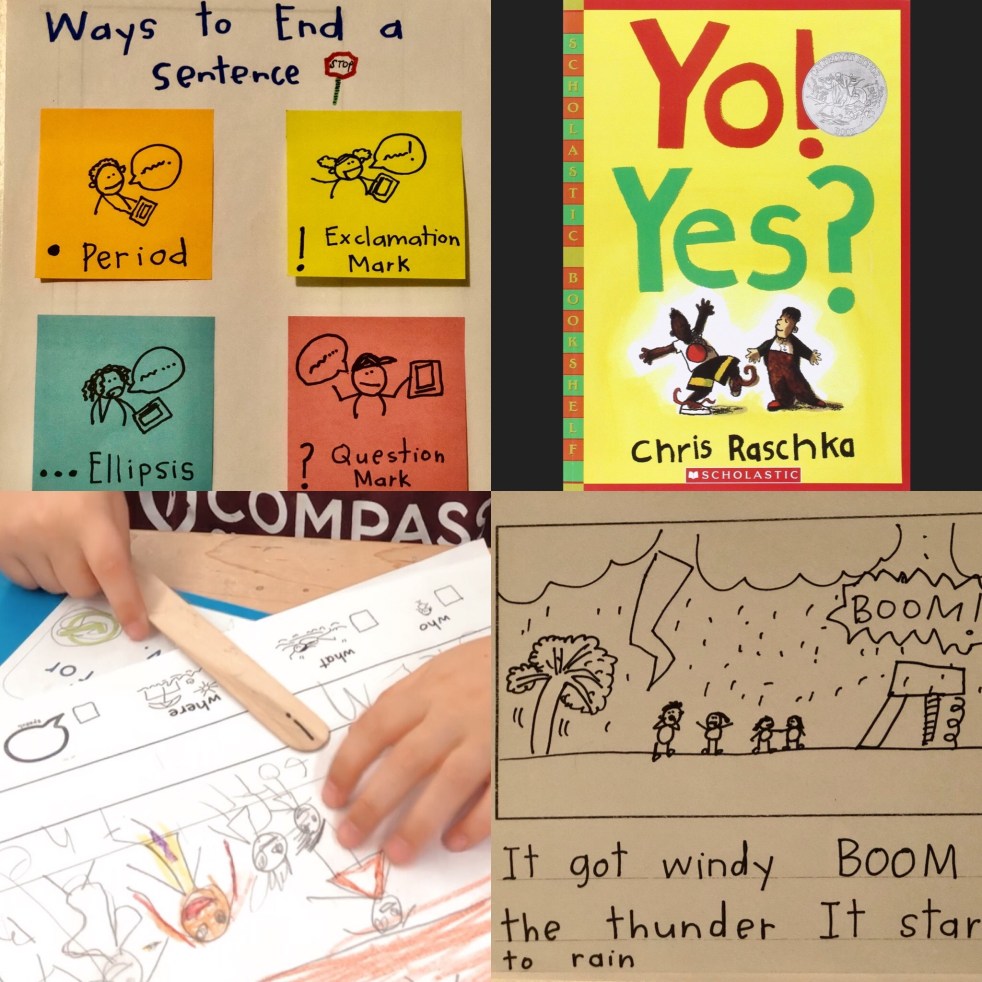
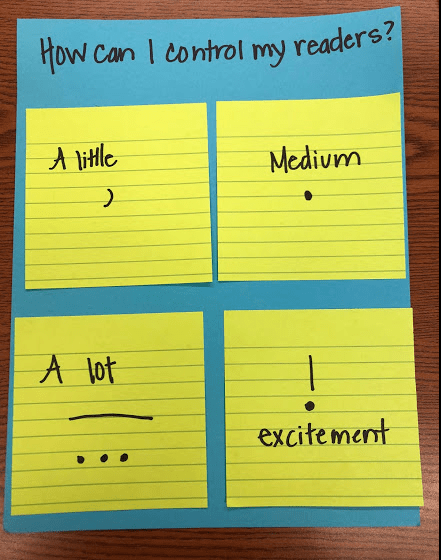
Hands-on Tools for Purposeful Practice with Punctuation
Whether your writers are forgetting to use, incorrectly using, or using punctuation without much variety, these tips and tools can bring engagement and intention to conventions.
Share this:

Share this:
Using Inquiry to Lift Language Conventions
As middle school teachers, we know grammar and language conventions have likely been taught to our writers in previous years. But why don't they stick? Here are a few ideas around teaching grammar and language conventions using an inquiry approach...
Share this:

Share this:
Trying It Out! Using Ideas From Professional Resources
How do you keep learning and growing as a teacher of writing? How do you apply what you've learned from reading professional texts? Today I am sharing the way I am applying my learning from professional texts with my third grade students.
Share this:

Share this:
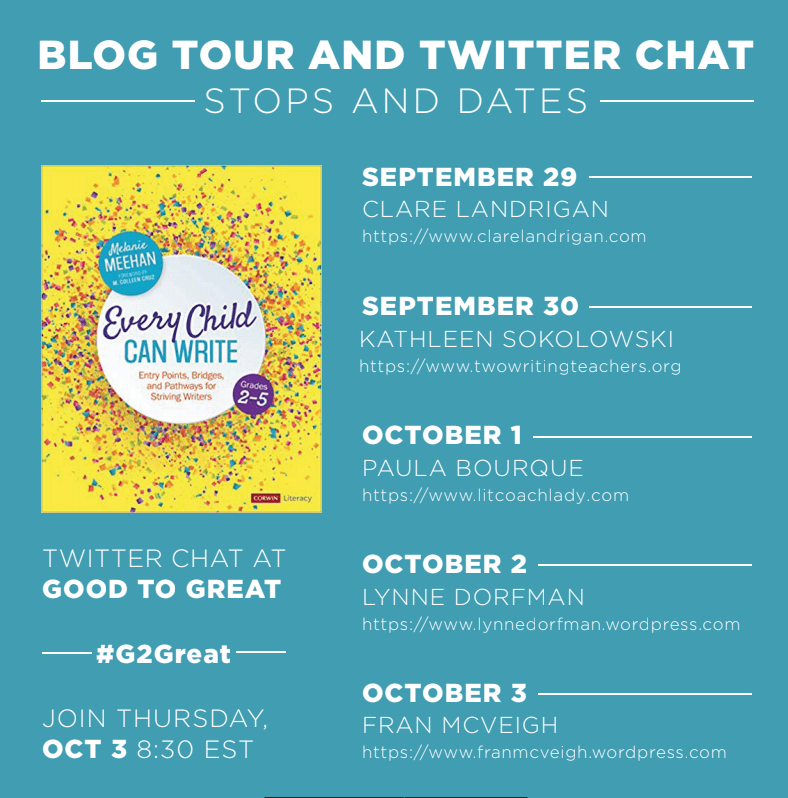
Every Child Can Write Blog Tour: Focus on Spelling and Conventions (Giveaway)
Welcome to the next stop on Melanie Meehan's Every Child Can Write blog tour! Today's focus is on Chapter 8, which has excellent ideas for educators when it comes to teaching striving writers about spelling and conventions. Be sure to comment on this post for a chance to win your own copy of Every Child Can Write! (You are going to want a copy of this book ASAP! It is THAT good!)
Share this:

Share this:
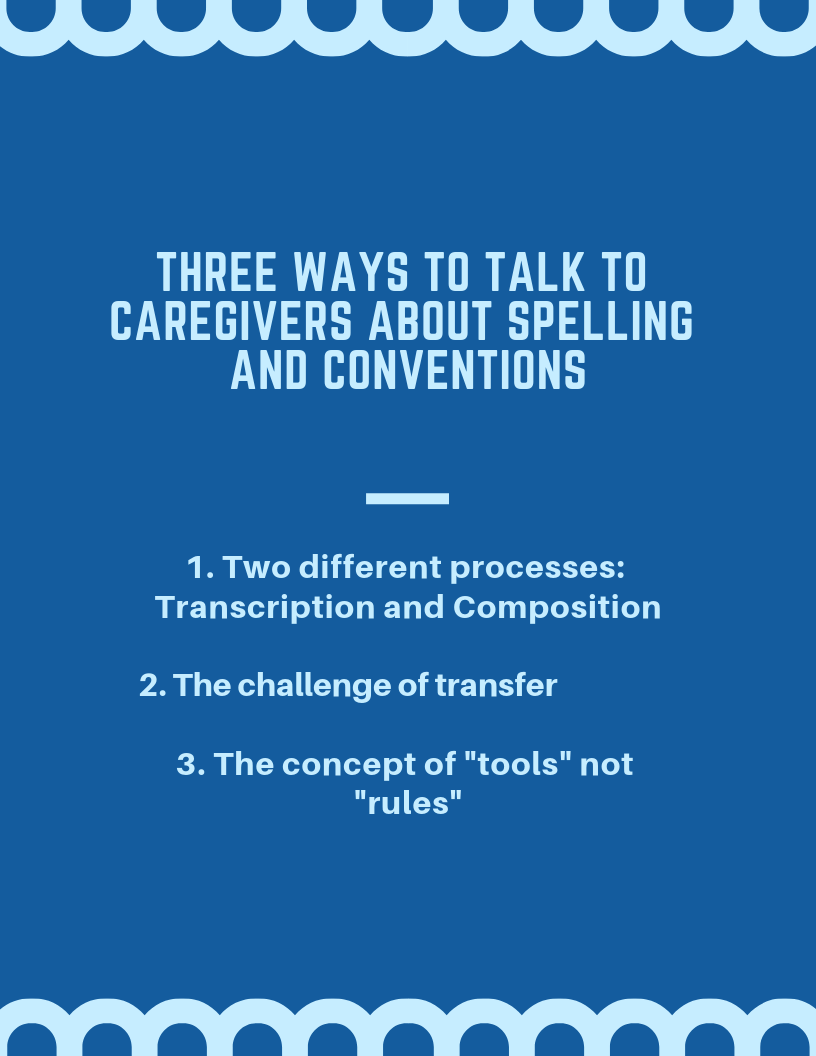
Talking to Caregivers about Conventions and Spelling
More than other skills, most caregivers tend to worry about spelling and conventions when it comes to their child's writing. I get it. Those skills are right there at the tip of the writing iceberg. Those skills are concrete and obvious. Those skills are the ones that they recognize and know how to fix when they sit with their child. So how do we talk to caregivers about spelling and punctuation? Here are three ideas that you may find helpful.
Share this:

Share this:
When Conventions Aren’t Sticking–Some Tips and Tricks
Disclaimer: you're not going to find the miracle cure for getting students to use conventions in their writing within this post. I don't have one. And I've read a lot, researched a lot, and tried a lot of things. That being said, you may come across some ideas that apply not only to conventions, but also to the writing process as a whole, and maybe even to life. (That might be a stretch...but maybe---)
Share this:

Share this:

Transitioning From Support to Independence
What areas of independence do you wish writers took on more freely in your workshop?

