
Each life we impact matters. Each one of the children with whom we interact is currently living into an uncertain future. Thus, with kindness and resolution, we greet writers each day and do all we can to help them learn what it takes to make their voices heard through the power of the metaphorical pen. This is our work.
Author: Lanny Ball
For more than 29 years, Lanny has taught, coached, presented, staff developed, and consulted within the exciting and enigmatic world of literacy. With unyielding passion and belief in the possibility of workshop teaching, Lanny has worked to support students, teachers, and school administrators around the country in outgrowing themselves as both writers and readers. Working first as a classroom teacher, then as a coach and TCRWP Staff Developer, Lanny is now a literacy specialist, working and living in the great state of Connecticut. Outside of literacy, he enjoys raising his three ambitious young daughters with his wife, and playing the piano. Find him on this blog, as well as on Twitter @LannyBall. Lanny is also a former co-author of a blog dedicated to supporting writing teachers and coaches that maintain classroom writing workshops, twowritingteachers.org.

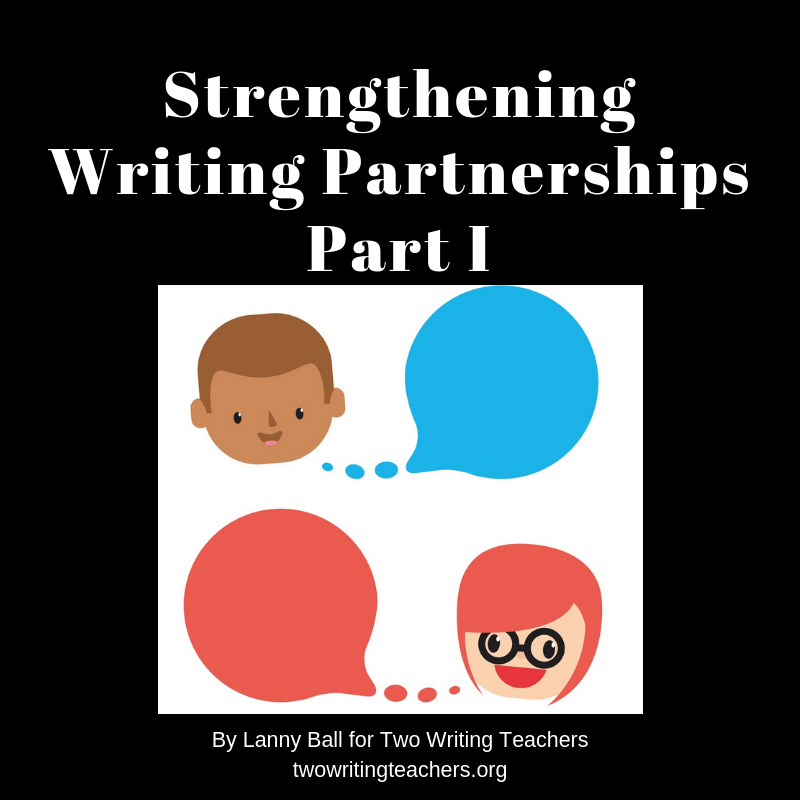
Strengthening Writing Partnerships, Part I
A writing partner provides a sounding board and creates a social opportunity for feedback, criticism, and notions of what improvement could look like or sound like. The problem with partnerships, however, is that left to their own devices kids are not very good at being partners. How can we help kids get better? Here are a few strategies...
Share this:

Share this:
A Few Ways to Empower Writers Using Mentor Texts
It could be said that what sets a writing workshop apart from other approaches to teaching writing is a focus on empowerment. Here are a few ways to empower writers when it comes to mentor texts...
Share this:

Share this:

4 Purposes for a Writer’s Notebook: Notebooks as a Writer’s Tool
Understanding the purpose of something can unlock a path forward. This week, the authors of Two Writing Teachers are devoting digital ink to supporting teachers in thinking about the writer’s notebooks as an important writer’s tool. Today, let’s think about the various purposes of a notebook...
Share this:

Share this:
Writing Conferences: What to Do When a Writer Doesn’t Say Much?
When conferring with a writer, our big aim is to engage in a meaningful conversation with the student about his or her writing. An individual writing conference is likely the single most effective way for a teacher to help move a writer forward. But many times, even with our best intentions and attempts at "training" students how to converse during a conference, the student will sometimes say something curt, like, "Good." Or, "It's fine." Silence. That's it. That's all they have to say. What to do? Fear not! Conferring Carl suggests six strategies to help teachers address this situation...
Share this:

Share this:

Different Ways to Use Checklists in Writing Workshop
Student-facing checklists can be a powerful tool. While rubrics are helpful for teachers, checklists are helpful for students. Checklists can serve to provide clear targets for writers as they strive to craft pieces of writing. But what might be different ways to use them in your writing workshop? Read to find out...
Share this:

Share this:
Coaching Writers in the Small Group
Coaches of young athletes often offer tips, reminders, and suggestions from the sidelines in hopes of eliciting the best possible performance from the team. As teachers of writing, we can borrow this structure in our small group settings.
Share this:

Share this:

Partnerships Can Provide Purpose and Power
All writers seek feedback. All writers write for an audience. All writers question themselves. And for these reasons, writers long to bring their work to another person-- another set of eyes, another pair of ears. Hence, the writing partner in writing workshop. When working well, partnerships can help grow the confidence of each writer in our classes by providing support, authentic peer feedback, and a sounding board for ideas. Here are a few ingredients to consider when creating a community of writers...
Share this:

Share this:
4 Tips for Modeling with Your Own Writing
For many of us who work to live as writers and teachers who write, we likely do so in order to appreciate the challenge, the complexity, and the thrill that writing can provide for our lives. It is living through the process that matters. But what about turning some of our writing into teaching tools for our writing workshops? Here are four tips...
Share this:

Share this:
Our Job: Noticers-in-Chief
Whether or not you have started school already or you are taking those final deep breaths before your first day, let us remember one thing that sets us writing workshop teachers apart from other methodologies, curricula, programs, and/or approaches to teaching writing: we NOTICE.
Share this:

Share this:

This Is the Year I’m Going to Write Alongside My Students
When a teacher not only brings the knowledge and pedagogy to teach, but also love, passion, and an ability to demonstrate-- whether it be playing an instrument, speaking another language, or writing-- a certain authenticity is added. My father used to call it “walking the talk.” This week, my colleagues at Two Writing Teachers are committed to supporting teachers in dreaming big for this year’s writing workshop. Perhaps part of dream your for this year will be to authentically live the life of a writer! Here is some inspiration to make that dream a reality . . .
Share this:

Share this:
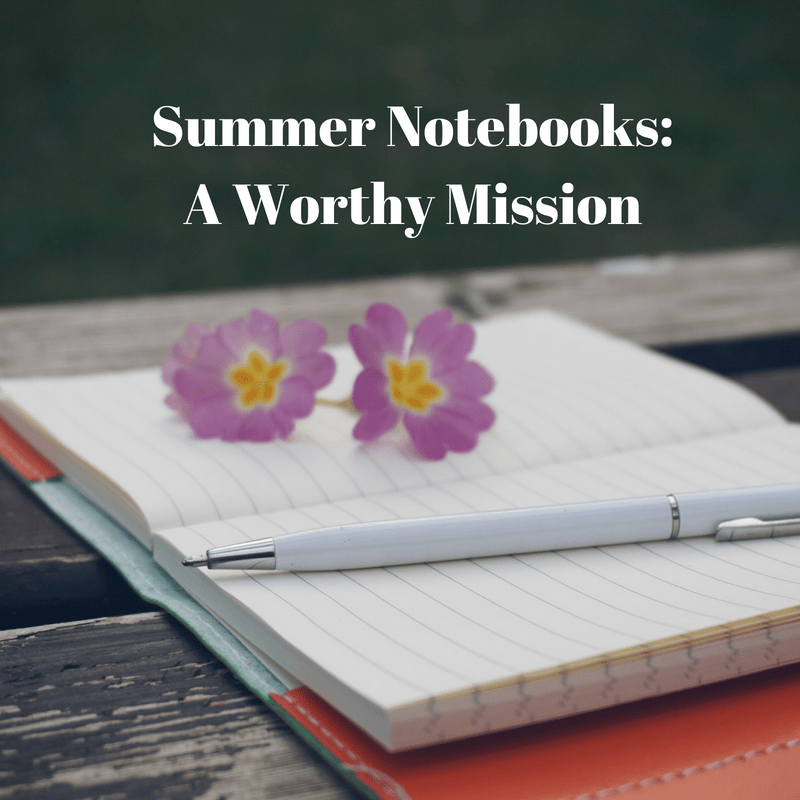
Summer Notebook: A Worthy Mission
As teachers, most of us view summer as a much-needed period for decompression and recharging. But as teachers of writing, there are likely several of us who see summertime as a valuable opportunity to prepare. One thing I plan to do is purchase a summer notebook...

