
Naming and modeling different kinds of facts offers tangible ways for students to revise and elaborate informational texts.
Category: nonfiction writing

Writing Wonders
Nonfiction authors often start with wonder. But to spark wonder, we need to “prime the pump” with some knowledge, either by reading a book or article, studying a photograph, or watching a video. That’s where all of Kirsten Larson’s books begin! This post will help you find appropriate media to spark student curiosity and guide them through the process of writing down their wonders. The end result: topics students are eager to research and write during their writing time.
Share this:

Share this:
The Story Behind WE ARE WATER PROTECTORS and Writing Lyrical Nonfiction
Carole Lindstrom discusses the inspiration behind WE ARE WATER PROTECTORS and talks about how she approaches nonfiction stories.
Share this:

Share this:

The Immersion Phase of a Unit: Reading and Writing Collide
The immersion phase of a unit allows us all to get to know our subject. For students, it might be ideas they have and for teachers, it is about getting to know their writers a bit better.
Share this:

Share this:

The Joys of Sharing Expository Nonfiction Mentor Texts with Students + a Giveaway
Consider sharing these six books with your fact-loving students. Leave a comment on this post for a chance to win all six books for your classroom library.
Share this:

Share this:

NCTE 2018: Here We Come!
Here's a peek at the dates and times three members of our co-author team will be presenting at NCTE this weekend.
Share this:

Share this:
Rethinking the “I-Rule”
Many of us were taught that first person pronouns had no place in academic writing. But is that rule still being followed by professional writers?
Share this:

Share this:
When Ideas Collide
I'm not someone who rides horseback but I often get to let go of the reigns and see where I might end up. My students never disappoint.
Share this:

Share this:
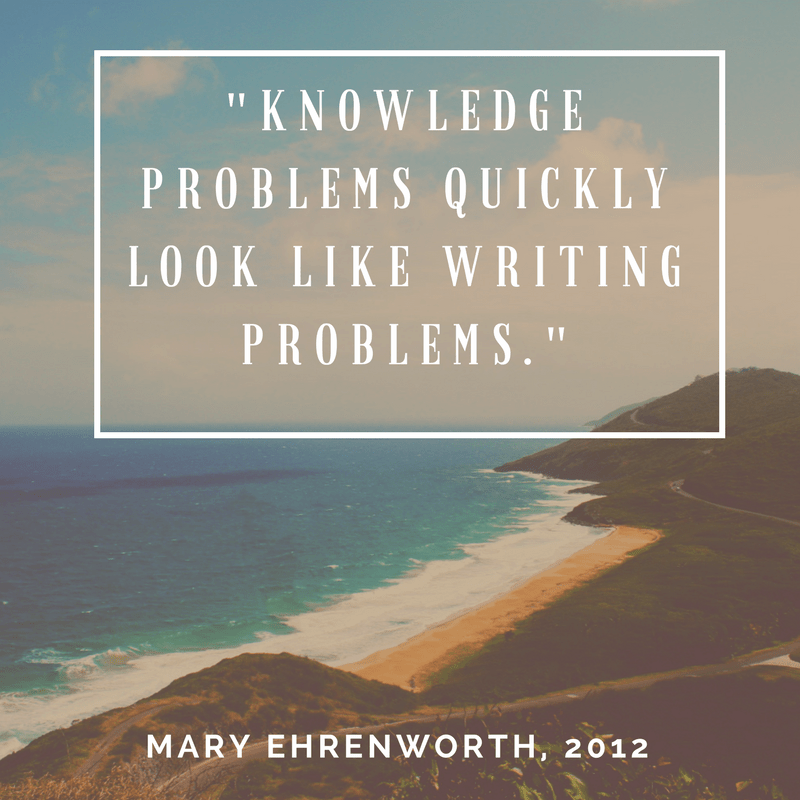
Addressing Knowledge Issues in Informational Writing
If we do not possess a good amount of background knowledge, if we are not interested in the topic, and we were not given a choice, our writing typically suffers. Lack of knowledge in particular, as Mary Ehrenworth suggests, manifests quickly as writing weakness and writing problems. As writing workshop teachers, how might we think about and address these challenges?
Share this:

Share this:

Passionate Nonfiction Writing Starts with a Question
Author Melissa Stewart shares her expertise about the role questions play in nonfiction writing.
Share this:

Share this:
Making Writing Appropriate, Precise, and Effective
Melissa Stewart, award-winning author of more than 180 nonfiction books for children, shares her thinking about the revision process in nonfiction writing.
Share this:

Share this:

Changing Tack: Learning from a Writing Conference
It's great to be prepared when we are conferring with our writers. However, being 'prepared' and being 'present' are not the same thing...

