Estimated Reading Time: 3 minutes (587 words)
Audience: Teachers and Coaches, Grades 3-12
A Backstory
As a former Bostonian (yeah, bo’s!), this time of year always brings back fond memories of the Boston Marathon. Watching in awe as runners push themselves to the limit, pause to celebrate their accomplishments, and then begin setting goals for their next race. With the school year coming to a close, it feels like the perfect metaphor for our writers.
At the start of the school year, many of your students probably arrived at writing workshop like first-time runners at the starting line. They were unsure. They were hesitant. Their notebooks were empty. For some, there was excitement. For others, nervousness. And for a few, there may have been the overwhelming feeling that they might never be writers—that they might never “finish the race.”
But look at them now.
Full notebooks. Bursting folders. Page after page of drafts, revisions, and published pieces. Stronger stamina. Clearer voices. Goals accomplished. They’ve trained all year long—and they’ve come so far.
And yet, just as they cross this year’s finish line, another starting line is waiting for them in the fall. Without intention, that same cycle of uncertainty can repeat itself.
So how do we help students carry their writing identity forward instead of starting over from scratch? How do we help them carry their momentum, accomplishments, and goals into the next school year?
One of my favorite end-of-year traditions is a simple but powerful activity:
“Dear Future Me…“

How it Works
Invite students to write a series of letters to themselves in their writer’s notebook that travel with them to next year’s teacher. When they sit down for writing workshop on day one, instead of opening an empty notebook, they’re greeted with inspiration from their greatest mentor: themselves.
This reflection becomes more than a goodbye activity—it becomes a bridge between writing communities.
In their letters, students can include:
- excerpts they’re proud of
- mentor texts that inspired them
- writing goals they worked on this year
- strategies they used when they got stuck
- topics they love to write about
- areas they want to continue improving
- moments when they truly felt like writers
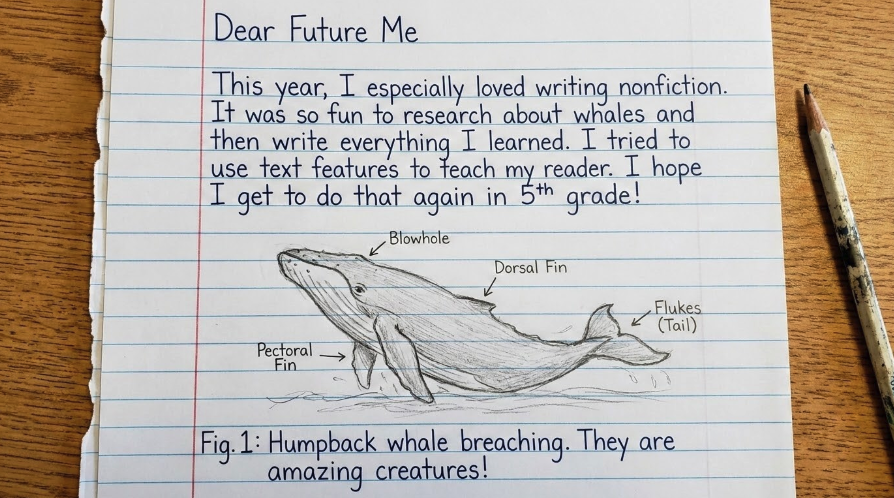
Some students write advice to their future selves. Others include reminders or encouragement. Many name strategies they want to keep using. And almost all of them reveal something powerful about their writing identity.
These letters become incredibly useful tools for the year ahead.
Looking Ahead to Next Year
Next year’s teacher can use them as:
A built-in mentor text
Students begin by learning from their own growth.
An instant get-to-know-you
Instead of guessing who their writers are, teachers hear directly from them.
A conferring shortcut
Teachers can begin the year already knowing strengths, goals, and preferred topics.
A writing partnership launchpad
Partners can read each other’s letters and immediately begin meaningful conversations.
A community builder
Students walk into workshop knowing their voices already matter.
Most importantly, these letters help students see themselves the way marathon runners do—not as beginners each September, but as writers already in motion.
When students open their notebooks in the fall and reread their “Dear Future Me…” letters, they’re reminded:
I am a writer.
I have strategies.
I have goals.
I have history.
And I know where I’m going next.
Celebrating writing at the end of the year doesn’t have to mean closing a chapter. Sometimes the best celebrations help students carry their momentum forward—so when they arrive at next year’s starting line, they’re already running.
Discover more from TWO WRITING TEACHERS
Subscribe to get the latest posts sent to your email.


