| Estimated Reading Time: 4 minutes. 789 words. | Target Audience: Kindergarten teachers, coaches, and administrators. |
What if we don’t launch Writing Workshop in August?
A Back Story
I taught Kindergarten for five years, and launching Writing Workshop was always my favorite moment of the school year. New folders, writing centers, and magic pens; joy in every corner of our room. When I moved to my current school and brought Writing Workshop with me, Kindergarten teachers learned how to introduce kindergarteners to this approach.
Not everything was confetti and cheers. Teachers shared the typical challenges students experience as they develop fluency in letter-sound relationships. Confidence is one of the most sacred things to cultivate and protect, and it can easily crash too early. We know writing isn’t the main expectation on Day 1; the process begins with storytelling and sketching, so that assurance kept us going year after year.
Then, during the summer of 2025, I had an idea: What if we bridged our Reggio-inspired preschool with a stronger Reggio-inspired Kindergarten by delaying the official Writing Workshop launch?
What I Proposed
Last fall, I proposed we begin the year with Story Workshop, waiting until October or November to officially launch Writing Workshop.
Kindergarteners have plenty to say before they can transcribe those ideas onto paper. Generating a story, sequencing it, adding details, segmenting words, recalling letter-sound relationships, and forming letters is a lot of cognitive work!
What if we temporarily reduced some of the transcription demands without reducing the sophistication of the composing?
But Wait… Were They Writing?
Delaying Writing Workshop did not mean delaying writing. Children were still immersed in print and receiving explicit phonics instruction from Day 1, with plenty of opportunities to experiment with the written word throughout their day. What we delayed was the formal structure of Writing Workshop. Story Workshop allowed us to place more of the early cognitive load on composing—having ideas, developing them, telling them, and revisiting them—while transcription skills continued to develop alongside that work.
Even though Story Workshop felt new to my teachers (and me!), its key ideas were familiar:
- Children compose stories before they put pen to paper.
- Environments promote play, and play leads to stories.
- Revisiting ideas matters as children become writers.
- Oral storytelling allows children to rehearse and develop ideas.
- Drawing is only one of many ways children can represent stories.
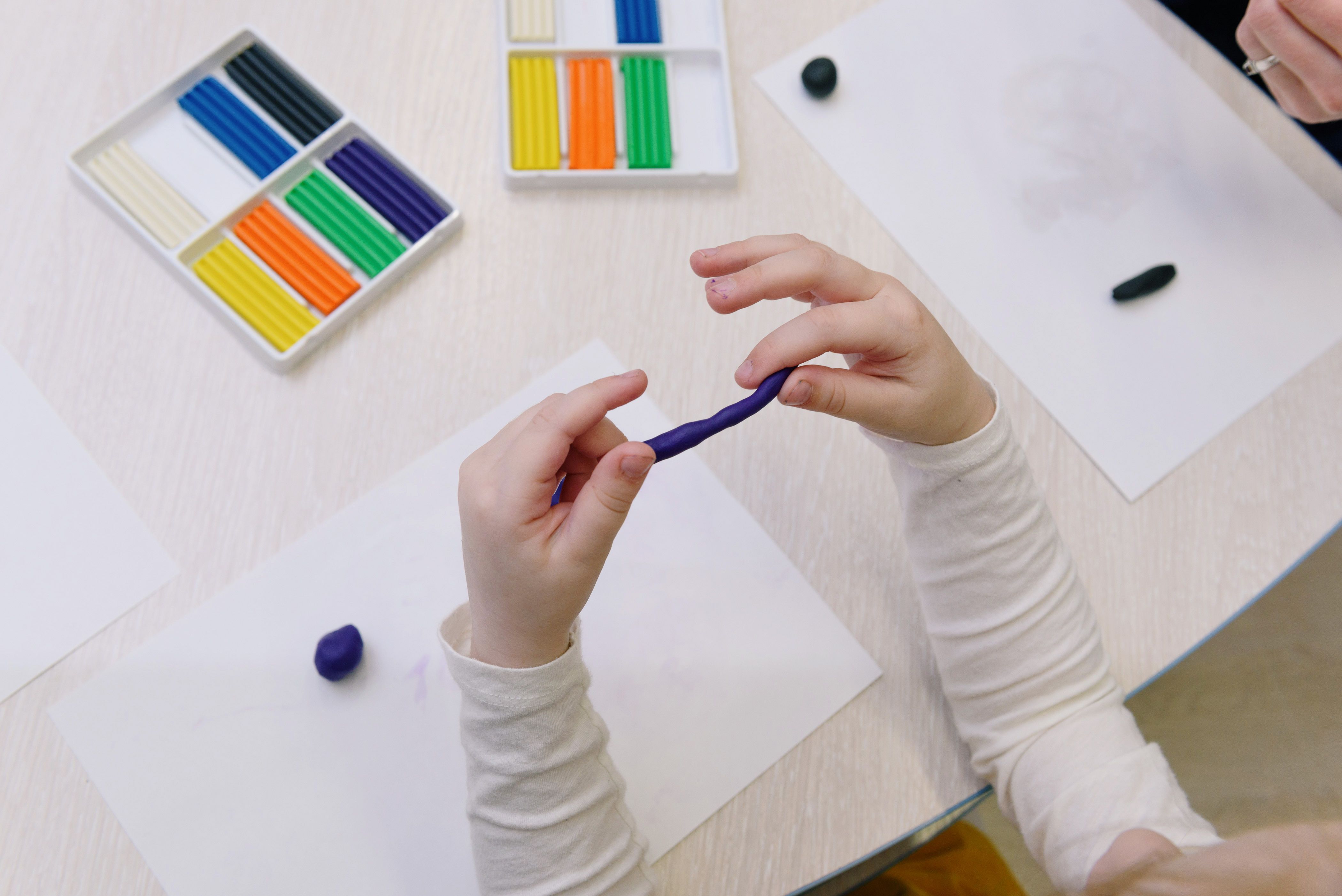
Loose parts, blocks, dramatic play, painting, clay, collage, and drawing could all become pathways into storytelling.
The Details
For Story Workshop, we borrowed the familiar structure of Writing Workshop while allowing the work to develop responsively.
Minilessons: Teachers demonstrated different ways to tell stories and offered a focus to provoke storytellers during independent work.
Independent Work Time: Teachers offered three areas with different materials for story generating. Kindergarteners decided where to begin while teachers observed, conferred, and documented how children composed.
We held back from offering paper and writing tools for the first few days so students could focus on composition. Teachers conferred with questions such as, “Tell me about what’s happening here,” “What happened next?” and “I noticed you changed this part. What made you decide that?”
Share: Students shared their creations and stories while teachers highlighted the writing work already happening: sequencing, characters, actions, dialogue, and revision.
Over time, children moved from exploring materials and discovering stories to developing characters, actions, and settings; telling and retelling; revisiting ideas; and revising. After a few days, paper, pens, and markers joined the materials available for representation.
Writing wasn’t something children suddenly became “ready” to do. It became another language available to them for telling their stories.
The Impact
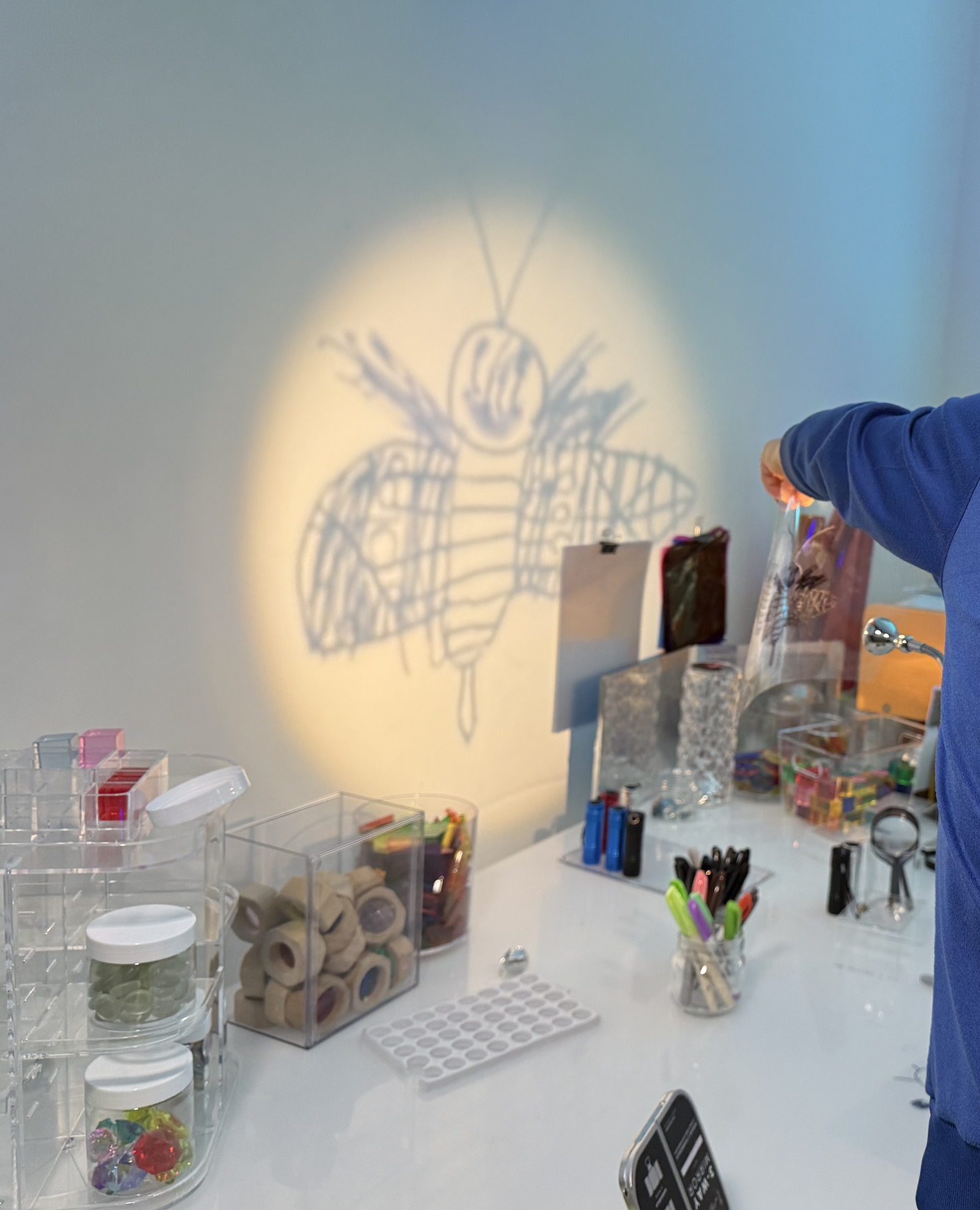
By mid-October, teachers felt ready to launch Writing Workshop. We created the writing center, got folders ready, and planned sessions that supported students in transferring stories from loose parts, puppet shows, or clay onto writing paper.
Teachers noticed something different. There seemed to be more excitement and less anxiety around the launch. Children came into Writing Workshop having already spent weeks exercising their storytelling and composition muscles.
We also noticed less resistance to rehearsing and revising. We can’t say Story Workshop alone caused those changes, but the observations were compelling enough to make us want to try again.
This was never about waiting until children could write more conventionally. Instead, we wondered what might happen if we gave storytelling and composition more time and space before asking written language to carry so much of the load.
What’s Next
This week, I’ll meet with our Kindergarten team to reflect on last year’s experiment and envision Year 2. We anticipate four to five weeks of Story Workshop, but we’ll remain flexible and responsive to children’s work.
This time around, the question isn’t What if we don’t launch Writing Workshop in August?, but What if we spent the first weeks explicitly developing composition before asking writing to become children’s primary mode for representing those compositions?
Discover more from TWO WRITING TEACHERS
Subscribe to get the latest posts sent to your email.


Love everything about this! A hundred languages.
LikeLiked by 1 person
So much brilliance here! Thanks for sharing your step by step thinking and execution! I’m returning to the K classroom after many years as a reading coach. Your inquiry stance is just what I needed to read today to give me confidence as I take this leap back to the classroom! Thank you!
LikeLiked by 1 person