Estimated Reading Time: 5 minutes (901 words)
Target Audience: Classroom Teachers, Instructional Coaches, Curriculum Coordinators

Over the past few years, I’ve noticed something interesting across many literacy programs: writing instruction is often positioned as a traditional workshop model or as something taught through the lens of content-area literacy with a focus on science and social studies topics.
However, based on what research shows about writing development, content-area instruction, and the standards kids are expected to meet as developing writers, these two instructional settings are not mutually exclusive (Fisher & Frey, 2013; Ryan & Lipp, 2025).
Some types of writing, such as personal narratives, traditionally stand on their own as writing-focused pieces (though even narratives often align with content areas or build on background knowledge when incorporating the lenses of culture or historical events). However, many other types of writing (informational reports, science labs, persuasive speeches, etc.) blend seamlessly into both writing workshop and content areas. To develop the strongest writers with the skills to navigate complex ideas, research, draft, and produce well-composed pieces, students need ongoing opportunities to build their writing skills seamlessly across the entire school day.
Getting Started
Doing this work effectively means doing this work intentionally. Starting the year with a solid plan is the first step; refining practices is ongoing work across the year.
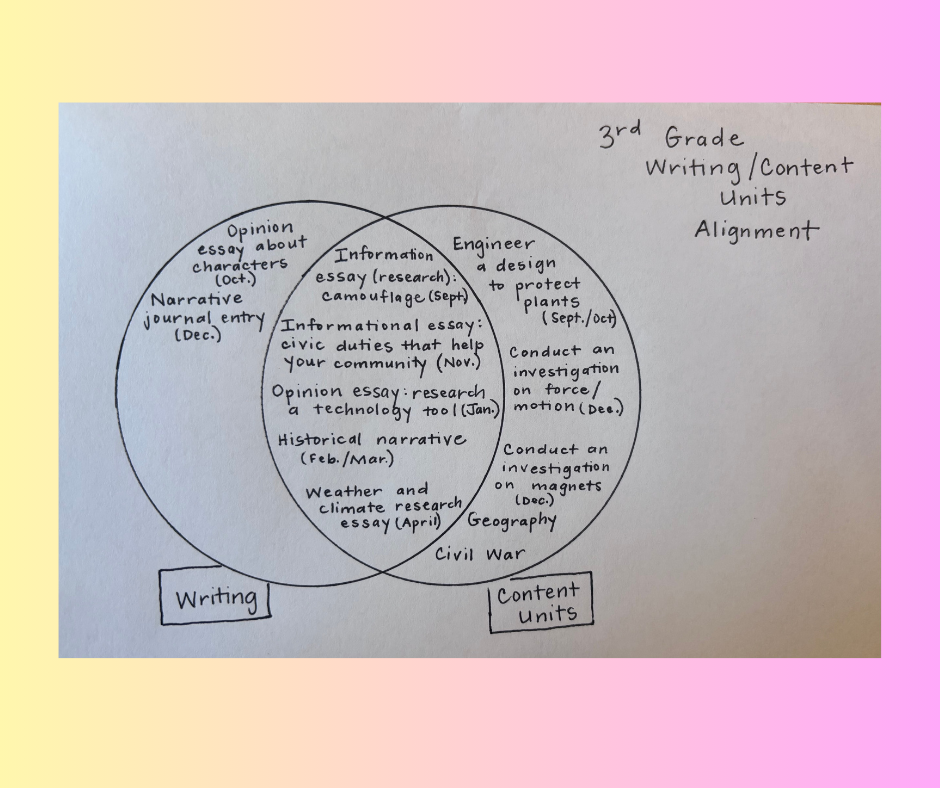
One way to approach planning is to map out units—or standards—across a Venn diagram by sorting the work students will do across groups that answer three specific questions:
- What content fits only during writing time?
- What content fits best into only social studies or science time?
- What content can be taught across the day?
Behind the Scenes
As I’ve spent time working on both curriculum mapping and developing writing plans with a third grade team this summer, I’ve thought a lot about the intersections between writing and other subject areas, specifically science and social studies. Knowing there will always be an imbalance between the amount of time we have in a day and the amount of content we are all expected to teach, I made it a goal to clearly identify the opportunities in our curriculum to weave writing and content topics together.
The process was straightforward and quick. I sat down with a blank Venn diagram, a list of third grade’s major writing pieces across the year, and a roadmap of science and social studies content. I went through these lists line by line, adding them in the corresponding sections of the chart (Writing, Content, or–my desired placement–in the middle, work that can be addressed across the day). I then went back through and penciled in the months of the year in which the work in the middle falls. This allowed me to pace out the topics on the outsides to fill the gaps, ensuring there won’t be a mismatch in pacing between writing and the content area topics.
Some Small Shifts
Though this work may feel huge at first, small shifts will make a big difference:
- Leverage Your Read Aloud: Select books that will both reinforce the content students are learning and the craft moves they are focusing on in writing. This will allow a seamless connection between writing within and outside of workshop. (Example: Read aloud picture books such as Look Again by Steve Jenkins and Robin Page for camouflage research or Sofia Valdez, Future Prez by Andrea Beaty to explore civic duties and community.)
- Model Your Thinking: Be explicit about the connections between the writing students are doing and the ways in which these skills connect to content area topics. (Example: Tell students, “When I consider ways that cell phones are a helpful kind of technology, I also need to explore what experts say might be harmful about these tools.”)
- Strengthen Partnerships: Consider other professionals in your building who can reinforce this work. (Example: Librarians are uniquely positioned to know strong writing and an endless number of resources to support any content area.)
- Rethink Time: Revisit your schedule through the lens of the goals you want students to achieve as knowledge-builders and writers, focusing on looking beyond silos of time for each subject.
The Bottom Line
All writing time in school is important, whether it happens during a designated workshop block or during content area instruction. The goal has never been to get kids to write well in just one way or during one discrete block of the school day; the goal is to build writers with a solid writing identity and the skills to clearly communicate ideas through their writing. Writing across the day is the very best way to make this goal a reality.
Go Deeper:
Content Comes to Life: Maximizing Writing Time by Kathleen Neagle Sokolowski
Weaving Writing Into Other Areas With Intention and Meaning by Melanie Meehan
ICYMI:
Today is the second day of Finding Common Ground, this year’s TWT Back to School Blog Series. If you missed it, make sure to read Jess’s post from day 1 to take a deep dive into the balance between explicit and responsive instruction.
Up Next:
Join us again tomorrow for day 3 of the series as Melanie explores the importance of emphasizing foundational writing skills and composition at all ages and stages of writing development.
Discover more from TWO WRITING TEACHERS
Subscribe to get the latest posts sent to your email.


