Estimated Reading Time: 3 minutes (660 words)
Target Audience: Teachers and Instructional Leaders
Catch Up Quick: A few weeks ago, I wrote about the power of engaging students in reading like writers. In this post, I focused on structures we can use in classrooms to engage kids in the work of finding and imitating the strong language in books within their own writing.
Last week, Melanie and I were discussing her latest post, The Purpose and Play of Sentence Scrambles, and we both quickly realized that these two skills–recognizing powerful language structures and holding a deep understanding of syntax–are intricately connected as kids develop both writing and reading skills.
Melanie and I decided to carve out some space to explore syntax in depth this spring, with a clear plan to pick these conversations back up in the fall. Today I’m focusing on the bridge in between–summer–and some easy ways you can join us in exploring this topic and adding to our growing resource collections (sentence scrambles and syntax sentences).
As A Teacher-Writer: I never have enough time. This is especially true during the school year, when my days are full and my evenings are spent trying to keep up and be present with my family. Often, this means putting practices that align with my core teaching beliefs on the back burner as I juggle the things that need immediate attention.
Summer is my opportunity to pull out those practices and embrace them. In addition to plenty of family time, you will find me spending long, hot summer days catching up on the types of reading and writing that will help me–and the teachers and students with whom I work–become better at the craft of writing.
This summer, my goal is to grow the collection of sentences my colleagues and I can use to explore syntax with students. This Padlet, launched with a seed collection from Melanie, will be the sandbox I (and hopefully many of you) can use to gather sentences that play with language in ways that are strong, unique, and meaningful.
Behind the Scenes: Over the years, I’ve adopted several tried-and-true strategies for growing my writing teacher skills over the summer. These have become part of my summer routine and will easily support the syntax goal I’m centering this year.
- Sneak some picture books onto my library stack. I’m a “regular” at the library during the summer, lugging loads of adult (and some YA and middle grade) books around with me. I also set an intentional goal to add a couple of picture books to my pile each time I visit. This lets me read them for both enjoyment and through the eyes of a writer, committing to purchase after I’ve weeded through the ones I want.
- Set up a system. I’ve found the perfect sentence….now what? This refrain has probably run through your head before, either in the moment of finding it…or in the moment of realizing months later you don’t know what happened to it. Whether your system is sticky notes or photos captured on your phone (or, we hope, adding to our syntax sentences Padlet!), figure out how you want to stay organized. You’ll thank yourself in the fall!
- Say “yes” to professional learning opportunities. I’m offering several workshops in my district this summer that focus on reading children’s books and building writing toolkits. I hope you also have the opportunity to engage with colleagues where you live and do some of this work together.
What’s Next: I’m excited to dive into this work, and equally excited to invite you to join me! Here’s the roadmap I plan to follow:
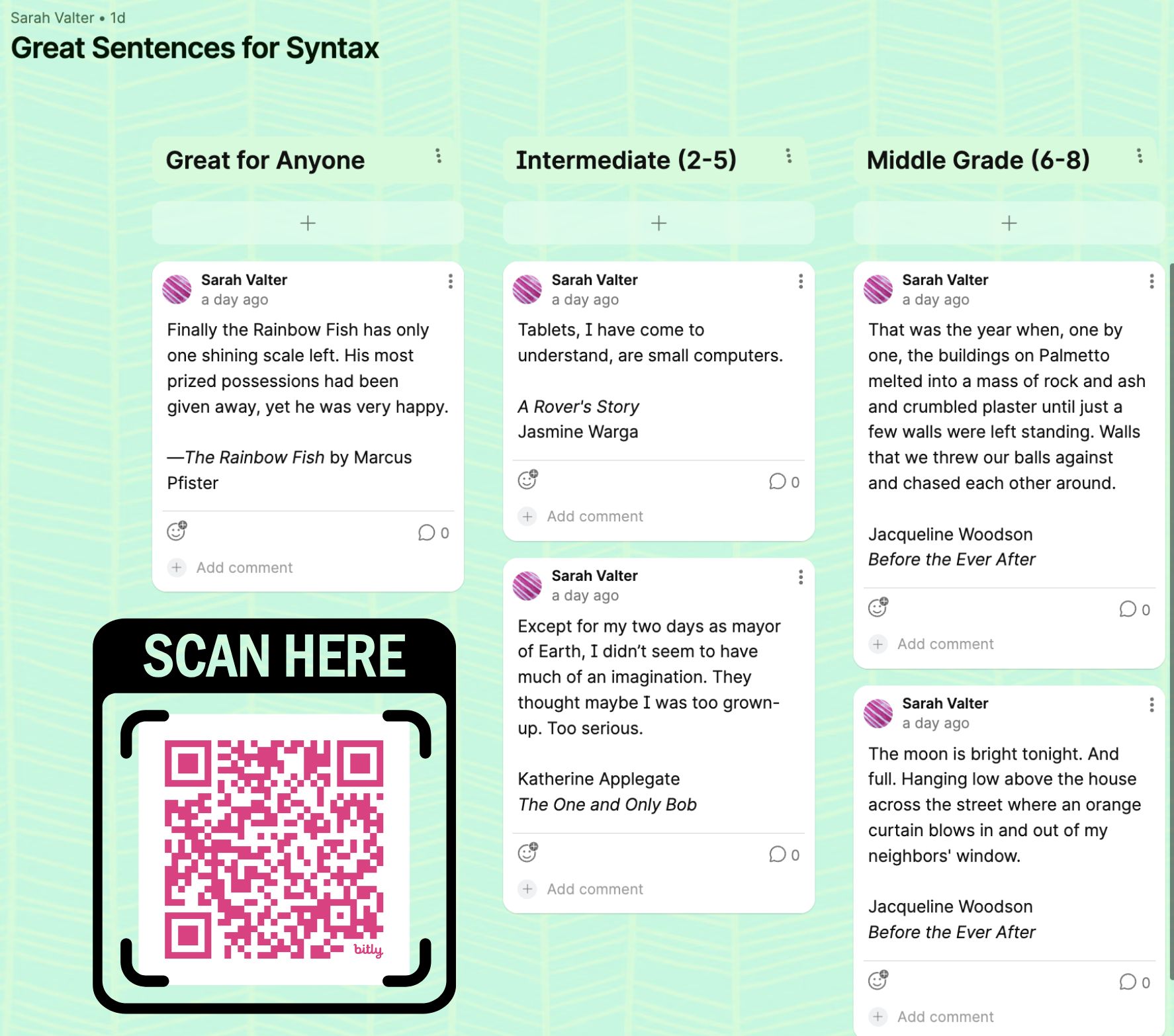
- Read a book or two or several. Read first for enjoyment, then again as a writer. Notice, name, and capture the sentences that are worth holding onto.
- Add to our crowd-sourced list.
- Circle back in the fall, partnering with Melanie and all of you, to take an even deeper dive into the ways we can strengthen our writing instruction with purposeful, joyful syntax work!
Discover more from TWO WRITING TEACHERS
Subscribe to get the latest posts sent to your email.


