
Estimated Reading Time: 4 minutes (716 words)
Intended Audience: Classroom Teachers and Instructional Coaches
Catch Up Quick: In the (almost) seven years since Beth Moore shared her post “Something Do-Able to Try: The Editing Minute,” the practice of shifting editing to a daily writing habit has had a tremendous impact on my perspective on the writing process. It has changed how I support writing teachers and their students, as well as how I frame the writing process in professional learning sessions. The Editing Minute is built on the recursive nature of the writing process: editing is not work that can (or should) be done in a single session or class period. Rather, writers are constantly circling back to correct errors in their work. The Editing Minute promotes this work by reserving just one minute at the end of each day’s writing session for students to find a spelling mistake, correct capitalization, or add missing punctuation.
What’s New: Encouraged by the success of the Editing Minute, I invited a team of teachers to extend this approach to the other “tricky” area of the writing process: Revision. We have collaborated over the past few months to reimagine when and how revision fits into the writing process and ways to build it into a stronger writing routine.
How It Works: Revision is difficult for students: they need audience awareness, a clear purpose, and experience with a wide toolkit of strategies. Rather than expecting revision to occur in one large block of time after drafting is done, a Revision Routine engages kids in making tweaks to writing along the way.
Here is how we’ve approached this work:
- Keep revision simple. Everything a writer might do when revising falls into three categories: adding, changing, or deleting. Giving kids this clear definition keeps the work manageable.
- Begin each day with revision. While the Editing Minute fits naturally at the end of workshop when students need to go back and fix mistakes, the Revision Routine works very well at the beginning. We invite students to begin by rereading the previous day’s work with their brain engaged, noticing places where their writing is strong and places where there might be room for improvement.
- Focus on one task. At the very beginning of this work, our parameters were tight: students were asked to add something to their work. Knowing that it’s easier to add a word, phrase, or sentence than to make bigger changes, this felt like a safe place to start. After providing some instruction and support, we then focused on changing one thing in their work. Finally, we introduced the idea of deleting a word, phrase, or sentence that doesn’t work.
- Keep it short. Set a timer. Be intentional. The goal is for writers to learn a habit, not to overhaul or rewrite the entire draft. Sometimes the work will extend into the writing they do throughout the day; other times it might just lead to a tiny change and nothing more.
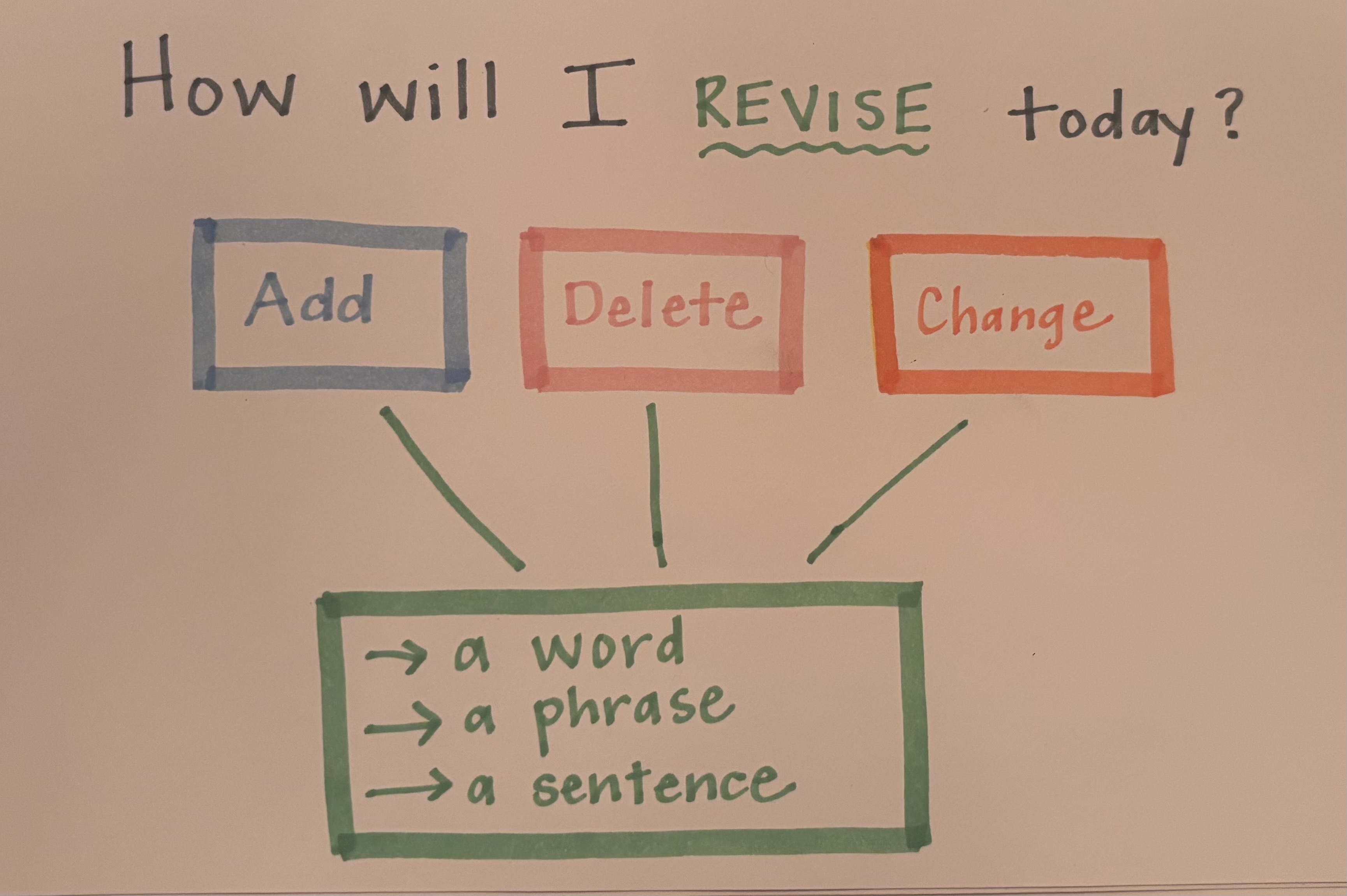
Zoom In: If you are wondering how to fit a Revision Routine into your daily writing instruction, here is an example of how a 40-minute writing block might flow:

- Rereading and Revision Routine (4 minutes): Writers quickly take out yesterday’s draft, reread for 1-2 minutes, and use the remaining time to add a word, phrase, or sentence to their writing.
- Mini-lesson (10 minutes): Direct and explicit instruction on today’s learning target: writing a clear topic sentence for a new paragraph.
- Independent work (20 minutes): Students continue drafting while the teacher confers with individuals and works with small groups of writers.
- Partner work (3-4 minutes): Students collaborate with a pre-determined writing partner to share a small part of today’s writing and get peer feedback.
- Editing Minute (2-3 minutes): Writers close the workshop by finding a capitalization or punctuation error and editing to correct.
One Thing to Remember: The Revision Routine and Editing Minute work best as frequent, regular practices, but they don’t have to be part of your workshop every single day. The goal is to build the habits of revision and editing, making both practices a natural and embedded part of the writing process.
Start small: try adding one Revision Routine to your workshop sometime in the next week and watch carefully to see how your students respond. We’d love to hear your successes (and support your struggles) in the comments below!
Share this:

Discover more from TWO WRITING TEACHERS
Subscribe to get the latest posts sent to your email.

Love the idea of defining revision by adding, deleting, or changing. Thanks!