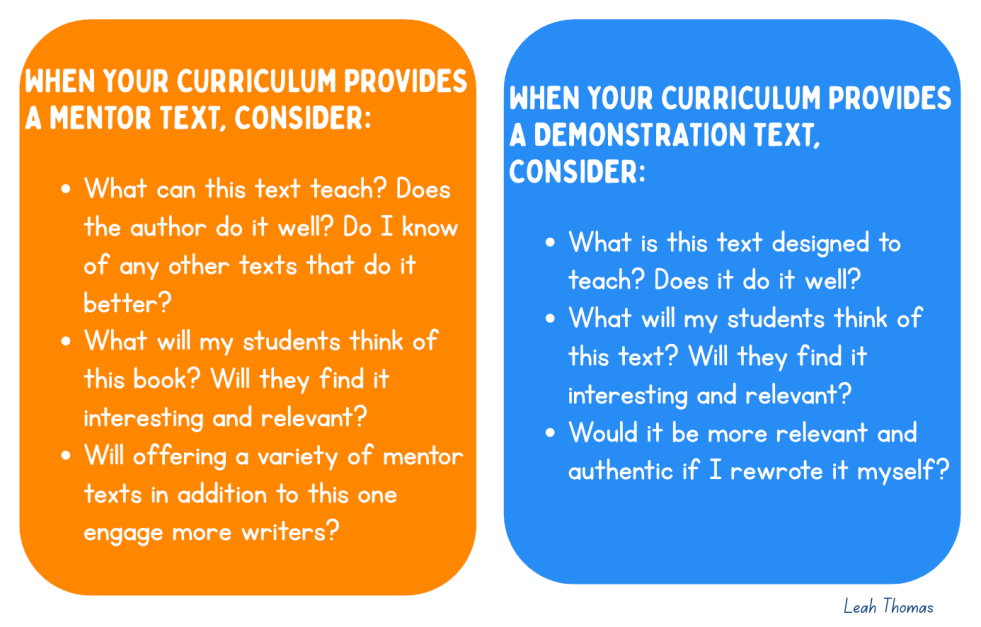
On the last day of this week's Finding Common Ground Blog Series, learn about the difference between demonstration texts and mentor texts. Both types of text have an important place in writing instruction.
Category: Finding Common Ground Blog Series
The “Finding Common Ground Blog Series” is the Two Writing Teachers’ special back-to-school series, running from August 3-7, 2026. This year, our team has been reflecting on the tensions that exist within the world of writing instruction—questions so often framed as either/or. Through ongoing conversations, we’ve realized these aren’t binary choices, but both/and opportunities. This series brings together diverse perspectives and practical strategies to help educators navigate these complexities as the new school year begins. Each of the five posts—authored by Jessica Carey, Melanie Meehan, Stacey Shubitz, Leah Thomas, and Sarah Valter—dives into these tensions, sharing the thinking, questions, and classroom practices that have shaped our writing instruction. Each post offers a unique view on fostering a supportive, responsive, and skillful writing classroom, finding common ground in the nuances of present-day writing instruction.

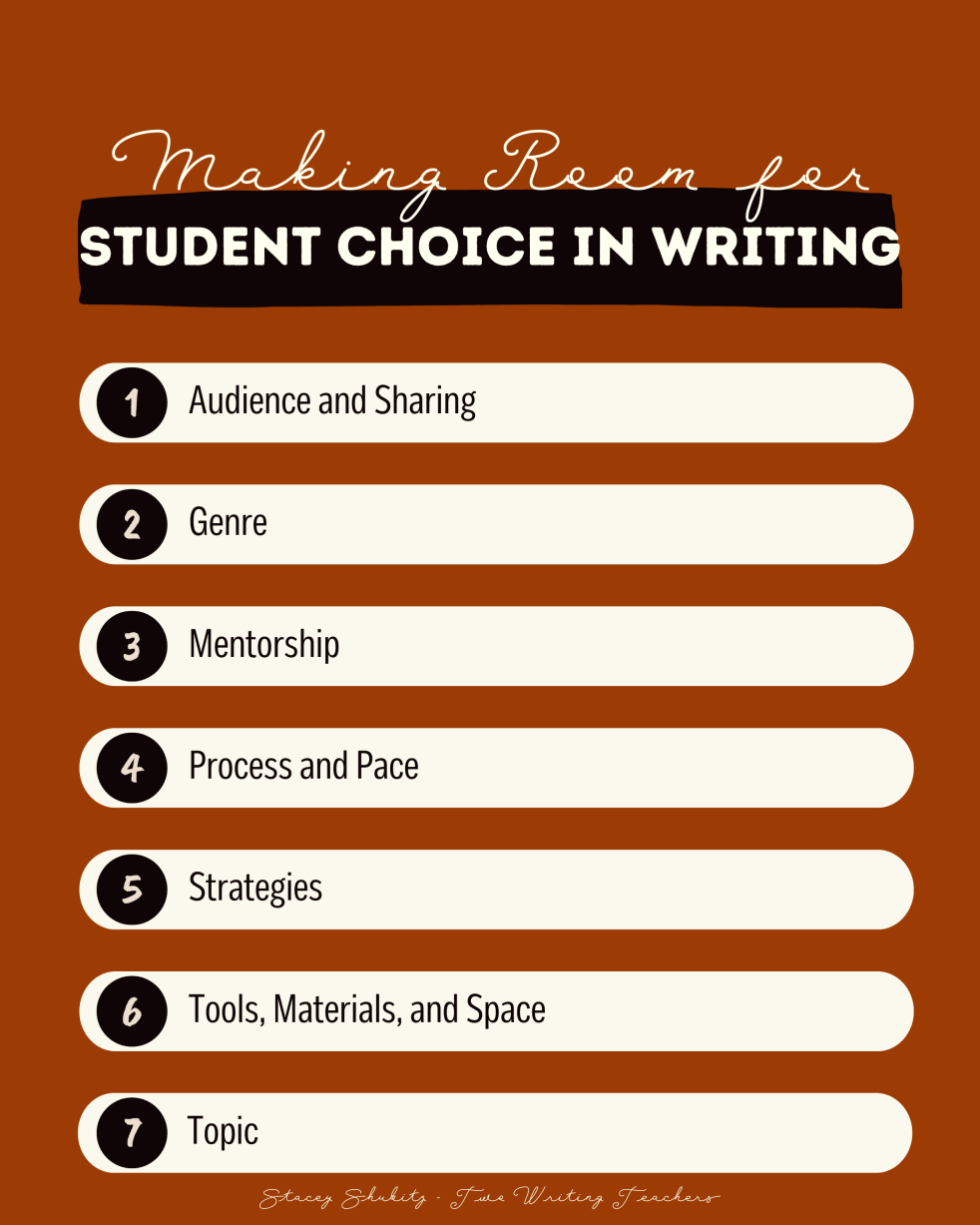
Balancing Choice and Assignments in Writing Instruction: Finding Common Ground
Required writing units don’t have to mean zero choice for students. There are seven areas where you can still offer meaningful options: audience, genre, mentorship, process, strategies, tools, and topic. Choice helps kids stay invested in their writing even within a scripted curriculum. You’ll find practical ideas you can use right away to balance required assignments with student-centered choice. Small shifts can make a big difference.
Share this:

Share this:
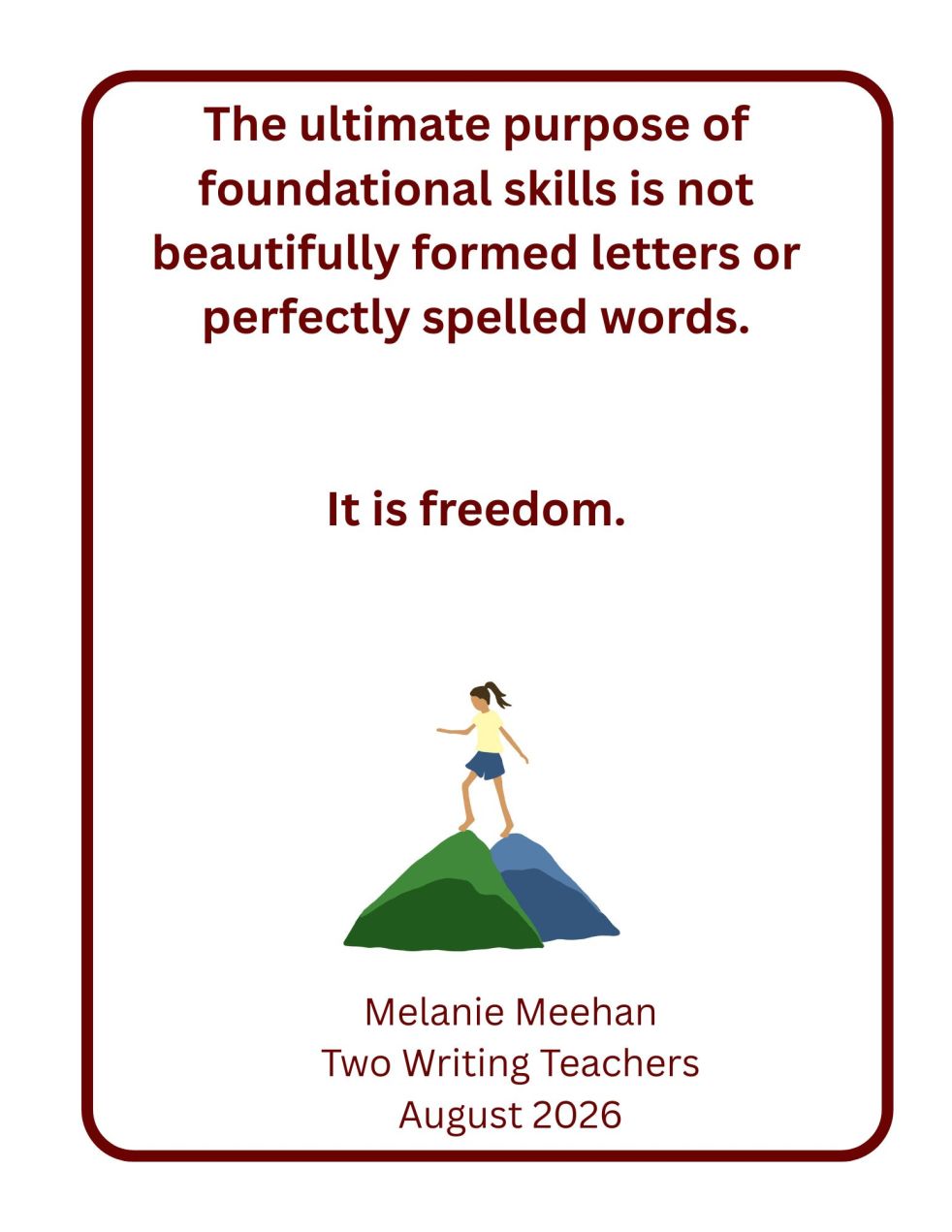
Foundational Skills and Composition: Finding Common Ground
Opportunities to develop fluent transcription, accurate spelling, and flexible sentence construction flourish within authentic reasons for communicating ideas. Foundational skills, sometimes also called transcriptive skills, work in conjunction with compositional skills. When these two aspects of writing grow together, each reinforces the other.
Share this:

Share this:

Writing Workshop and Cross-Curricular Writing: Finding Common Ground
To develop the strongest writers with the skills to navigate complex ideas, research, draft, and produce well-composed pieces, students need ongoing opportunities to build their writing skills seamlessly across the entire school day. Today's post in the Finding Common Ground blog series focuses on ways to seamlessly link writing with content area instruction.
Share this:

Share this:
Explicit Instruction and Responsive Instruction: Finding Common Ground
Are we teaching writing, or are we teaching writers? It's a question that's becoming increasingly important as schools balance curriculum fidelity with meeting the needs of the students sitting in front of us. This post explores how explicit instruction and responsive teaching work together to create meaningful writing instruction.

