Estimated Reading Time: 4 min, 655 words
Primary Audience: elementary teachers, special education teachers, literacy coaches
The Context: My school is in its second year of implementing an inclusive model for special education services. This means that we now have students in our general education classrooms who in the past would have been in separate-setting classrooms at a different school. Almost every inclusive classroom at my school includes between one to three students who use Augmentative and Alternative Communication (AAC). Each student with AAC has an iPad with a program that allows them to touch the words that they want to say. For preliterate and/or primary age students, the majority of the words are paired with a picture that represents the meaning.
Lately, I have been thinking about what adapted materials could make writing workshop more accessible for students who are nonverbal and/or do not have the motor skills to draw and write.
What I Did:
- Consulted with my school’s Speech and Language Pathologist (SLP) to better understand how the AAC program works, including the supports within the program for preliterate students such as picture cues and color-coding for parts of speech.
- Considered the genre that students are currently writing in and created sentence frames that match that genre. For example, first grade is currently doing an opinion unit, so one sentence frame is “My favorite____is a____because it_____.”
3. Created a visual sentence frame, where each word is in a box. The empty boxes are color coded based on the part of speech, matching the colors in the AAC program as much as possible.
4. Generated a “word bank” of word cards with pictures that match the AAC program and color-coding to match the empty boxes in the sentence frame.
Symbols shows are SymbolStix®, Copyright © 2026 ny2, LLC (Everyway). All rights reserved.
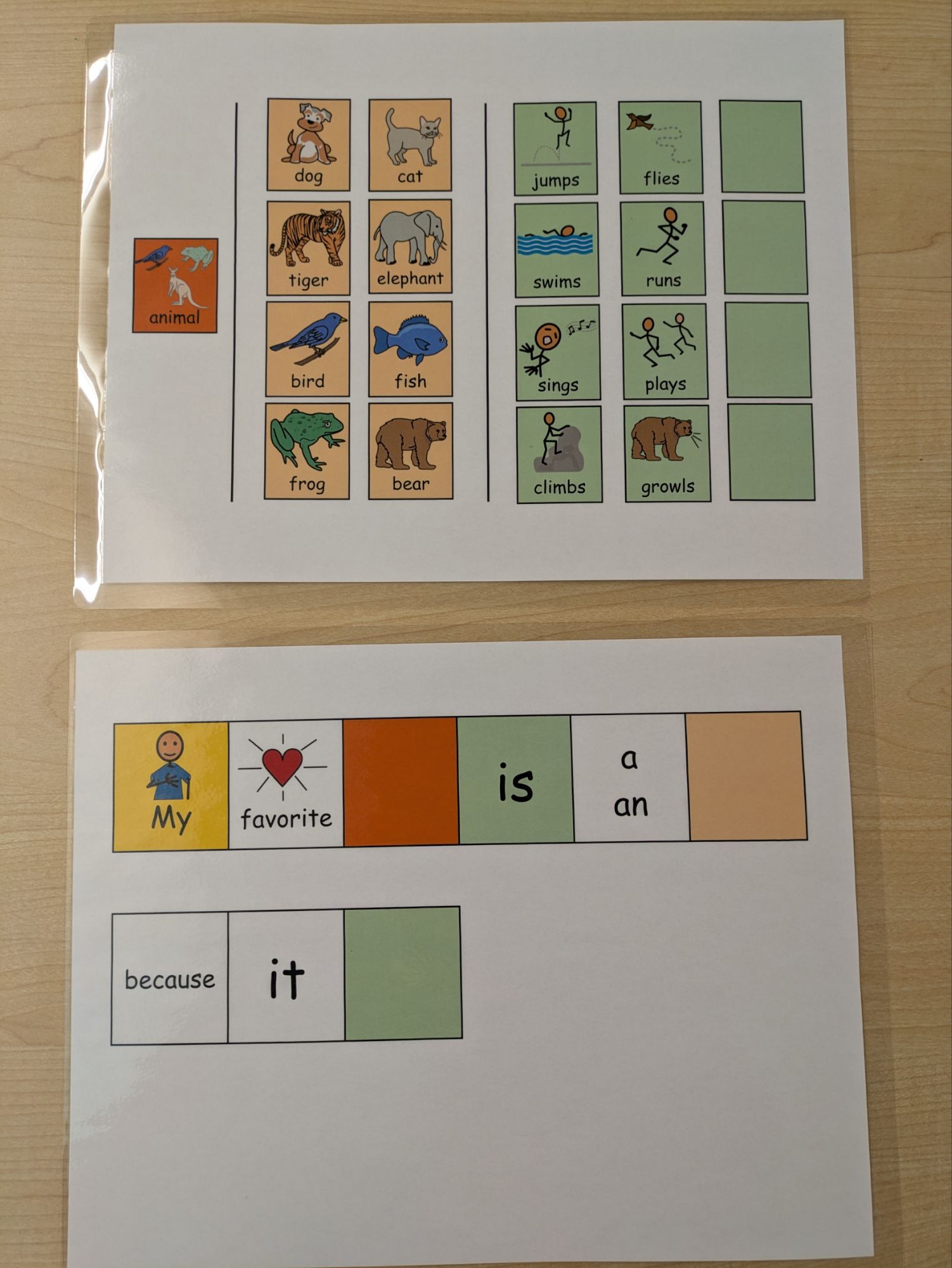
How It Works: Students choose from the “word bank” to complete the sentence frame, allowing them to show their understanding of the genre and express their ideas like their grade-level peers are doing in writing. This is most likely done with the support of an adult. Depending on a students’ needs, they could work on this in the gen-ed classroom with a classroom teacher or paraeducator, in a speech/language session with an SLP, or in a special education classroom with a case manager. Better yet, they can work with the sentence frame across multiple settings to provide consistency and connections between the gen-ed classroom and other settings.
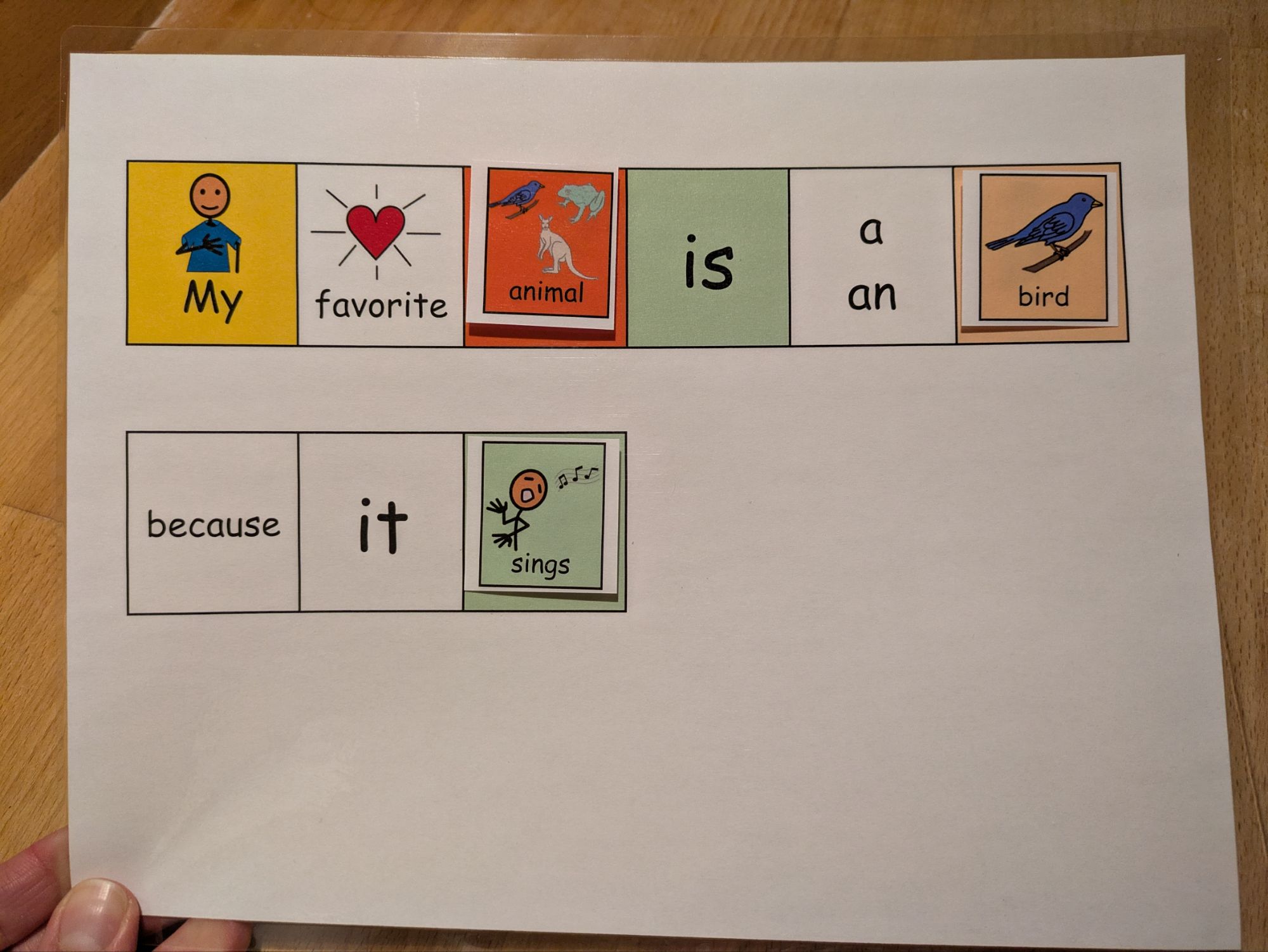
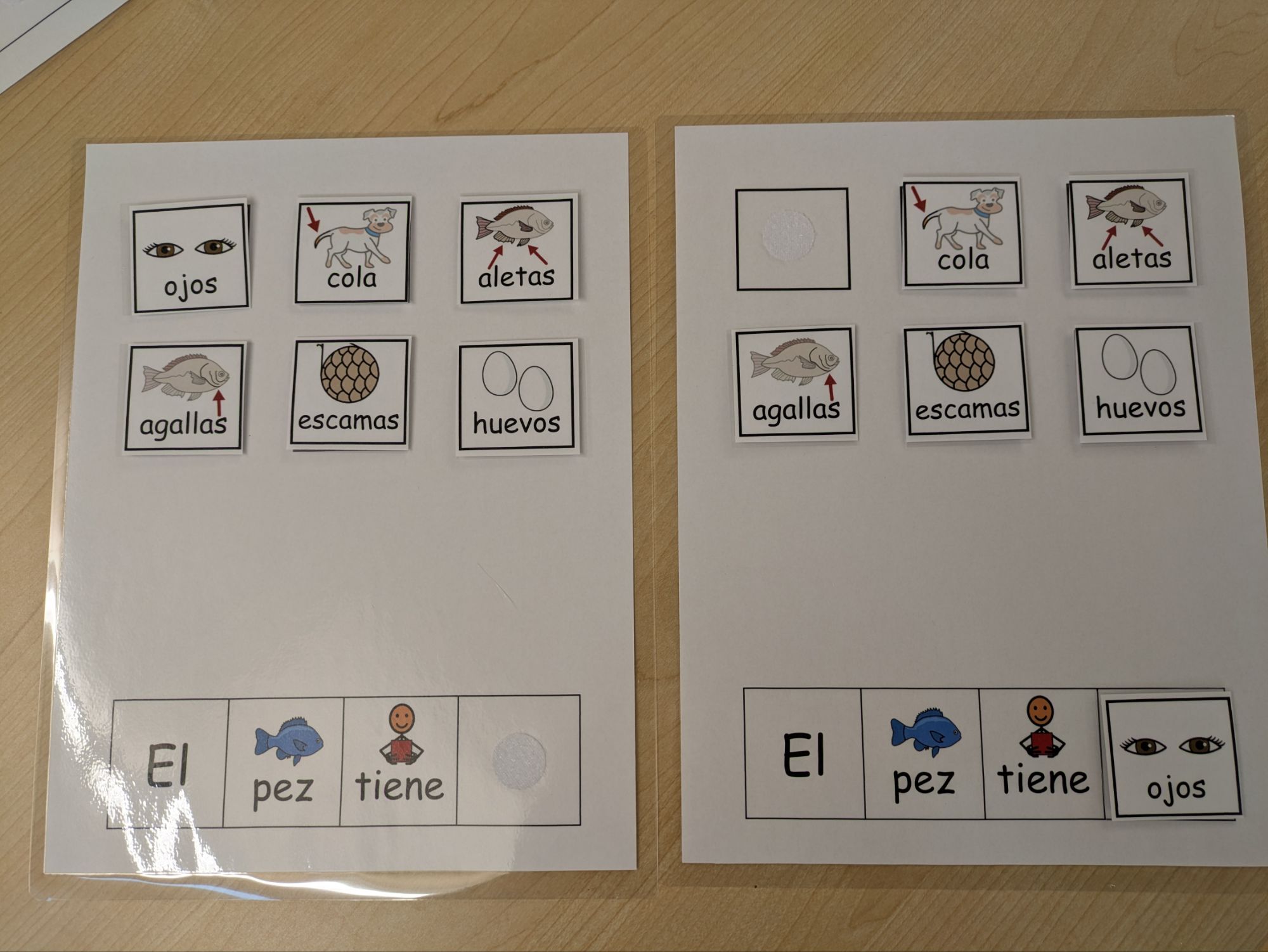
The sentence frame then becomes a launching point for further instruction:
- Students with AAC can work with their SLP, paraeducator, or teacher to learn how to locate the words of the sentence frame within the AAC program, allowing them to share their sentence out loud through the iPad when the class shares their writing.
- Verbal students can practice reading their sentences so that they can share out loud at the same time their peers share their writing.
- Students working on the motor skills for drawing/writing can supplement their sentence frames with pictures or writing some of the letters or words. If the student works with an occupational therapist on handwriting and motor skills, this is another setting where the sentence frame can be used.
The Bottom Line: I have learned that in an inclusive model, students with exceptional needs should have access to the same curriculum as their grade-level peers. It is our job as inclusive educators to determine the adapted materials that provide access to the curriculum for students. Thinking about adapted materials for writing workshop has been tricky to say the least! We have only just begun using these adapted sentence frames with primary students at my school. I am sure this structure won’t work for all of our students, and I am positive that we will continue to expand our toolbox of strategies to provide access to writing workshop for every student in our inclusive classrooms.
If you have experience with writing workshop in an inclusive classroom model, I would love to hear about any strategies that you have found successful!
Share this:

Discover more from TWO WRITING TEACHERS
Subscribe to get the latest posts sent to your email.
