Estimated Reading Time: 6 minutes (1069 words)
Audience: Early Childhood Educators and Caregivers
The Context
Every school year, certain themes become more prevalent in the imaginations of a close community of young children. The teacher may play a role in initiating these fascinations, but they typically emerge entirely on their own. These are topics that come from the children — through their play together, their wonderings, their fears, and their developing understanding of how complex natural phenomena work. At their most elemental level, our youngest writers connect directly to many of the same themes that adults also care about: friendship, family, love, loss, life, death, good vs. evil, fairness vs. unfairness, and beauty. Yet, their way of communicating them is oftentimes unintentionally powerful. A careful reading of the writing of four and five-year-olds can uncover many human truths.
In my Pre-K class, writing a book means drawing pictures across three or more pages, orally dictating a story, and choosing a title for the cover. I do not give many instructions or set too many limits, i.e., there is no expectation for how the book should look or sound at the end. My goal is for children to feel free to draw on their own imaginations, and for their natural stream of consciousness to guide them as they make one page after another. This allows them the freedom to explore writing and storymaking in ways that fit their developmental age and stage.
Examples in Action
I would like to take the opportunity to share some of this work, all of which I find interesting and poetic for the way these examples express ideas through language that is authentic to each child. When I take dictation, I always make sure to preserve their grammar and syntax, even if it’s not “correct,” and I mostly ask for clarification only if I don’t understand what they said, although occasionally I ask for clarification around a storyline, too.
There are themes that overlap across some of the books below, most notably rain and sharks (and being eaten by or saved by sharks). Most remarkably, through each book, an element of each child’s personality is revealed. There are short books and long books. Books with a lot of details in the illustrations and books with very few. There are books with long, runaway sentences and books that are very concise. As a teacher, they each make sense to me in terms of the child who writes it and the way they see the world at this moment in time. They are expressions of their inner selves.
I hope you will take a moment to read each story below:
“THE LITTLE GIRL SAW A RAINBOW” by S.F., Age 4
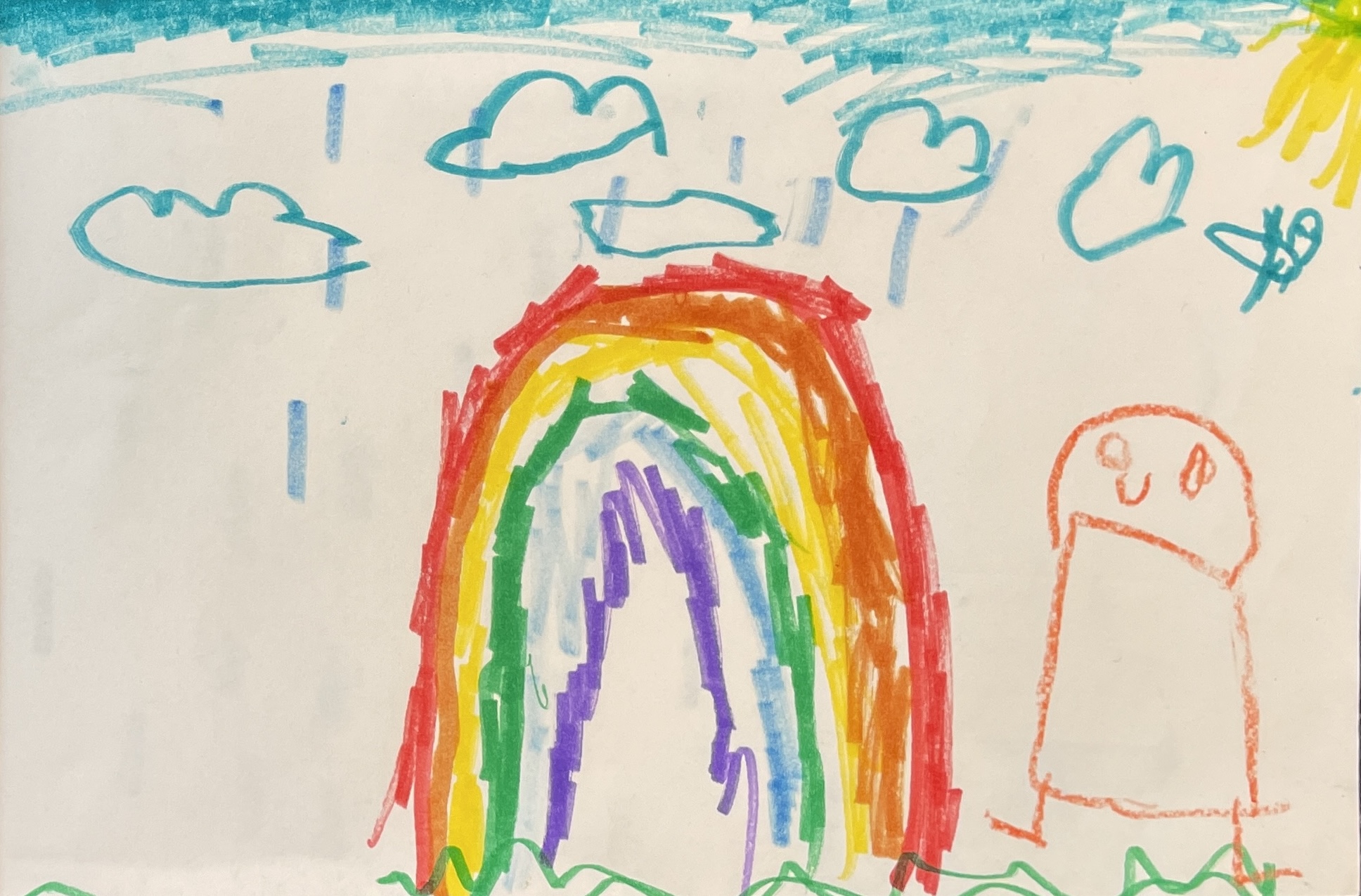
“Once upon a time there was a little girl and she saw a rainbow. It was beautiful.”
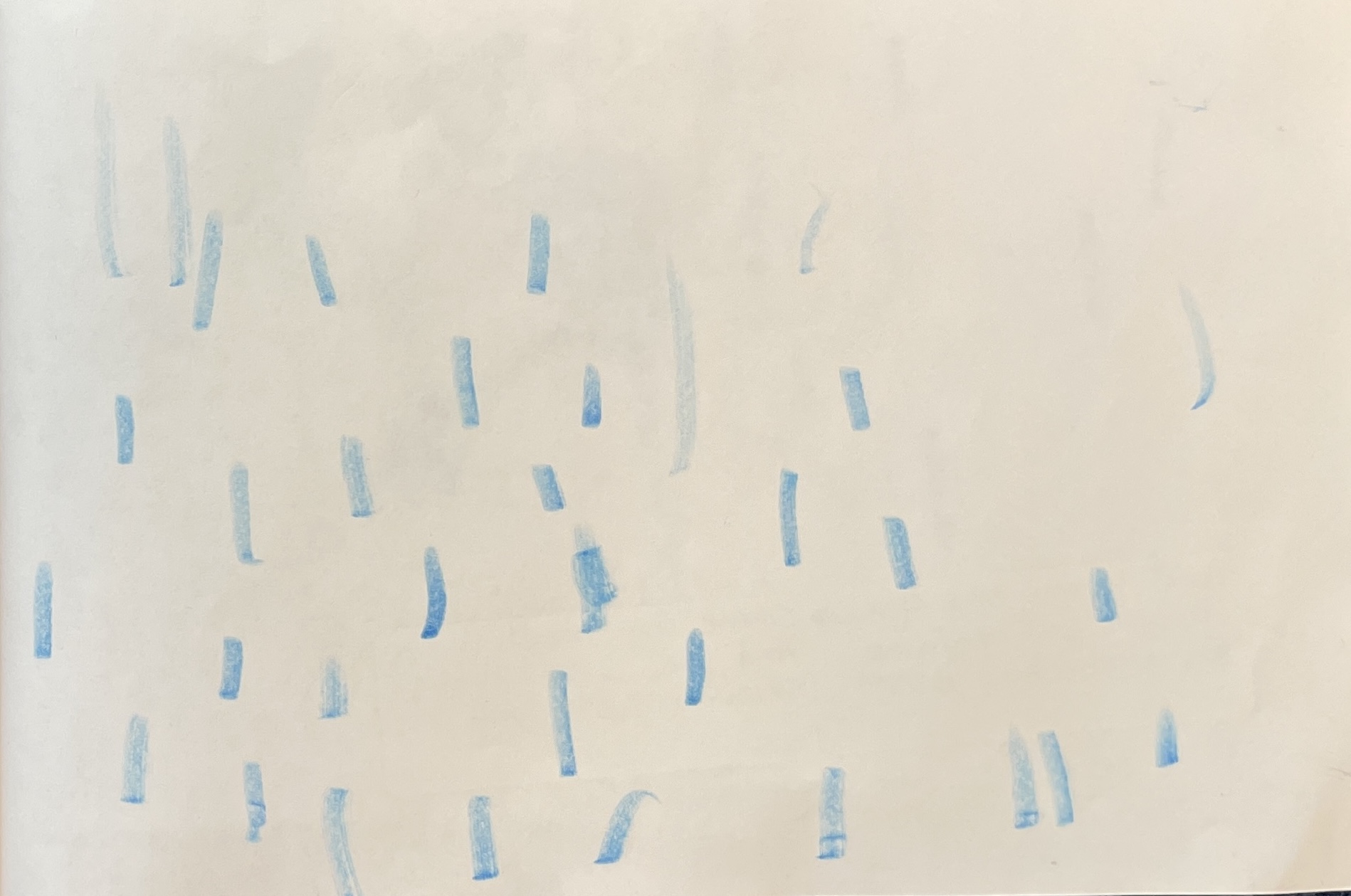
“And then it started to rain.”
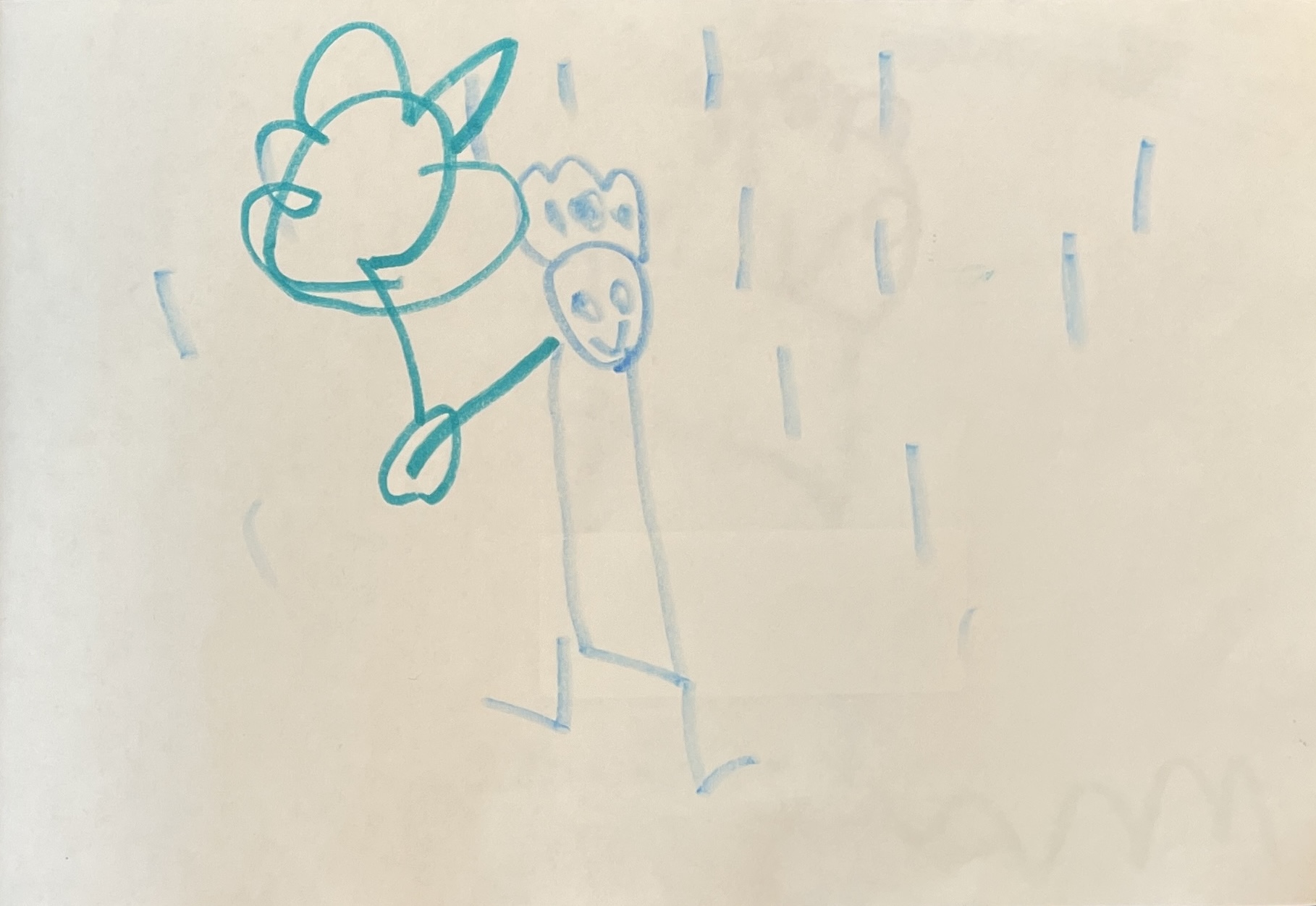
“And then the queen came out. And then it was still raining. And she was holding an umbrella. But then it stopped.”
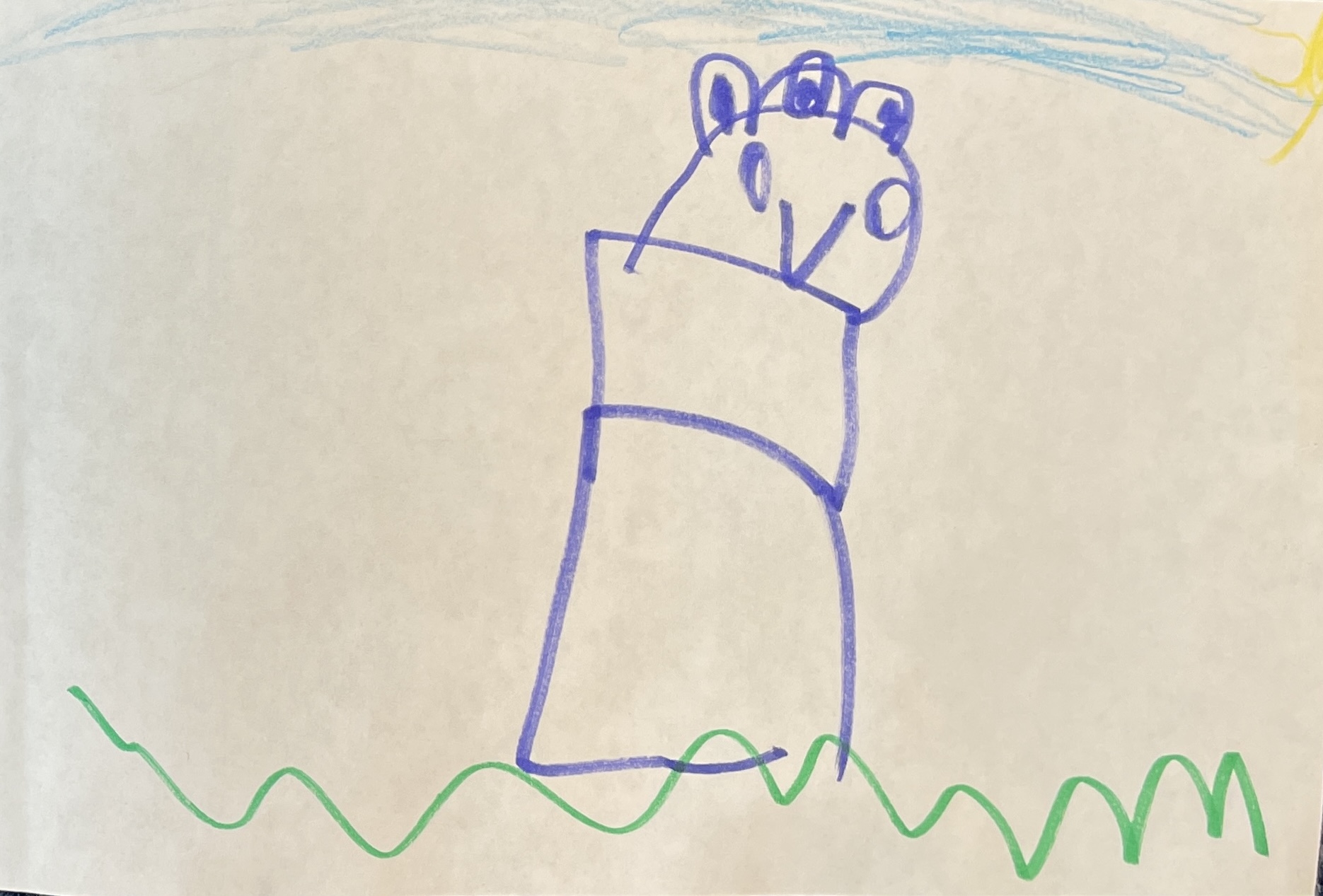
“But then everything was back to normal. And the queen went back.”
“SHARK SURFING” by L.L., Age 5
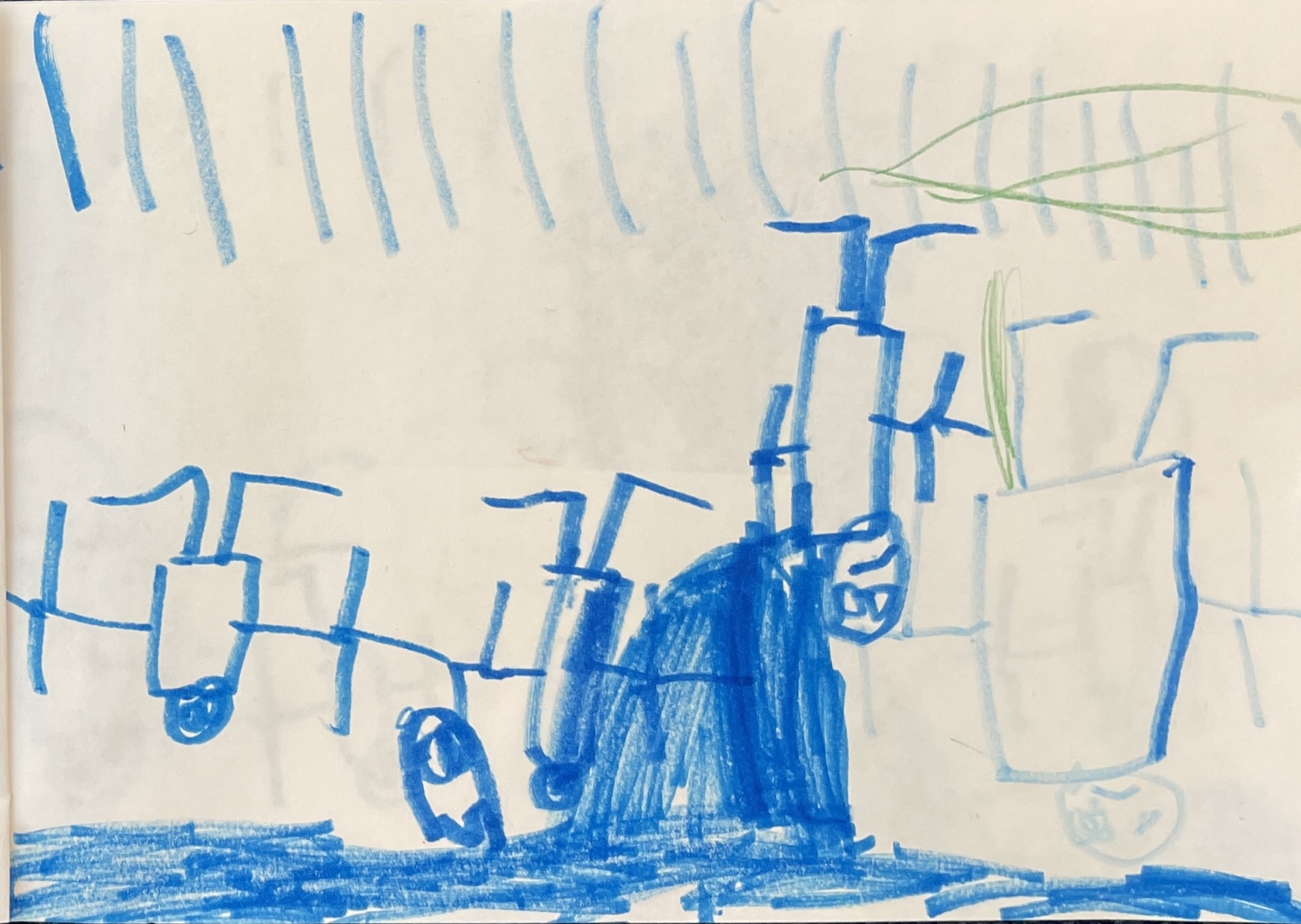
“My papa y mama y sister and me went swimming. A shark came out and we swam away fast.”
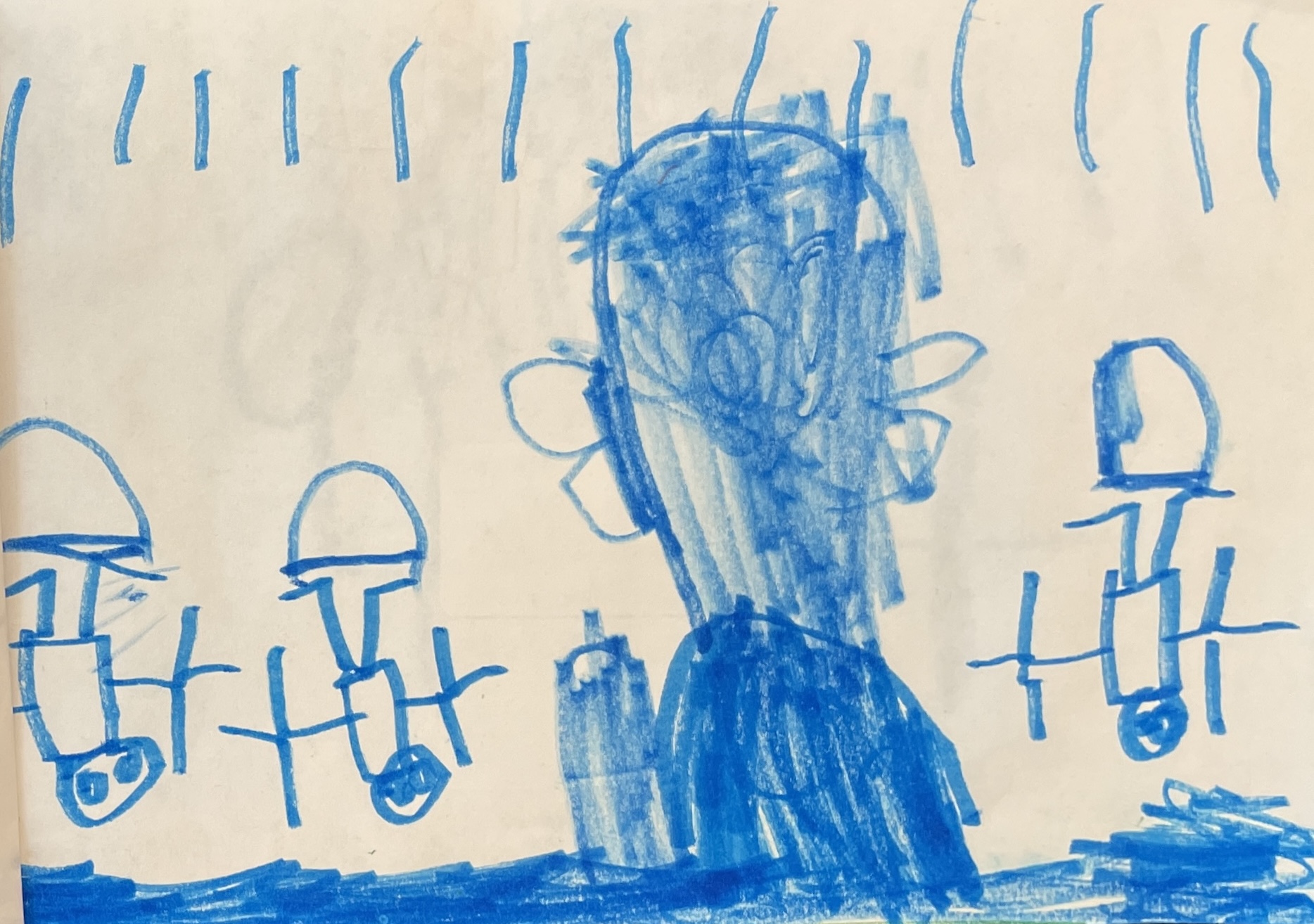
“It rained and a big wave came and we surfed the wave.”
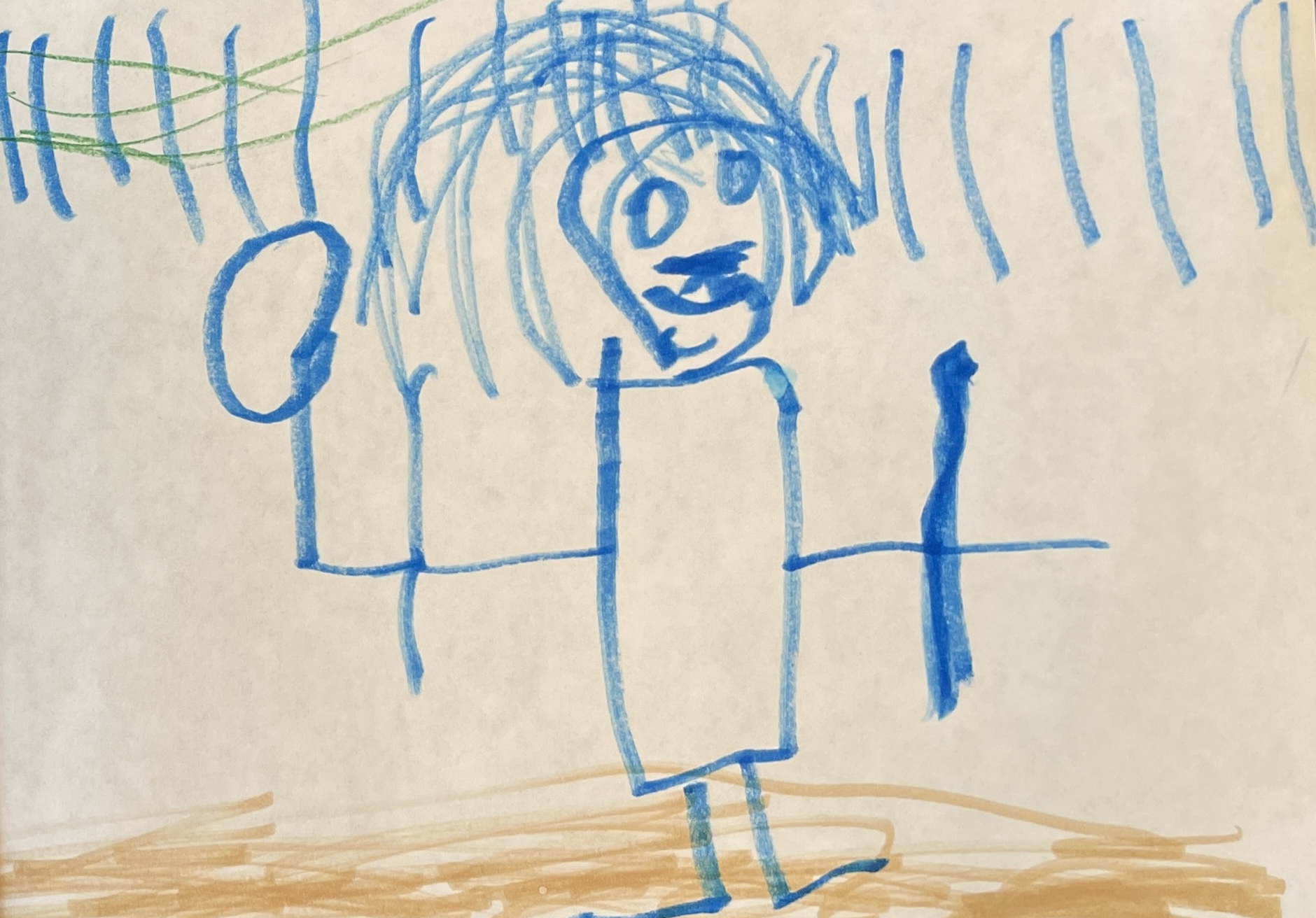
“My mom was walking to get a lollipop for me and then she forgot her keys so she never went home.”
“THE SAND BOOK” by H.S., Age 5
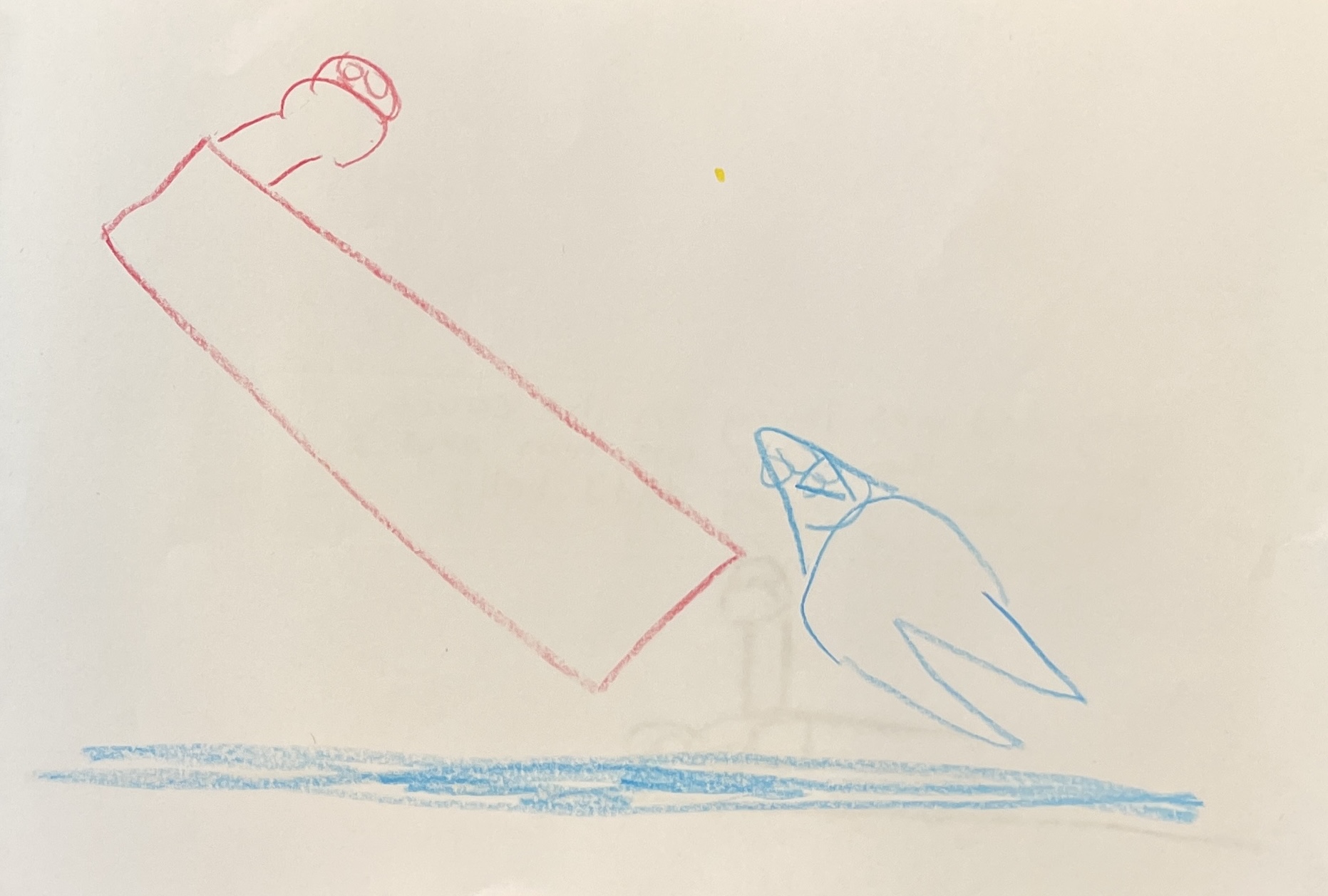
“I was standing on a bridge and shark was below it and it was wobbly and I slipped into the shark’s mouth and it ate me.”
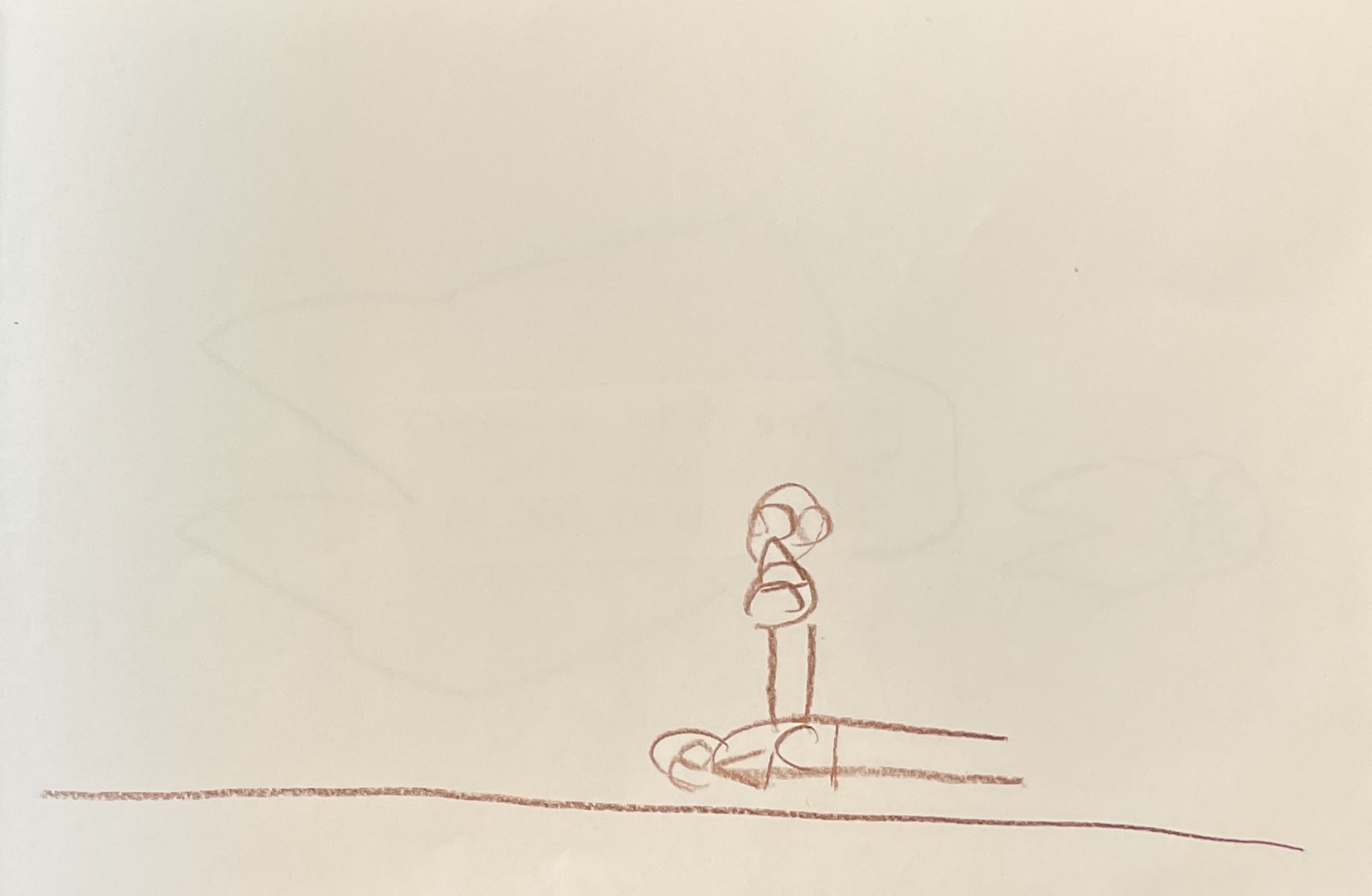
“My dad was laying on the couch because the shark ate him and I was standing on my dad’s belly.”
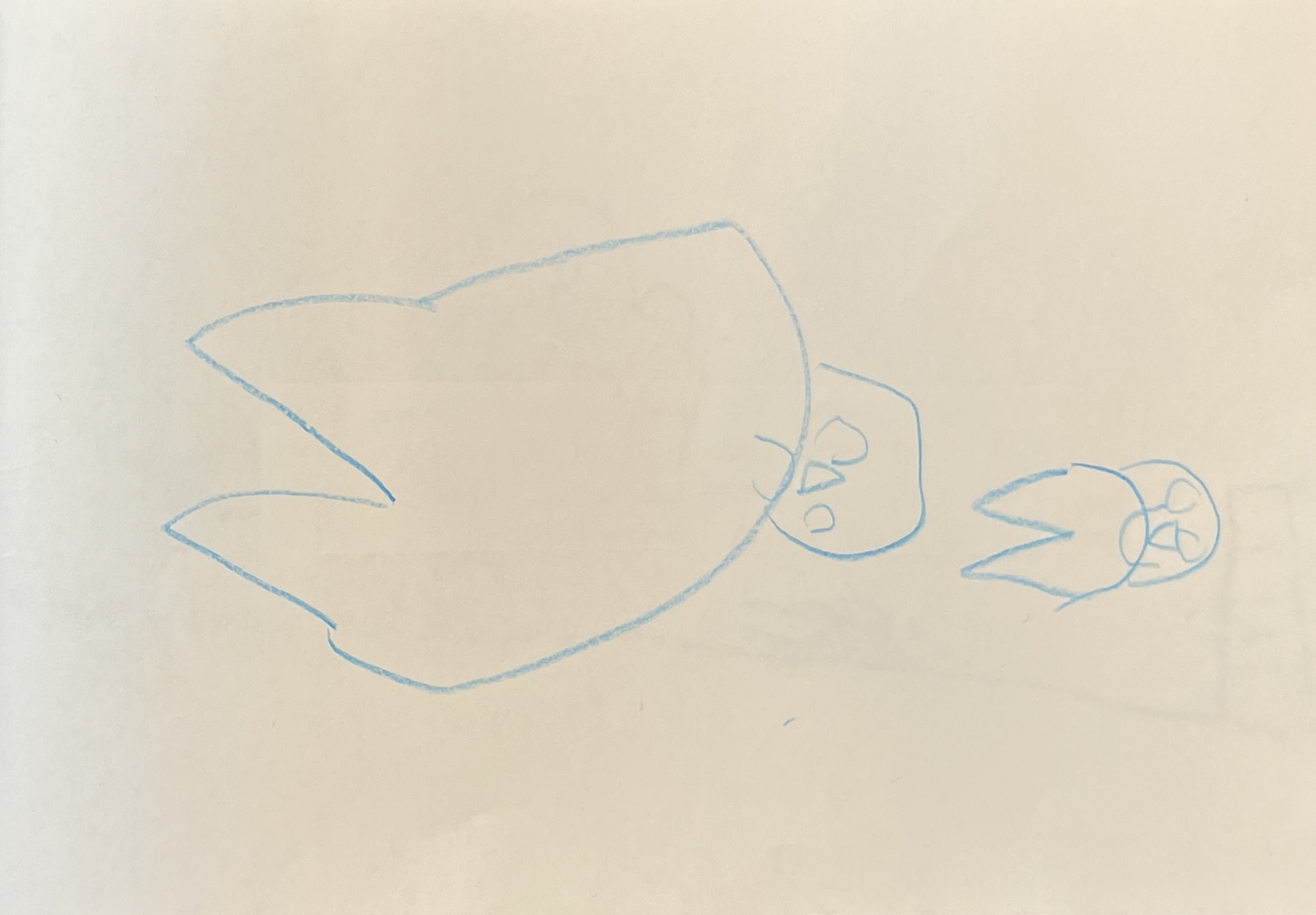
“And then a bigger shark ate the shark that ate us.”
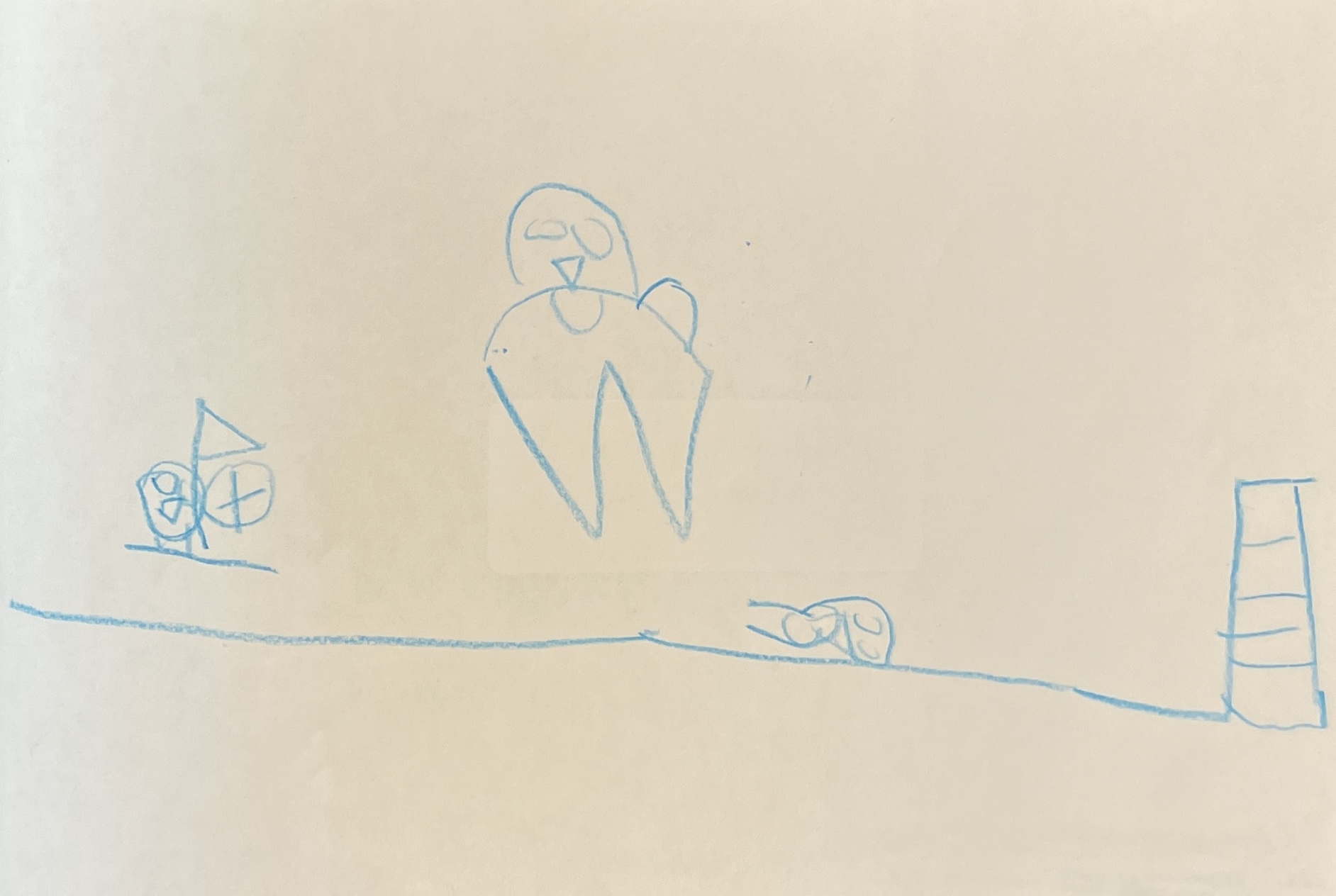
“But there was a hole in it and we popped up and then a bad guy ship was trying to get us and we were swimming to get away and we made it.”
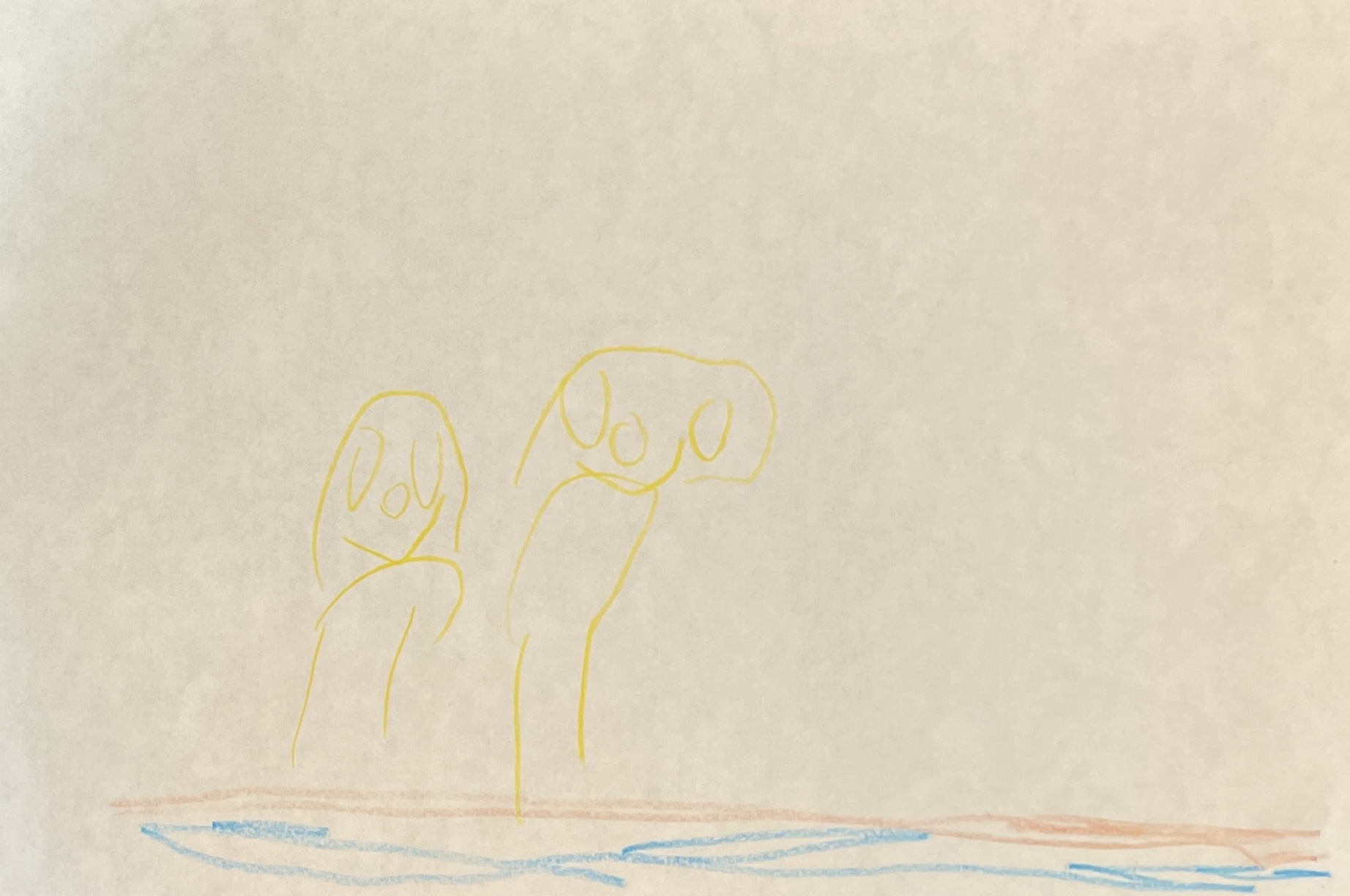
“And we played in the sand.”
“THE STORY OF RAIN” by C.D., Age 5
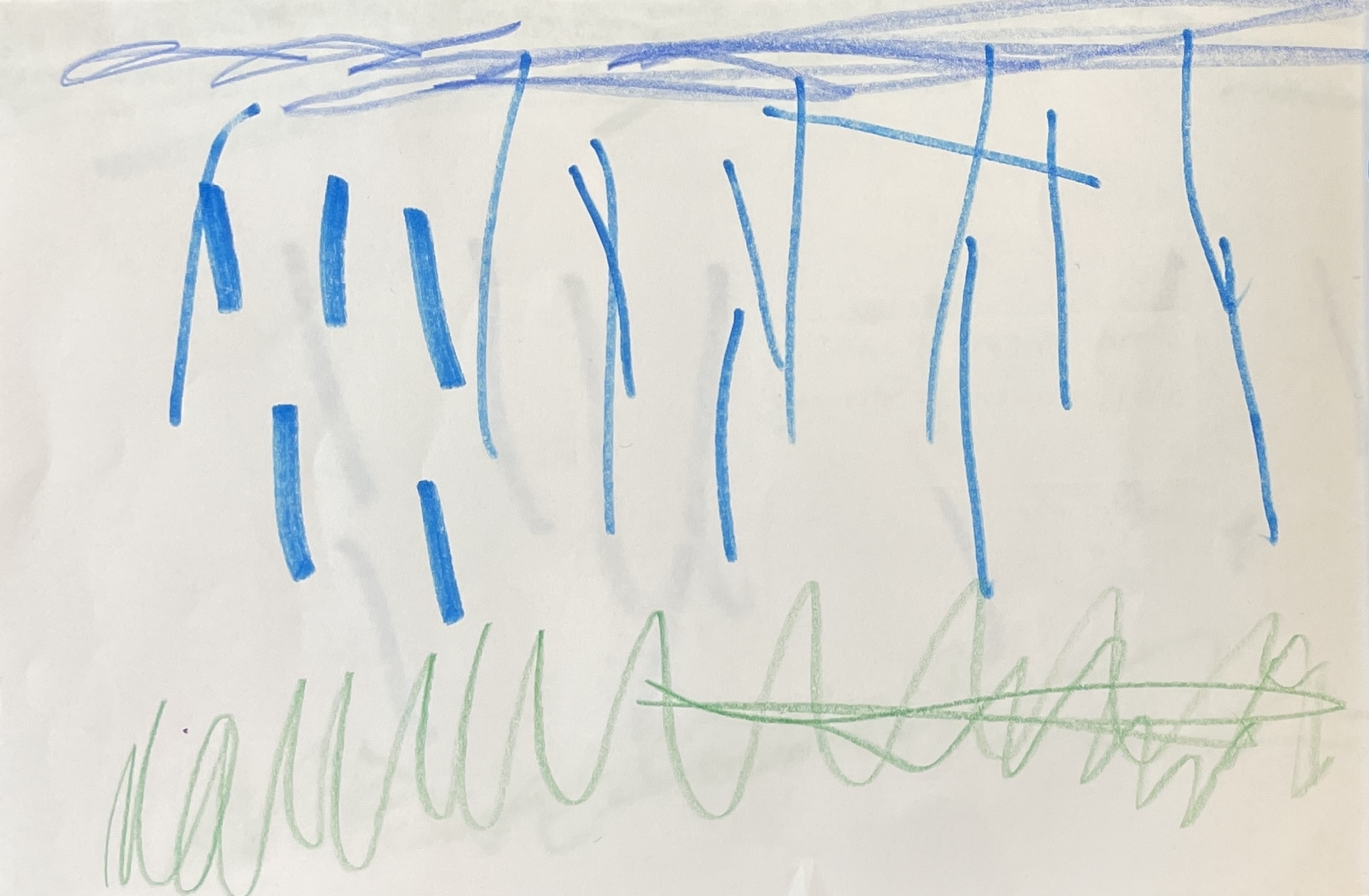
“It was a rainy day. There was no sun. And it was very cloudy. It watered the grass but there was no sun still.”
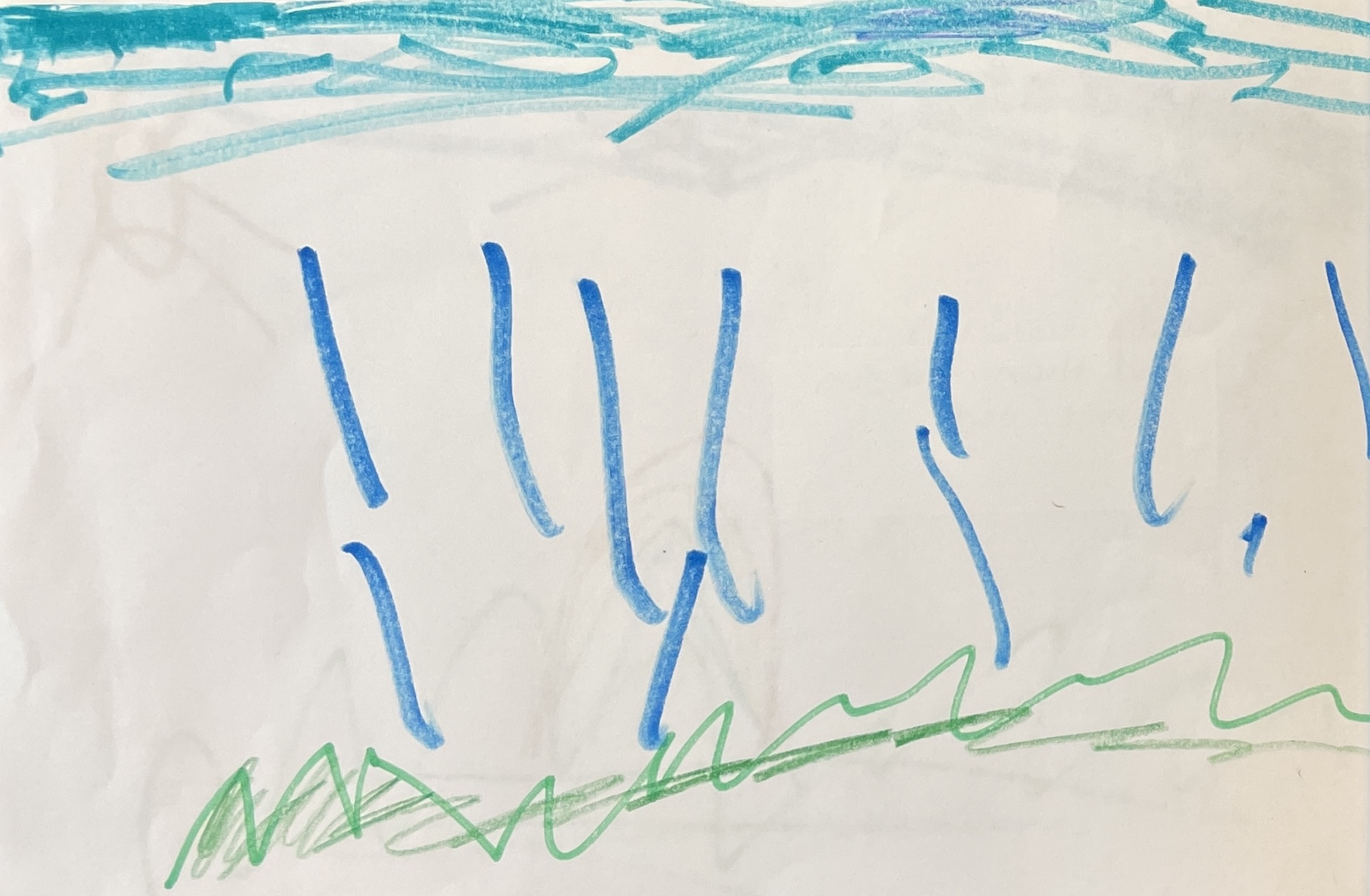
“And then it was still raining. Storming!”
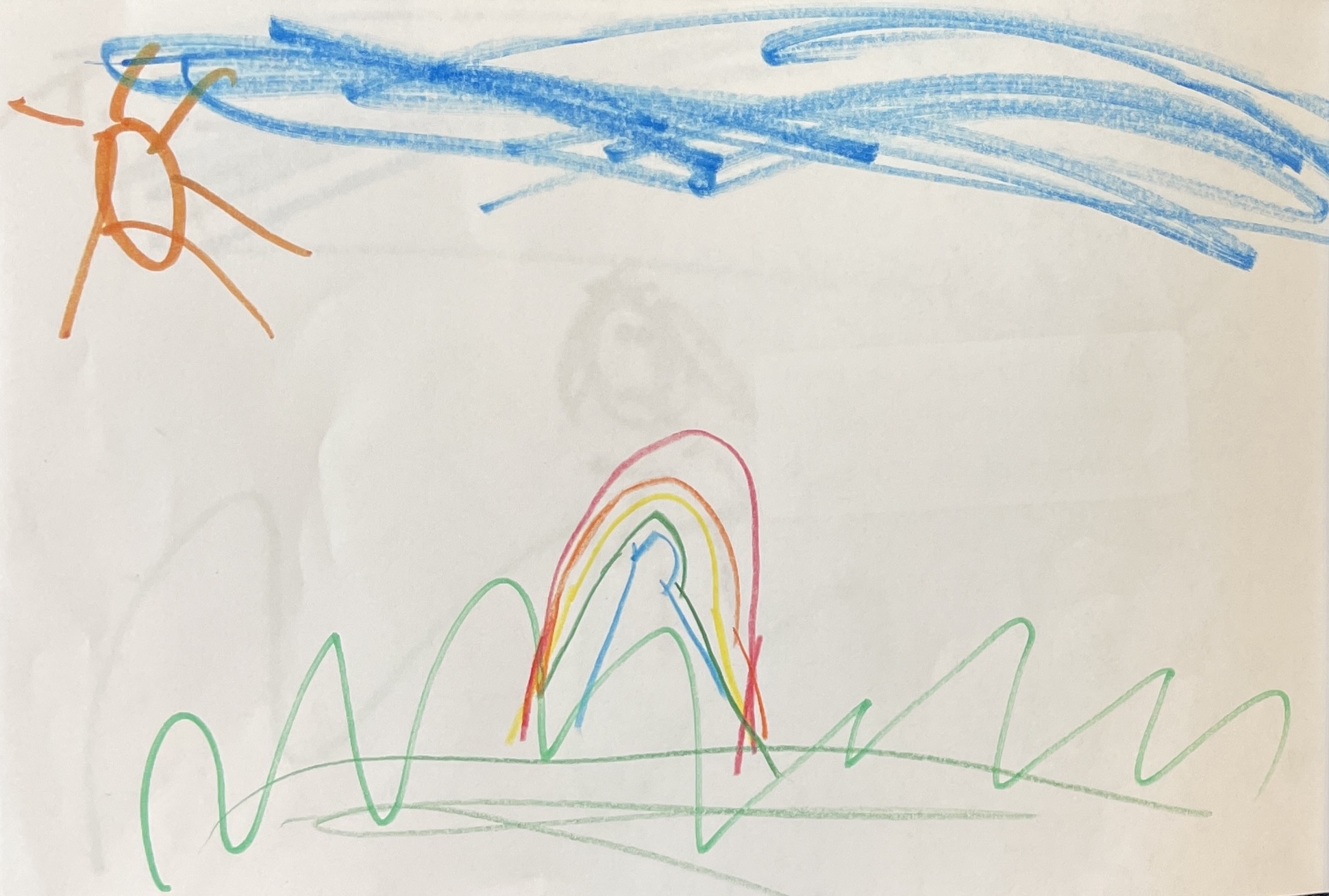
“And then the sun came out.”
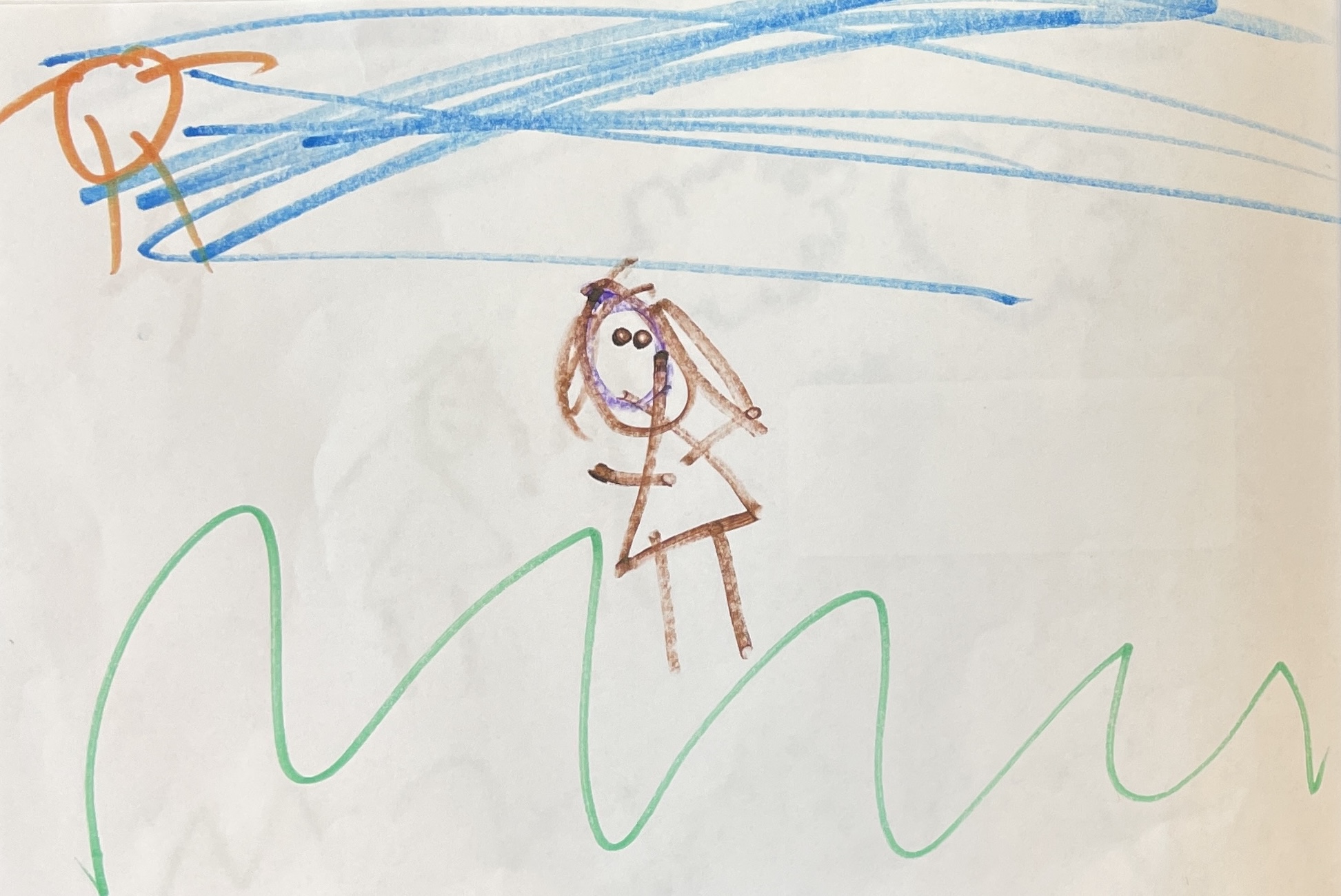
“And then a girl came out and wanted a friend.”
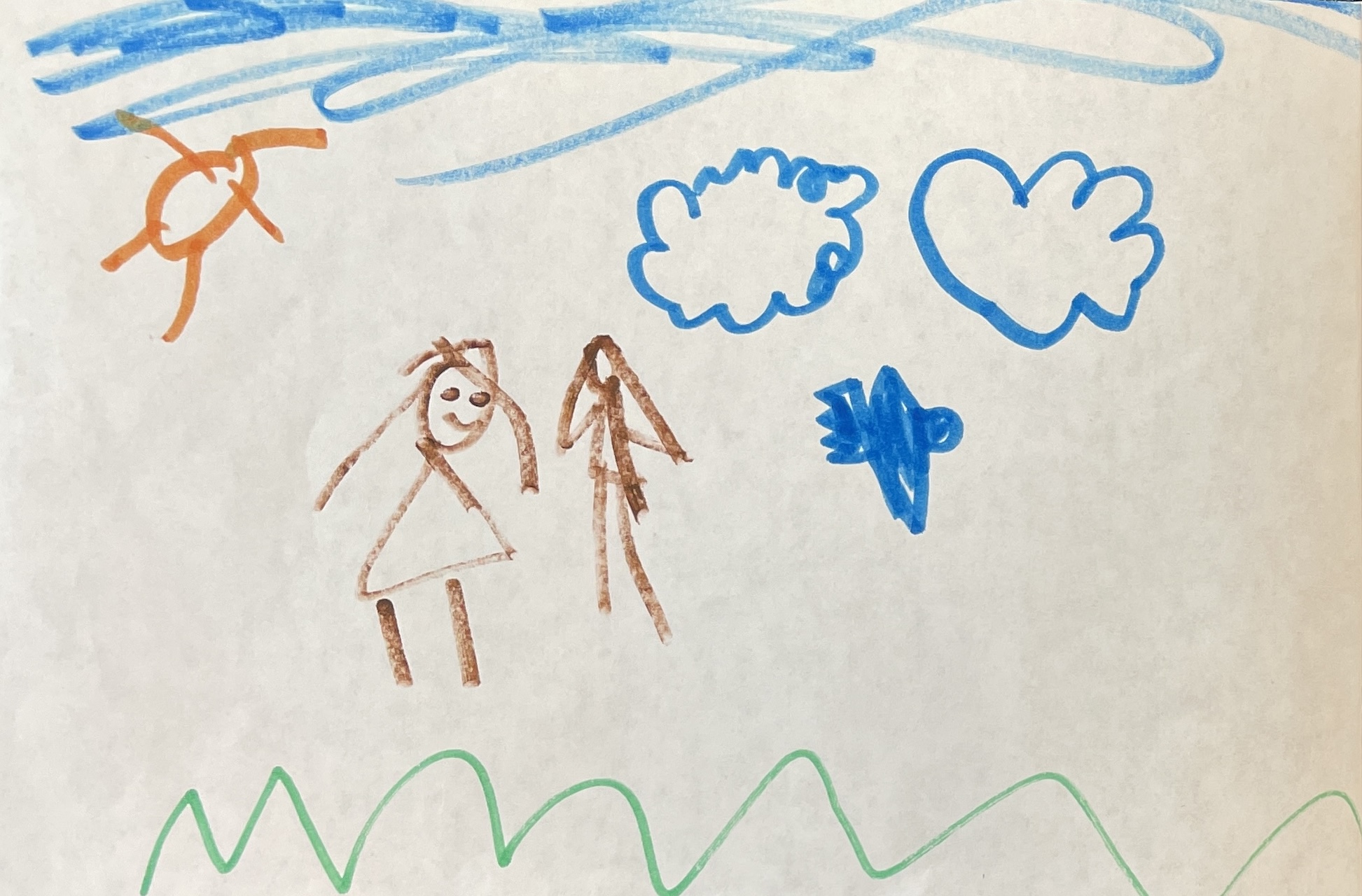
“So she got one! And it was another girl.”
“THE SHARK WAS GONNA SAVE ME” by O.S., Age 5
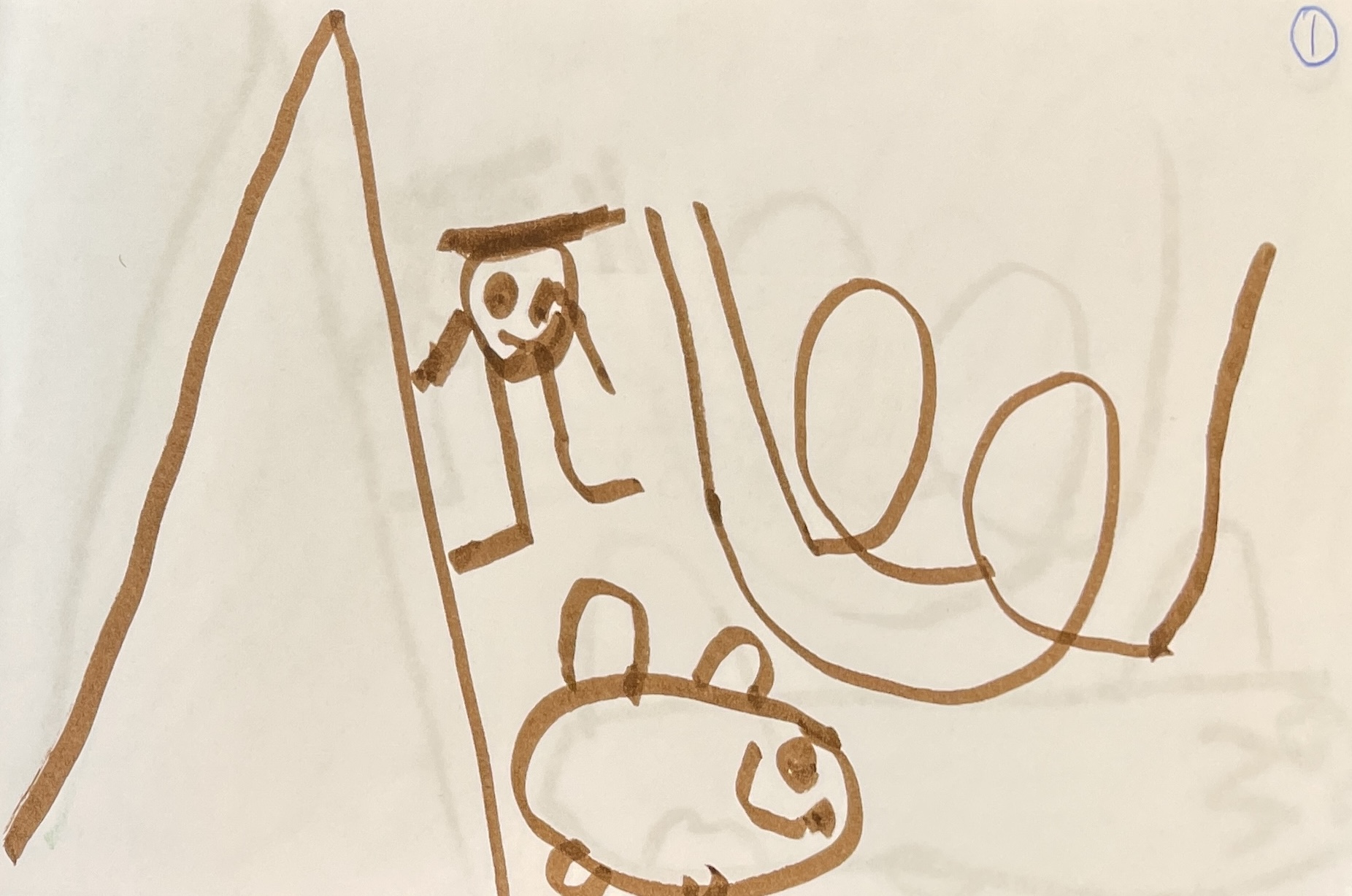
“A shark was gonna eat me but then the shark couldn’t eat me because I went to the slide.”
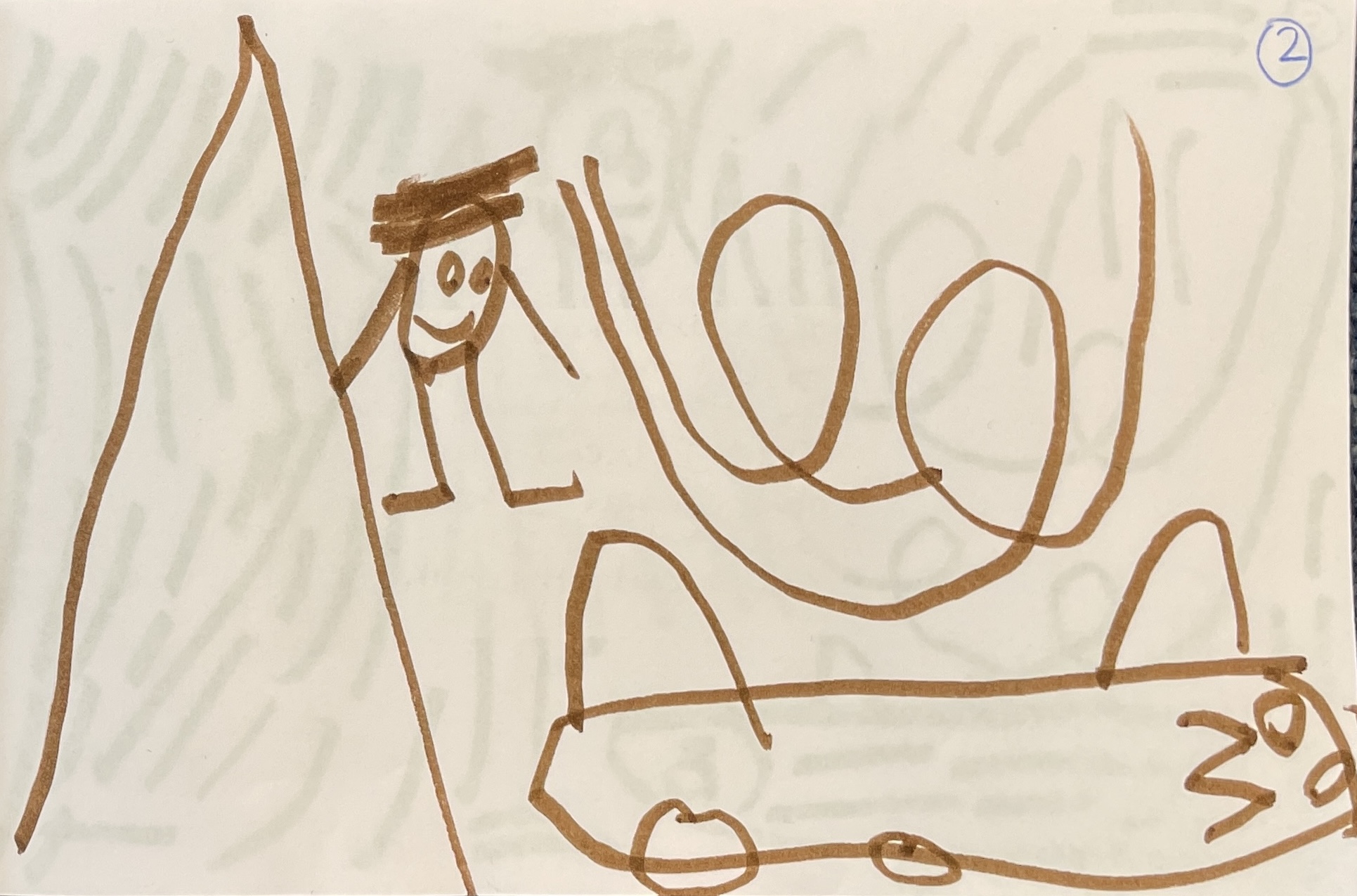
“And the shark was gonna eat me but the shark could not eat me. I was going on the slide.”
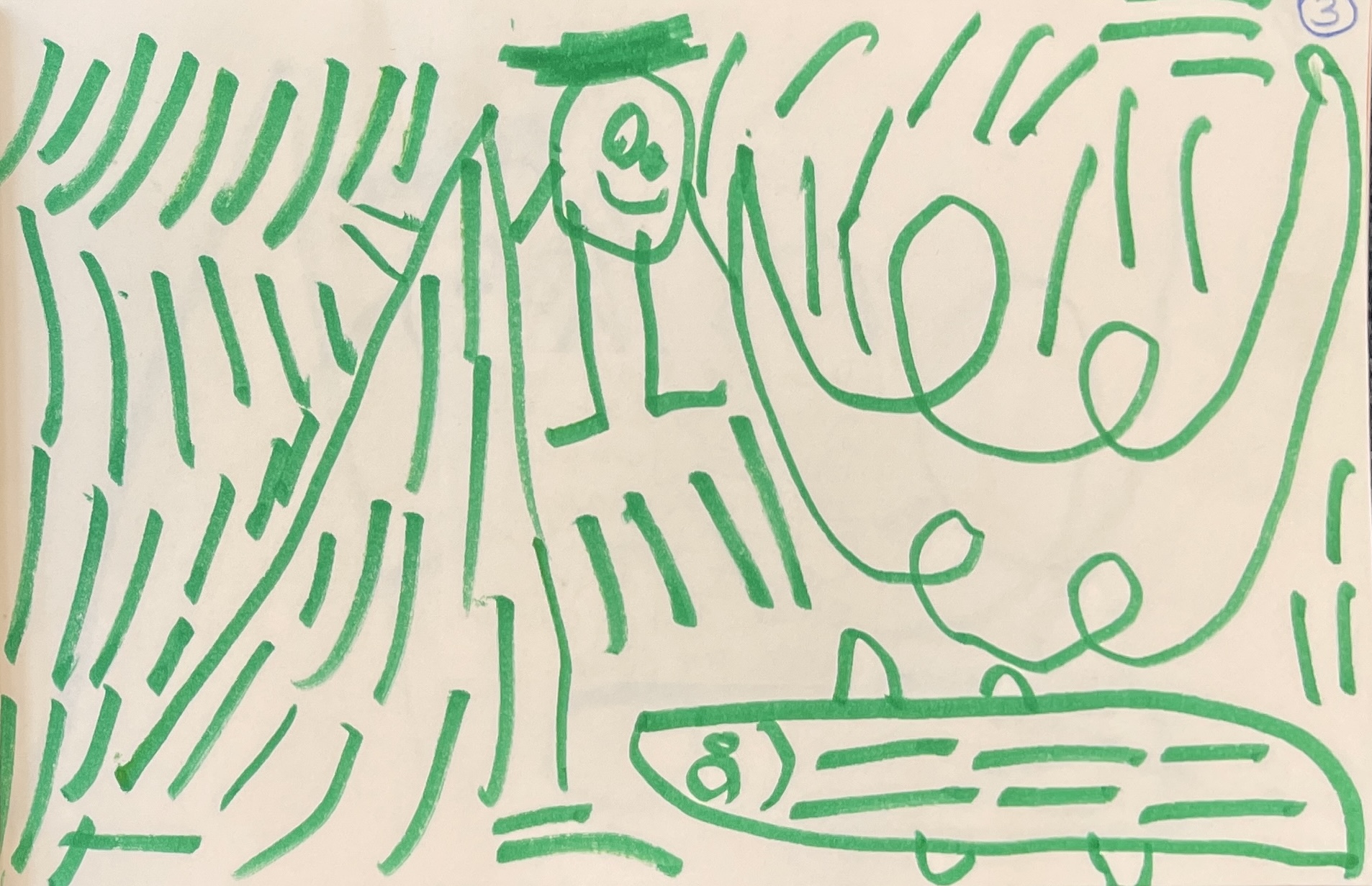
“The shark was going to eat me. I went to the mountains. Then I went to the slide. I had a sword so I could cut the shark.”
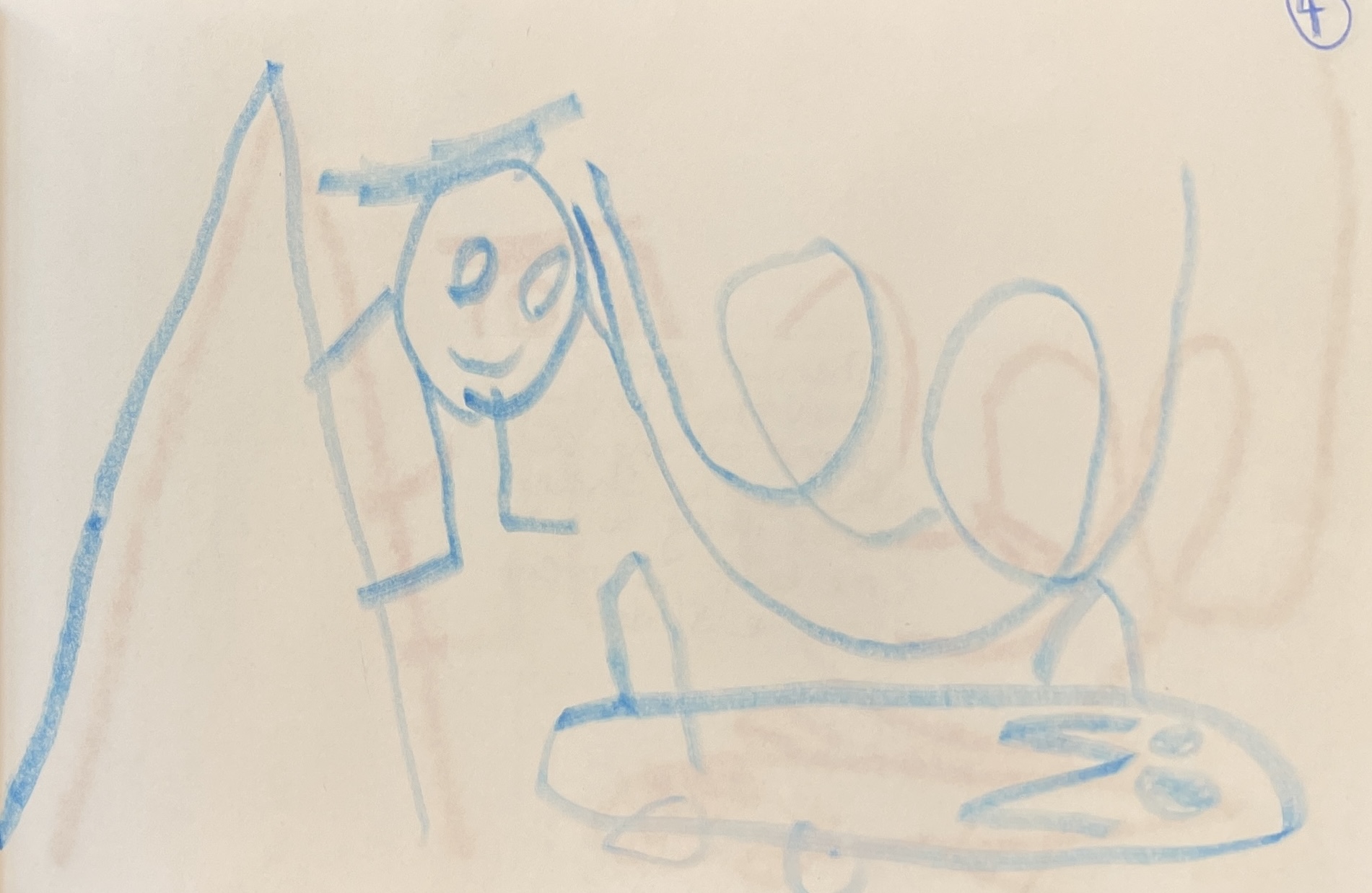
“Then the shark was going to eat me but I jumped in the mountain and I slide down. Then I did the slide and I cut him with my sword.”
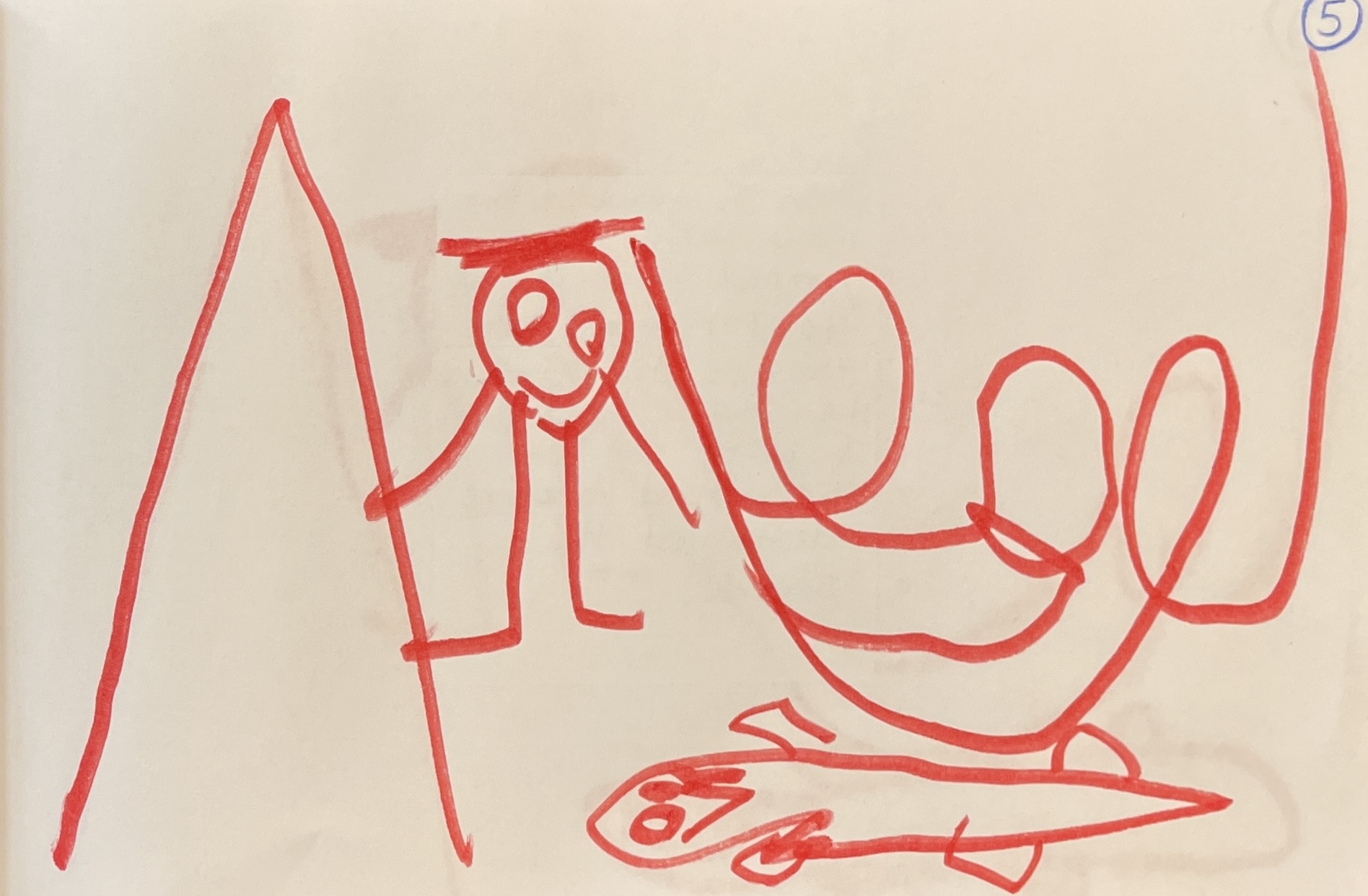
“Then I grab the mountain and I jump all the way high. The shark was going to eat me but I went in the slide.”
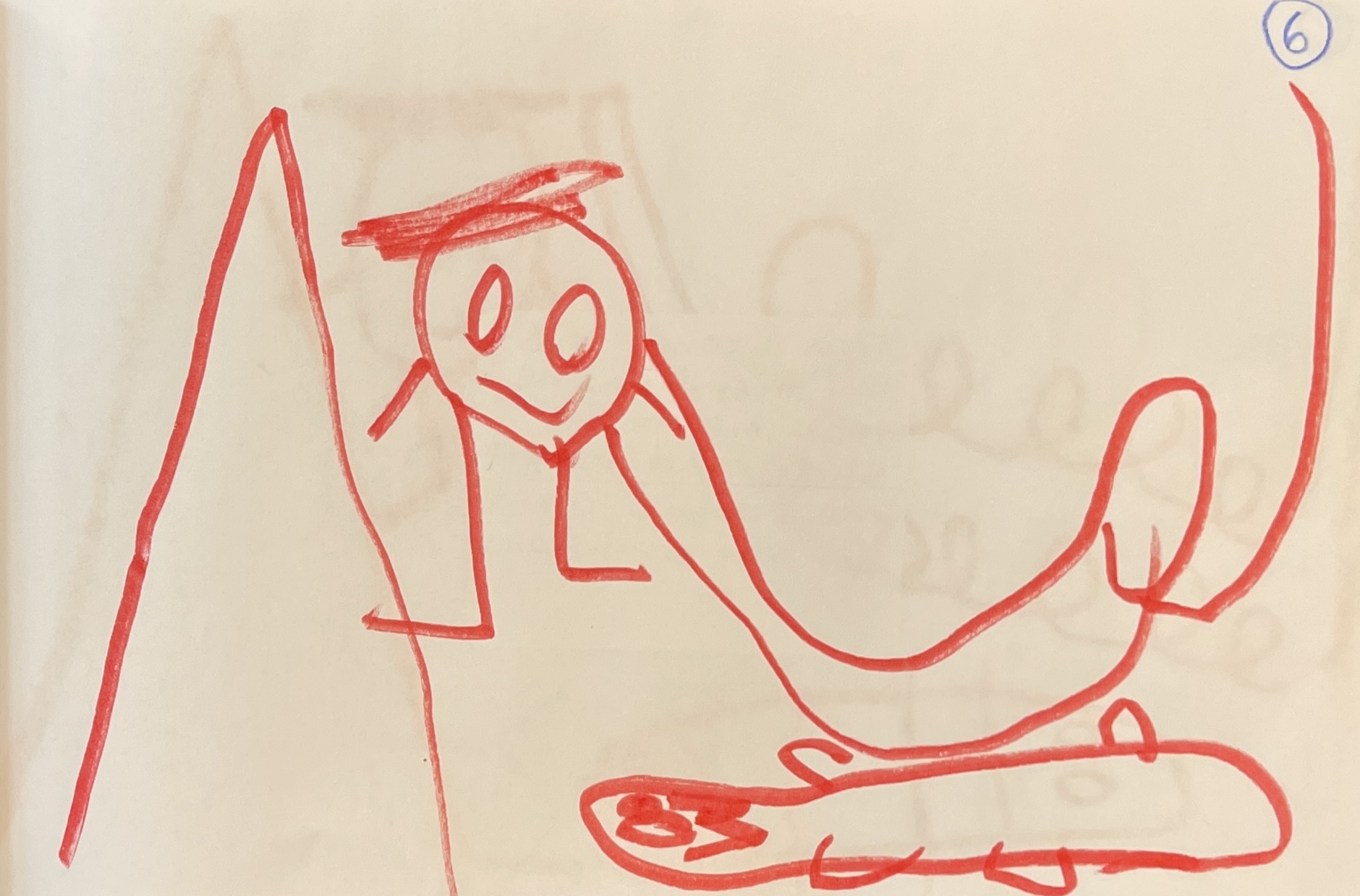
“Then I grabbed the mountain. Then I jumped so high and the Pokemons were going to save me from the shark. And then I went to the slide. And Arceus destroyed the shark.”
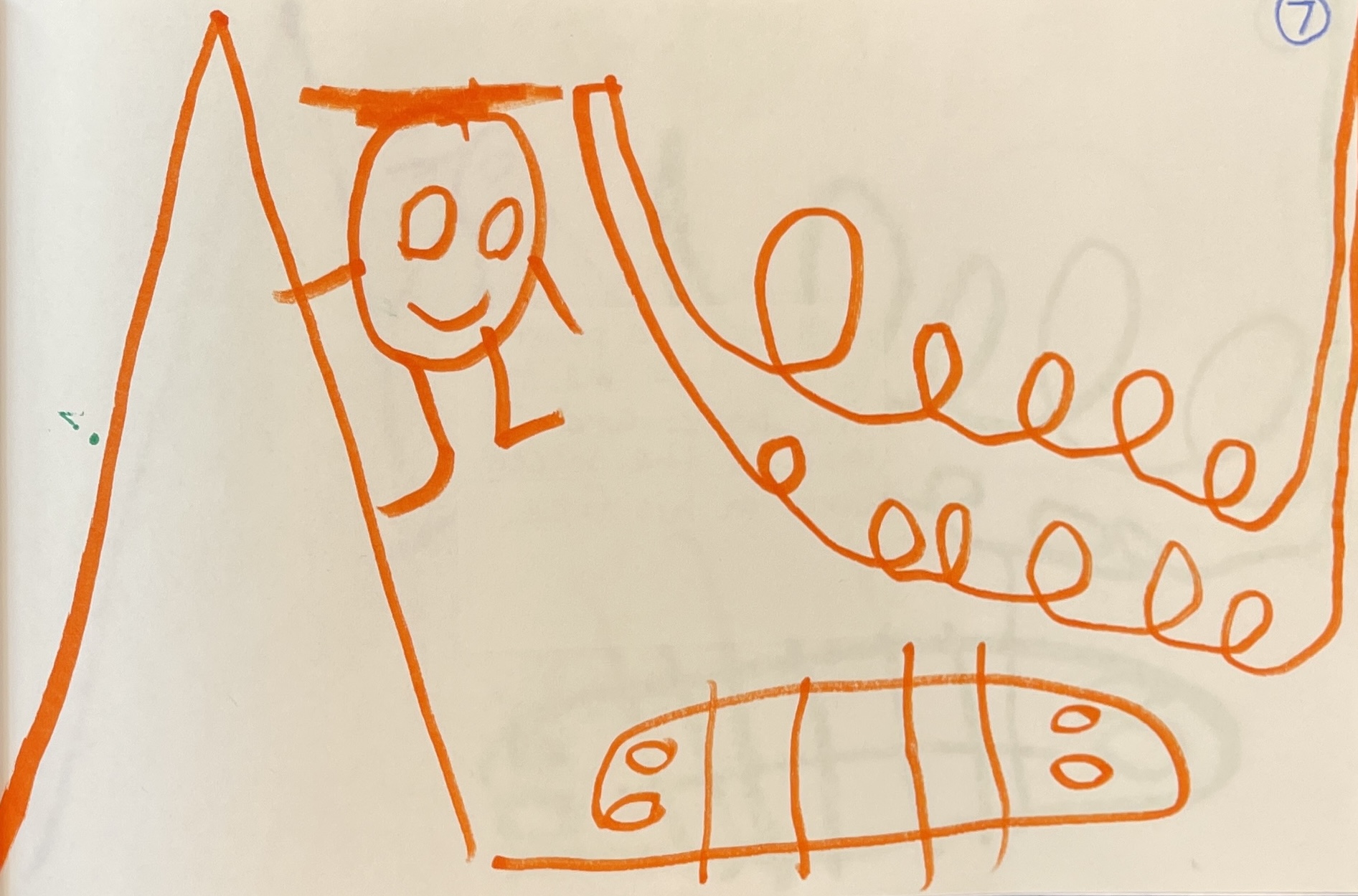
“Then a robot was my friend and he took me on the slide and he got me bubblegum for my birthday.”
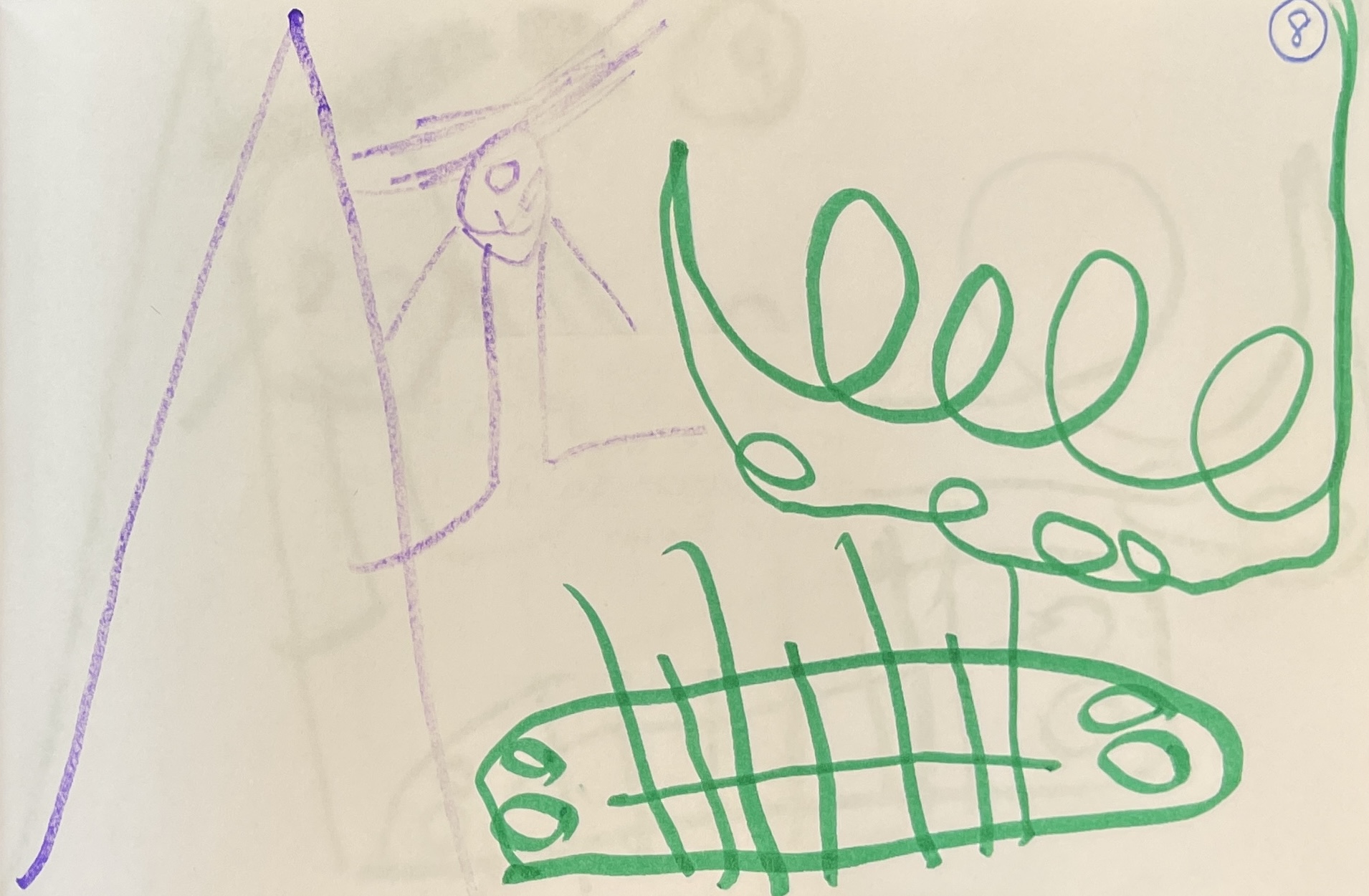
“And then a powerful robot take me to the park and I kicked the soccer ball in his face.”
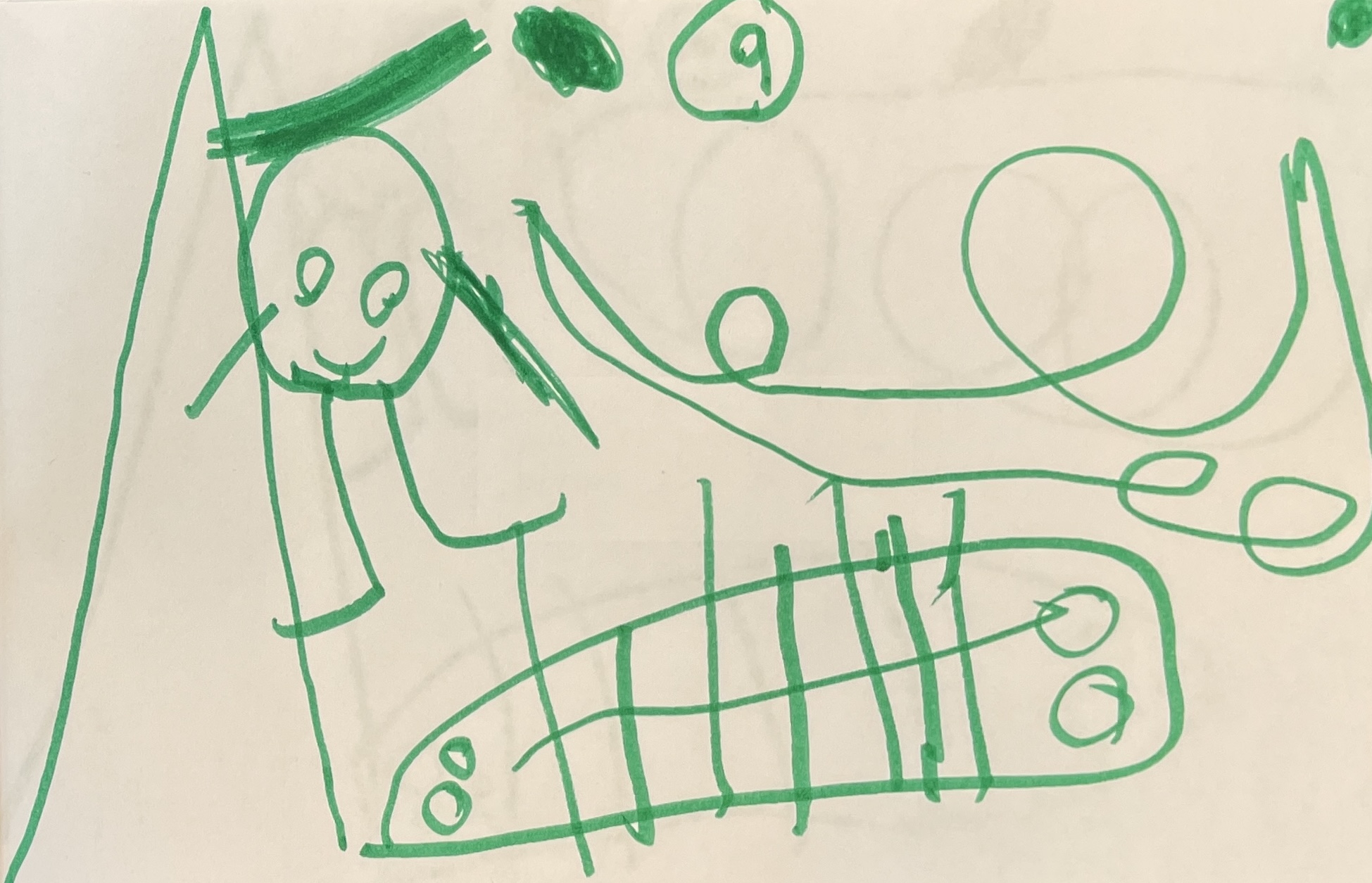
“Then a nice, nice robot was going to save me in the water so it could swim.”
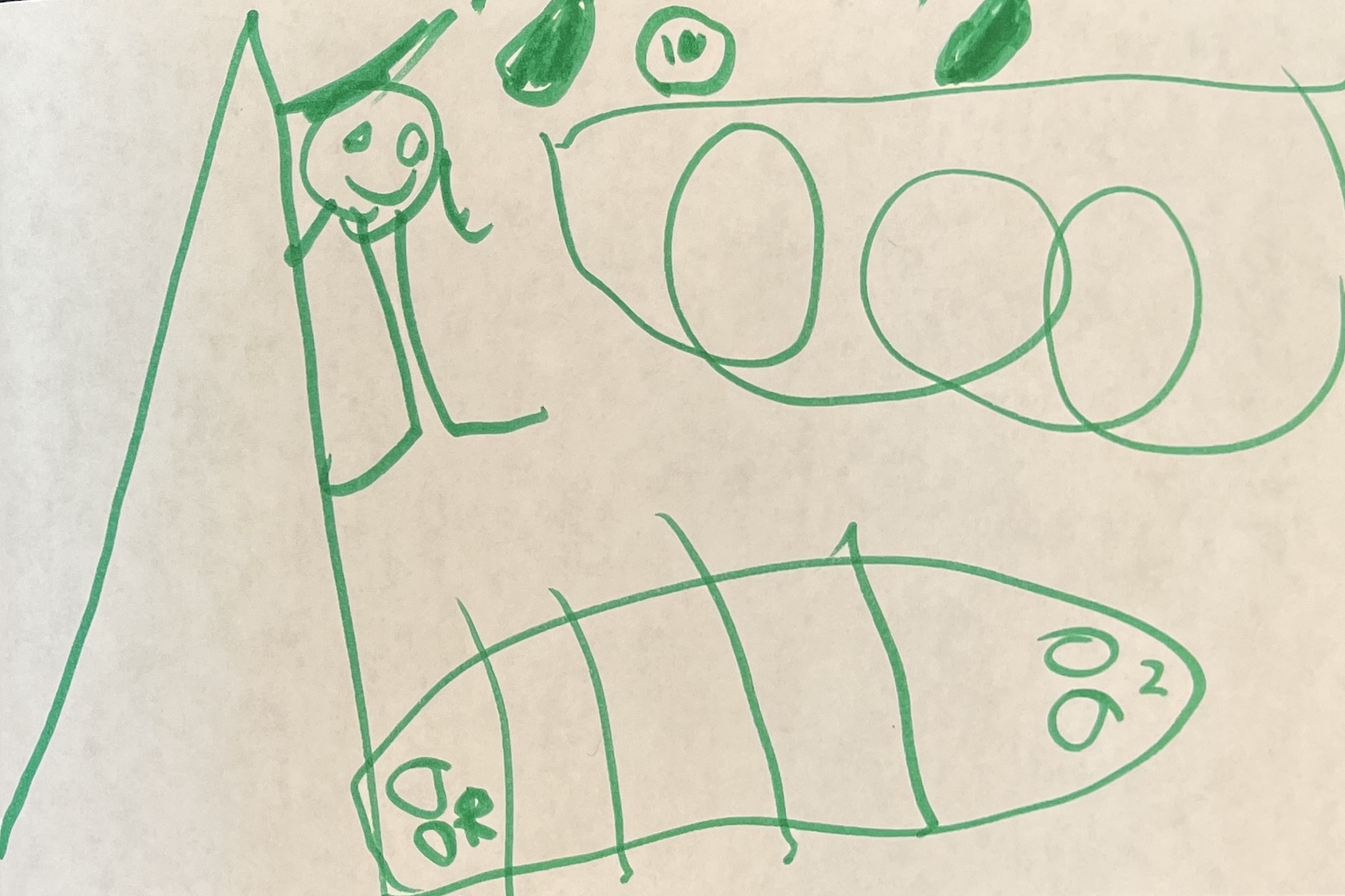
“And then a shark was going to save me in the world.”
The Bottom Line
When teachers provide opportunities for young children to tell stories through drawings and words, overlapping themes emerge that one might not have anticipated. From the above stories about rainbows and rain, and friendship and comings and goings, to those about sharks and their inherent dangers and the human condition to be at once fearful and fascinated by them, all are present in these stories. Young children are capable of communicating such richness and depth in their work, and it is our job as adults (teachers, caregivers, and educators) to notice it, nurture it, and celebrate it whenever we can.
Discover more from TWO WRITING TEACHERS
Subscribe to get the latest posts sent to your email.


