Estimated Reading Time: 4 minutes, 739 words
Primary Audience: Early Childhood Educators
The Context
I am always looking for opportunities to infuse authentic writing into my pre-k curriculum. Whether it’s drawing stories in blank books, telling stories together as a class, or dictating stories to a teacher, there are so many ways to bring writing to life in the early childhood classroom.
Recently, I thought about what I could teach my particular group of students who are all getting to the point where they know most of their letters and sounds, and are up for a challenge. I wanted to introduce labeling in a way that would be meaningful to my students and very concrete, so they could understand how to do it and start applying it in other contexts. Knowing that they will be doing a lot of labeling next year in kindergarten, I thought, “Why not give it a try now?”
The Details
To facilitate this process, I modeled thinking about something I did over the weekend and telling a simple story about it. Then I modeled drawing my story by including the people, places, and things in it. My story was about taking my two daughters to the tennis court to hit tennis balls. The people were my daughters and me, the place was the tennis court, and the things were the tennis rackets and tennis balls.
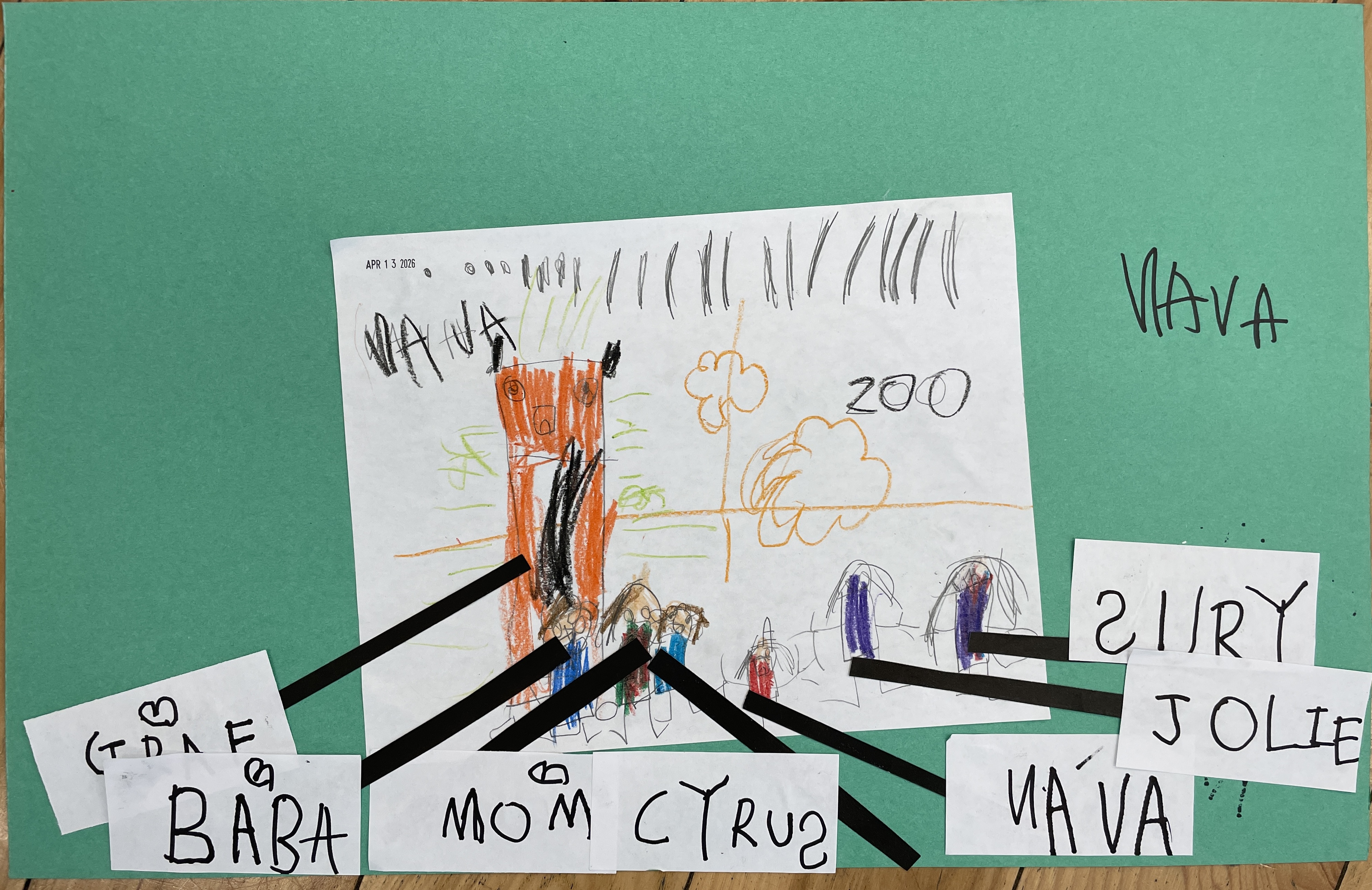
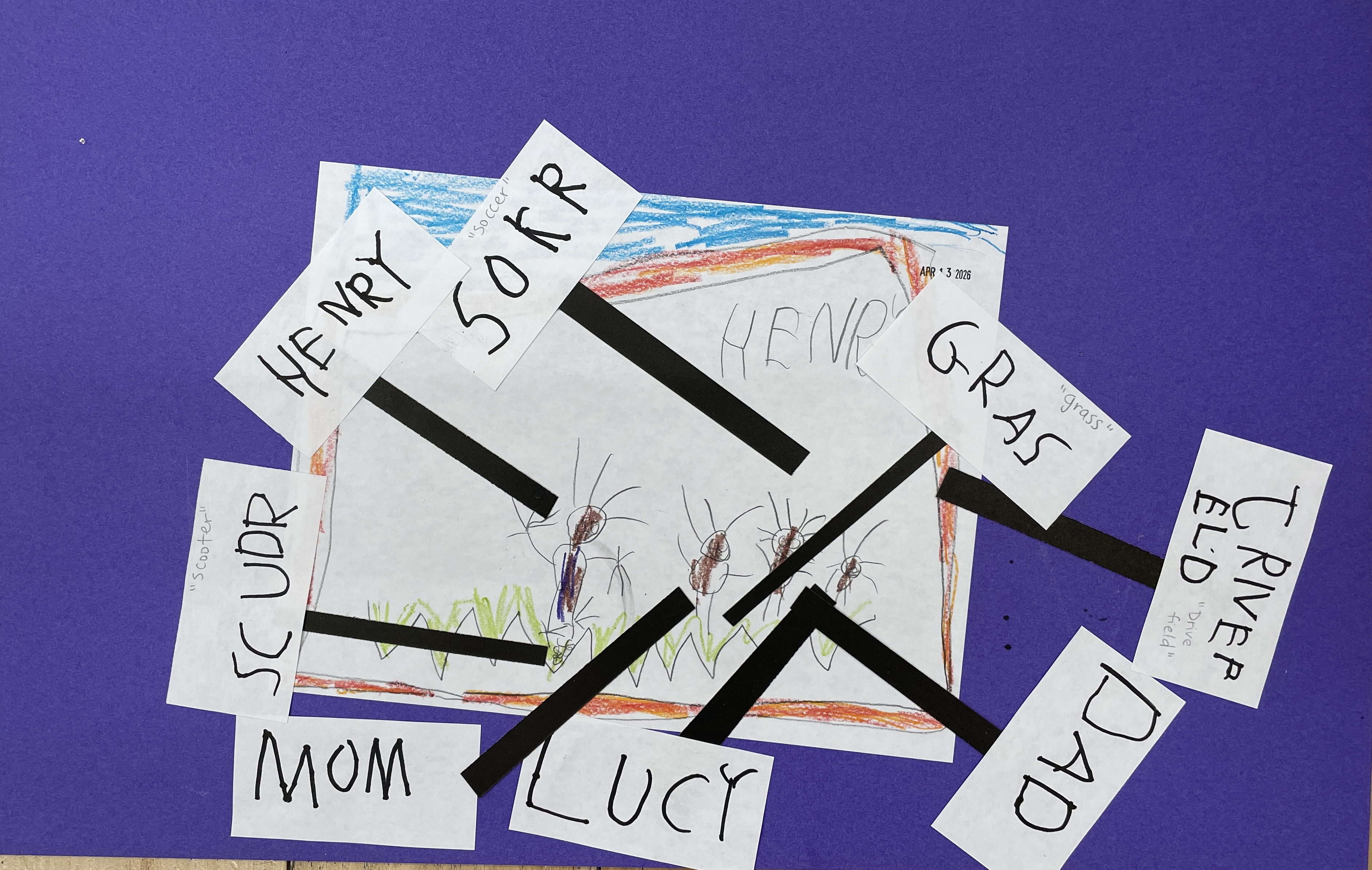
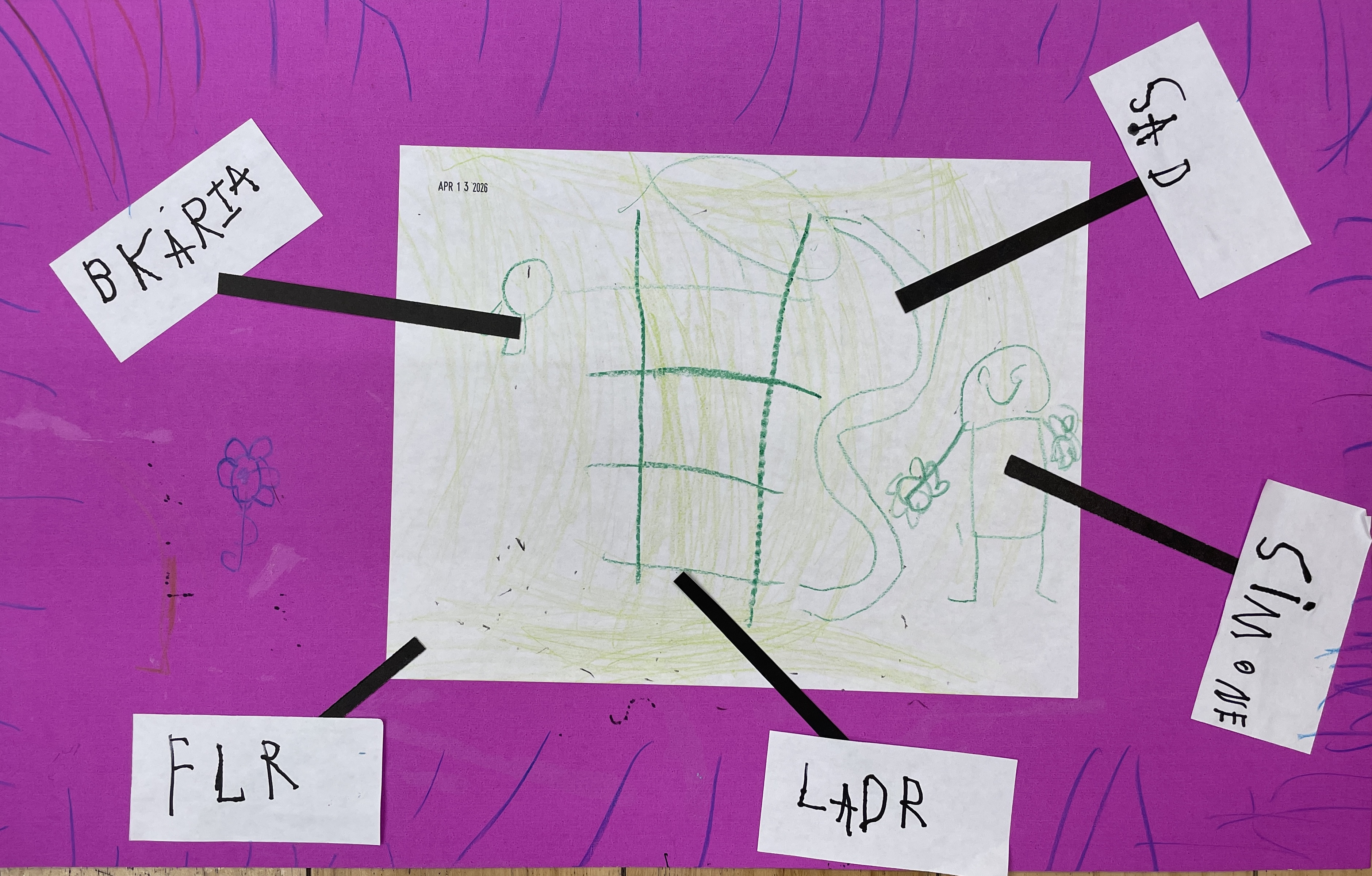
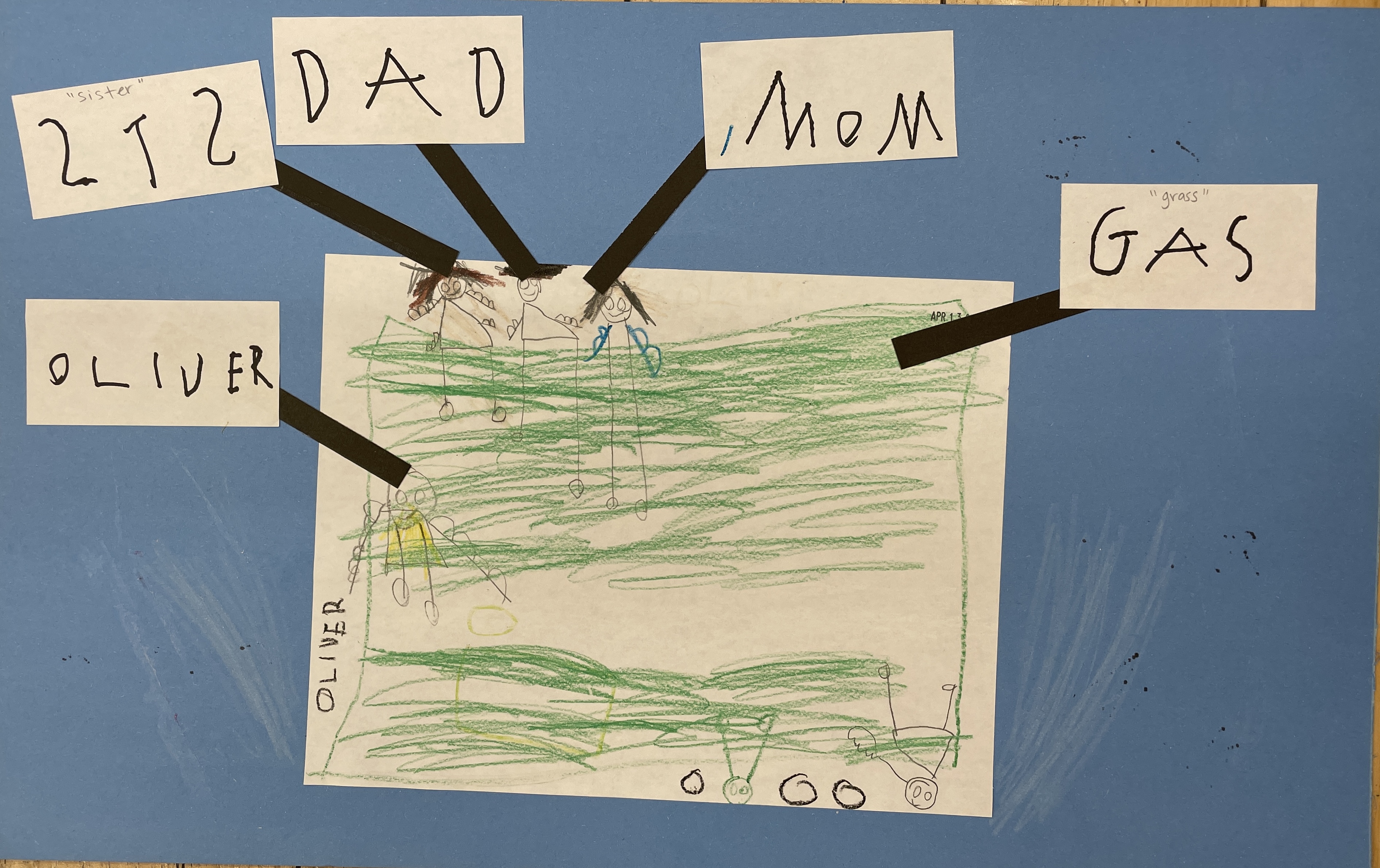
After drawing it, I introduced labeling. I said, “I want to label the people, places, and things in my picture so that someone else looking at it will know what everything is.” Rather than having them write directly onto their drawing, as I typically do in kindergarten, I thought of creating something very concrete for children to use to physically connect their labels to the parts of the picture they describe. I cut skinny strips of black paper for the “connecting lines” and rectangular pieces of white paper for the labels. As the students decided on something they wanted to label in their drawing, they would sound out the word on the label paper and glue it, along with the connecting line, directly to the part of the drawing it described.
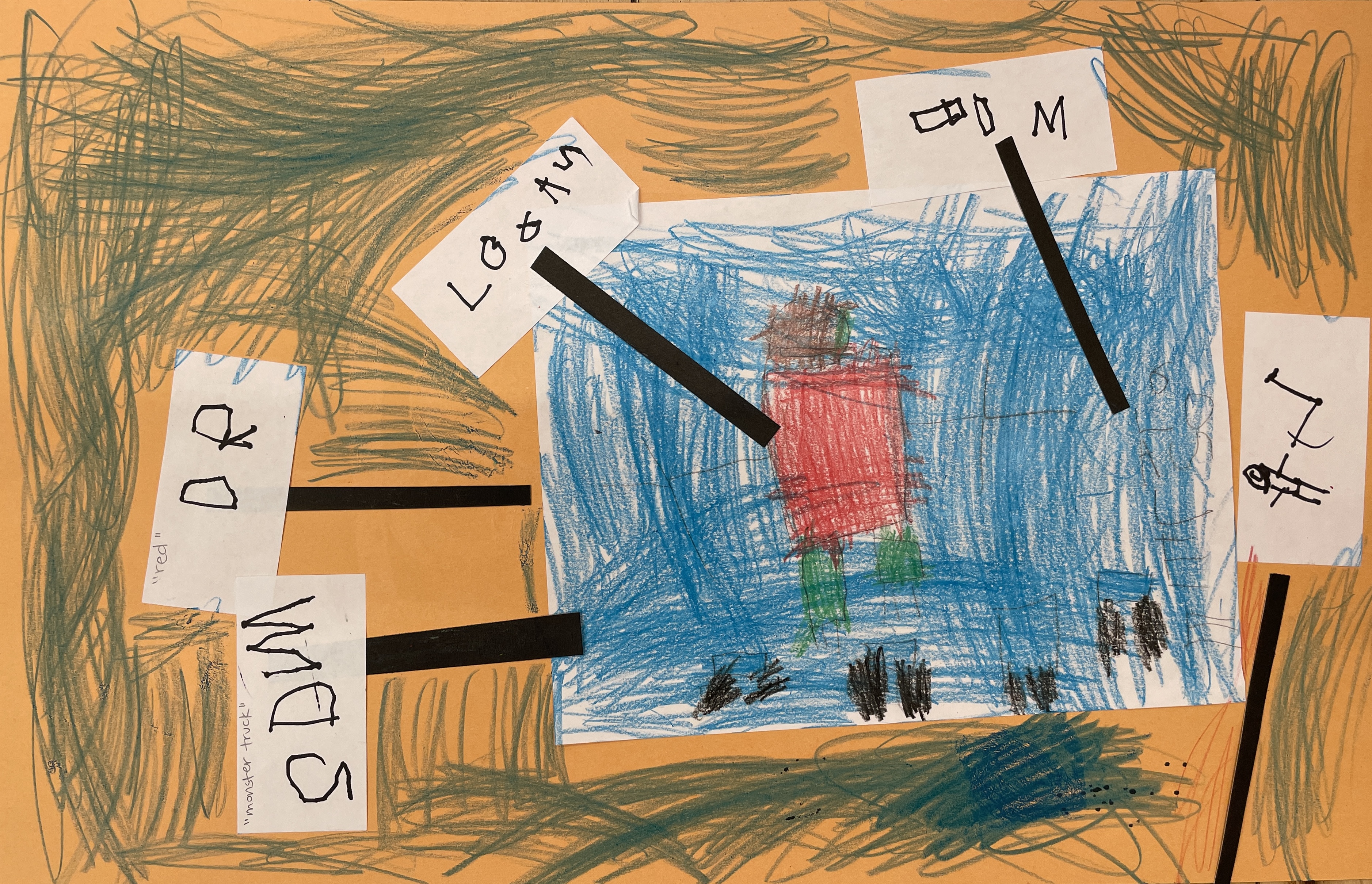
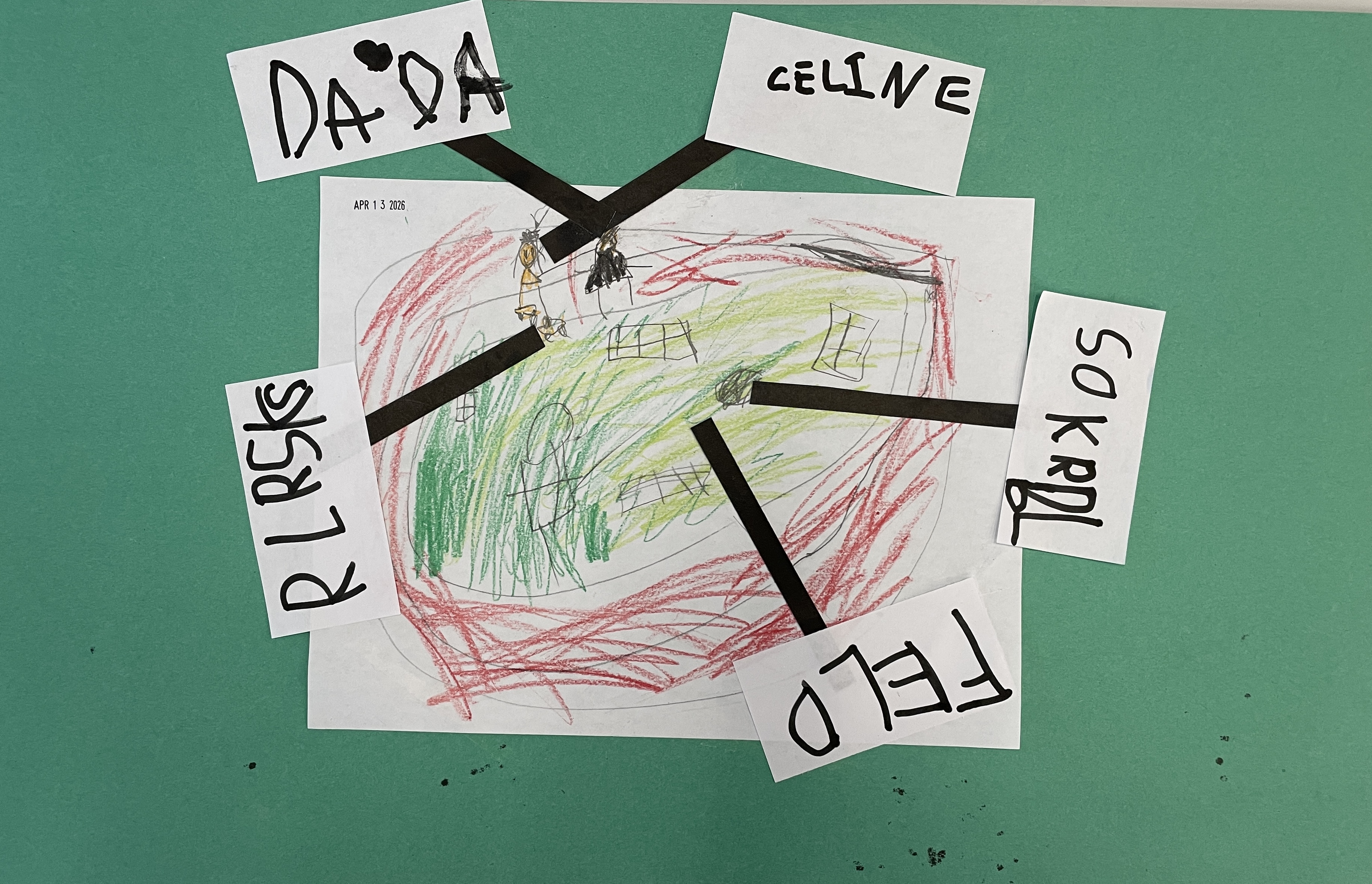
I wanted them to focus specifically on the people, places, and things (nouns) in their drawing to help them focus on the most important parts of their story. Many children labeled themselves and other people, typically family members (mom, dad, grandma, sister). Some children labeled the places where they actually were (soccer field, zoo, Greece), and most labeled the things they drew (skooter, ice cream, slide, roller skates). I hoped that children would use their emerging letter-sound correspondence to capture the first sound of each word they were trying to write. I was pleasantly surprised to see that most students attempted middle and ending sounds too!
The Impact
Did this method work? In hindsight, the organizational planning and fine motor components of gluing the connecting lines and label papers made the process cumbersome for some kids. But in the end, it was a good exercise in taking something symbolic (writing) and making it concrete by physically attaching the words to the picture parts. I hope that next time we do this exercise, children will be even more comfortable with the process. Eventually, it can turn into the kind of labeling they will do next year in kindergarten once the concept becomes more solidified.
What’s Next
The school year is nearly over, but I would like to find more opportunities for students to practice “labeling,” whether in the classroom or in other areas such as dramatic play or blocks. I hope they will begin noticing more signs, labels, and environmental print in the neighborhood, and make the connection to the work they’re doing in our classroom.
A word that has been coming up a lot in my classroom this year is “connect.” Kids will be playing with blocks or other materials and will say, “Do you want to connect?!” That means, do you want to connect your structure to my structure? I have been intrigued by this thread of “connection” as it has been developing throughout the school year. Perhaps teaching them to add labels to their work is my way of showing students one way they can “connect”-only this time it’s by connecting the words in their head to words in their work, and dare I say, to the larger world around them.
Discover more from TWO WRITING TEACHERS
Subscribe to get the latest posts sent to your email.


