Estimated Reading Time: 2 minutes Contains 487 words
Audience: Classroom Teachers 3-8
Students don’t just need to learn how to write; they also need to learn how to use writing.
The Context
I recently worked with students on a unit analyzing speeches from influential voices, past and present. It led to conversations about whose voice matters and how those voices are heard, and it inspired the ideas for this post. Kids are hungry for conversations about important topics that affect them. For younger students, this might look like naming feelings, asking for help, or expressing ideas around fairness. Finding the entry points to these deeper conversations can start simply, and one text I think is a perfect way for all ages is Say Something! by Peter Reynolds. By incorporating multiple literacies into our writing instruction, self-advocacy moves from abstract concepts to lived practice. Let’s look at a framework adaptable from grades third through eighth, why this matters, the essential elements of explicit teaching points, and how to structure practice around the topic of advocacy writing.
Catch Up Quick
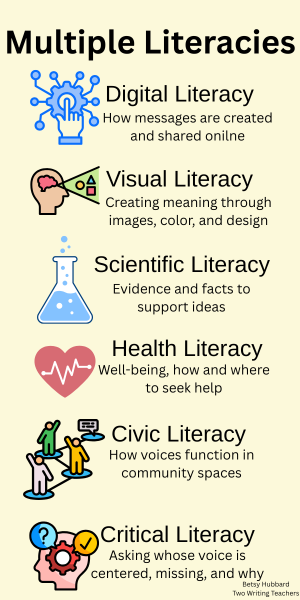
What are the different literacies?
These expand beyond traditional reading and writing to include more environments where voices are engaged. Examples can include digital literacy, visual literacy, scientific literacy, health literacy, civic literacy, and critical literacy. There is overlap in many areas, and although some of the meanings behind these literacies might seem obvious, with a greater understanding of their importance, we can more intentionally embed them into our teaching.
Why it Matters
When our instruction stays confined to a single common structure, we can unintentionally teach that writing is about correctness or completion rather than impact. When we incorporate multiple literacies, we allow for the opportunities for students to learn to:
- Consider the audience before drafting.
- Strengthen claims with credible information.
- Recognize bias and fairness.
- Communicate needs respectfully.
- Create messages intentionally.
The Big Picture
Anchoring advocacy work around a resource can help students build on their understandings and connections as you introduce and analyze how multiple literacies intersect. Using a picture book, like Say Something! by Peter Reynolds, works well for multiple age groups. Linked below are minilesson guides for six different literacies to introduce students to self-advocacy messages.
Starting Points for Teaching Self-Advocacy Through Multiple Literacies
In the starting points for teaching self-advocacy, the anchor text is a launch point, not an endpoint. The book is revisited in each minilesson. However, other anchor texts, videos, or images could be used in place of Say Something!
One Final Thing
Teaching writing using multiple literacies is not about adding more content. It’s about reframing writing as a powerful method of communication and a message. When students understand that literacy includes analyzing systems, interpreting information, and advocating for well-being, they begin to see writing differently. AND, when writing shifts from performance to agency, a classroom can shift as well. We aren’t just teaching them to compose an essay or write an opinion piece; we are teaching them to say something.
Discover more from TWO WRITING TEACHERS
Subscribe to get the latest posts sent to your email.


I appreciated the minilesson guides to help introduce kids to self-advocacy messages. It’s so important to practice self-advocacy while still in elementary school (as we’ve discussed). I love that you’re using a picture book to get those discussions about self-advocacy going.
LikeLike
I love the mantra “Say Something” around writing. Peter Reynolds’ book is a quick read aloud to get this idea across. Thanks for reminding me of the book and of the different literacies that come into play.
LikeLike