Estimated reading time: 4 minutes. Contains 781 words.
Target Audiences: K-12 Classroom Teachers, Literacy and Instructional Coaches
A Backstory
I have been hearing the phrase “quick wins” in education lately, and it seems we are all searching for them. A quick win is a straightforward change in practice or systems within your school that leads to prompt results.
In the spring of 2024, the leadership team in my building aimed to set a goal for the upcoming school year that would positively influence Tier 1 instruction. Tier 1 instruction is part of a Multi-Tiered System of Supports (MTSS) and is the foundation for whole class instructional practices in the general education setting. Based on surveys, interviews, and data collection, we decided to concentrate on enhancing vocabulary instruction throughout our building, from industrial arts to the ELA classroom. We selected a resource and embarked on a year-long effort to improve and deliver robust vocabulary instruction in every area. Overall, we achieved significant gains, a quick win for our middle school.
The Details
We chose Bringing Words to Life: Robust Vocabulary Instruction by Isabel L. Beck, Margaret G. McKeown, and Linda Kucan as the resource for a year-long book study. It served as an anchor for our conversations and inspiration. I gained new insight into my understanding of vocabulary, found resources that made implementation simple, and vocabulary took on the role of a main character in my classroom.
Examples in Action
One of the units I teach, a multi-genre unit, focuses on adolescence and what it means to be in the stage between childhood and adulthood. From this unit, I took Tier Two words (not to be confused with the MTSS tiers), which are the words that are categorized as frequent but more academic in nature. This list allowed me to determine how I would incorporate and advance my students’ understanding through our unit focus. Here are my three favorite ideas we used in my classroom, utilizing our Tier Two list of words.
Word Wizard Challenge
I selected three words from our unit list to concentrate on both inside and outside of our classroom. The Word Wizard Challenge motivates students to use, listen for, and search for words in their classroom environment and beyond. Four of my seventh-grade classes participated, and they were all winners.

As students noticed one of our word wizard words in a text, they could email me, or if it was while in our classroom, point it out for a class point. If students heard, read, or used the word outside of class, they would also communicate this with me. I required context for the use, or other teachers could email me at the request of students. This was particularly fun because multiple teachers got involved, sharing with me when our word wizard vocabulary was used in their classes too! The prize? Twenty minutes of free time in my classroom. A simple and free reward with huge dividends.
Vocabulary Scenarios
In partners or groups, students were given a word from our list and given the task of creating a skit or scene based on the word. They had to create their own context and the rest of the class was challenged with figuring out what word they were depicting. I could work this in whenever we had a spare five minutes here or there. Keeping the words on popsicle sticks (or index cards in a stack) made it easy to use as a quick time filler that was fun, collaborative, and sometimes hilarious.
Vocabulary Stories
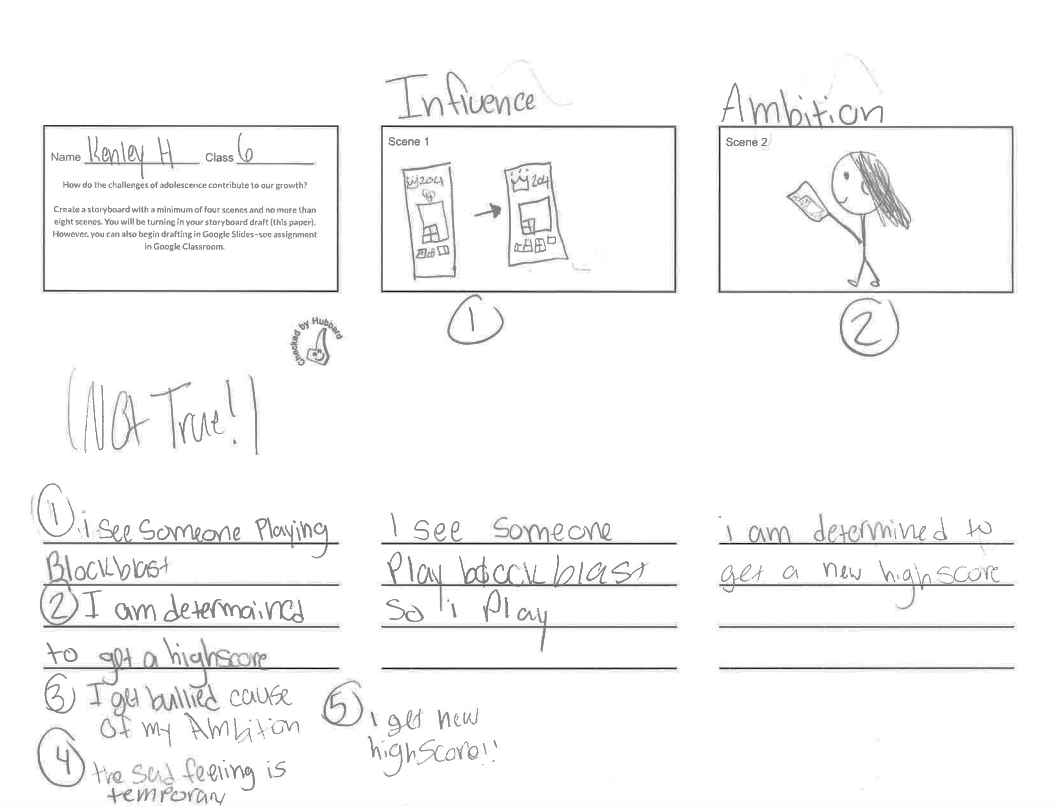
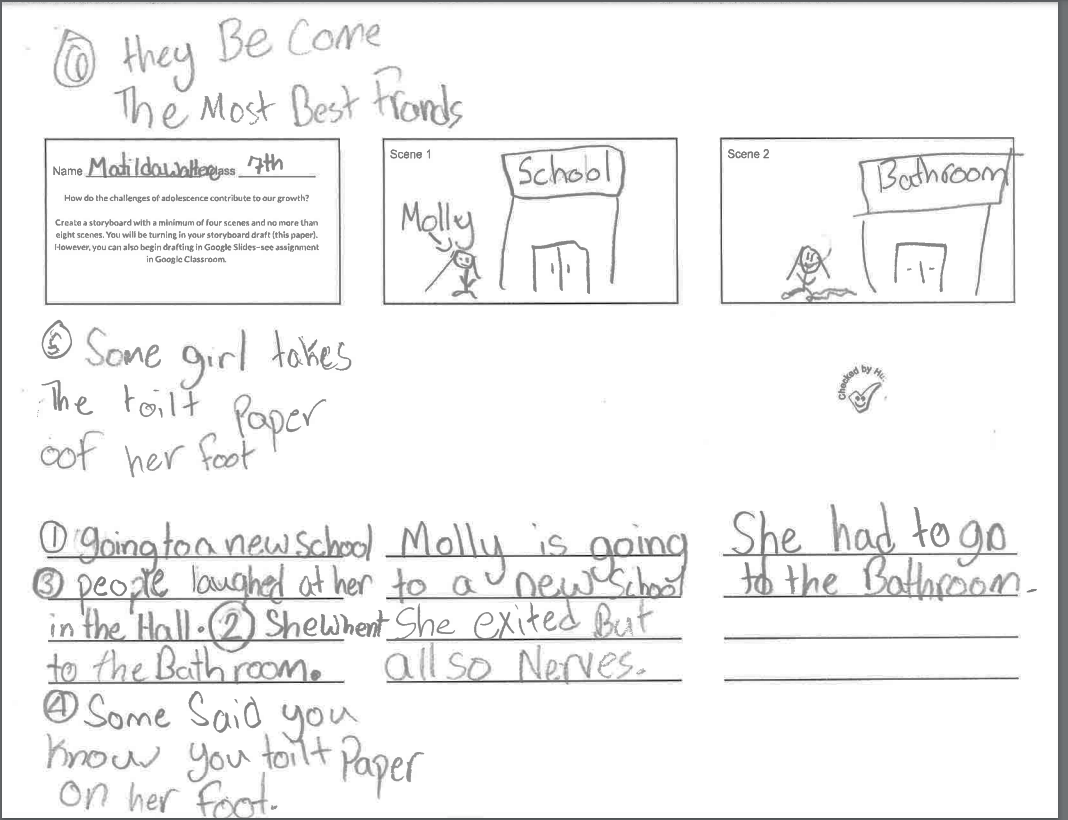
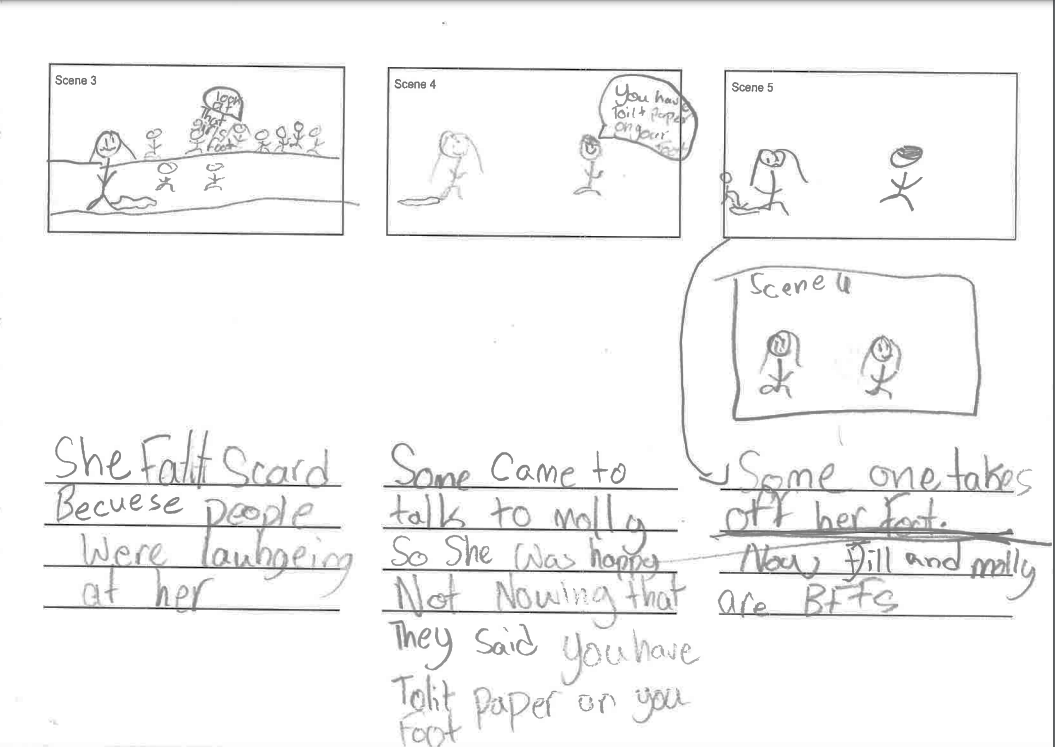
We took it even further when students began planning, drafting, and bringing stories to life based on our vocabulary words. Across multiple lessons, students created storyboards and incorporated our vocabulary words into as many scenes as possible, making connections between the words. Below are two seventh graders’ examples.

Here’s a Secret
One of my favorite new resources to use when I want to discover what Tier Two words exist within a text or unit I am planning on using in my classroom is Academic Word Finder. I can copy and paste any text into the site, and it will list out tier one, two, and three words within the text based on whatever grade level I choose. This is my favorite tool when I need help sifting through a text quickly.
Creating meaningful shifts in our Tier 1 classroom practices is a continuous process. Prioritizing vocabulary over the past seven months has strengthened my students’ word knowledge and engaged me in my practices, building my curiosity around vocabulary instruction. Investing in vocabulary development is a powerful way to make connections across writing and reading in our classrooms and beyond to other content areas, conversations, and enhanced learning.
Discover more from TWO WRITING TEACHERS
Subscribe to get the latest posts sent to your email.


