
Estimated Reading Time: 3 minutes, 640 words
Primary Audience: primary teachers
A Backstory: When I first started teaching, I taught the “ELL Newcomer Center” class at my school, a multi-grade primary classroom of all beginning and intermediate English learner students that required me to infuse language development into every part of our day.
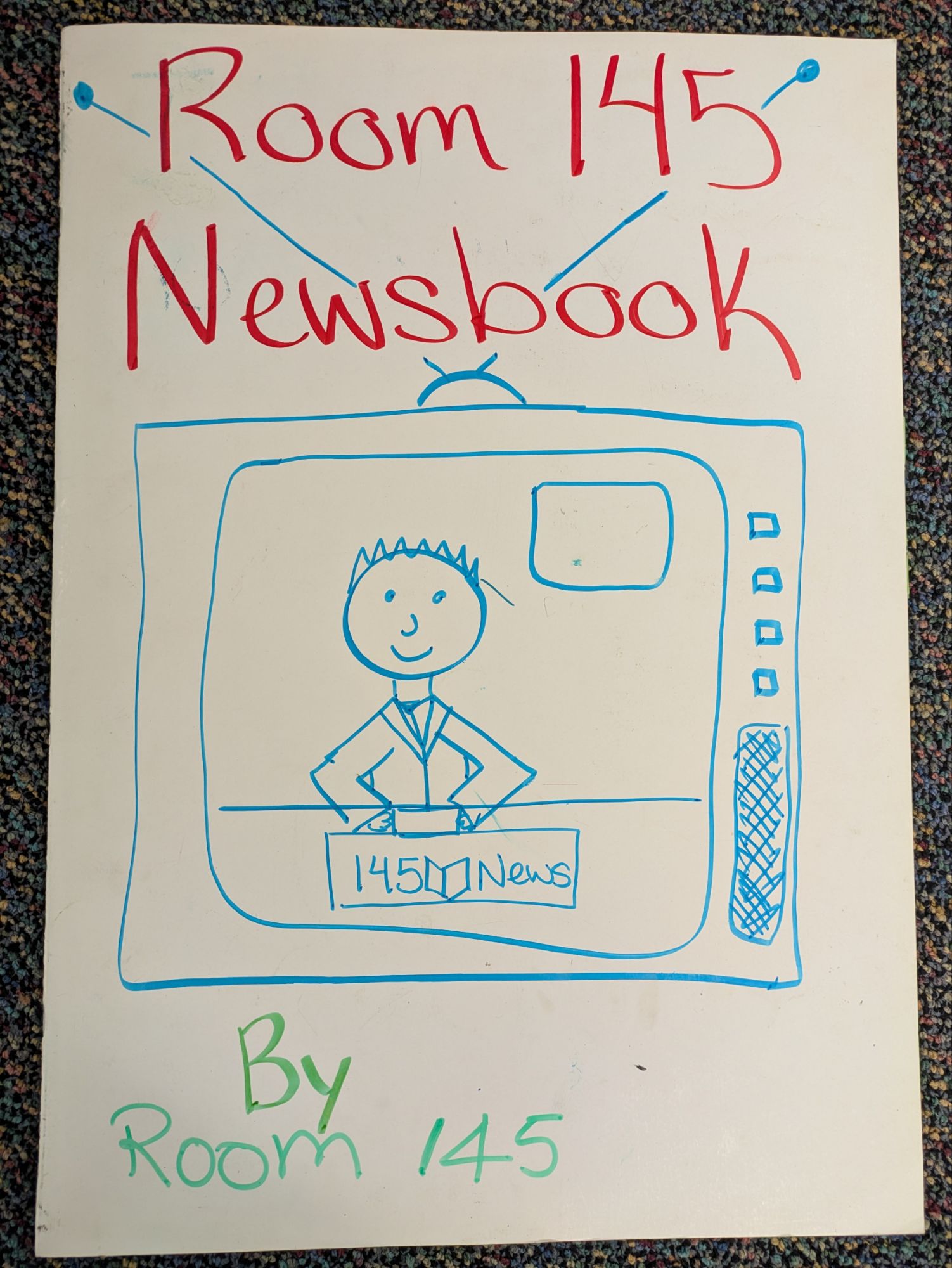
The Class Newsbook is a daily routine I developed to include all four language domains: listening, speaking, reading, and writing. It quickly became one of my favorite parts of the day not only because I love interactive writing, but also because by sharing our news, we learned so much about each others’ lives outside of school. It is a foundation for creating and sustaining a strong classroom community in any primary classroom.
How It Works:
1. Teacher posts a blank sentence strip on the board or easel. Students get their whiteboards and markers and sit with their partner in the meeting area. Start by reading the last few pages in the class newsbook all together.
2. Students share their news with their partner. At the beginning of the year, we talk about what news is: something exciting, fun, sad, scary, out-of-ordinary happening in your life. We practice the routine of asking each other, “What’s your news?” and listening carefully to our partner.
3. Teacher draws a name and that student (partner A) shares their partner’s (partner B’s) news with the class. This holds students accountable for listening to what their partner says. Then partner B shares partner A’s news. Partners can help each other as needed (such as whispering reminders), but each student is expected to report out their partner’s news and not their own. Repeat with a few more partnerships as time allows.
3. Teacher decides what news to write about for the day (trying to rotate equally through students, but also taking into consideration special events like birthdays, significant family news, etc.). Students say the sentence orally with the teacher and count the number of words in the sentence. Repeat the sentence again while touching where you will write each word on the sentence strip. This might sound like…
“Today we are going to write about Ana’s new baby brother. We will write ‘Ana has a new baby brother named Elias.’ Say that with me: Ana has a new baby brother named Elias. Now let’s count how many words are in our sentence. Hold up a finger for every word we say…”
4. Interactive writing time! With teacher guidance, students write the sentence word by word on their white board. The teacher strategically invites students to write part or all of certain words on the sentence strip, and the teacher writes the other parts. While writing, focus on:
- Stretching out words and writing all the sounds
- Conventions: capital and lower case letters, spaces, punctuation, etc.
- Rereading what you have written so far as you write
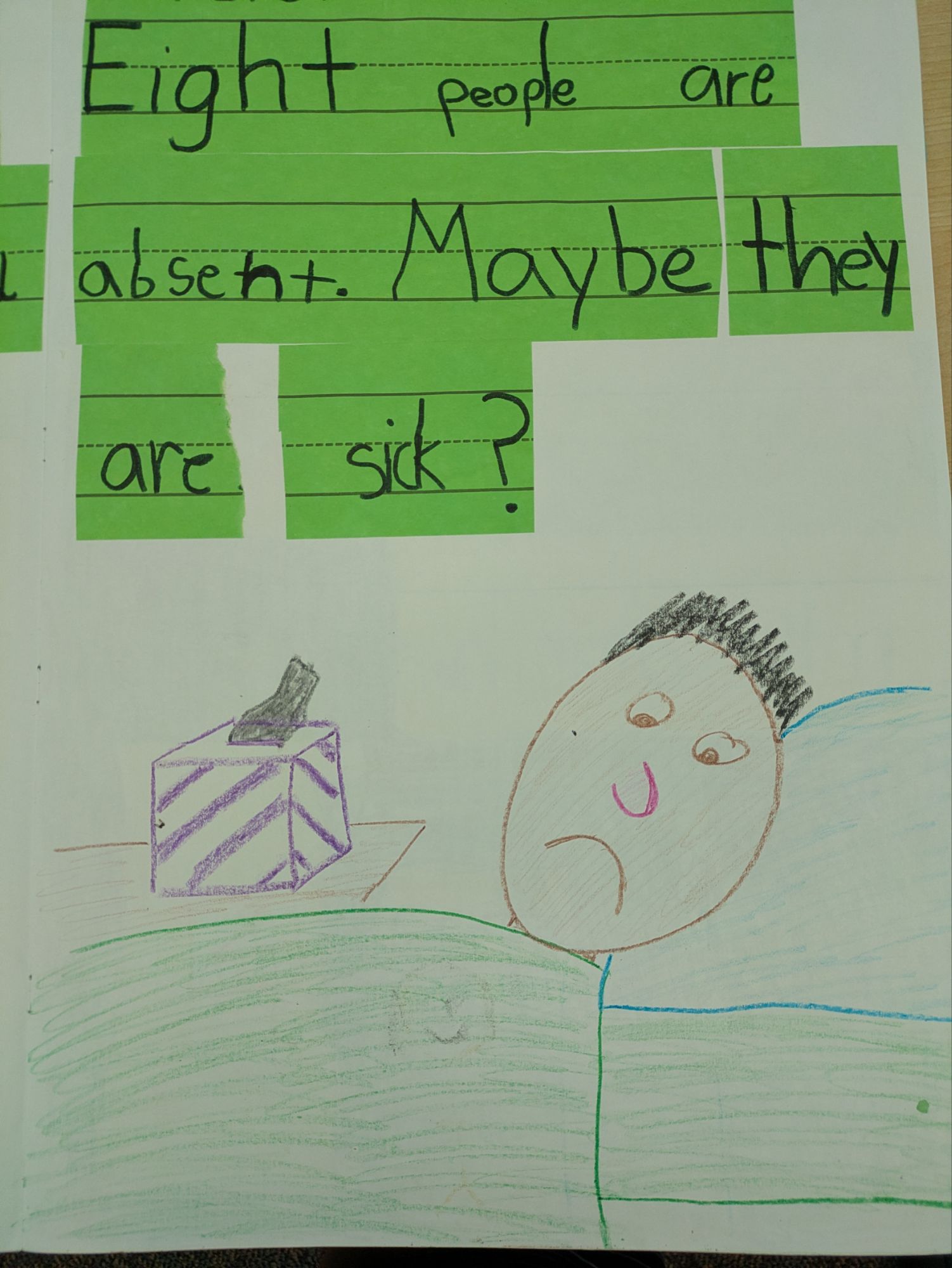
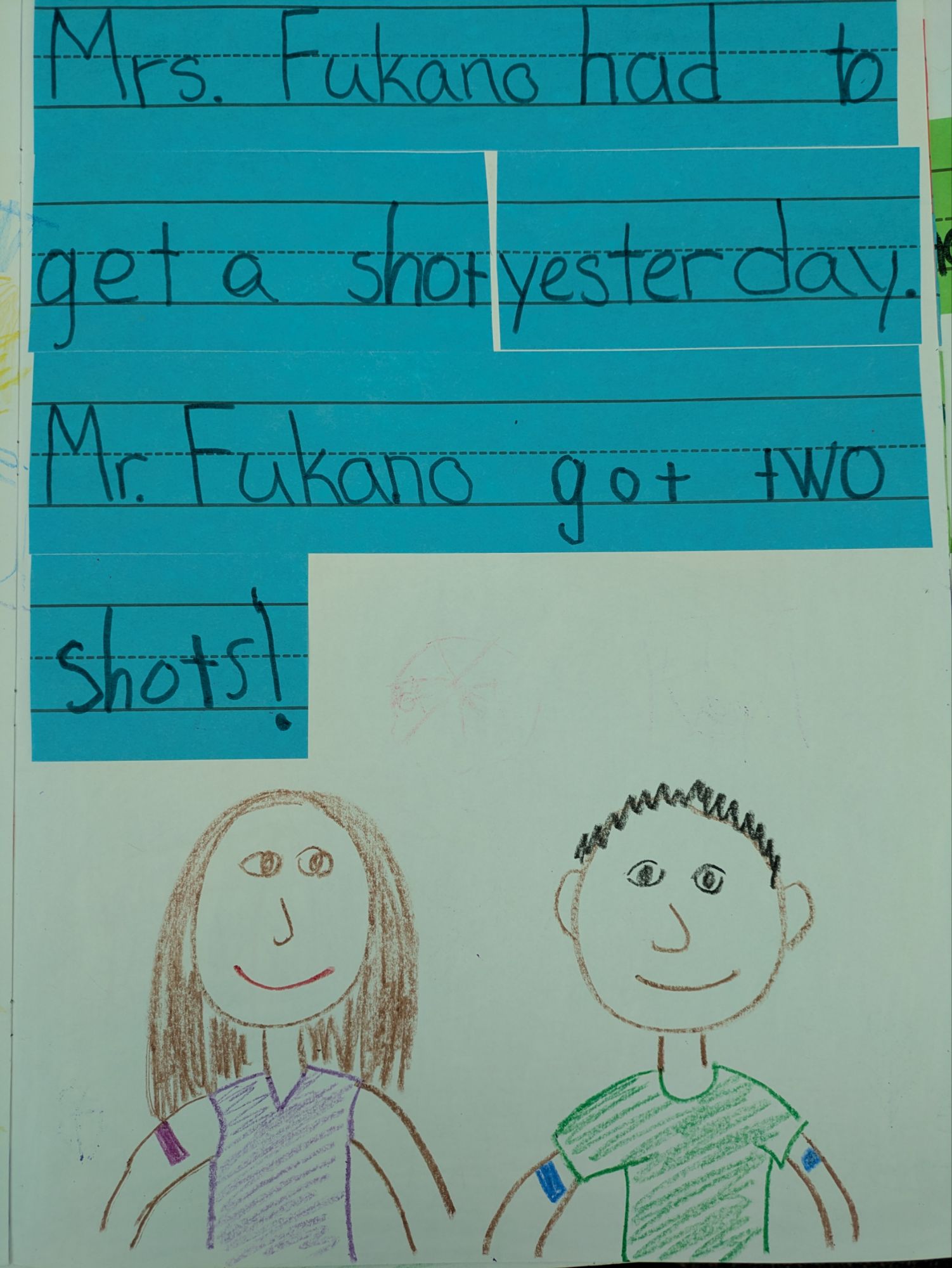
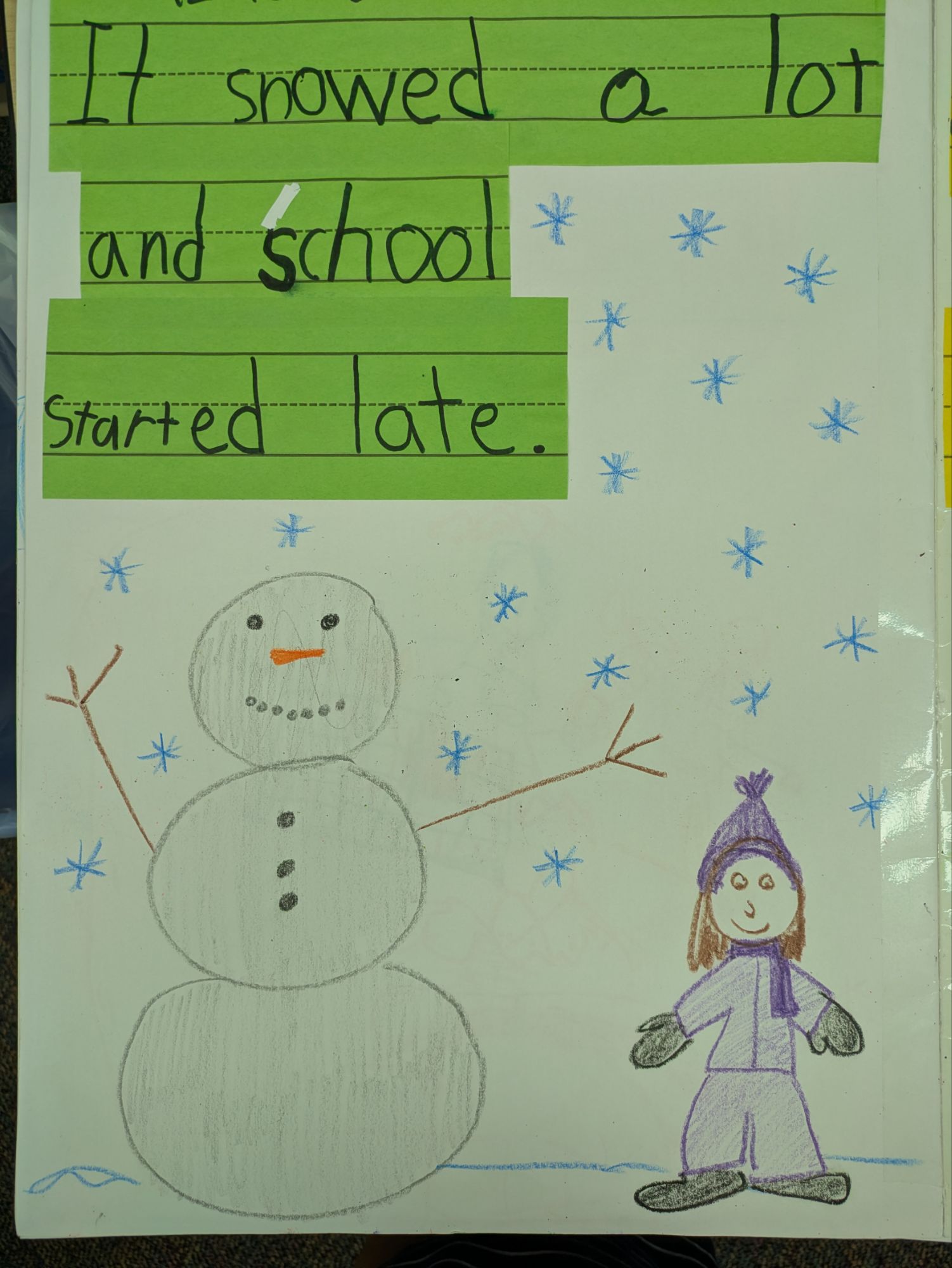
5. When the entire sentence is written, read the sentence multiple times with the class.
6. Later, when you have a minute, glue the sentence strip into the big book. The student who it is about makes an illustration for that page of the book at a time that makes sense in the daily schedule.
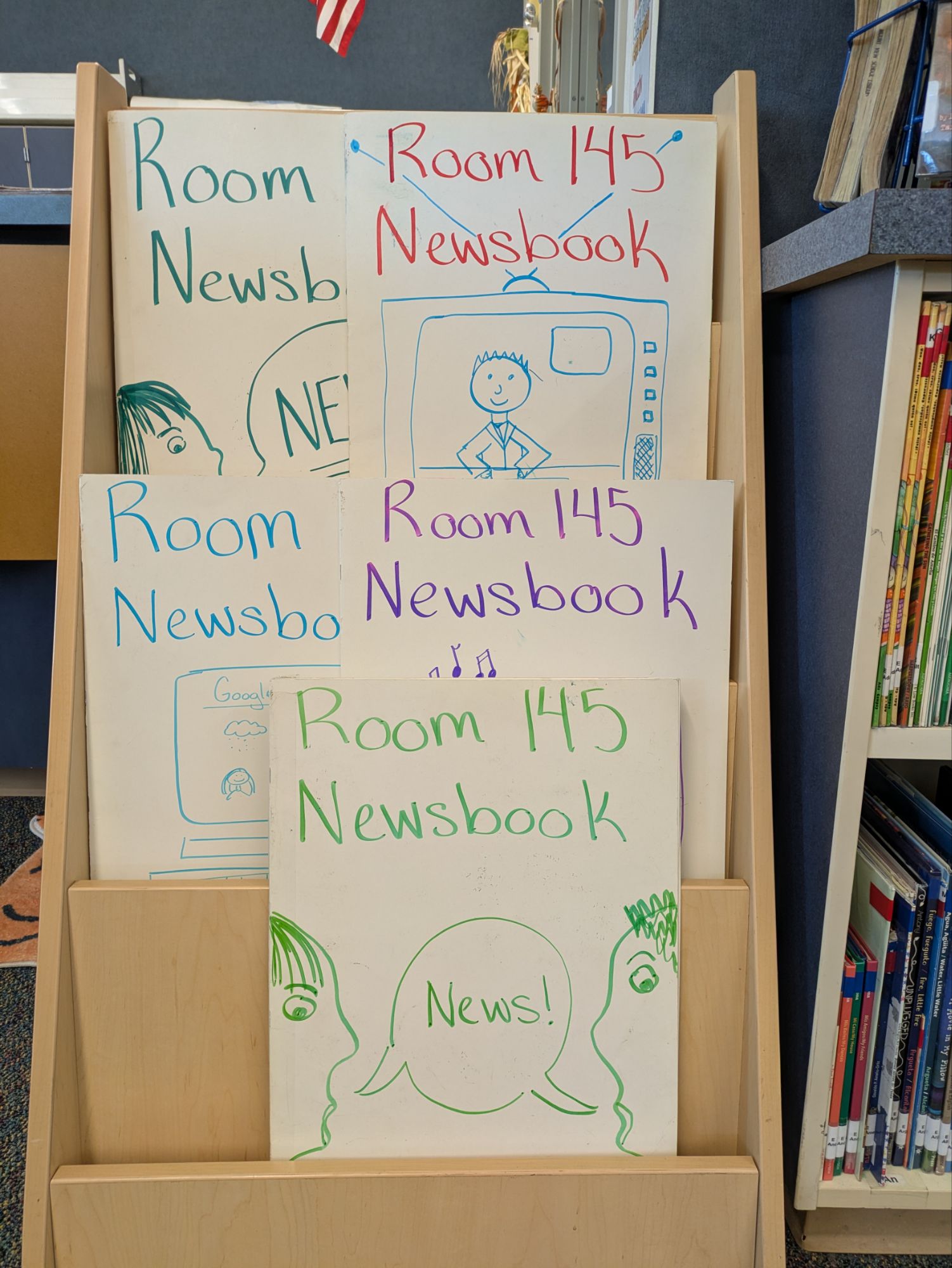
Class Newsbooks lived in our classroom library all year long. Whenever one’s pages filled up, we started a new one. Students were free to read the newsbooks during independent or partner reading time, and they were always popular. Since the whole class was involved in writing every page, and we reread several pages together every day, every student felt successful reading the Class Newsbooks, another reason I love this routine so much!
Go Deeper: Want to learn more about interactive writing? Check out these past posts:
- Reminders About Interactive Writing by Leah Thomas
- Step Up Interactive Writing (…And Sneak In More Spelling, Vocabulary, and Grammar) by Pam Koutrakos
- Possibilities for Interactive Writing in a Bilingual Classroom by Jenna Komarin
Discover more from TWO WRITING TEACHERS
Subscribe to get the latest posts sent to your email.


