Estimated Reading Time: 4 minutes Contains 665 words
Audience: Instructional Coaches and Classroom Teachers K-8
The Context
There are many crucial elements when teaching writers to spell with automaticity and semantics. Morphology is a branch of linguistics that connects and intersects through reading, writing, spelling, and vocabulary development, and is defined as the smallest units of meaning within words. However, there are broad misconceptions about when and where morphology is most beneficial. For instance, believing that phonics, though essential, is enough for fluent spelling, or that morphology is about memorizing affixes, or that it’s something for the upper grades.
Why it Matters
Morphology is a foundational skill that provides an anchor to word meaning and spelling. Many words cannot be spelled through phonics alone because of etymology and morphology. This barrier can be discouraging to young writers when wanting to take a risk with word choice or a more sophisticated voice. Becoming a risk-taking writer requires building blocks of knowledge and understanding, as well as confidence. Explicitly teaching morphological patterns takes students beyond memorization, another critical part of learning, and adds brain-based connections writers can draw from long after the foundation is laid.
Let’s debunk some misconceptions with quick, ready-to-go classroom tips to build morphological awareness. These activities and strategies just scratch the surface and propose a new spark of inspiration.
Sketch the Meaning (K-2+)
- Time: 3-5 Minutes
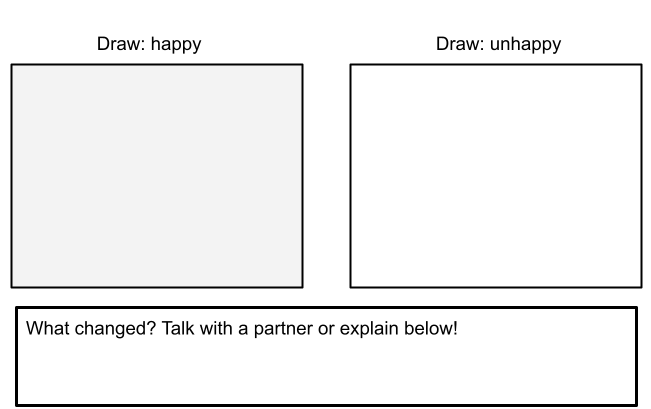
- Teach: Changing a base word can change its whole meaning!
- Purpose: Build early awareness of word structures and focus on how the meaning of a word can change.
Making Word Sums (3-5+)
- Time: 3-5 minutes
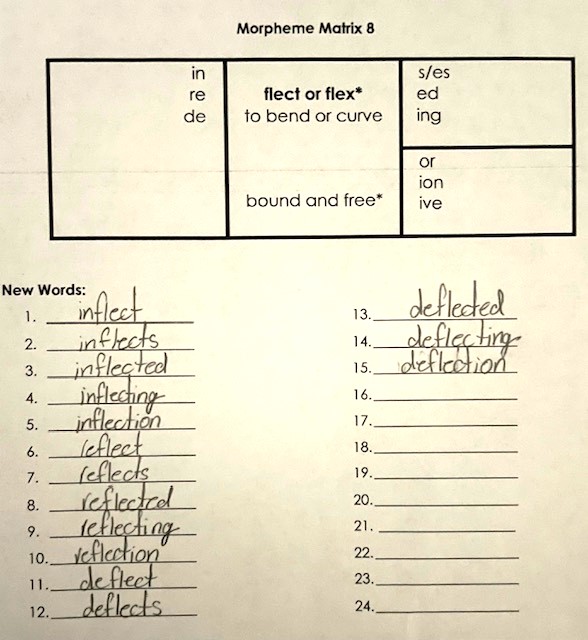
- Teach: Refer to the resources in the “Digging Deeper” section of this post regarding morpheme matrices. Teach and demonstrate how to use variations of affixes to create new and meaningful words with one base or root.
- Purpose: To build word flexibility, awareness around the structure of words, and build automaticity with spelling patterns through practice and word exploration.
Sentence Expansion
- Time: 3-5 minutes
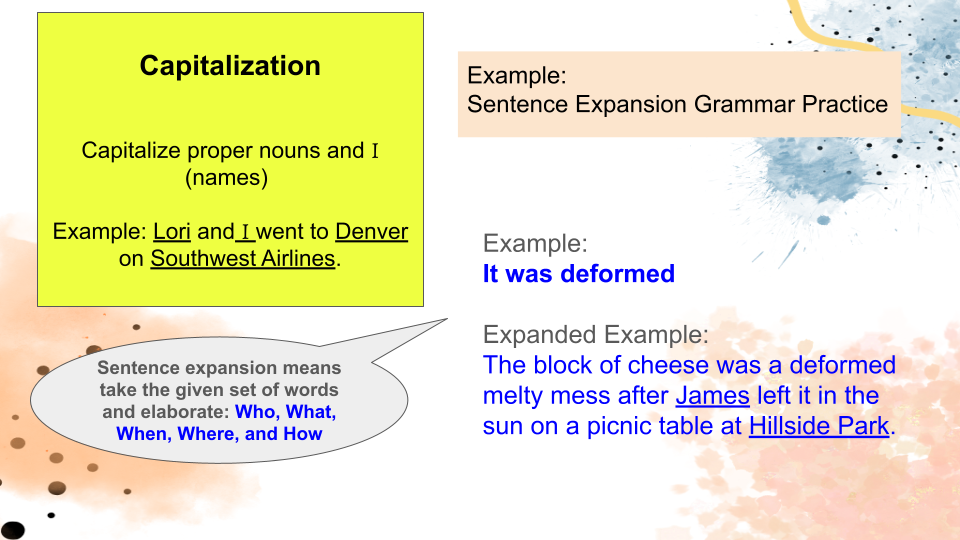
- Teach: Students take a phrase or clause that includes a word with a Greek or Latin Root that has been taught. Encourage students to change the form of the word and expand the sentence.
- Purpose: Encouraging sentence-level revision that reflects more sophisticated writing with detailed meaning.
This is an example of something I do in my seventh-grade classroom every week. We have weekly morphemes, and each week we do a sentence-expansion activity using a grammar rule from the book Grammar Keepers (cited below). I use this resource to choose a grammar focus and embed morphology into the weekly routine. I’ve included multiple slides from the lessons I have done in class as a starter for you. It can be adapted to fit any grade level.
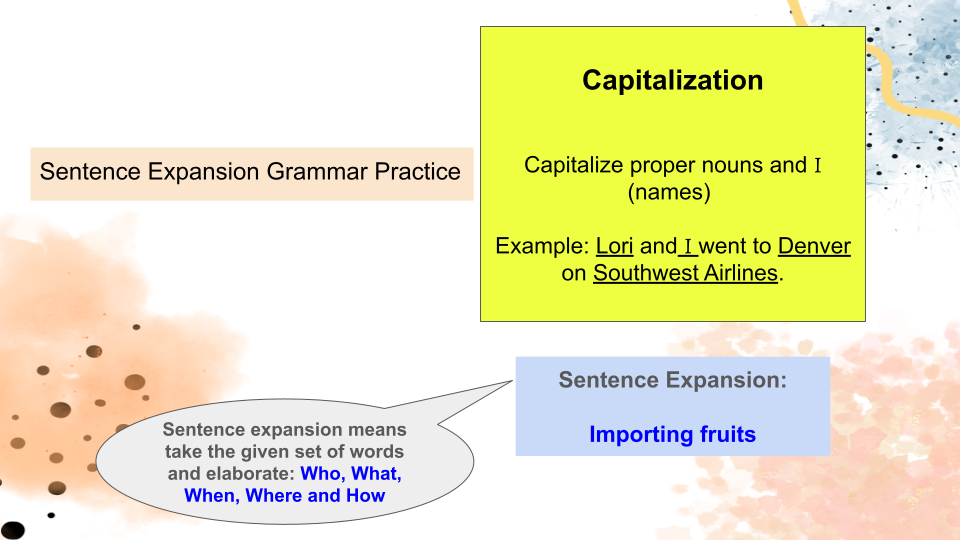
Click here for the set of grammar and sentence-expansion slides I use in my classroom.
Morphology is a powerful lever we can use as educators in everyday teachable moments. Start small, modeling how to use a morpheme matrix to build words, or how affixes change meaning through sketches and discussion. These are just a few ways to embed more morphology into your day to build spelling routines and deepen your writers’ word-level understanding.
Dig Deeper:
Bernabei, G. (2015). Grammar Keepers: Lessons That Tackle Students’ Most Persistent Problems Once and for All, Grades 4-12. Corwin Press.
Berninger, V. W., Abbott, R. D., Nagy, W., & Carlisle, J. (2010). Growth in phonological, orthographic, and morphological awareness in grades 1 to 6. Journal of psycholinguistic research, 39(2), 141-163.
Bowers, P. N., Kirby, J. R., & Deacon, S. H. (2010). The effects of morphological instruction on literacy skills: A systematic review of the literature. Review of educational research, 80(2), 144-179.
Henry, M. K. (2010). Unlocking literacy: Effective decoding & spelling instruction. Paul H. Brookes Publishing, 2nd ed
Henry, M. K., PhD (2021, October 1). Morphemes: Building Blocks Vocabulary Instruction [Conference Presentation]. New Jersey Branch International Dyslexia Association. https://nj.dyslexiaida.org/wp-content/uploads/sites/18/2021/09/NJIDA-Fall-Conference-2021-Handout-Henry.pdf
Mini Matrix Maker by Neil Ramsden, 2022
Morpheme Matrices by Marn Frank, 2018
Discover more from TWO WRITING TEACHERS
Subscribe to get the latest posts sent to your email.


