Estimated reading time: Four minutes, Contains 675 words
Target Audiences: Early childhood and elementary school teachers
The Context:
When I was kid, sharing my writing with other people was the most meaningful when I felt a personal connection to the people I was sharing it with. For example, any time I wrote a new article for my high school newspaper, I waited with excitement to bring it to my grandparents’ house because I knew they valued my efforts. Together they read it with the utmost care, and then offered me specific feedback or asked me questions to learn more. This personal connection made me feel seen, and it motivated me to keep writing.
Examples in Action:
My kindergarten students generally enjoy sharing their writing, but not every child likes to share it in the same way. Publishing parties and whole class writing shares are valuable for some, while small group shares, parent shares, partner shares, and even impromptu shares can be just as meaningful. Below are a few examples of how the sharing of writing looks in my classroom:
Small Group Share: My students recently published their “How To” books. Instead of meeting as a whole class to read them aloud, we had each child share in a small group of about eight students. This allowed everyone to have a turn without the big pressure of the entire class watching. For some children, especially those who are more shy, this can help scaffold the experience of reading their work in front of an audience. It still shines the light on one student at a time, while also allowing for the feeling of closeness.
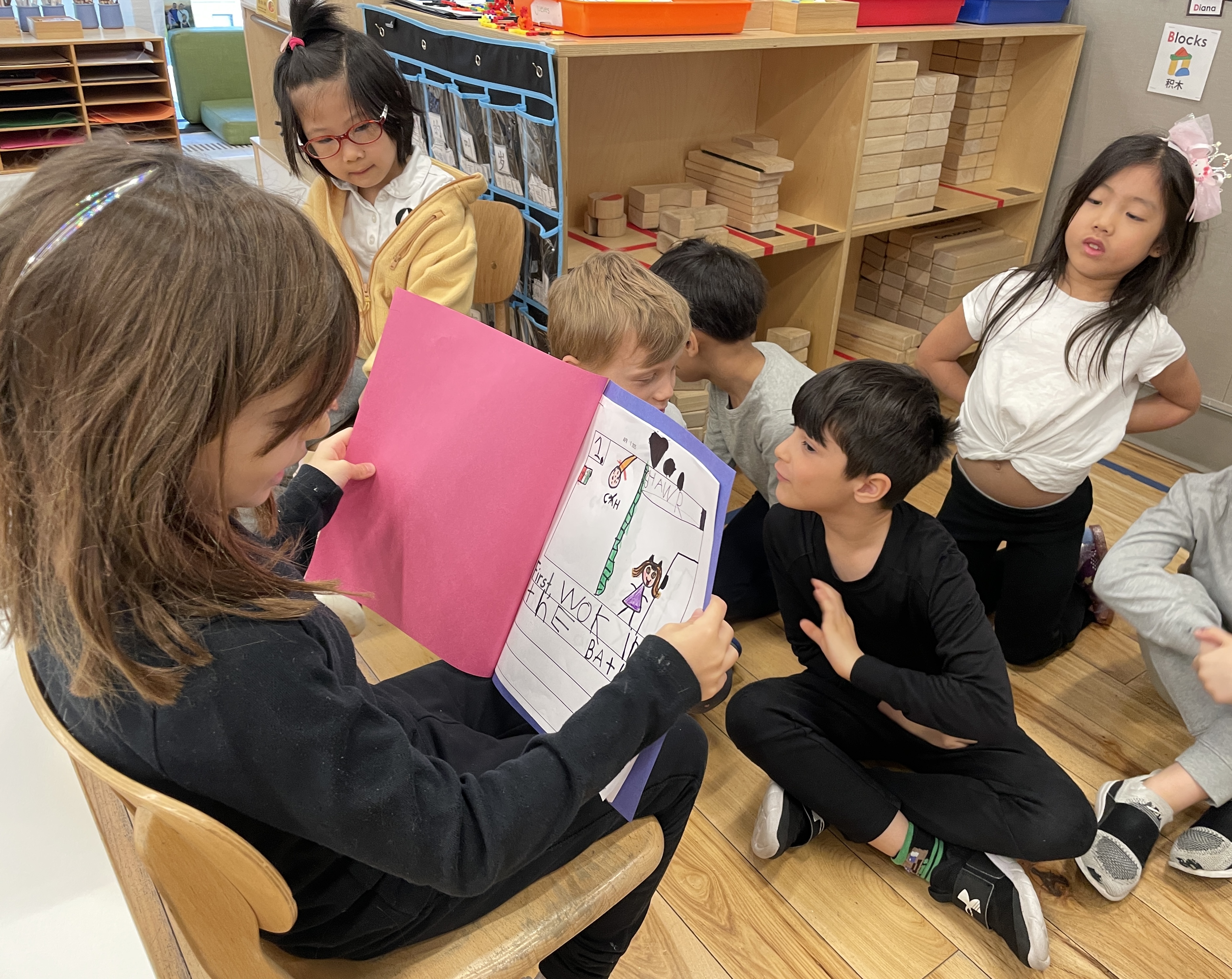
A student shares her book to a small group in the block area of a kindergarten classroom.
Family Share: We recently had the opportunity for each student to share their work in progress to their parents at one of our monthly parent “drop-ins.” This style of sharing was very informal and was mostly a way for parents to see what their child was working on for the past few months. I like this style of sharing because children feel great pride in showing their grownups a big stack of work. It can be hard for families to understand what the writing process looks like at this age, and seeing it gives them the opportunity to browse through their child’s writing folder with them, viewing both finished and unfinished pieces. They can engage with their child by letting them take the lead as they read their books to them and by asking them specific questions about their work.
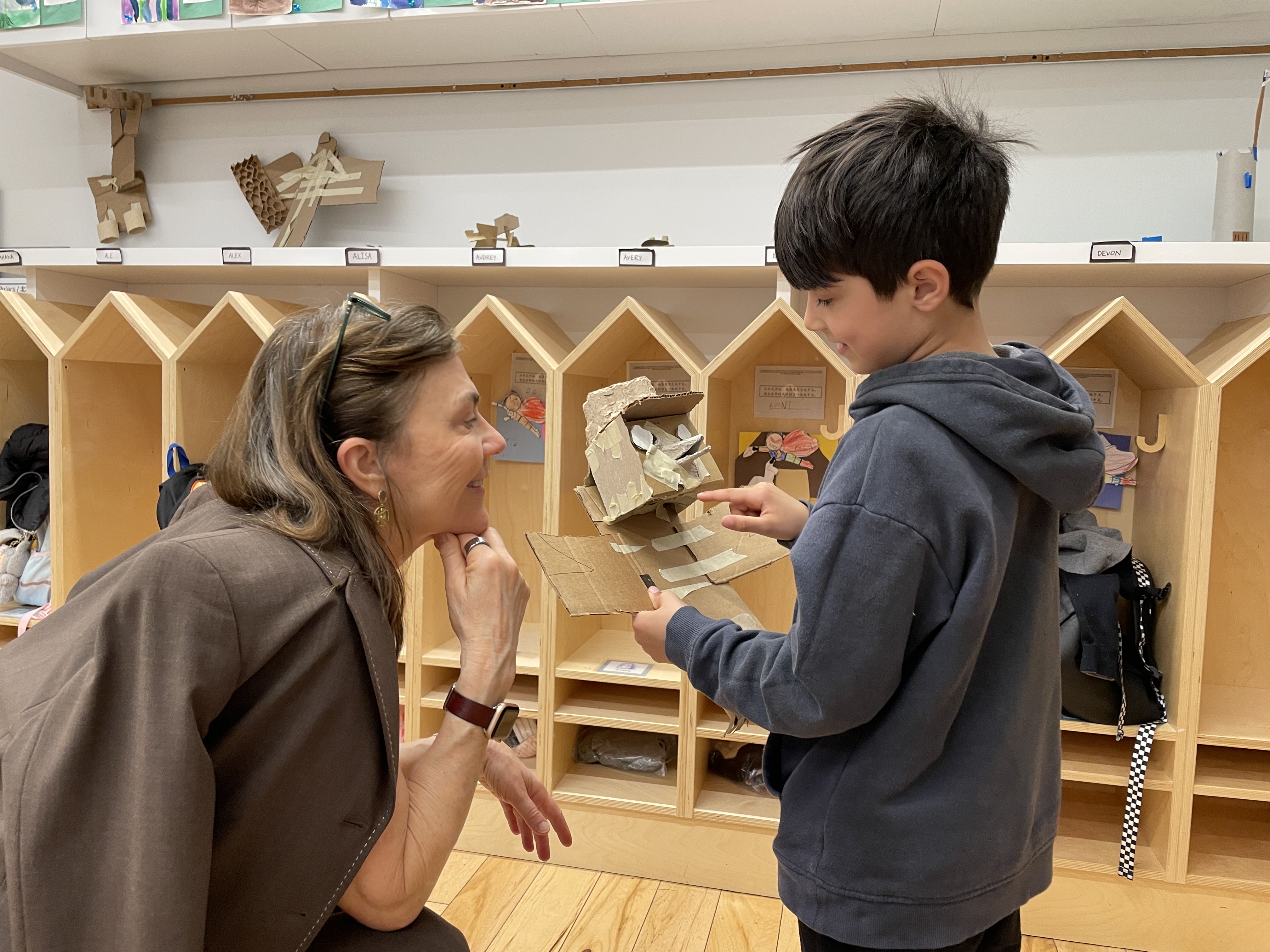
Impromptu Share: It’s a beautiful thing when a child can share their work with other members of their school community. With everyone’s busy schedules, it can be hard to coordinate! On a recent morning, Melody Meade, Head of the Early Learning Center at Avenues New York, was passing through the kindergarten hallway when the animal character puppets that my students made caught her eye. (The character puppets are being made in preparation for our creative writing unit. Students will use them to develop a character and then write fictional stories about them.) Melody spotted a thoughtfully constructed bird and took the opportunity to engage in a conversation with the student who made it. She spent about five minutes with him looking and talking, and asking him specific questions. It was a wonderful moment to observe and certainly made the child feel valued!
Melody Meade, Head of the Early Learning Center at Avenues New York, has an impromptu conversation with a kindergarten student about his work. (Photo courtesy Danna Zhang)
The Bottom Line:
Sharing is personal. Whether your students share their writing all the time or hardly at all, it is important to keep in mind that there are many different ways for children to experience this important aspect of being a writer. It is something that can be done as a planned class activity, in small groups, or with partners, but an impromptu run-in with a curious adult is invaluable! What does the sharing of writing look like in your classroom?
Discover more from TWO WRITING TEACHERS
Subscribe to get the latest posts sent to your email.


