
Estimated reading time: 2 minutes 1 second. Contains 405 words.
Target Audiences: Classroom Teachers and Literacy Coaches
How We Got Here: As any teacher knows, from year to year, students can struggle to carry learning with them to the next classroom. We often start the year by recharging and creating cues in our lessons to revive those learned skills from the year or years before.
Behind the Scenes: Beginning the school with a new group of seventh graders, I prepared myself for the blank stares, looks of bewilderment, and complete confusion that would commence as soon as I began using words like “noun” or “adjective.” In many cases, I remember teaching these very skills to some of the same kids in front of me. However, that doesn’t change the fact that these words feel like another language until they don’t. So, I watched, accepted, and validated their lost synapse connections. A few had the quick hand up, with the “aha, I remember” response. It’s always refreshing but never the norm for all students. This is why I’ve created two simple, essential, and editable resources that could be used as a shared or independent writing tool in your classroom tomorrow.
How it Works: With my students, I started with the most basic review to restore memory of what nouns and verbs were with a simple sort. Verbs can be acted out, while nouns cannot. We generated a list together (though you could create some notecards with words beforehand). Then, students chose one of each randomly, placing them into the following activity to generate a quick scene.
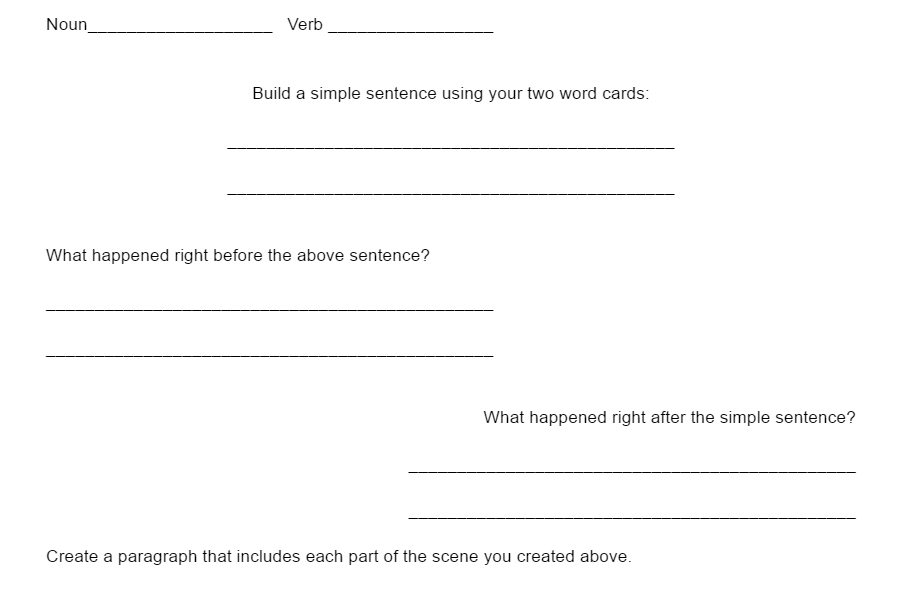
You can find links to each of these resources at the bottom of this post. You have permission to access, edit, and use it as a tool in your classroom.
This reviewed a basic skill and gave students a quick writing prompt to build upon. This could easily be replicated with adjectives, adverbs, prepositions, etc.
The second resource I’m sharing encourages sentence building using phrases.
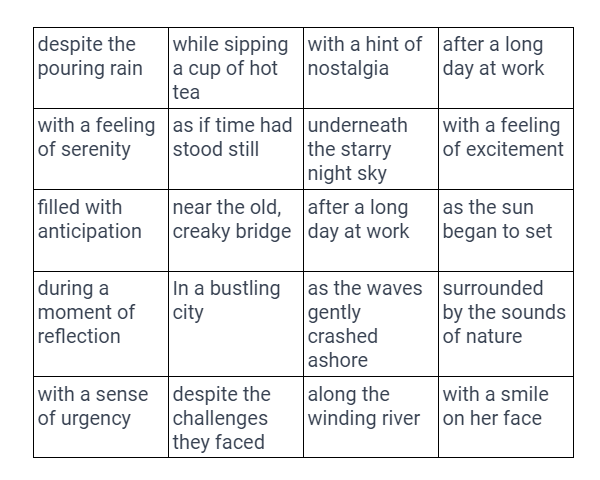
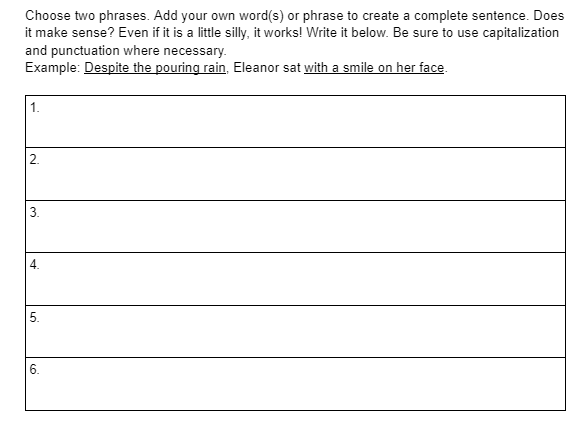
These phrases include descriptive language intended to encourage your writers to create complex sentences. As students build sentences using these phrases and their own additional touch, notice their understanding of commas and placement. Is capitalization of sentence beginnings and proper nouns coming naturally, or is a lesson needed? For younger students, create sentences together using students as the characters and actions necessary to complete the sentence.
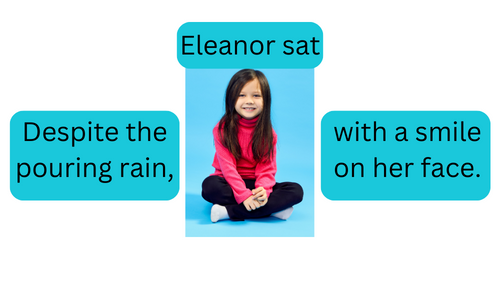
One Final Thing: If you teach any writer beyond kindergarten, you might begin the year with big assumptions of what they will enter knowing. Remember that revisiting past skills is essential, builds confidence, and sets the stage for what’s to come.
Discover more from TWO WRITING TEACHERS
Subscribe to get the latest posts sent to your email.


So, so helpful to remember that we adults need to allow students to settle in during each new year and provide gentle memory nudges instead of the ANGRY “you should know this” attitudes that don’t move students forward! The sentence-building phrases are genius. THANK YOU!
LikeLike