Estimated Reading Time: 2 Minutes (472 Words)
Target Audience: Classroom Teachers and Instructional Coaches
A Backstory
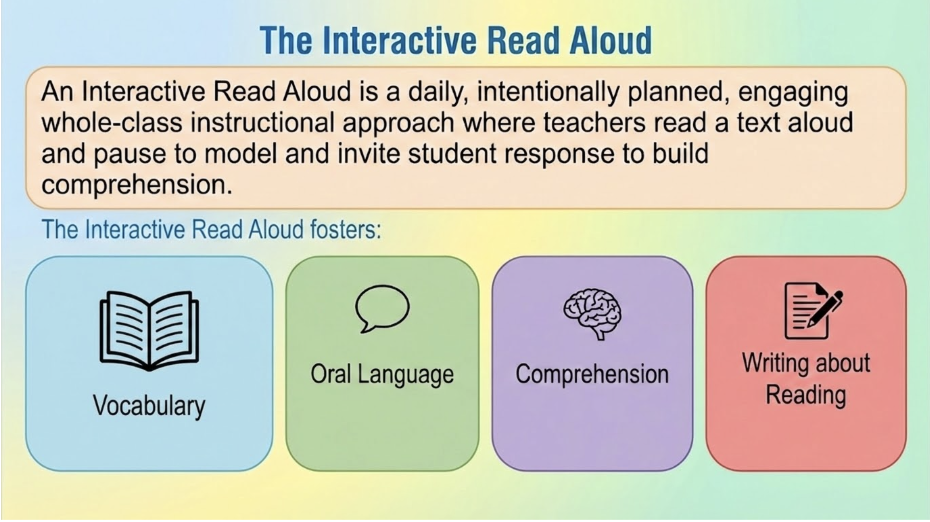
This year, our district-wide professional development has focused on recalibrating our vision of the interactive read-aloud. We’ve been asking ourselves: How can we maximize this valuable instructional block? To help our staff visualize this shift, our district coaching team created this definition and visual:
I recently sat down with Melanie Meehan for an episode of the Two Writing Teachers Podcast. Since read-aloud has been on my mind, we decided to chat about the role of read-aloud and how read-aloud can also support the work we do in writing.
Why This Matters
We all know that schedules are jam-packed. By embedding a writing lens into our read-alouds, we can create a bridge between reading and writing. This integrated approach helps students see literacy as a whole, rather than a series of disconnected blocks. When we support students to look at texts with a writing lens, the author stops being a distant figure and starts being a mentor. This shift helps students realize that every book in our library is a collection of choices. Once they see those choices, they feel empowered to try the moves they’re noticing in their own writing.
One Small Shift
At the end of the podcast, Melanie asked if I had any quick tips for getting started with thinking about read-aloud as a time to support writing.
My top tip is intentionality. Read-aloud can be a powerful instructional tool when it’s planned with purpose. That doesn’t mean it needs to take a lot of time, but when you have clear goals in mind, it becomes much easier to make intentional decisions about how to maximize this block-whether these decisions center on reading or writing content.
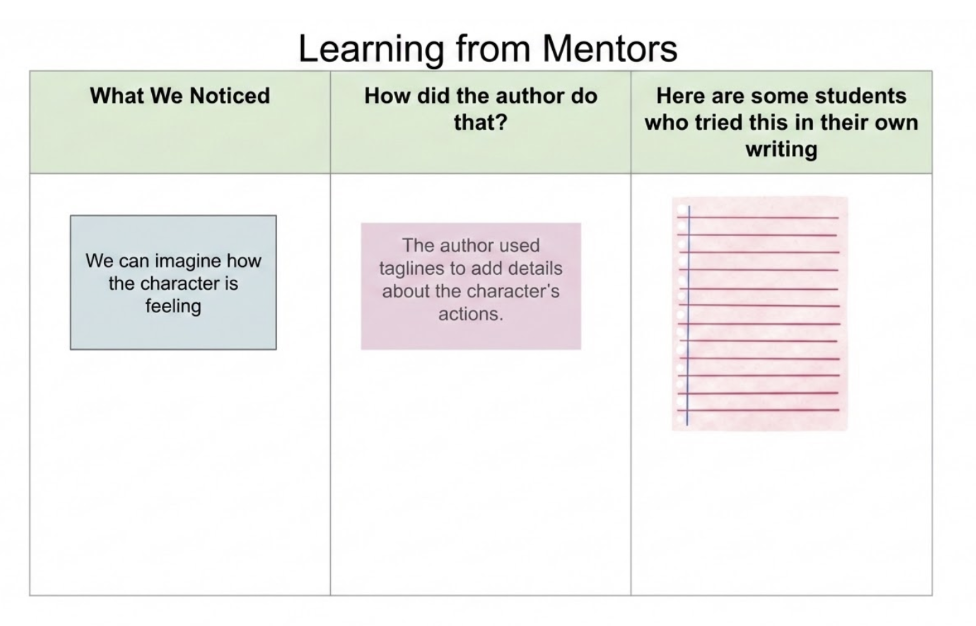
A second tip is to start small. If you aren’t yet inviting students to think about read-alouds through a writing lens, simply pause and ask: “How did the author do that?” This question draws attention to a craft move or decision the author made. That noticing can support students in thinking about idea generation, structure, elaboration, or even conventions. Often, this small shift is enough to spark new thinking and inspire students to try similar moves in their own writing. To build on this, consider co-creating a chart during read-aloud that captures the craft moves students notice. Revisit this chart during writing time to help students transfer what they’ve learned into their own work.
A Final Thought
When we slow down during read-aloud and make space to notice, we offer students more than just a story-we offer them access to the decisions behind the story. This small shift can send the powerful message: you can do this too. The next time you gather your students for a read-aloud, consider this: What might shift if we treated that time not just as a space to grow readers, but also as a space to grow writers?
Discover more from TWO WRITING TEACHERS
Subscribe to get the latest posts sent to your email.


Great post on a much needed topic!
LikeLiked by 1 person
“You can do this too” is a powerful sentiment. Gonna try it out asap.
LikeLiked by 1 person
This can lead to some great work! Thanks for sharing!
LikeLiked by 1 person