Estimated Reading Time: 4 Minutes (800 words)
Primary Audience: Instructional Coaches and Classroom Teachers
Catch Up Quick
A few weeks ago, I wrote about the importance of intentional mini-lesson planning in Back To Basics: Maximizing The Architecture of a Mini-Lesson to Foster Independence and Agency. As I worked with new teachers in my school, I noticed a common challenge: students struggled to transition from the mini-lesson to independent work, making it difficult for teachers to pull small groups effectively. While our district initiative emphasized small group instruction, it became clear that before small groups could be successful, students needed stronger tools for independence.
My last post explored ways to strengthen mini-lessons to promote student agency. Another essential piece of this puzzle? Anchor charts. When used intentionally, anchor charts don’t just capture learning—they become an interactive tool that supports students in making decisions, staying on track, and deepening their writing skills.
The Big Picture
At a basic level, anchor charts provide students with a visual reminder of the most important information from our mini-lessons—whether it’s the writing process, elaboration strategies, or editing and revision techniques. These charts help students see how each day’s lesson connects to the larger unit goals, reinforcing their understanding and helping them stay on track.
Beyond just a reference tool, anchor charts also promote independence and engagement during the independent portion of writing workshop. Instead of relying solely on the teacher for guidance, students can turn to anchor charts for support as they decide what to work on next or when applying a new writing strategy. Over time, this helps them become more confident, self-directed writers.
Some Fresh Ways to Think About Anchor Charts
1. Adding Layers
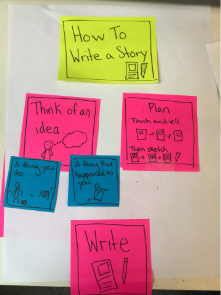
In my last post, I wrote about the importance of having a clear link in your mini-lesson. One way I reinforce this clarity is by modeling strategies in a way that can be easily restated in a bulleted list. For example, during a recent research unit in fourth grade, I modeled note-taking by breaking it down into the simple steps below.

When I write these steps on a sticky note, I can add them to that day’s anchor chart, creating a layered reference for students. Over time, the anchor chart evolves into a menu of strategies, allowing students to choose the support they need based on where they are in the writing process. This layered approach helps reinforce independence and ensures that students have ongoing access to the tools they need.
2. Using Anchor Charts As An Assessment Tool
A single-page version of an anchor chart can easily double as an assessment tool when used as a checklist. By transforming the chart into a reference for key writing strategies, we can use it to track student progress—whether through classroom observations or when reviewing student work. Simply jotting down names in different sections of the chart helps identify which students may need extra practice or support in specific areas. This approach not only makes assessment more efficient but also ensures that instruction remains responsive to student needs.
3. Using Anchor Charts For Accountability
Anchor charts can also serve as a powerful tool for accountability in the writing workshop. At the end of a mini-lesson, students can add their names to the anchor chart to indicate the work they plan to do that day or to show where they are in the writing process. This simple step allows the teacher to track student goals, making it easier to confer with individuals or quickly form small groups based on shared needs.

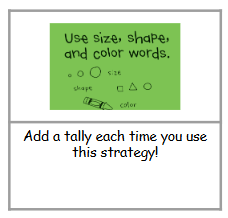
Individual sections of an anchor chart can also be repurposed as personal writing tools. For example, after a small group lesson focused on elaboration—such as adding a character’s thoughts—I might give each student a small version of the anchor chart highlighting that strategy. Students can then use it to tally each time they apply the technique in their writing. At the start of the next small group, this tool becomes a quick check-in to assess progress and reinforce learning.
One Final Thought
Anchor charts can quickly become wallpaper in our classrooms, however, they have the power to be dynamic tools that support learning, foster independence, and provide meaningful opportunities for assessment and accountability. When used intentionally, they help students see the bigger picture of a writing unit while also giving them the scaffolds they need to take ownership of their work. Whether serving as a reference during independent writing, a checklist for assessment, or a way to track student goals, anchor charts ensure that the strategies we teach remain accessible and actionable. By layering in these supports, we create a classroom environment where students feel empowered to grow as writers.
Discover more from TWO WRITING TEACHERS
Subscribe to get the latest posts sent to your email.


You are so right. The simple anchor chart can serve so many purposes. Using the anchor chart to build agency is one of the most powerful and one that’s not always understood.
Over time, the anchor chart evolves into a menu of strategies, allowing students to choose the support they need based on where they are in the writing process.
LikeLiked by 1 person
Wonderful, I loved it. My name is Mariana, I live in Buenos Aires, Argentina. I am a psychopedagogue and I will use this resource for the development of socio-emotional skills, assertive communication lessons, positive thinking, emotional management. As soon as I use it, I will share photos and results with you. Thanks for sharing.
LikeLiked by 1 person
Amazing! This work can definitely span curriculum areas. I’d love to see what you create. Thank you!
LikeLike