Estimated Reading Time: 3 minutes 54 seconds (782 words)
Target Audience: Instructional Coaches, Administrators, and Teachers
The countless opportunities for learning and growth are some of my favorite things about being an educator. Since my first conference during my very first year of teaching, I have thrived on the energy of learning together with colleagues. The learning is the easy part, though; making it stick and transfer is a whole different story.
Catch Up Quick: In 2019, Stacey penned this post to help teachers get the most out of attending literacy conferences. In her Before/During/After structure, she unpacked strategies to help any teacher approach literacy workshops like a pro. She set the perfect stage for this post, which focuses on the work after the conference or workshop has ended and we head back to our schools and classrooms.
Why It Matters: I have a notebook that is color-coded, tabbed, and full of notes from literacy workshops. Though I’m hungry to share all of the things I’ve learned about teaching writing from experts in the field with colleagues, this work is messy (and likely ineffective) when I’m not thoughtful and intentional in the work. Over time I’ve learned that we have to be intentional in when, how, and what we share so that we maximize the impact of our conference experiences.
As a Coach/Literacy Coordinator, I know that my next steps after attending a literacy conference involve two phases: personal reflection and sharing.
When I engage in personal reflection, I take the time to review my notes, unpack big ideas, and connect my learning to the work I am doing (and want to do in the future). Some strategies for this phase include:
- Scheduling a Date with Myself: If I don’t block out time on my own calendar to thoughtfully engage in this work, it is very unlikely to happen. The time I set aside depends on the learning experience, but it’s beneficial to carve out this time before I even go to the workshop or conference.
- Sticky Note Reflection: I often sit down after a day of learning with a pad of sticky notes and jot down “next steps” as I reread the notes I’ve taken throughout the day. These notes become my action steps for future work.
- Email to My Future Self: If I engage in learning that I can’t process in the moment but know I want to return to at a specific point in time, I will email some general reminders to myself in a future-scheduled email. This allows the ideas to pop up just when I’m ready to receive them.
- Strategy Tabs: I add tabs to my notebook pages after I engage in learning. As I read back through my notes, I write the names of specific strategies I want to try on tabs and add them to the edges of my pages. This allows for quick and efficient access when I’m ready to try them out.
- Accountability Buddy: While I’m listening in a workshop, I will sometimes email either an instructional coach on my team or a classroom teacher when I learn about something I’m ready to jump in and try with students. This not only holds me accountable but also draws my colleagues in right away.


When I engage in sharing, I have to be selective, clear, and focus on the “big picture” of the work that is going on in my district. As we gather together in a team to share our learning and new ideas, we use the following framework:
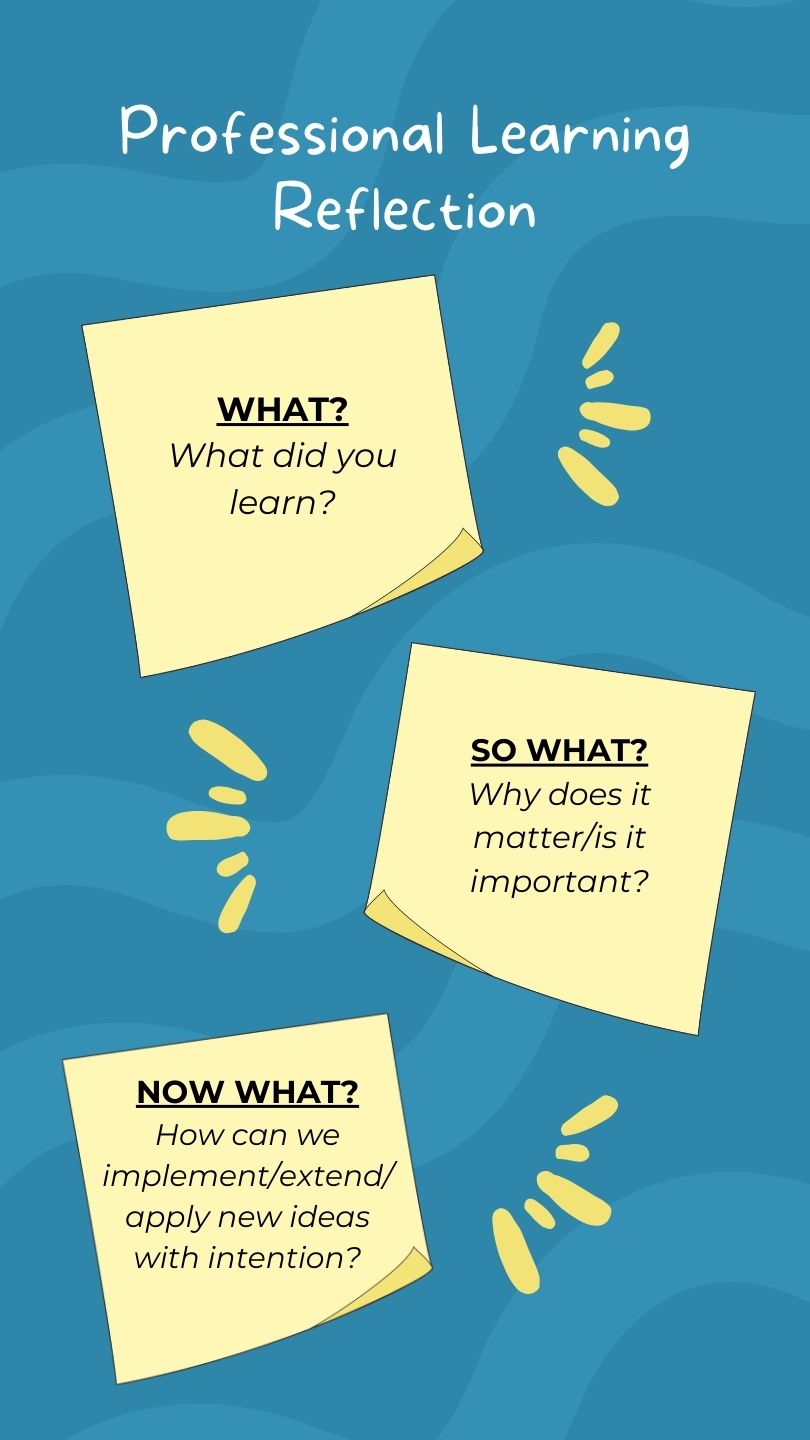
- WHAT: Each person shares what they learned, either from the same workshop or from different learning experiences. The format is flexible: each person can share notes, a summary, photos, or a visual or tool they created to complement their learning. Tip: Only invite each person to share one idea at a time. This will make sure all voices have a chance to be heard and will encourage each participant to prioritize and focus on what is most important to share.
- SO WHAT: After sharing the key information, the person sharing needs to explain why it matters to the team, the school, and/or the district.
- NOW WHAT: The last step is a collaborative discussion. After hearing each piece of new learning, all participants have the opportunity to discuss how that learning will be used, where it fits, and how the team can be intentional about incorporating it into practices across a system, not just in isolated pockets. From there we hold one another accountable and are very intentional in implementing new ideas.
A Final Thought: When attending conferences and workshops, we retain only a fraction of what we see and hear from the presenters, no matter how amazing they are. It is only through a process of intentional reflection and sharing that we can leverage and expand our new learning to impact our entire school system.
Discover more from TWO WRITING TEACHERS
Subscribe to get the latest posts sent to your email.


I love the tip about emailing yourself reminders for the future!
LikeLiked by 1 person
Sarah, I love your post because it is so packed full of great advice. Although I am retired, I think your advice is something all teachers and administrators should read and if they implement your strategies great things will occur for everyone involved.
LikeLiked by 1 person
Thank you for your kind words!
LikeLiked by 1 person