Estimated Reading Time: 2 minutes (438 words)
Primary Audience: K-12 writing teachers
As I crafted this post, I texted some TWT colleagues to have a look and let me know if I succinctly communicated my point. (I’ve been working on our “less is more” approach after reading Smart Brevity.) That’s what adult writers do- we ask for feedback- but even more than that, we first determine the kind of feedback we’d like to receive.
Young writers in school should have the same opportunity. They’re the authors- so they should control the kind of feedback they get from their audience. Today, I’ll share a simple shift in your teaching approach to give young writers more ownership over feedback.
Why It Matters: When authors select their feedback, they use metacognitive skills like assessing where they’re at in the writing process and recognizing their strengths and areas of uncertainty. This complex skill helps students build a writerly identity.
One Small Shift: Instead of telling writing partners to give each other revision ideas, or announcing that everyone will receive compliments at the writing celebration, allow the writers themselves to reflect and determine what they’d like from their audience.
Here are two moments during workshop where you could make this shift:
The Share: Share time at the end of workshop is a chance for everyone to reconvene in the gathering space and reflect on the teaching point and day’s work. Writers often share with the whole-class or a partner. As students share at the end of workshop, invite them to choose the feedback they’d like from their audience.
Conferring: Sometimes when teachers begin conferring with a writer, they already have a teaching point in mind. A small shift that puts the direction of the conference in the writers’ hands is simply asking, “How can I help you as a writer today?” This question elicits reflection and decision-making as writers choose a goal to work towards with their teacher. For more tips, check out my post: Enlist Students as Partners in Confering.
Of Note: I display these charts during our Author’s Chair to help students choose and offer feedback.
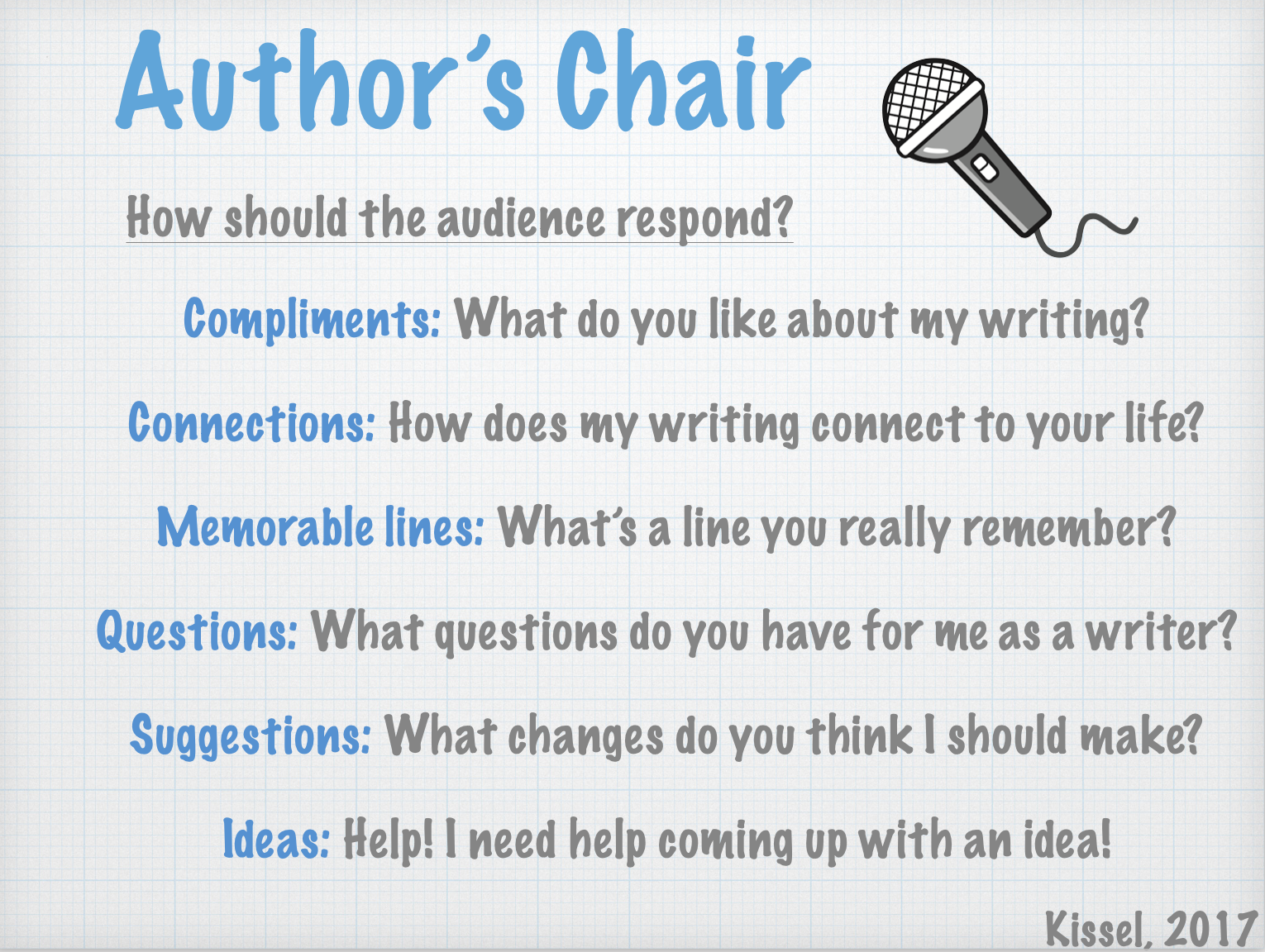

Here’s a Secret: These simple shifts lift the level of talk for all writers in the classroom as they request and provide feedback. As a result, the classroom starts to sound more like a publisher’s office as writers think deeply about what’s next for their writing and collaborate with peers.
Go Deeper: Want to see this in action? Watch the following 2 minute clip from my second grade classroom to see how student-driven feedback works during Author’s Chair.
Discover more from TWO WRITING TEACHERS
Subscribe to get the latest posts sent to your email.


