It is through others that we become ourselves. – Lev. S. Vygotsky
Estimated Reading Time: 4 minutes (713 words)
Primary Audience: Classroom Teachers
A Backstory: When I started teaching, I believed independent writing time should be silent. If kids were allowed to talk, it would get noisy, and they would get off track. In my mind, a quiet room of writers meant every kid was engaged in writing. And yet, this didn’t work. Certain students seemed to never stop talking! I began to call them the “Social Writers.”

Who They Are & What They Bring: I used to view chatty kids through a deficit lens, but now I see the strengths they bring to the table; charisma, interpersonal communication, and public speaking skills are a few! All of these sound like important qualities for adults in the workplace. How can we channel these strengths and save a seat for the “Social Writers?” The answer: Let kids talk during writing workshop!
Why It Matters: Talk helps writers of all abilities. Watch the following one-minute video from a noisy Kindergarten class. As you listen to writers sound out words, orally rehearse their story, announce hitting a milestone, plan aloud, and seek feedback, consider these questions:
- How does talk strengthen the writing process?
- How is the noise level fit with what’s developmentally appropriate for this age?
- Is this a culture of compliance or collaboration? What do you see and hear that tells you so?
My beliefs have changed since my first year. Now, I realize how talk helps students grow as writers, learners, and thinkers. If you expect silence from writers but would like to test the waters and allow more talking, the partner conference corner is something you can try.
The First Step: Partner Conference Corner

I designed this classroom space when I was ready to get kids talking more but couldn’t handle every kid talking at once.
What You Need: A small table, a sand timer, anchor charts to facilitate independence, and a laminated card asking, “Would you like to have a partner chat?”
How It Works: When kids want to discuss their writing (or reading) with a classmate during silent work time, they approach the peer and hold up the card. If the peer agrees, the two writers walk to the partner corner, set the sand timer, and discuss before returning to silent writing at their seats.
The Next Step: Minilessons to Foster Productive Talk
The partner conference corner helped me see that kids should always be allowed to talk during writing workshop. Taking this plunge requires some teaching, though. Below are some minilessons that can help you design a writing workshop where kids can talk freely.
- To Manage Engagement: Teach kids that they’re allowed to talk during writing workshop as long as they talk about writing. Kids want to keep the privilege, so a simple reminder, “Are you talking about writing?” or “I’m going to listen in for one minute” often gets them back on track. Lead a minilesson about what “talking about writing” sounds like and does not sound like. Here’s A Secret: Record actual quotes from your writing workshop to make this sort more relevant!)
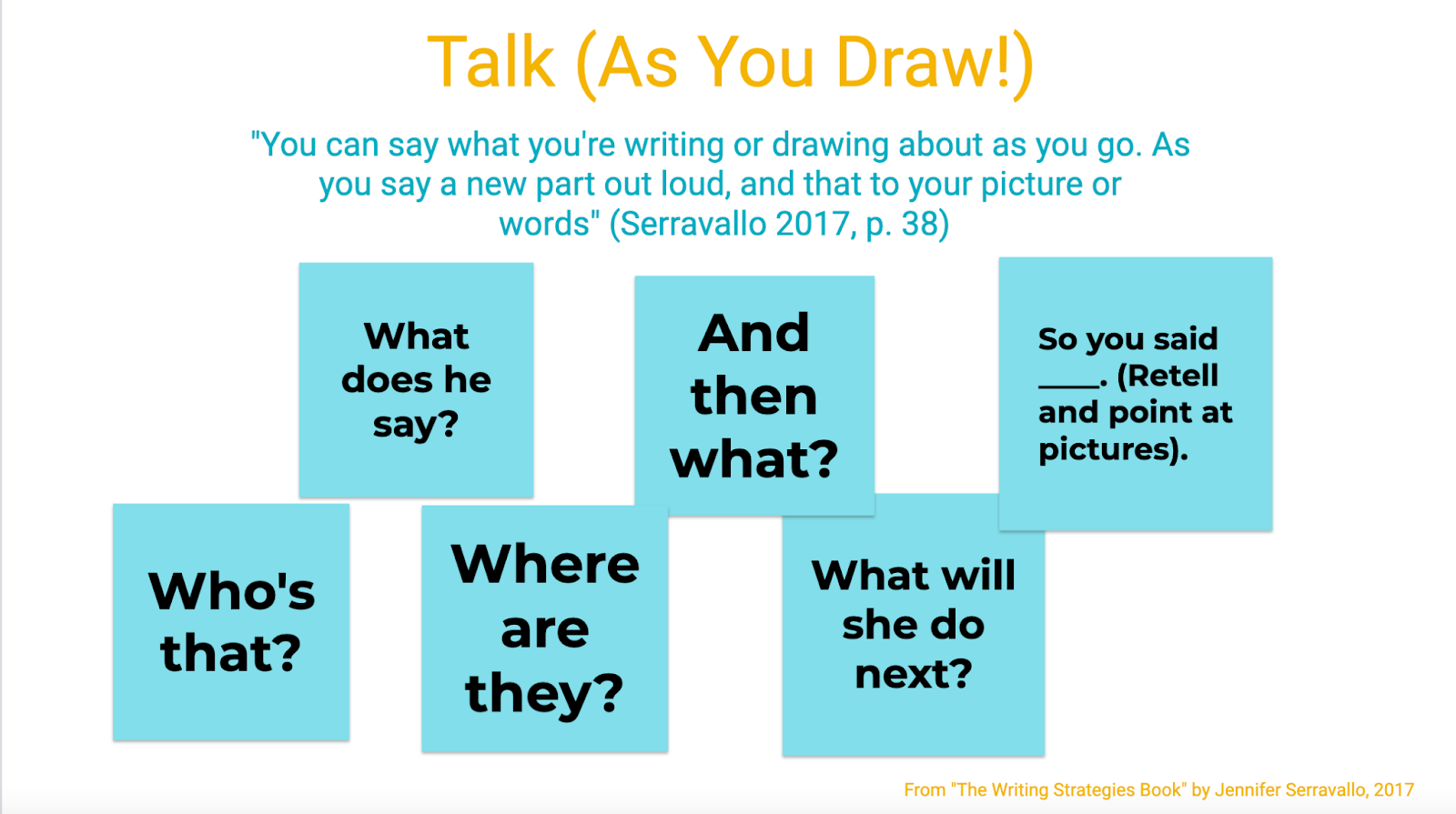
- To Get The Juices Flowing: The “Talk as You Draw” Strategy from Jennifer Serrevallo (2017) helps kids think aloud as they work. The chart below provides prompts to get partners going. Zoom In: This video shows two Kindergarteners engaging in the “Talk As You Draw” strategy. The oration helps one kid plan the future for his story as he draws and helps another kid realize he forgot a letter.
- To Build The Language: Sentence stems can help writers understand what writerly talk sounds like. Display the following chart at once or over a few days to frontload the vocabulary writers need.

- To Find A Conversation Buddy: Use the following chart to offer options for conversation.
- To Help Plan: Talking out loud is a great way to plan how a piece will go. Teach the following methods for planning that involve talk.
Click here to make a copy of these Jamboard charts to edit for your class.
The Bottom Line: A philosophy shift like this takes work. It takes teaching and reteaching. But all writers, especially the “social writers,” will thrive in an authentic environment where they can discuss their work and collaborate. I invite you to save a seat for the social writers by encouraging their need to communicate.
Go Deeper: To learn more about the importance of talk for writers, check out the following posts:
- Learn tips for a classroom environment where talk is productive (and watch an adorable video!) in this 2015 post from Betsy Hubbard.
- Learn more about oral language from Sarah Valter in a post from earlier this year.
- Check out Melanie Meehan’s book review of Unlocking the Power of Classroom Talk by Shana Frazin and Katy Wischow.
Giveaway Information: This is a giveaway of ABDUL’S STORY by Jamilah Thompkins-Bigelow, donated by Simon & Schuster. Readers must leave a comment on any SAVE A SEAT FOR EVERY WRITER Blog Series Post by Sat., 8/12 at noon EDT and have a U.S. mailing address. The winner must provide their mailing address within five days, or a new winner will be chosen.
Discover more from TWO WRITING TEACHERS
Subscribe to get the latest posts sent to your email.


Wonderful post! I am definitely a proponent of productive talk – maybe because I am a talker myself. It’s how I organize my own ideas before getting them down on paper. Thanks for the mini-lesson ideas. I am in charge of a literacy enrichment program for elementary students who have graduated from Head Start. The focus of the group has always been on reading. Since taking over, I have included writing as a part of the program. I recently discovered your blog – while searching for ideas on how to use Abdul’s Story with students!
LikeLike
Oh how I love this post! I was the same way when I was in the classroom – writing time was quiet time. Now, I realize how essential talking, intentional conversations, and sharing is so critical for our students.
LikeLike
Talk is essential to workshop! Love the charts!
LikeLike
*Love* the idea of creating a partner conferring corner in the classroom!
LikeLike
I really like how you find ways to channel talking into positive ways to enrich the writing experience for our students. I teach fifth grade and plan to incorporate many of these ideas in my writing workshop next year! Thank you!
LikeLike
Thank you for this great article! I am moving from 5th to 2nd this year and I am really thinking about how to use my space and embrace all of my students. This series has been really helpful!
LikeLike
Thank you! I am also moving to second (from K) this year!
LikeLike