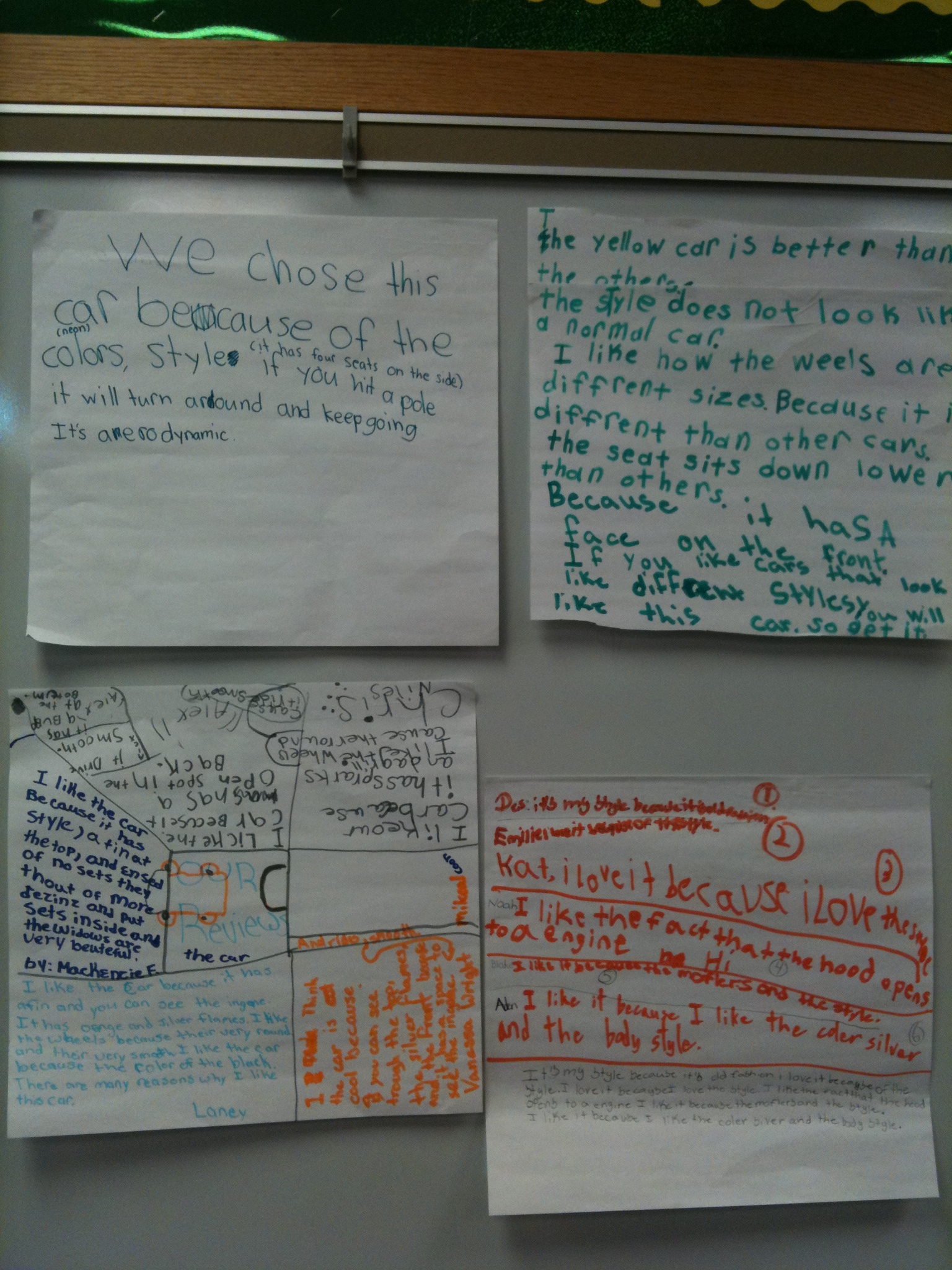
Yesterday in Mr. Gause’s third grade class, some incredible thinking was happening. This week we launched into reviews. Earlier in the week, he asked students to test different toy cars and then select the one they thought was the best. Then they met as a group and talked about their choice.
Yesterday, during the minilesson, I taught kids:
To write reviews, we need three important things:
- A strong opinion about a product or place.
- Experience with the product or place.
- Reasons (“back-up”) to support our opinions.
They realized it’s not enough of reason to say their car is the best or awesome or cool. Everyone thinks that about their choice. They needed to find reasons that set their car apart from the rest.
Then they returned to the groups they were in the previous day to think through their reasons.
Before workshop, Dan and I met and talked about the possibility of giving each group chart paper to write a review together. We weren’t sure how it would work, so we decided to watch the groups and teach into their thinking.
No more than three minutes after breaking into groups, one group (of 5 boys) asked, “Can we write a review together?”
I tried to contain my shock. I shouldn’t be surprised , but I was. “Sure,” I said, “Do you want some chart paper to write it on so you can share it with everyone else?”
“Cool!” They unanimously agreed chart paper would be the best to write their review on.
Dan gave them paper. Another group thought it looked like a good idea to have chart paper, so they asked for a sheet too. Before we knew it all groups had chart paper.
We watched them collaborate. I had goosebumps.
No group was doing the exact same thing as another group. They all, however, were talking and thinking about the reasons that would support their opinions that their toy was the best of the bunch. It was collaboration at its finest.
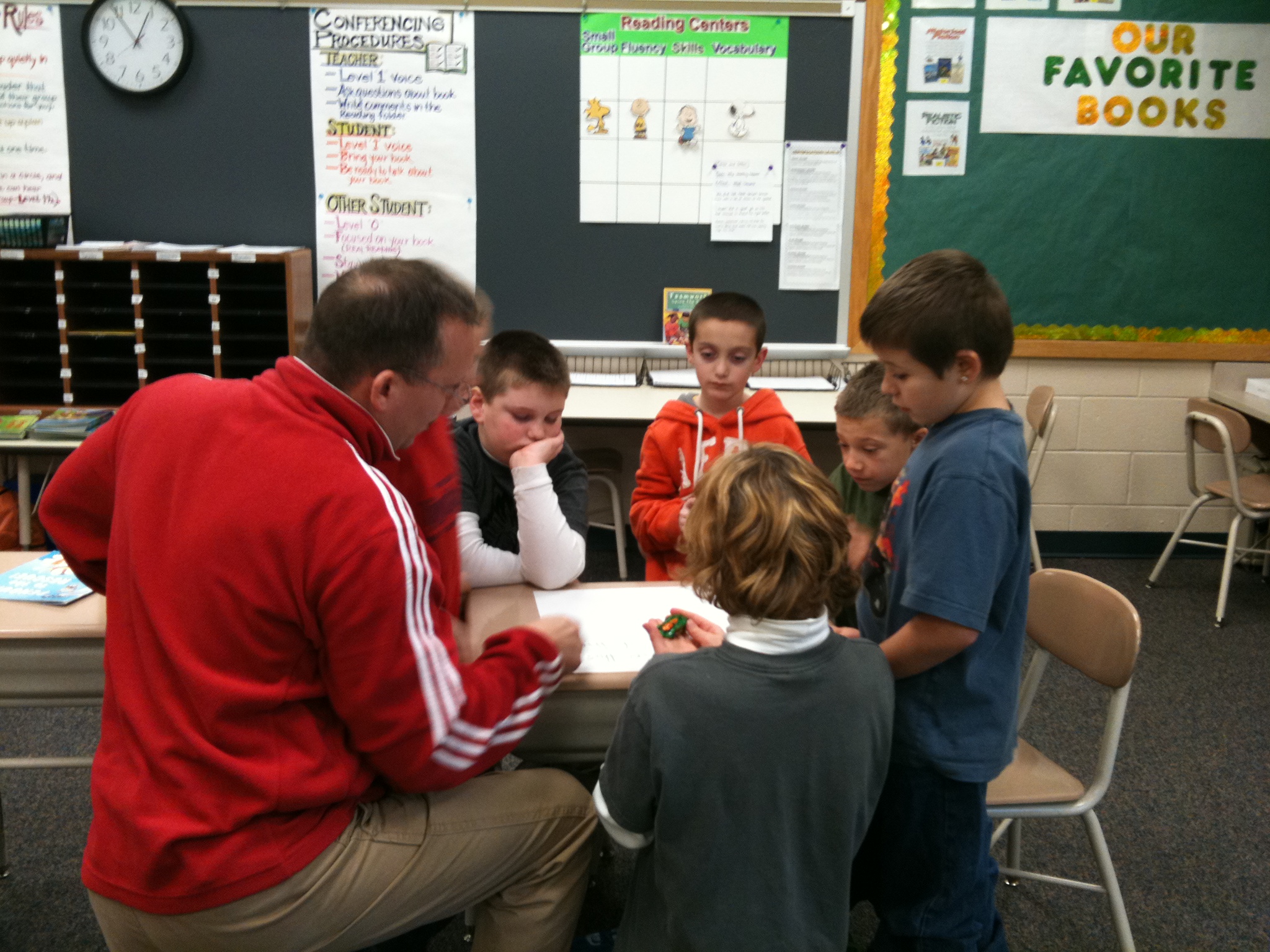
The group above is the original group to ask for chart paper, they then wrote a review together.
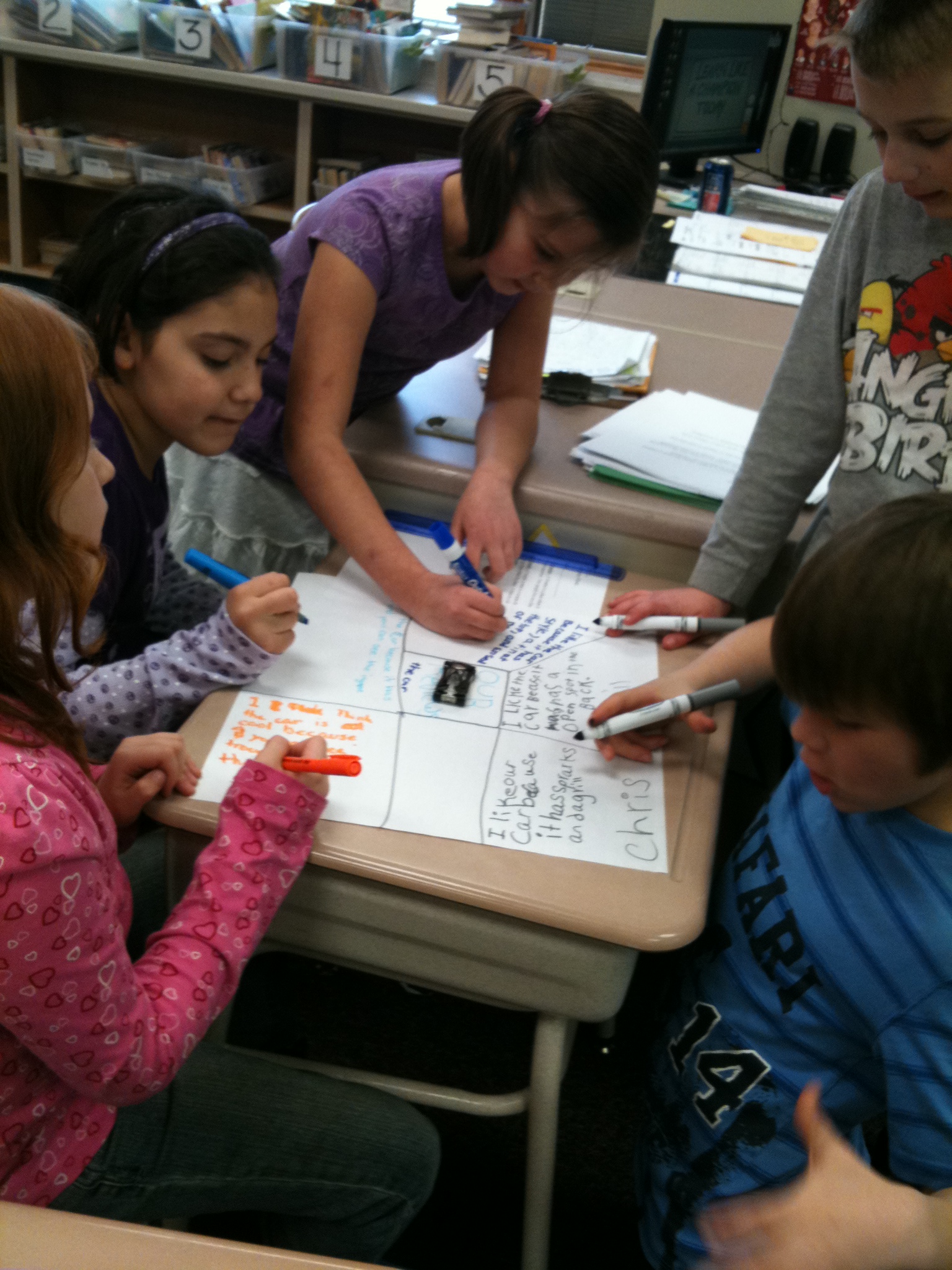
Another group divided their paper so each person could write his/her own review. It was interesting to watch this group because they talked the entire time, yet they were each writing independently.
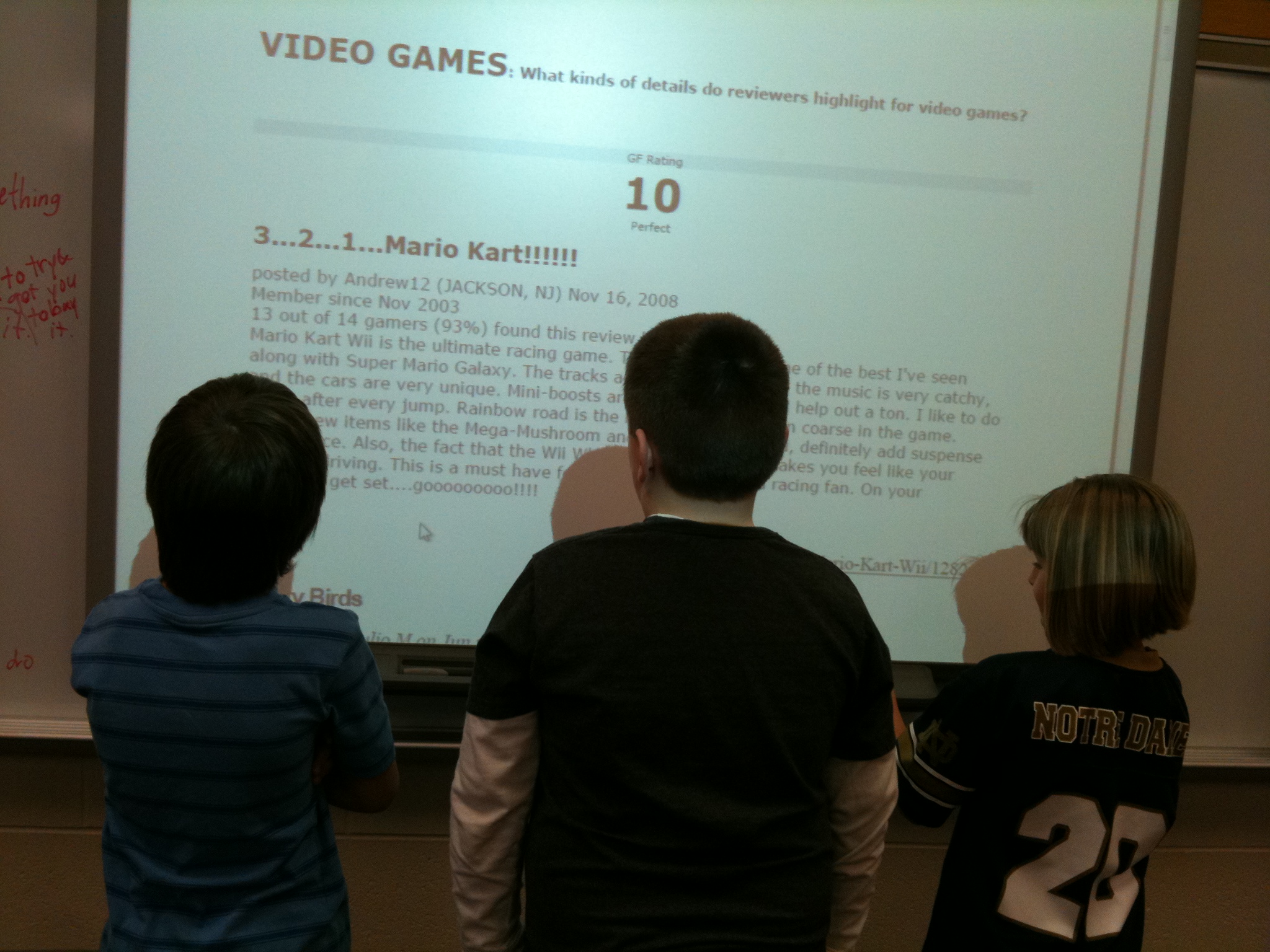
We left a mentor text on the Smart Board as groups collaborated. It helped lift the level of their reasons, as well as the reviews they were writing. One group realized they left off their opinion at the start of the review, so they wrote it at the bottom of their chart paper, cut it off and taped it to the top (see below). When they were ready to end their review, they consulted the mentor text again.
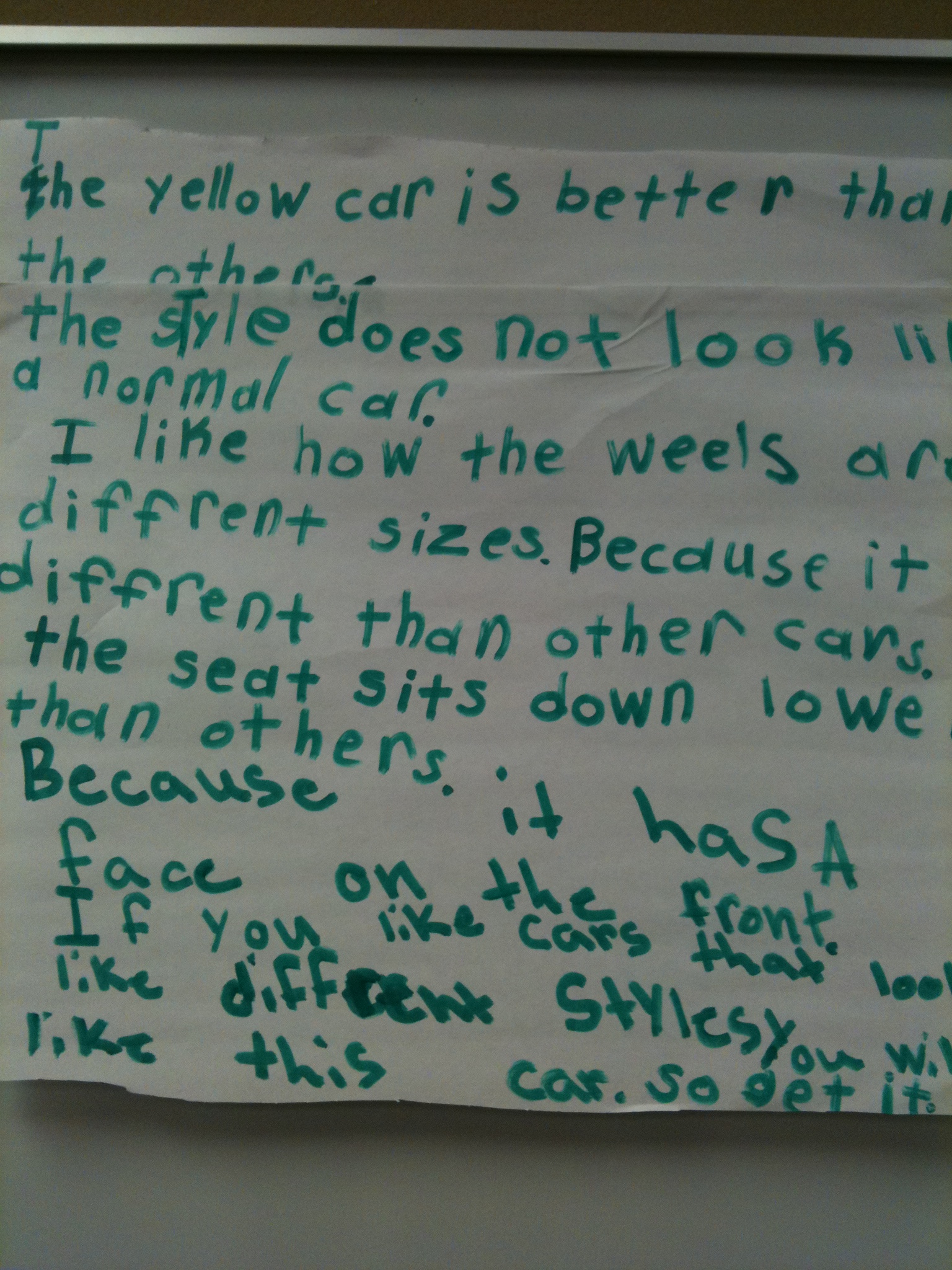
The final group took turns writing a reason at the top of their chart paper. Then they drew a line and began to write a review together.
These are some of the first steps into persuasive writing. The majority of students in the room have never written reviews or even considered them prior to this week. In order to position them to write well in this genre, we wanted to give students lots of opportunity to talk. In fact, it is our goal to float this unit on a sea of talk.
Monday they will begin writing reviews based on their own opinions about products and places of their choosing. (They didn’t start today because they are at the circus!) To scaffold students, we first gave them this experience to learn and dabble and even play with the concept of writing opinions.
Dan and I stood in awe as we watched these young writers work together to find their voices for this genre of writing. I’m looking forward to watching how the rest of the unit progresses since they’ve had this experience.
And just a little side note…
Dan’s classroom is the fourth third grade room I’ve launched the Review Unit in. I want to note that we launched it very differently than the other rooms. I think this is important to realize. I am ever changing the way I help young writers learn the craft, genre, process, and conventions of writing. I’m always asking: What do these kids need? How can they best understand these concepts? What’s another way to help them learn?
Because I’m grounded in my beliefs about teaching writers, I can alter the activities in order to reach young writers in the most effective way possible. The why behind what we do in workshop is just as important (maybe even more important) than the what. I’m excited to share this recap of writing workshop with you because I felt the students led the way — Dan and I supported their learning and nudged them into new learning about opinion writing. It’s not the activities that are important, but the thinking behind how this happened.
Discover more from TWO WRITING TEACHERS
Subscribe to get the latest posts sent to your email.


Thank you sharing your reflection at the end in regards to noticing what “these” kids need. I agree that the why behind our what teaching is so important. It’s what makes writers workshop different and powerful. Your thoughts affirm we are revising our teaching as well.
LikeLike
Here I am catching up on reading your blog and I answered my own question. Here is the link for others:
Click to access mentor-reviews.pdf
🙂
LikeLike
They are some lucky third graders to have such a strong teacher and coach. 🙂
I would also love a link to the mentor text.
LikeLike
Wondering what did you use for the mentor text?
LikeLike
This is a wonderful idea! I love that it engages all students…especially the boys. All students will no doubt have an opinion to share. Will be using this idea, thanks for sharing!
LikeLike
Yea for you–I love this lesson and am already thinking about how I could approach my high schoolers with it….
LikeLike
I like that there was choice within the beginning expectations, Ruth. It sounds like fun and enthusiasm right along with the learning. Thank you for sharing all about it!
LikeLike
Thank you for sharing! Sounds amazing. You must have been so proud of the students and you should be proud of yourselves as teachers. Appreciate the ideas and insights.
LikeLike
eay So cool
LikeLike
So cool! I love the thinking and collaboration and exploring the students did. Your description painted it perfectly. Here is another great example I will be sharing with teachers. Thanks for sharing your classroom work with us. This is the next best thing to being there! (I wish!)
LikeLike