Estimated Reading Time: 4 minutes, 694 words
Primary Audience: Early Childhood Educators
The Context
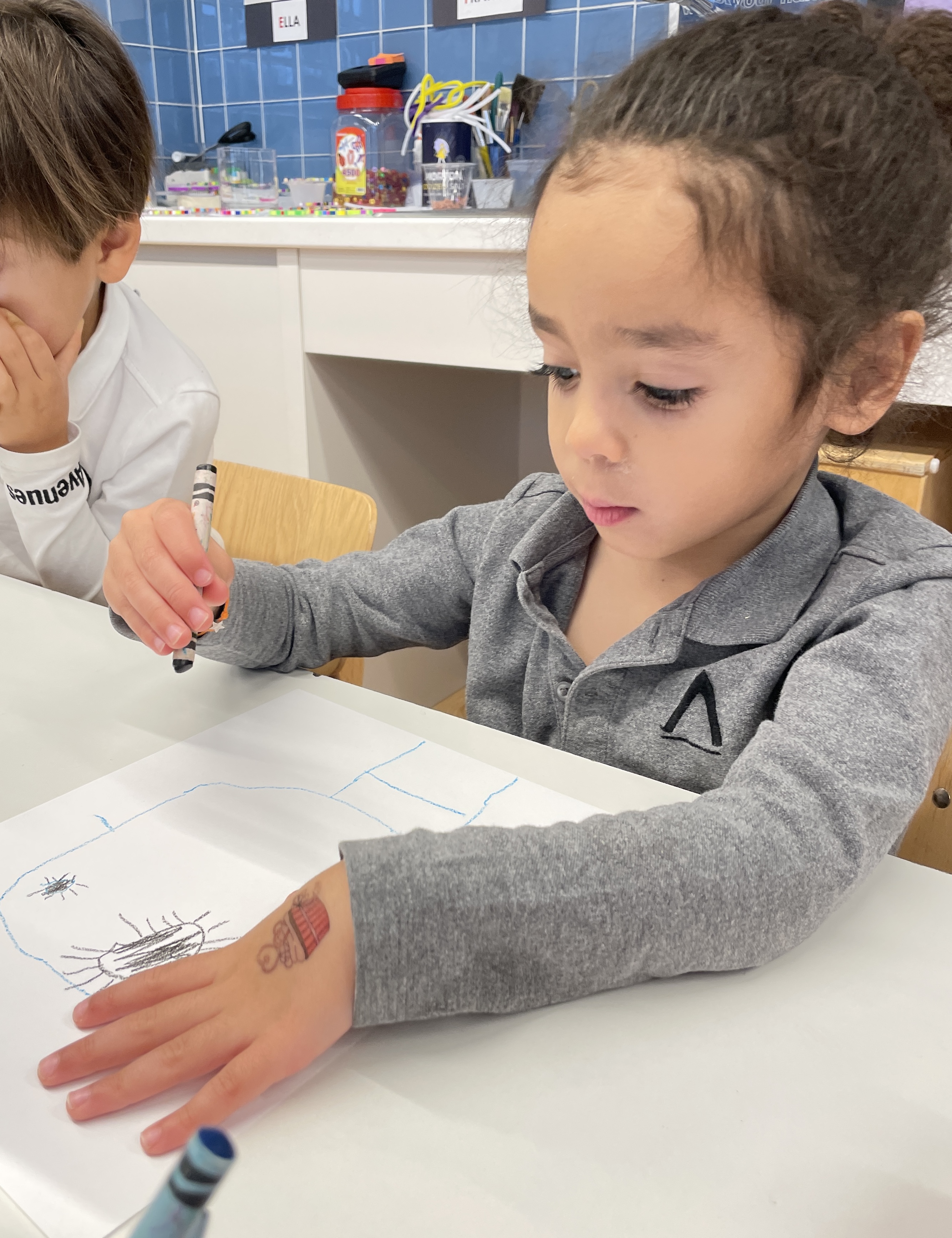
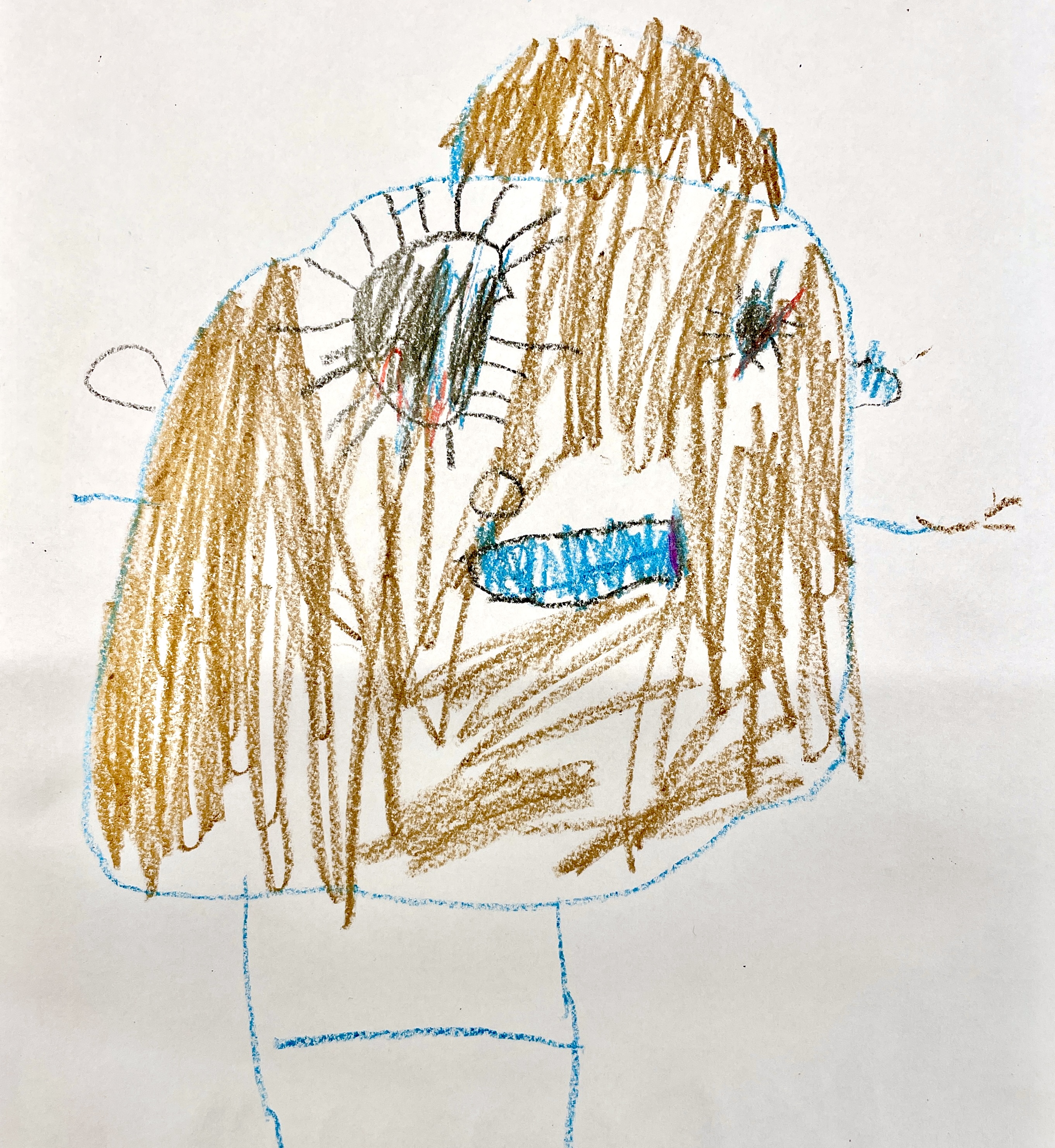
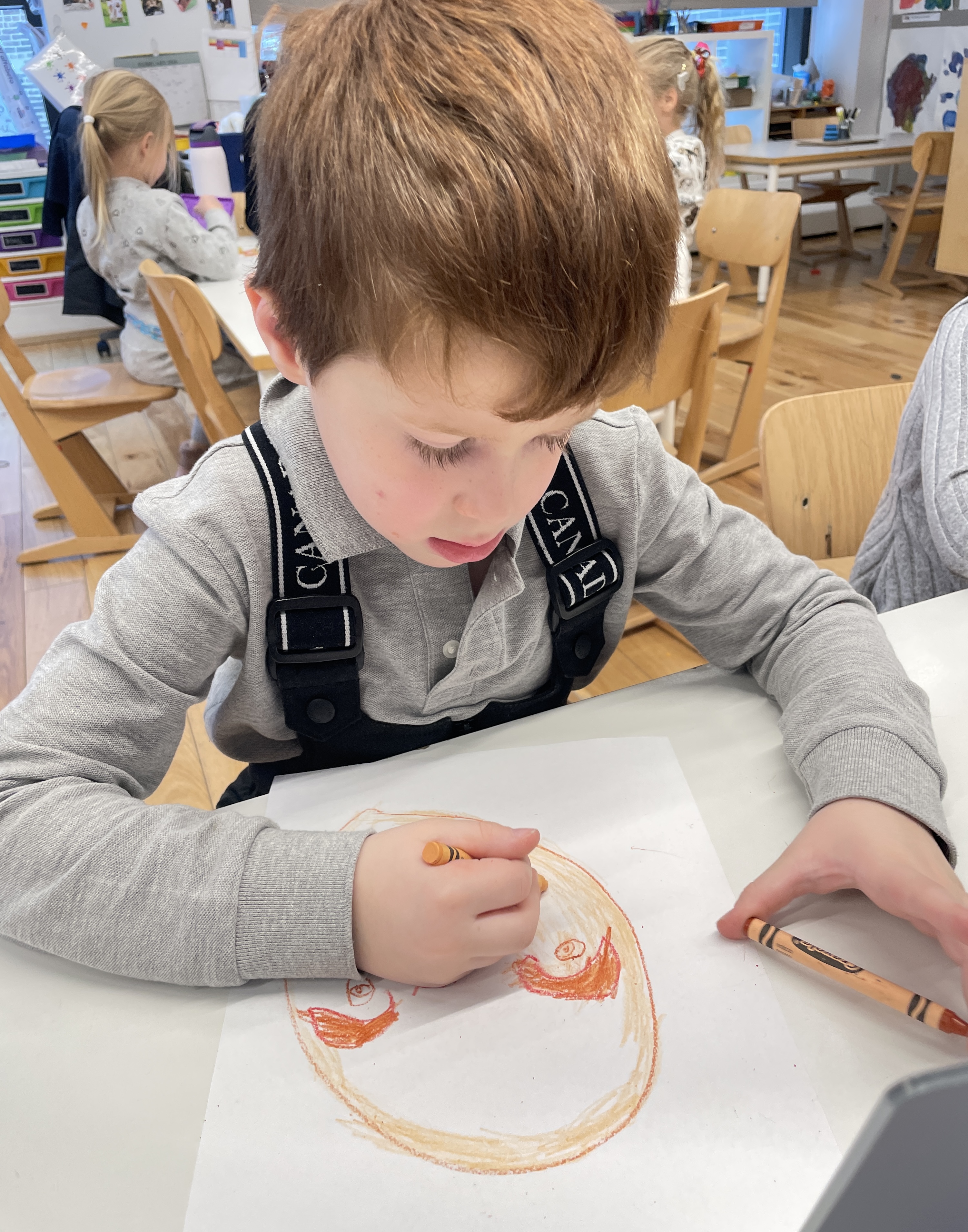
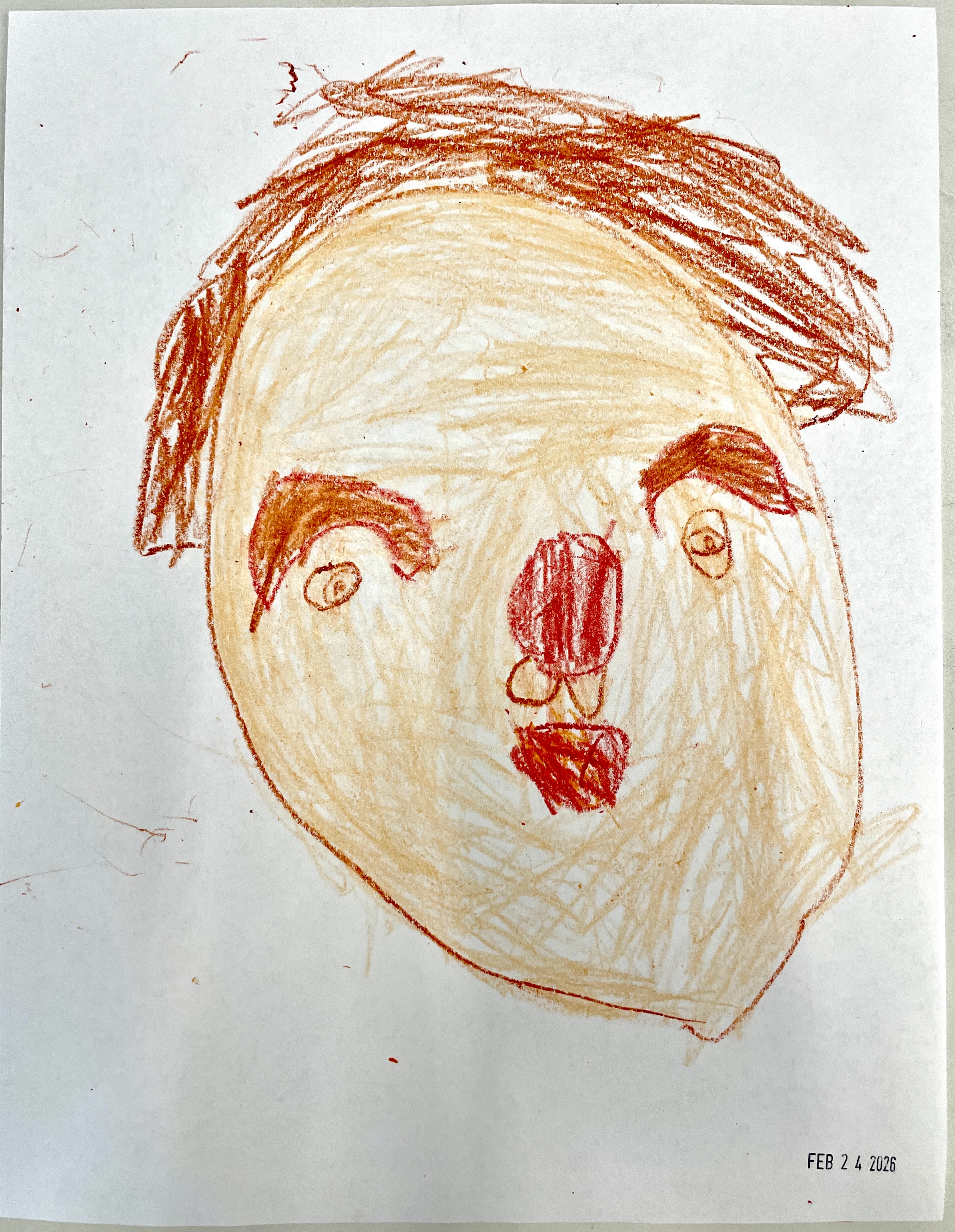
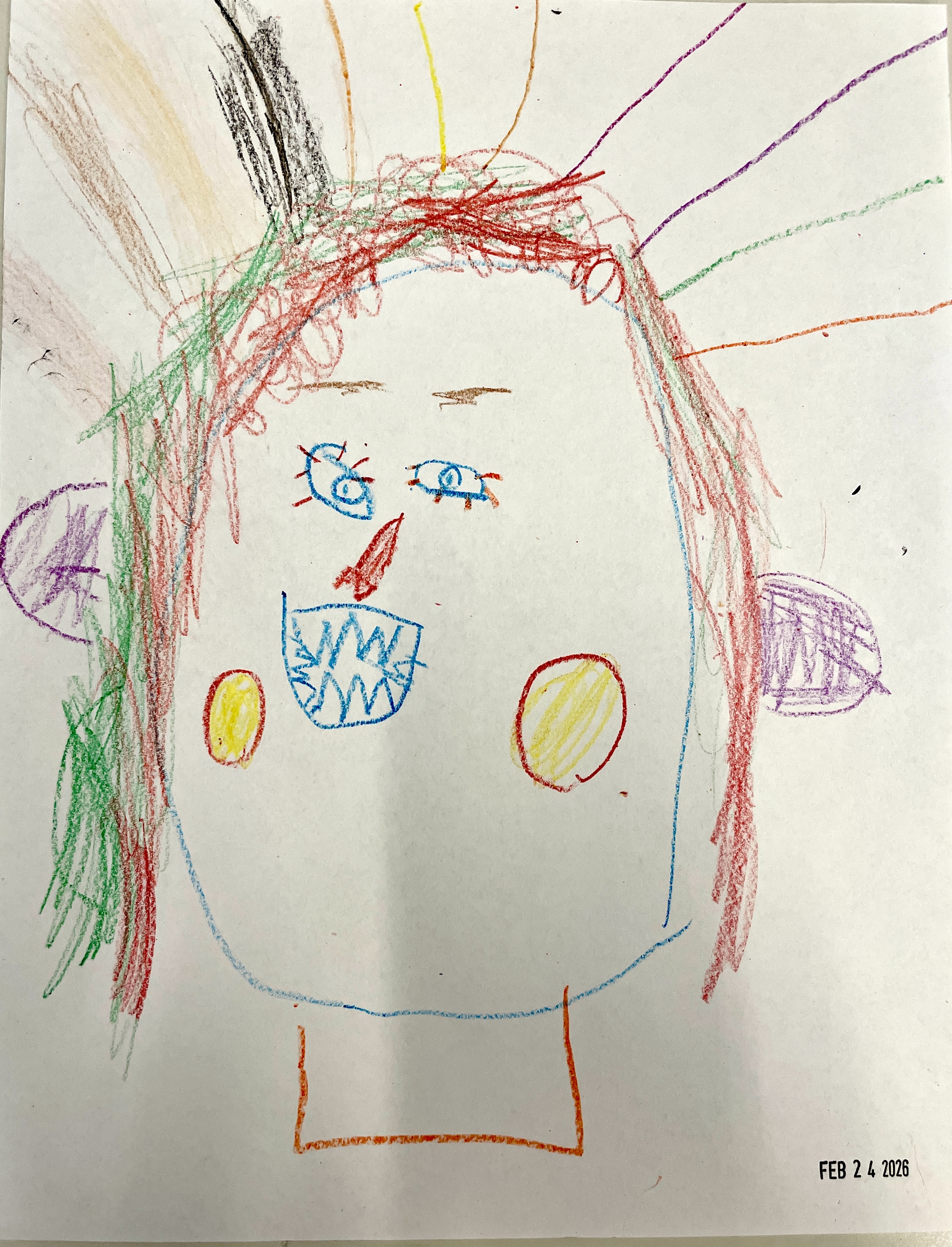
Self-portrait drawing is a meaningful pre-writing activity that children can do multiple times throughout the year in the early childhood classroom. When young children look carefully at themselves in a mirror, what do they see? How do they pictorially represent the shapes that comprise their head, eyes, nose, mouth, ears, hair, and other facial features? Three-, four-, and five-year-olds typically approach this task with an open mind and a willingness to try, without fear or self-consciousness. In the process, they practice many early literacy and pre-writing skills, including pincer grasp and fine motor coordination, close observation with attention to detail, symbolic and representational drawing, and spatial organization within a page.
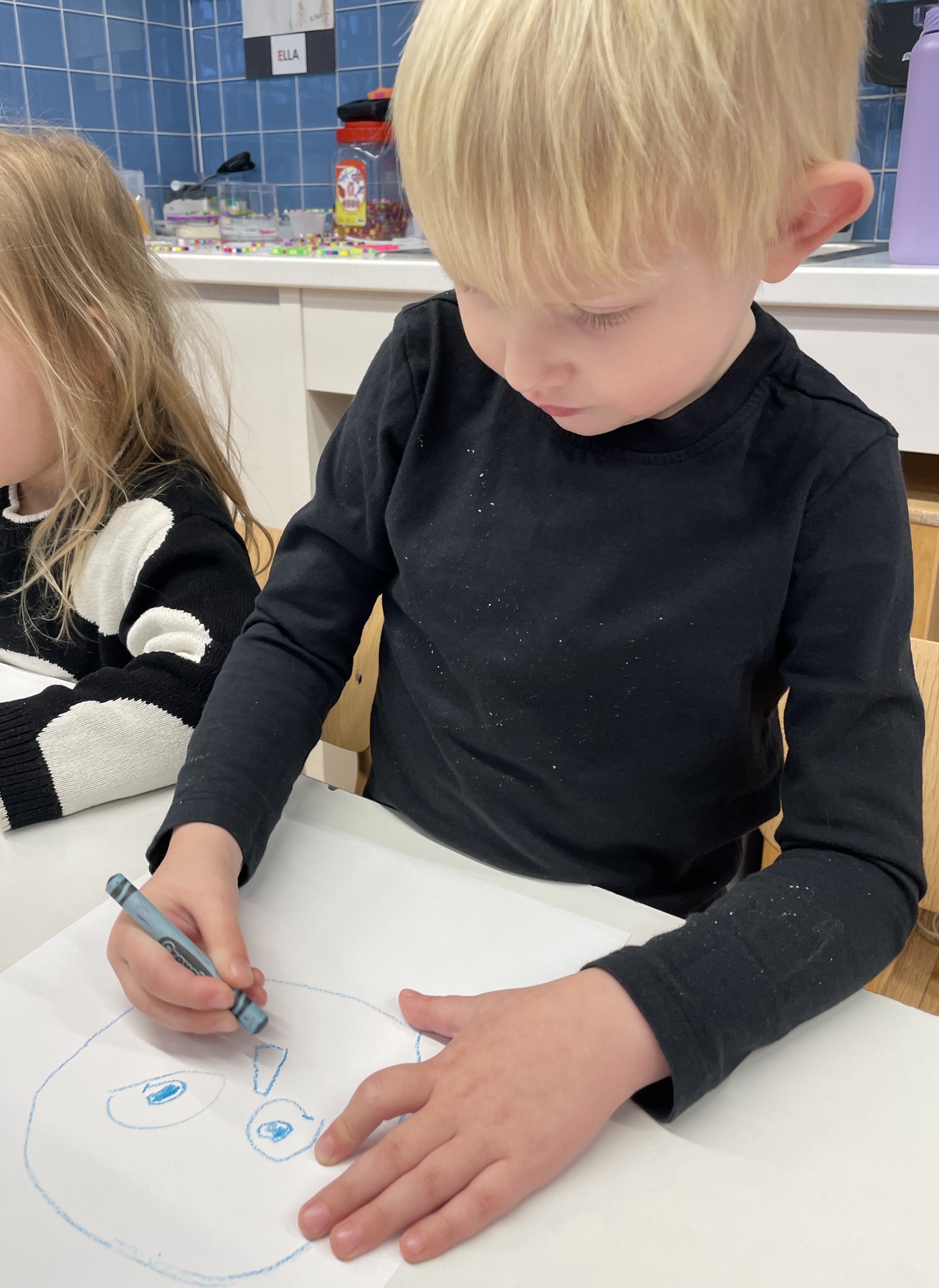
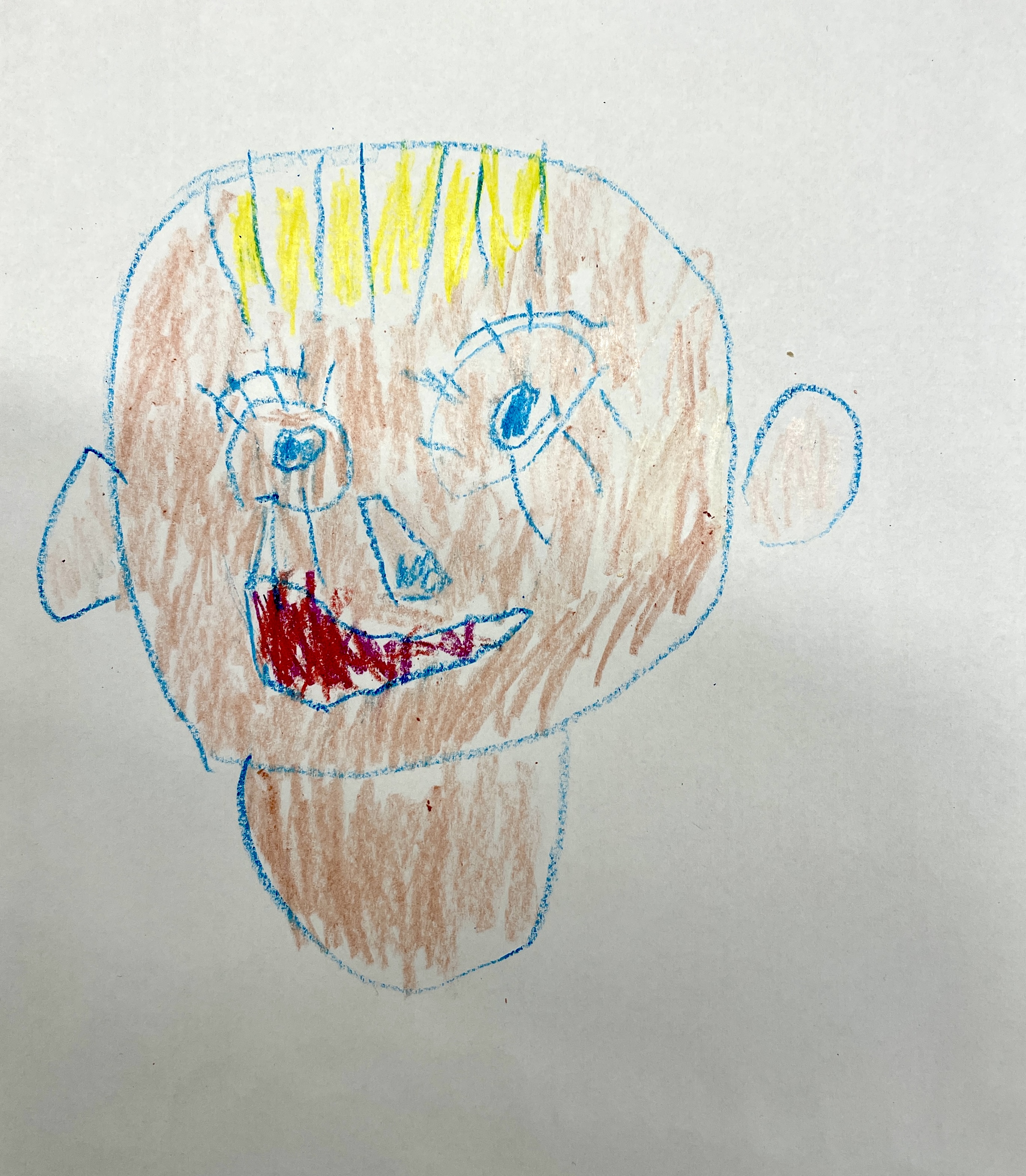
Children must make many decisions while drawing a self-portrait, including deciding how to begin (do they start with a big shape for the head or some other way?), and they must also plan where to place their features within the picture space — how far up or down do the eyes go? Does the nose fit somewhere in the middle? Where does the hair begin and where does it end? It can be useful information to a teacher to observe how they negotiate the space between each part, all while studying their own face in the mirror. It’s an enormous but very engaging task!
As a teacher, my approach to self-portrait drawing is as child-led as possible. My goal is for the result to be an authentic expression of who the child is, their drawing style, and their overall developmental stage. I do not want children to feel pressured or to have any particular expectation about how their work should be or look. I want them to make what comes naturally to them, according to their own drawing ability and visual logic.
The Details
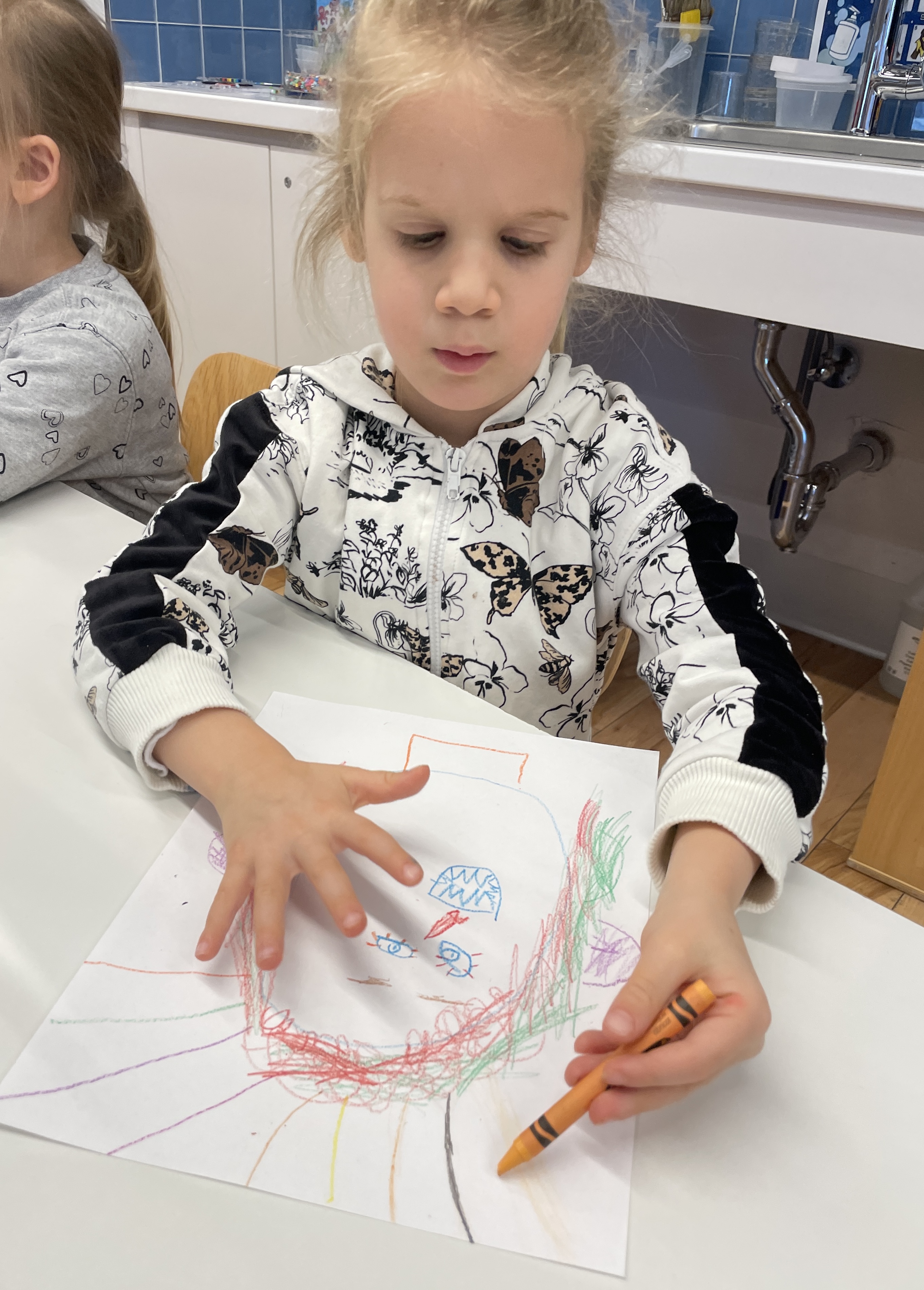
When I introduce how to make a self-portrait to my class, I first model by using a mirror to examine my own face. I think aloud about my facial features and elicit student input on which shapes to draw to represent them. I use specific language when talking about parts of the eye (iris, pupil, eyelid, eyelashes, etc.) and encourage my students to draw their noses and mouths as they actually appear, nostrils and lips and all. I prefer to do this work in a small group so that each child has a mirror and enough time and space to complete the task. If a child is working and says, “I’m done!” very quickly, I will encourage them to look again and add more details. I might ask, “Did you remember to draw your eyebrows? What about your ears? And your neck?” Usually, that is enough prompting for them to go back and work some more.
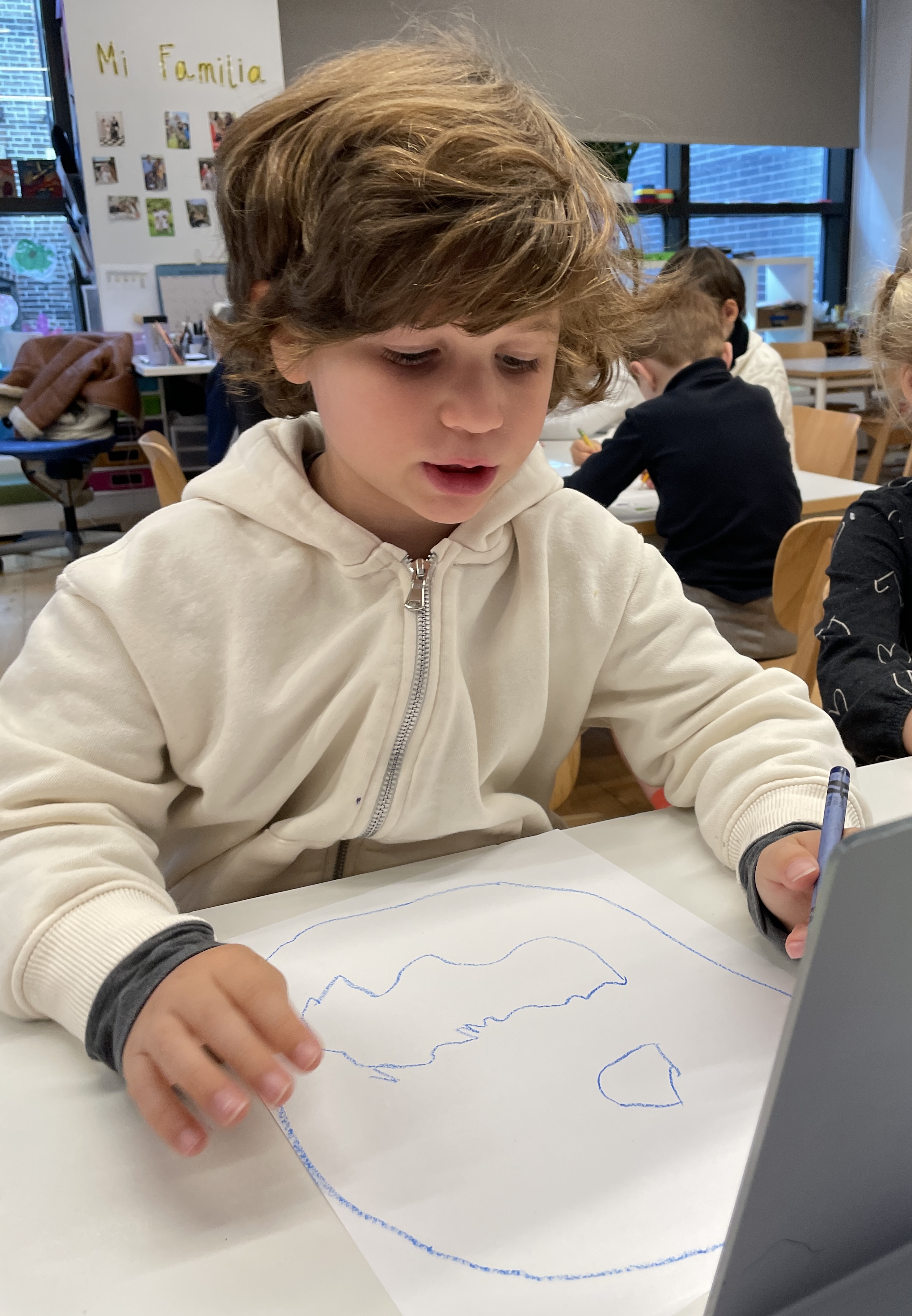
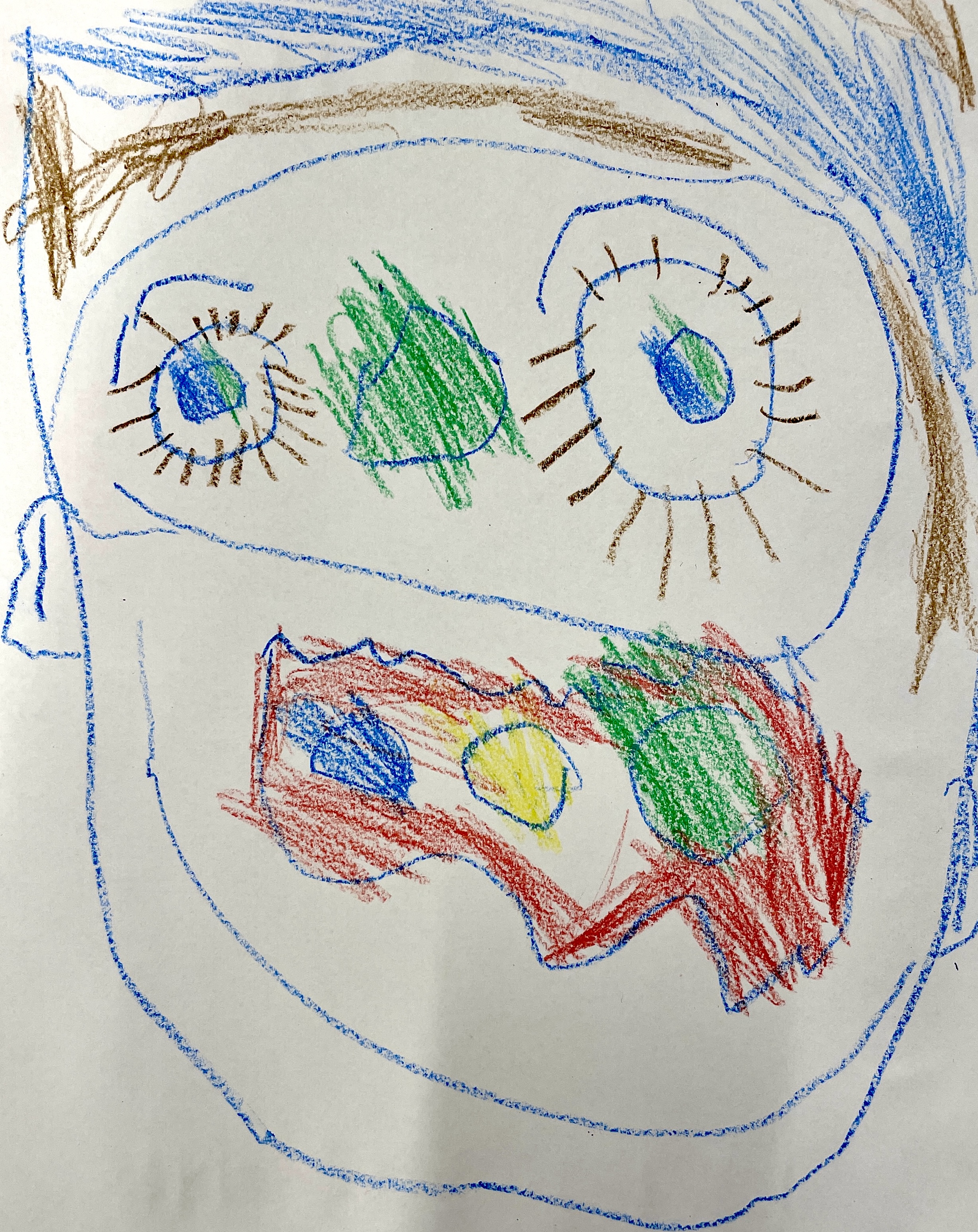
In terms of materials, sometimes we use pencils or crayons, while at other times we use markers, paint sticks, watercolors, clay, or even loose parts (found materials). When they are finished, I like to display the work in a place where we can look back and admire the self-portraits over time, and where children can refer to them in their conversations with their peers, parents, or me. When children have the opportunity to look — and look again — their noticings become more nuanced and descriptive. It is wonderful to be a “fly on the wall” while children are engaging in this kind of talk.
The Bottom Line
Whether your students make self-portraits just once a year or every single month, doing this kind of work in your early childhood classroom is important, enriching, and beautiful. For children who can already draw simple shapes like circles, ovals, and triangles, self-portrait work offers an opportunity to apply their skills in a real context. For those who are not yet able to draw symbolically or representationally, positive encouragement and guiding questions support their approximations. As time goes on, you will notice growth and change in the work that your young students produce. The bottom line is that this work is truly their own and becomes a running record not only of how they perceive themselves, but also of how they represent that perception through drawing.
Discover more from TWO WRITING TEACHERS
Subscribe to get the latest posts sent to your email.


