Estimated Reading Time: 4 min. (686 Words)
Target Audience: Elementary Teachers, Specialists, Coaches
The Context
My fourth graders and I are crafting stories in the style of Leo Leonni. While we’re emulating his story form, however, I want kids to feel like the writing is theirs, in their voice. But how to teach something as abstract as voice? How do I give kids tangible skills and tools for building their own voice into writing? What can they do to let their personality show through the written word? These questions lay the foundation for a classroom activity I’d like to share with you.
Why it Matters
As a writer, I want my voice to resonate. Craft moves like sentence structure, vocabulary and tone contribute. But for me, it goes further. Simply put, I’m a bossy writer. I like having control. I don’t just want readers to hear my voice, I want readers to hear my voice in their head as I’m reading – the way I’d like it read. That’s where the visual component of writing comes in: through formatting and punctuation.
Why even use punctuation? Why incorporate capitals, bold, or italics? Formatting and punctuation are the instruction manual for “hearing” a story in the mind’s ear. As readers, we need visual cues to guide us towards making sense of written expression. Talented authors offer that guidance without distracting readers from their message, and I wanted students to get a sense of that power.
The Details
I started with a question to students: How can we incorporate our voice, our personality into our writing? We developed the following from our conversation:
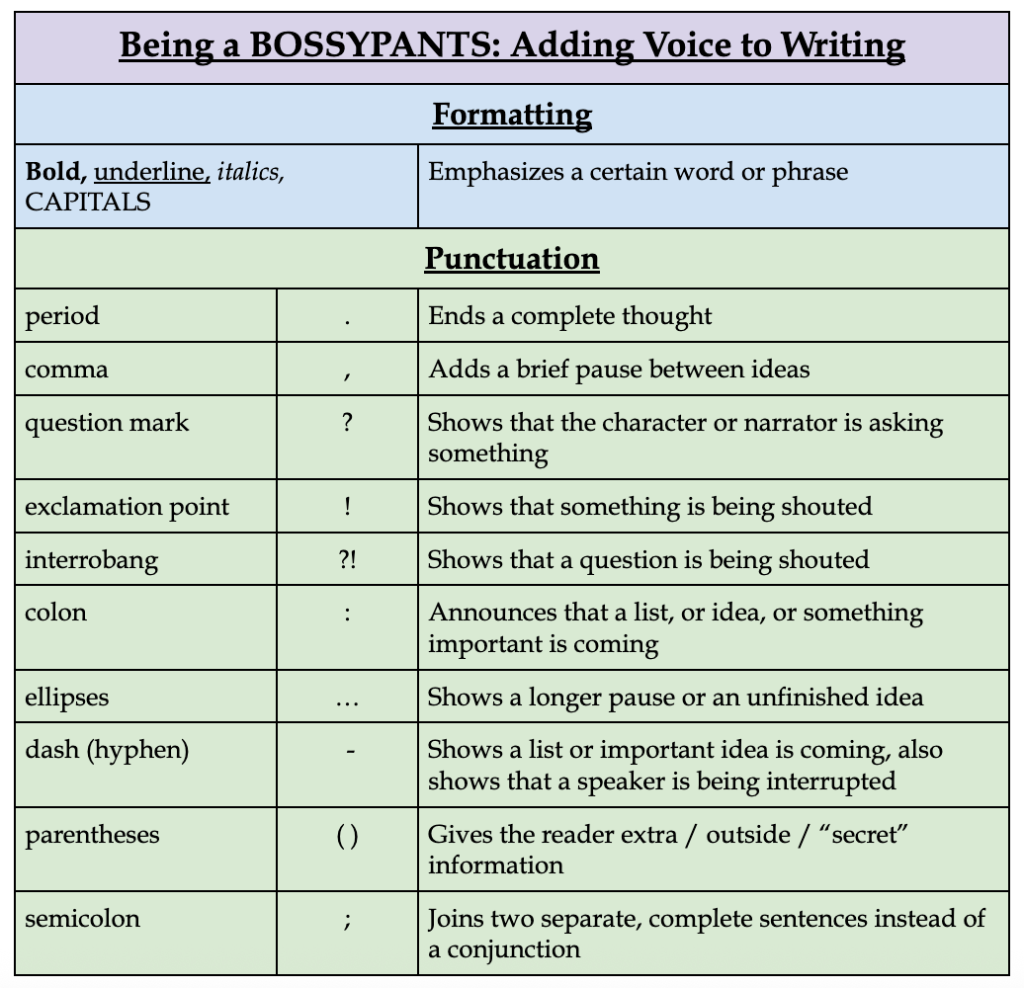
Getting Practice. Armed with these tools, we turned to Aesop’s fable “Belling the Cat.” I modeled playing with the read-aloud, showing how changes in my voice could be reflected visually in the text. Students then read the story out loud for themselves, changing punctuation or formatting as they saw fit – without a single change to the wording itself.
Students had a FIELD DAY:
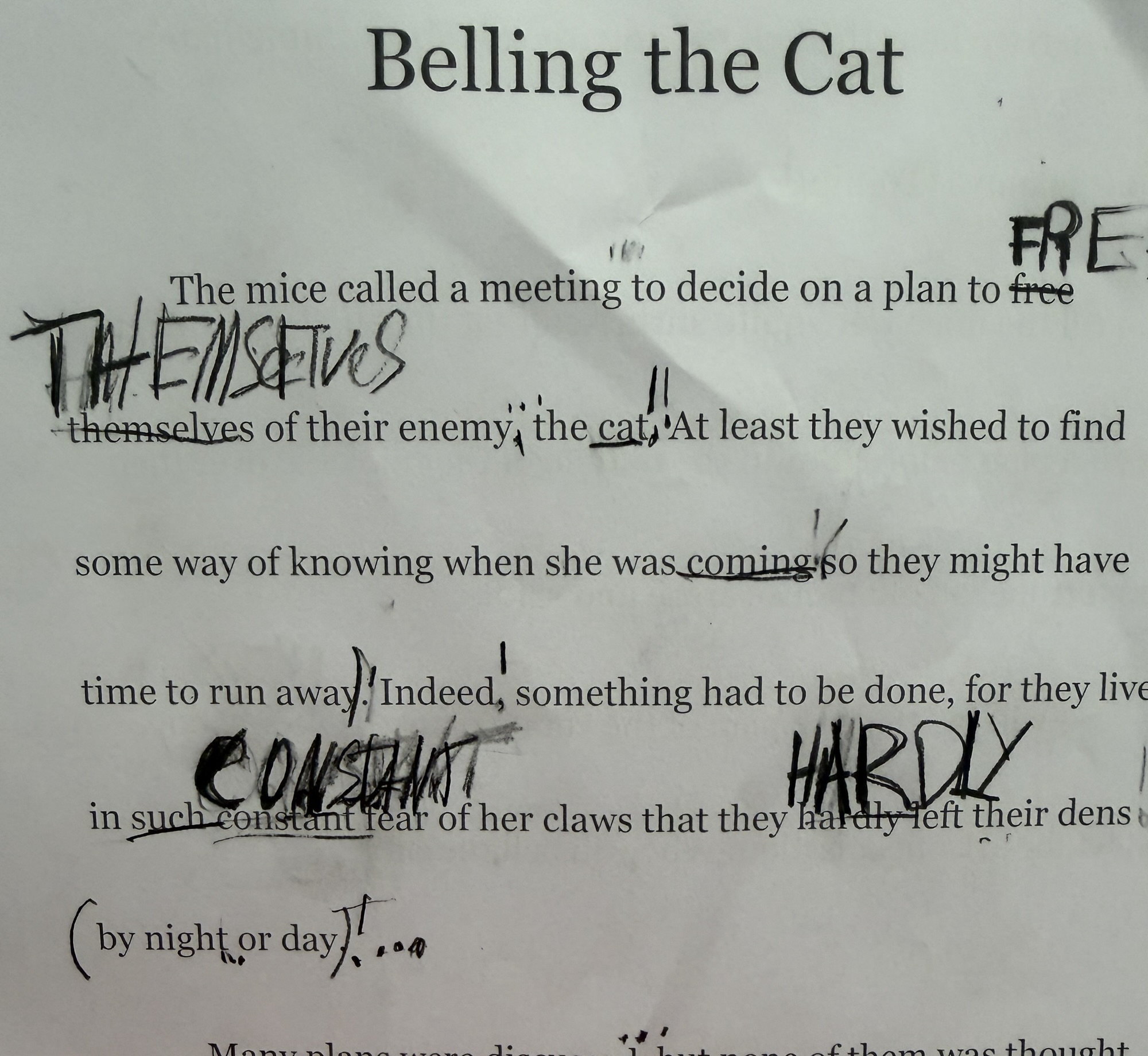
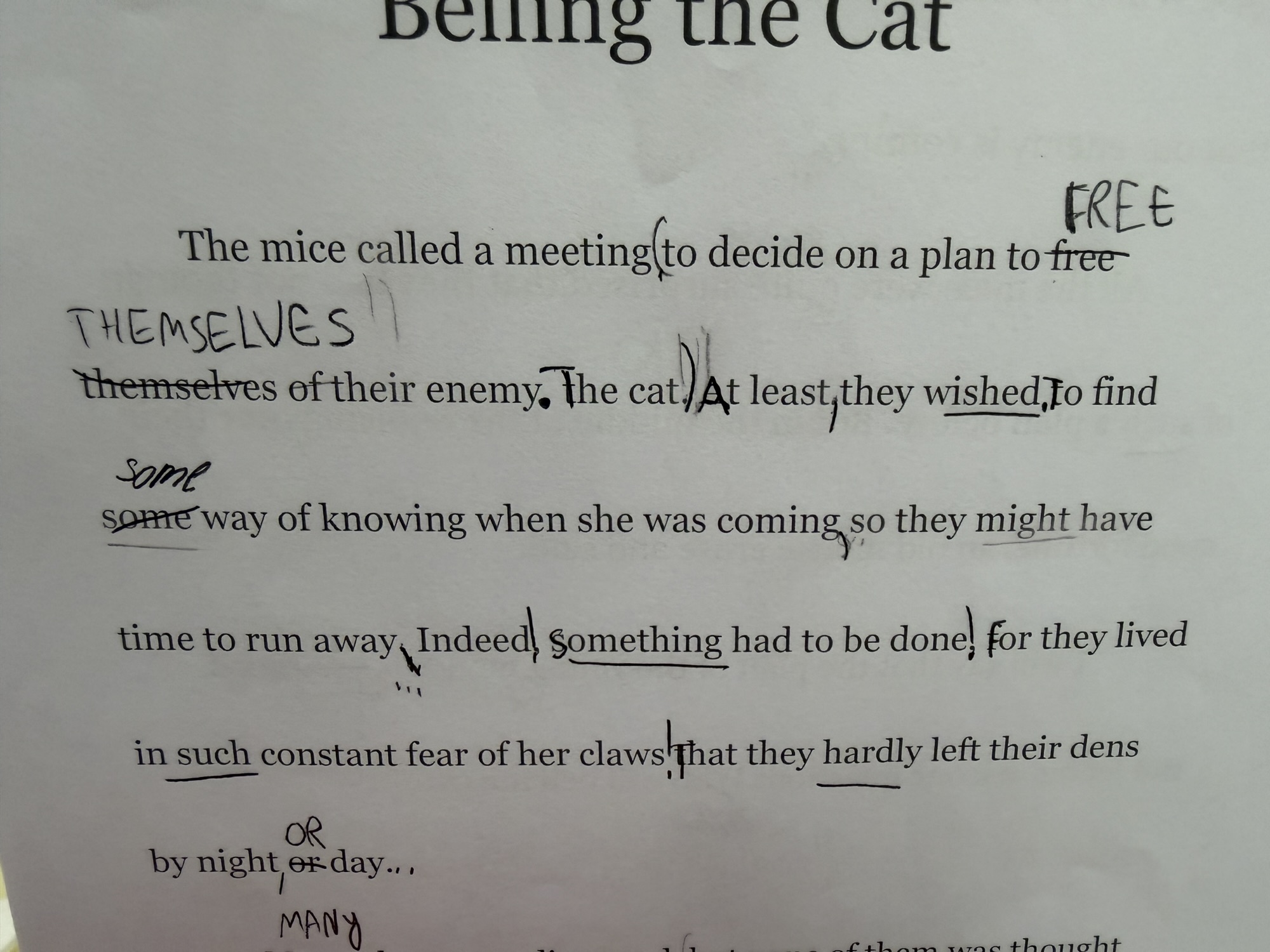
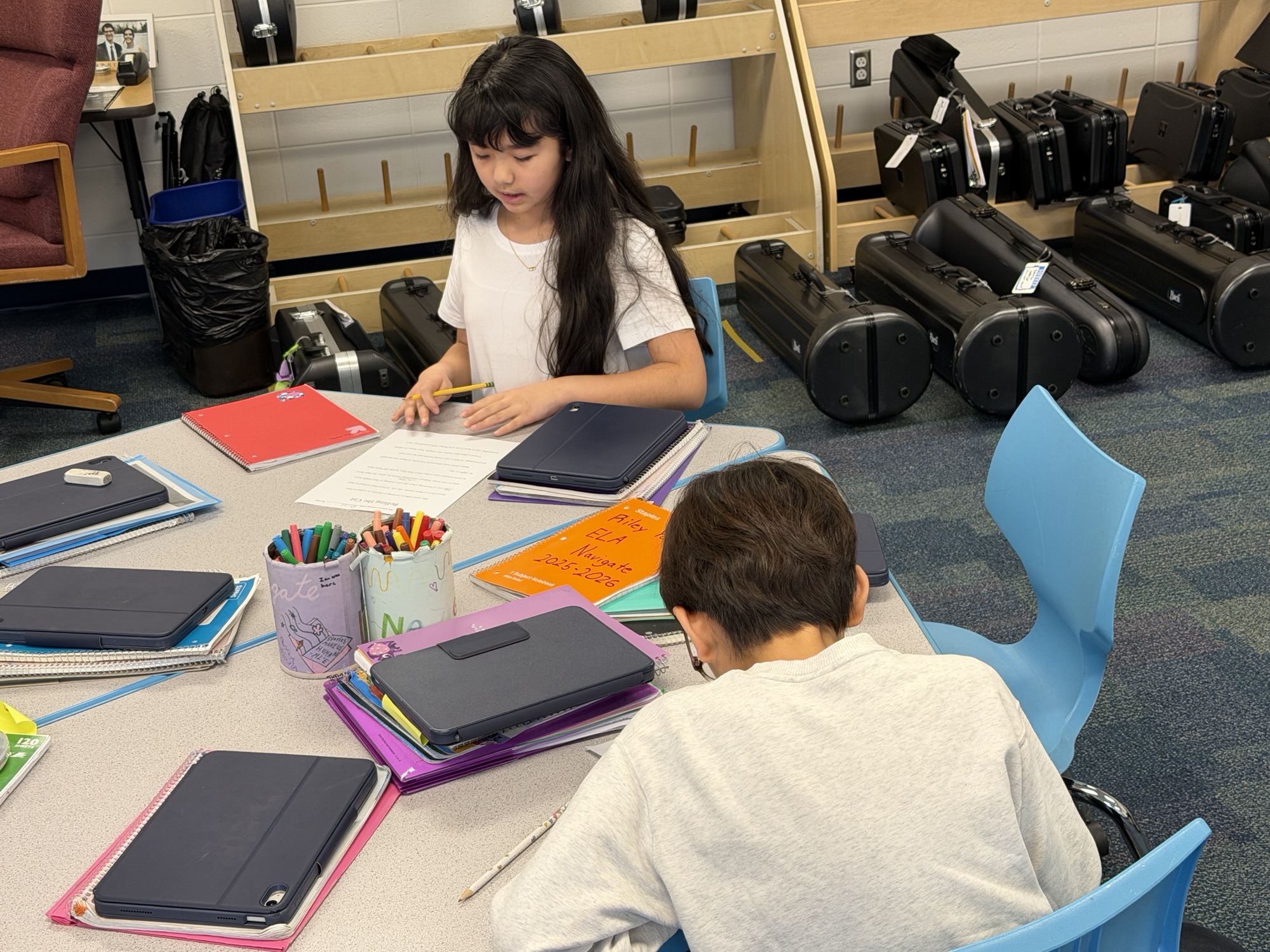
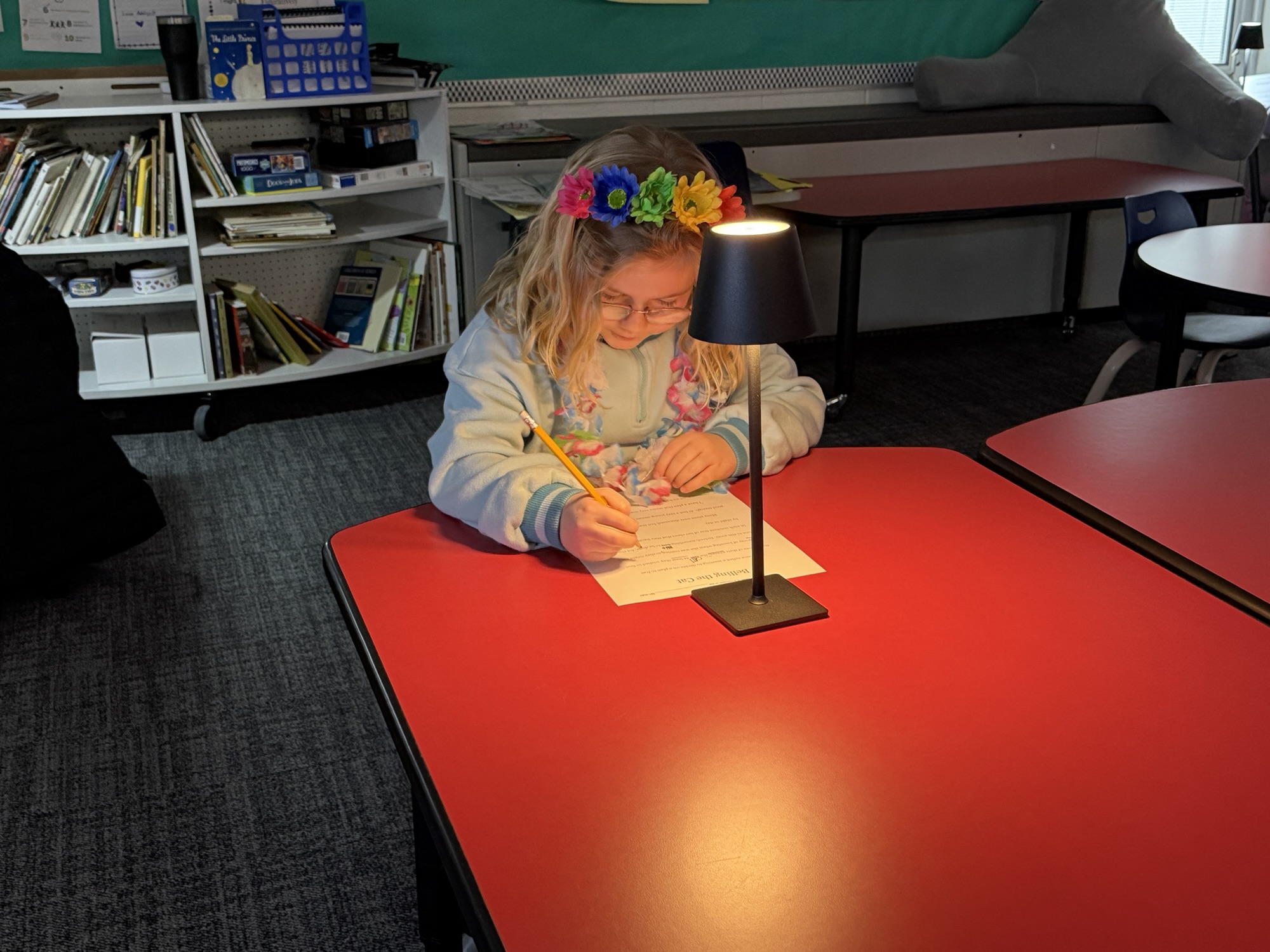
We regathered and read our fables aloud, this time using the expression as we each saw and heard it. All of us (myself included) used the sharing time to go “idea shopping,” changing our work whenever we heard an idea to incorporate.
Examining Our Own Work. We weren’t done! Now that students had some experience with punctuation play, it was time to let them loose on their own writing. We returned to the beginnings of our Leo Lionni stories and played with punctuation and formatting just as we had done for the Aesop’s fable. Once again, we read aloud to ourselves. We paid attention to what we emphasized and how we read, and we modified visual elements to reflect how we wanted readers to “hear” our words.
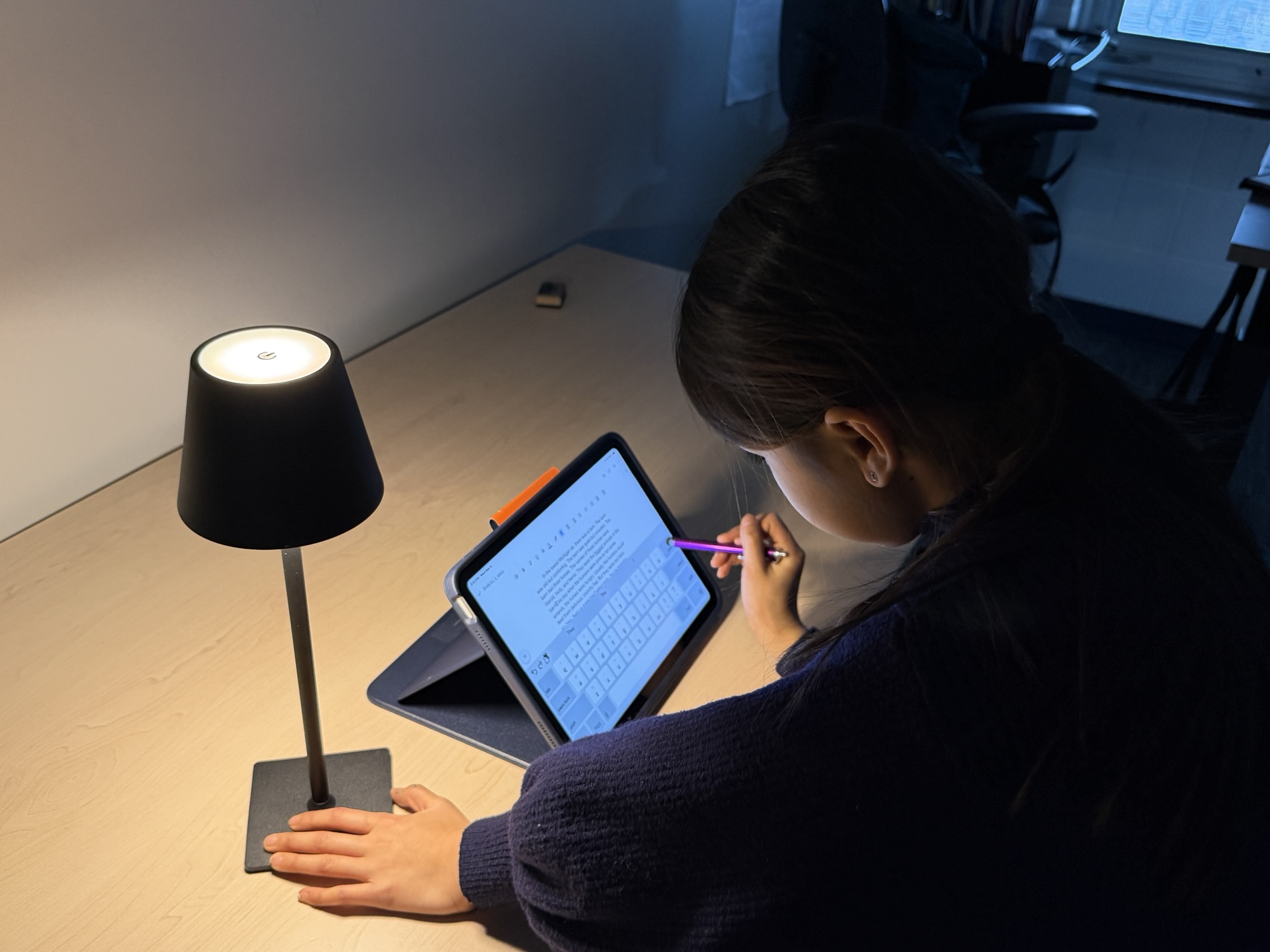
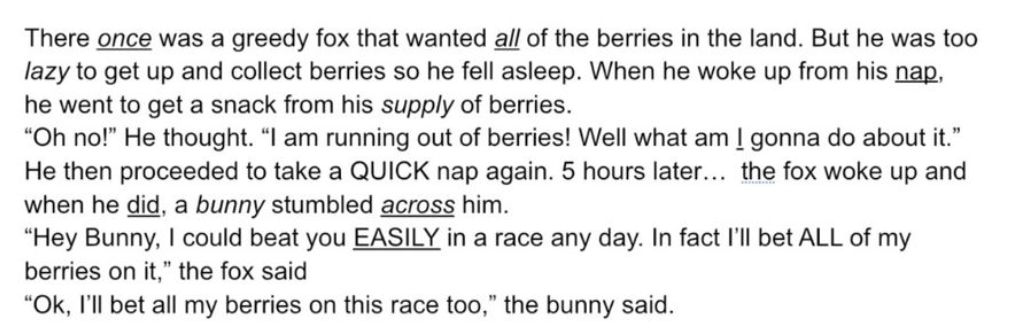
Leveling Up. Students posted their revised work to our class Seesaw page. From there, classmates recorded themselves reading the story as formatted and punctuated, and posted those recordings in the writer’s comments.
So…how did students feel about hearing their work read aloud? I’ll let their responses tell the story:
- “When I was listening to the recording [of someone reading my writing] I felt accomplished that somebody actually got what I meant.”
- “I felt empowered. People were reading it right, and I was hearing my own words.”
- “It was weird to hear my writing spoken, but it was helpful to hear what works and doesn’t work. I figured out which tools were helpful or not.”
The Bottom Line
As my writers improve their use of punctuation and formatting tools, I’ll expect them to use these craft moves in their home rooms, or any time they pick up a writing project. I hope that they’ll begin to enjoy, as I do, the satisfaction of being a “voice” in their readers’ heads.
And now that I’ve enjoyed success with this strategy, I’ll use it across my first- through fifth- grade groups, and I’ll offer it as a resource to other classroom teachers. It’s a short, simple way to boost the engagement with and quality of writing projects, and I hope you’ll find something useful here, as well.
Discover more from TWO WRITING TEACHERS
Subscribe to get the latest posts sent to your email.


Brigerton https://seekingopenspace.wordpress.com/2026/03/16/bridgerton/
LikeLike
A Tornado Drill Limerick — Oh My!
https://midlaughs.blogspot.com/2026/03/tornado-drill-limerick.html
LikeLike