
Estimated reading time: 3 minutes, 24 seconds. Contains 680 words
Primary Audience: Teachers and Coaches, Grades 3-8
A Backstory
My goal as a writing teacher is for kids to love language, the craft of it. I want students to treat words like their own personal playground, unafraid to take risks and have fun. I want them to see how exciting language is, how magical it feels to get just the RIGHT words for the job. For that reason, I’m always looking for ways to deepen students’ understanding of vocabulary. Today, I’ll share a few strategies, tell how they help my writers, and list how much time I expect those activities to take in the classroom.
Word-building
What it is: Many language arts programs have a word study element examining base and root words, as well as prefixes and suffixes. In this particular lesson, I use the guide below to teach the specifics of how words are built from the roots on up.
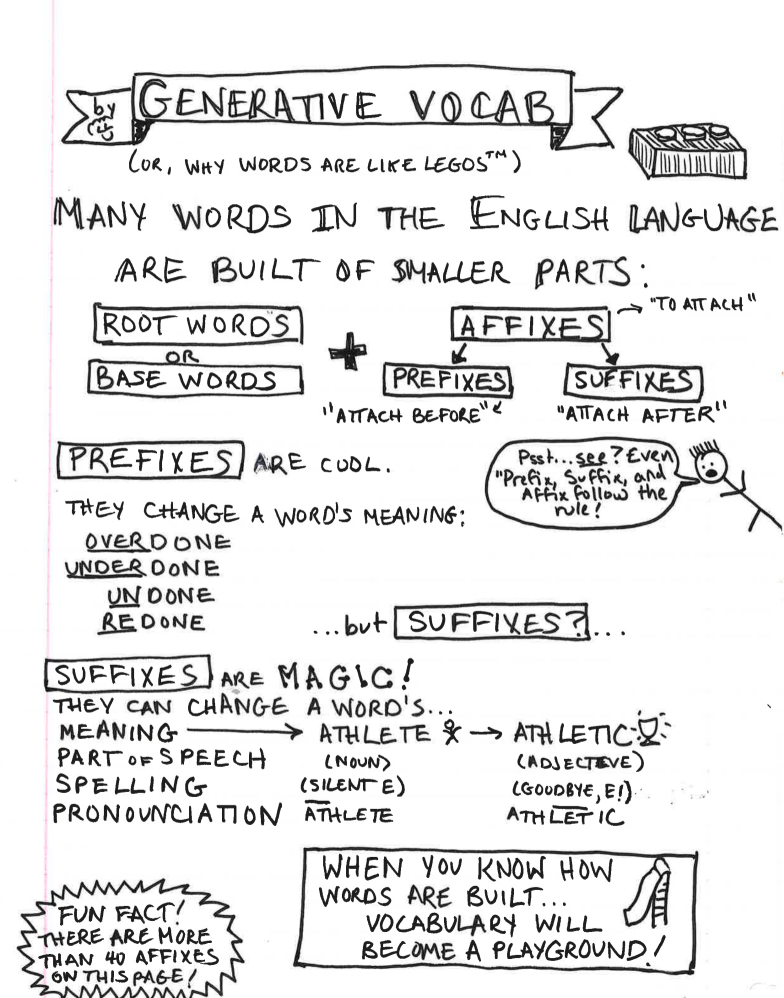
Feel free to copy and share!
How it helps my writers: Word-building helps my writers use better spelling and richer vocabulary, but it’s often taught without context. Looking at words as “Legos” is an accessible way for them to understand that language has a reliable structure. Once they understand the logic behind affixes and how they’re used, my students see the meaning of word work, and they engage more deeply in their learning of vocabulary.
Time in classroom: This introductory lesson takes 20-30 minutes, and it works for both small- and whole- group instruction.
Frayer Model
What It Is: Frayer models (explained in detail here) bring students to deeper understanding of concepts. Learners examine ideas through four lenses:
- Definition
- Characteristics
- Examples
- Non-Examples
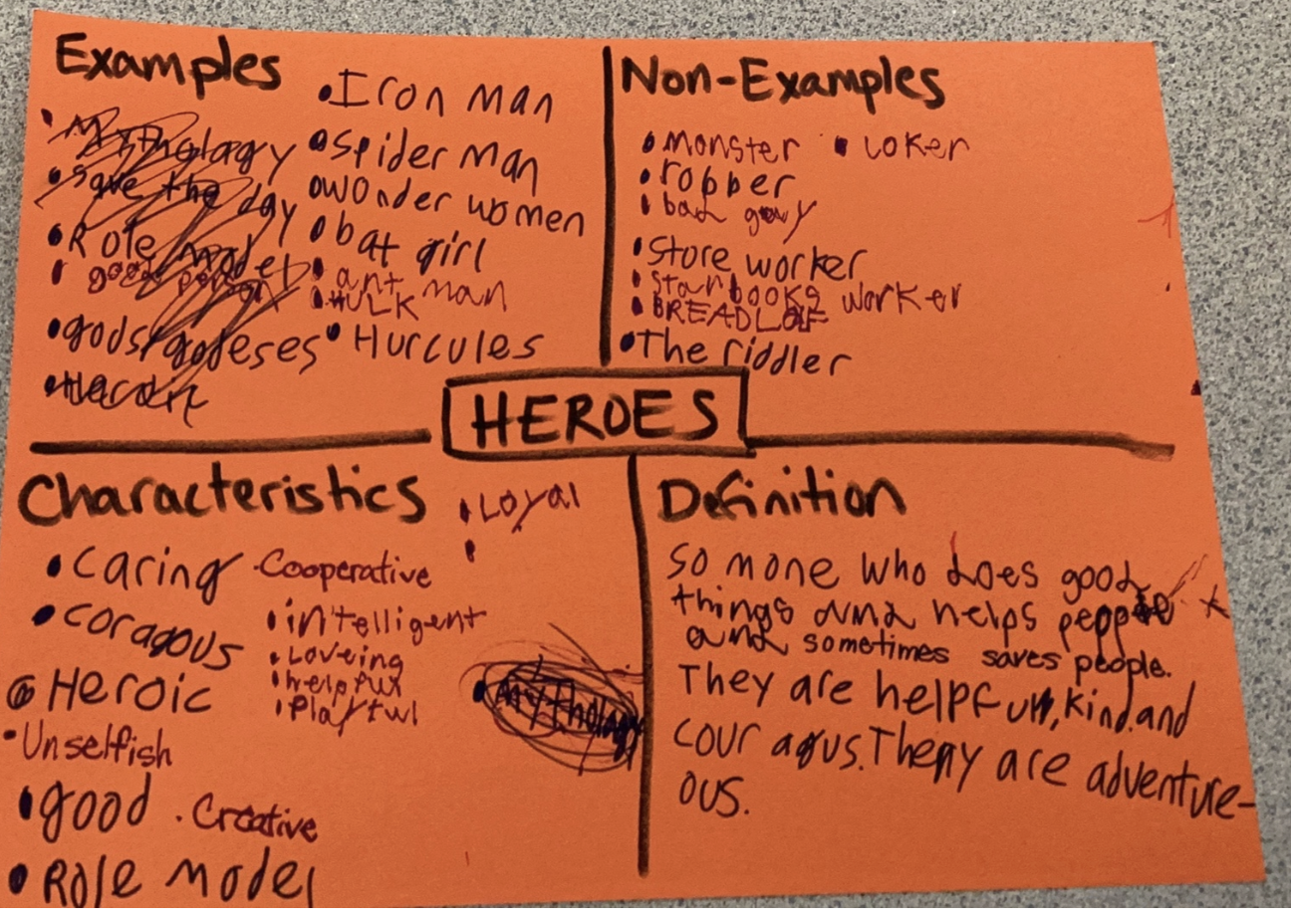
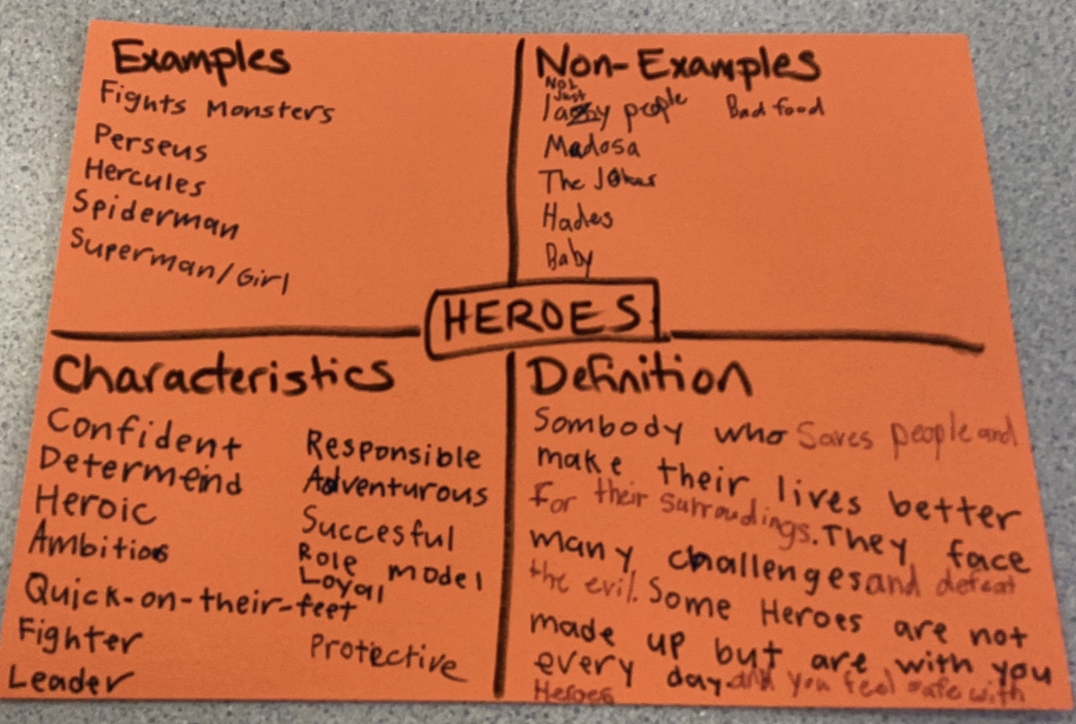
I’ve adapted the original Frayer model to make it more developmentally appropriate for elementary students. It’s easier for my students to consider examples and non-examples first, as it leads them to the characteristics of the concept. Then, and only then, do they have the ability to develop a reasonable definition for the concept. Here’s my adapted template if you’d like to use it.
How it helps my writers: While most vocabulary activities study a range of words, I love Frayer models for their ability to bring students to a deeper understanding of a single idea or concept. It’s particularly helpful when I want my students to reflect on a particular theme. The following Frayer models were completed by groups of third graders in preparation for a Hero’s Journey fiction project.
Time in classroom: 10-15 minutes for a class example (I like to use “recess” for modeling), and about 20-30 minutes for individual/group work, depending on the amount of discussion.
Word Relationships
What it is: I wish I could take credit for this next idea. It was actually a group of first graders who provided the inspiration. I asked them to sort flash cards by synonyms or antonyms, and they promptly found new and better ways to categorize the words. I’ve been using their strategy ever since.
I like the physical act of sorting, so we take vocabulary flash cards and kids find words that have different kind of relationships:
- Who are the “siblings” (words that are just about alike)?
- Who are the “cousins” (connected words, but with different meaning and purpose)?
- Who are the “frenemies” (opposites)?
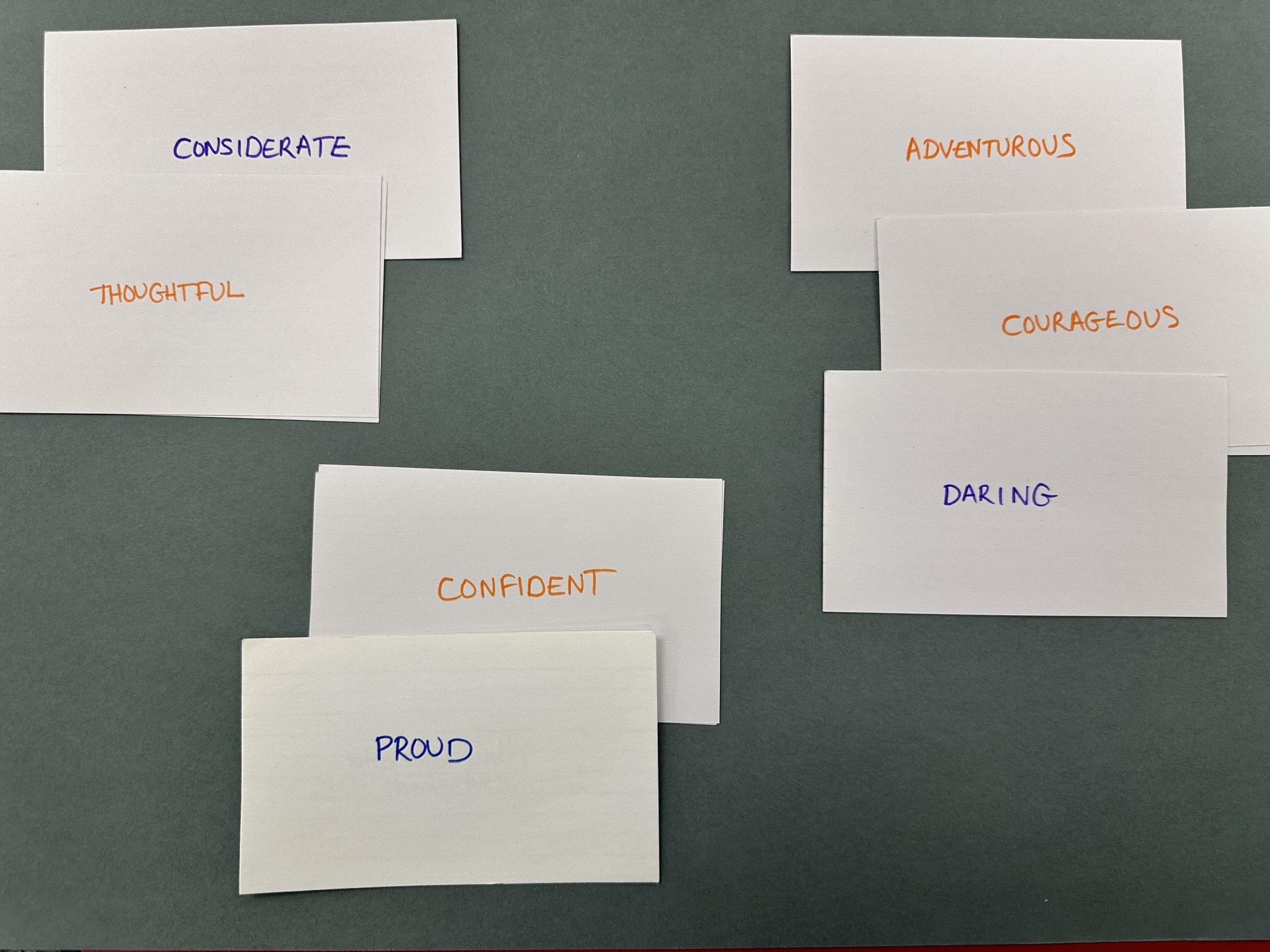
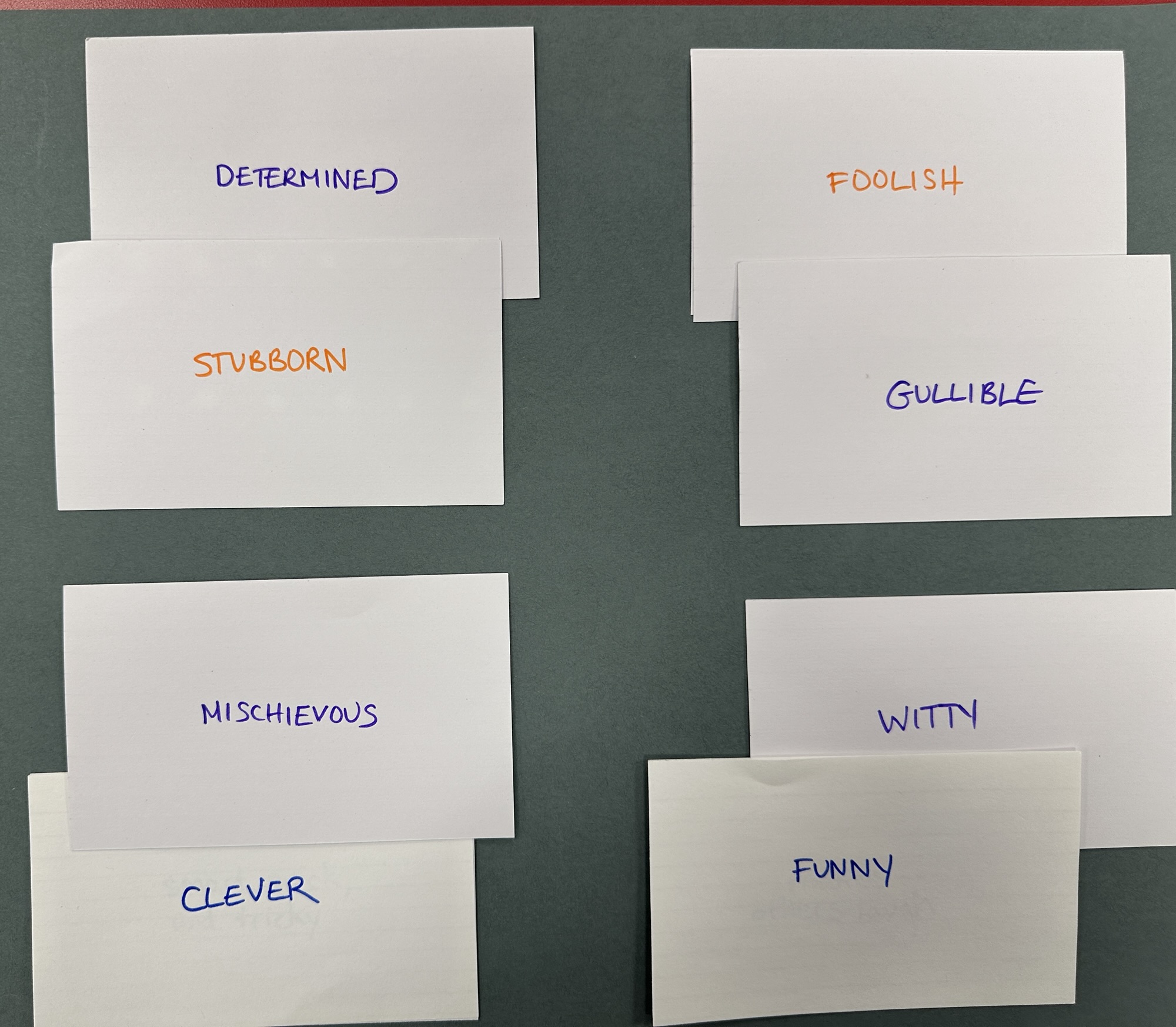

How it helps my writers: I often use this activity when discussing character traits, and it helps students become more deliberate when choosing vocabulary for their writing. Kids are forced to articulate finer shades of meaning, connotation, or purpose, especially when it comes to the “word cousins.” And on certain occasions, kids will invent new relationships (how might words be “friends” or “parents?”).
Time in classroom: About 10-20 minutes if students are already familiar with the vocabulary. Otherwise, I have to account for time to develop familiarity with the words.
The Bottom Line
I want writers to enjoy language, to feel a sense of play while expressing themselves in written form. The broader students’ knowledge of language and vocabulary, the bigger their “word playground” becomes. These are just a few of the activities I use, but I’d love for you to share your favorites in the comments!
Discover more from TWO WRITING TEACHERS
Subscribe to get the latest posts sent to your email.


New to your world of literacy and writing. I am blown away with the examples that I read. The Frayer model, explaining how words and vocabulary are built like Legos so that children can understand the idea better, and using notecards to match words based on “siblings, cousins, and frenemies” are such child based and innovative ways to teach writing and vocabulary. I plan on using these in the classroom with my future students, as well as my own children. Thank you so much!
LikeLike