
Target Audience: Teachers, coaches, administration
Estimated reading time: 4 minutes. Contains 842 words
Each new school year, I think about the writing instruction that lies ahead. It’s a good time to re-ground myself and re-commit to my teaching philosophy. As I take stock, I don’t just focus on affirming my views. It’s also important to challenge my thinking, to weigh my beliefs alongside new learning, and to stretch myself in new directions.
The Context
One exercise that’s particularly helpful is one I picked up from Elena Aguilar, a transformative learning coach. While I attended her seminars, she encouraged participants to keep a list of what we’d like to:
- Start
- Stop
- Continue
- Remember
I often get overwhelmed with new ideas in workshops. I flood note-taking pages with suggestions for myself, only to have difficulty putting all of those ideas to use. This four-part exercise is highly useful, as it breaks thoughts down into categories that feel manageable. Years after learning this approach, I encourage colleagues (and students!) to use the format when assimilating new information.
This school year, before getting overwhelmed with scores of ideas to implement in my teaching, I’ve decided to apply this exercise to my own goal-setting. I’m sharing my ideas here, and I’d love for you to consider doing the same alongside me.
What I’ll Be Doing
START: Conducting focus groups with reluctant writers.
When I visit classrooms to kick off optional creative writing sessions, there are almost always students in the room who are visibly unhappy about it. I’ve often thought, “Oh! if I could just have some time with them, maybe I could reach them, find out where their resistance lies, and coach them through it.”
So, I’m working with teachers to identify any “loveys” who get frustrated during – or just plan dread – writing time. I’ve developed a survey (find a copy here) to help gauge their views, and I’ll use the data to guide our discussions. We’ll work together in fifteen-minute blocks using a combination of “pep talks” and writing time to build stamina and confidence. Will they all love writing? I don’t know, but I’ll be satisfied if they don’t hate it.

STOP: Closing my classroom doors.
Over the last couple of years, I showed up to work, but retreated to my classroom at the beginning and end of the school day, plan time, or my lunch period.
While I needed the solitude, it affected my ability to advocate for writers and writing. I’ve missed out on chances to interact with students and speak with them about their interests and talents. When my door is closed, I don’t get to have conversations with my colleagues about what’s working well for them, or where I can offer support. Opening my door will once again bring opportunities for community and connection.
CONTINUE: Corresponding with students, past and present.
Inspired by a handwritten letter from a former student last spring, I surveyed my students to see who would like to be “snail mail” pen pals with me over the summer. I didn’t expect how much joy it would bring me to send and receive that correspondence!
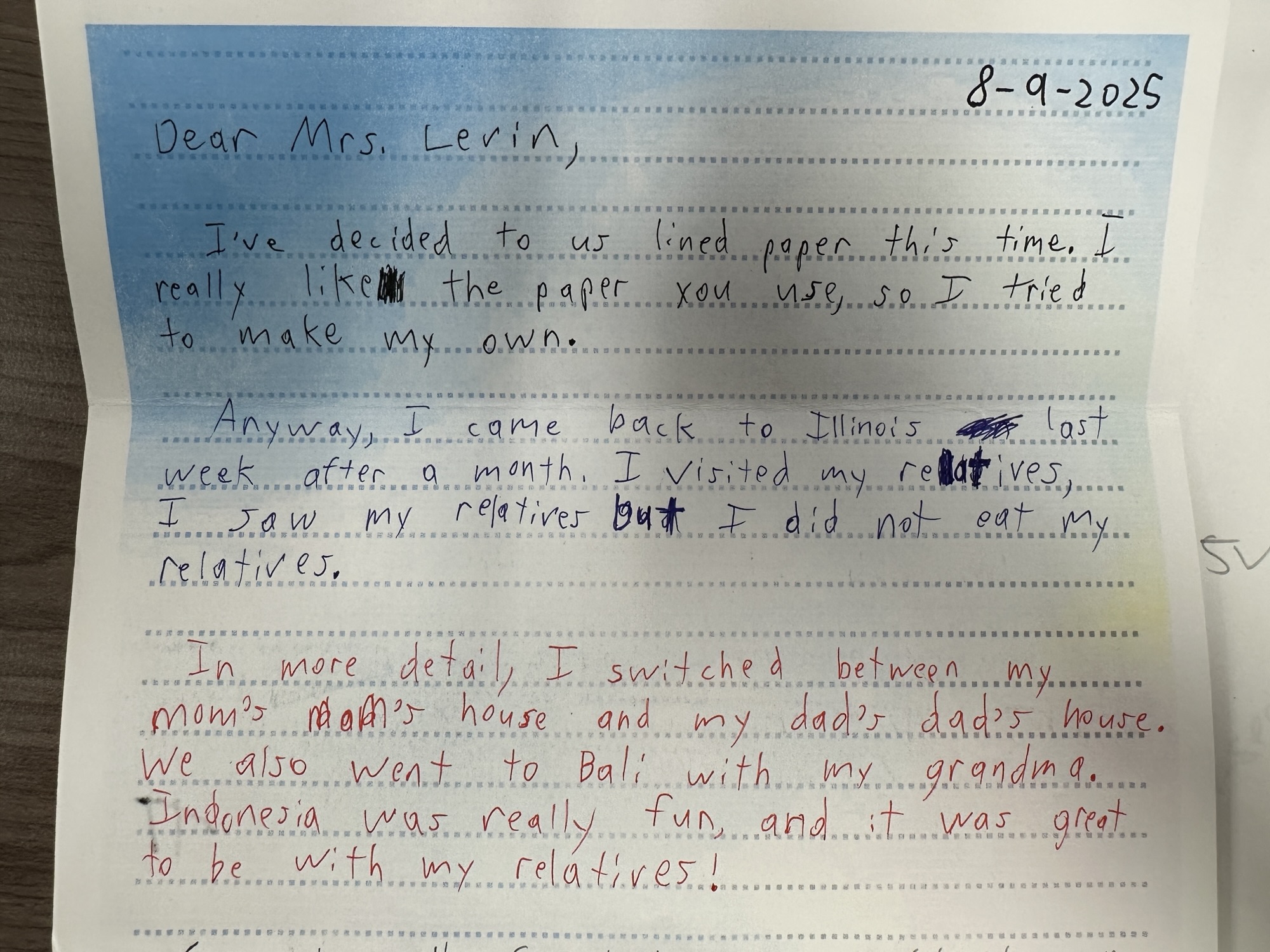
As a writing teacher, I see multiple benefits of having student pen pals:
- Students practice writing;
- Students experience the direct connection between writer and audience; and
- I get to know my kids better as writers and as people.
I found the letter-writing to be so successful I’m expanding it. I’ll continue writing with my current pen pals, and I’m posting a “mail box” outside my classroom door inviting all students in the school to strike up a letter-writing relationship. I look forward to seeing what kind of writing community we can grow from my grassroots effort.
REMEMBER: How important it is to remain PRESENT for others.
I returned to the classroom last year unsure whether I still had it in me to teach. I had recently endured emotional hardship, and I wasn’t sure how the demands of teaching would affect me. I was sure, however, that I would use the year to be a positive presence for my students, to make sure they knew our language arts room could be a safe haven in a tricky world.
When I got my traditional year-end letters from my fifth graders, many of them articulated how supported they felt being a writer in the community we created. And I saw it, too: students were happier, and their writing evolved as a result of our intentional connections.
This year, as I work to support students and colleagues through leadership transitions, curriculum adoptions, and problems big and small around us, I will remember that the most generous thing I can do is to be fully present and supportive of students and colleagues.
One Final Thing
How about you? As you consider the work that lies ahead this year, what will you want to start, stop, continue, or remember? Post your thoughts and reactions below. Let’s start the conversation!
Discover more from TWO WRITING TEACHERS
Subscribe to get the latest posts sent to your email.


Thank you for sharing your reflective approach to the new school year, Lainie. I love how you balance affirming your philosophy with a readiness to grow by starting, stopping, continuing, and remembering key practices.
You asked about us? As you know, I’m in recovery mode over here. Therefore, I am replying a bit differently.
START: Writing again! I stopped in late May when the side effects from chemo got horrible. I restarted yesterday (I’m using THE BOOK OF ALCHEMY daily.), and your post reminded me that I haven’t done my daily writing yet.
STOP: Chastising myself when I feel tired (physically, mentally, or socially). I need to remember that I am in the process of healing.
CONTINUE: Using the reminders on my phone to help me remember to do little things. (Again, your post reminded me that I need to open my kids’ lunch account at school tomorrow, since they’re buying instead of packing.)
REMEMBER: To pay it forward. My neighbors and fellow synagogue congregants were incredibly kind to me after my surgery. I need to remember (5, 10, 20 years down the line) to repay their kindnesses whenever they’re in need.
LikeLike