Estimated Reading Time: 8 Minutes (1,456 Words)
Primary Audience: Instructional Coaches and Classroom Teachers

Why It Matters
Knowing the students we teach, beyond data points, test scores, or academic skills, truly matters. One of the guiding principles of the Responsive Classroom Approach reminds us that “what we know and believe about our students-individually, culturally, developmentally-informs our expectations, reactions, and attitudes about those students” (Responsive Classroom, 2025). Similarly, The National Council of Teachers of English’s Professional Knowledge Position Statement says, “Teachers need to support students in the development of writing lives, habits, and preferences for life outside school.”
When we prioritize knowing our students as people first, we lay the foundation for understanding them as writers, and for nurturing their growth as confident, capable authors who know their voices matter, both inside and outside the classroom.
What The Research Says
According to researcher John Hattie, positive teacher-student relationships have a powerful impact on learning, with an effect size of 0.72 (The Core Collaborative Learning Lab, 2024, para. 1). This correlation is echoed in the book No More Teaching Without Positive Relationships, which reinforces the foundational role of connection in the classroom. As the authors write:
“‘No significant learning can occur without a significant relationship.’ …and subsequent research supports this; students who believe they are cared for by their teachers are not only more engaged (Teven & McCroskey, 1997) but also achieve higher academic performance (Miller, 2008)” (Howard et al., 2020).
When we center relationships in our teaching, we create the conditions for both engagement and academic growth-especially in the writing classroom, where vulnerability, voice, and trust matter deeply.
Regardless of Your Script
No matter what writing curriculum your school uses, it’s essential to begin the year by reflecting on a powerful question Ralph Fletcher poses in Joy Write: Cultivating High-Impact, Low-Stakes Writing:
“What kind of writers do we hope to see in our classrooms?”
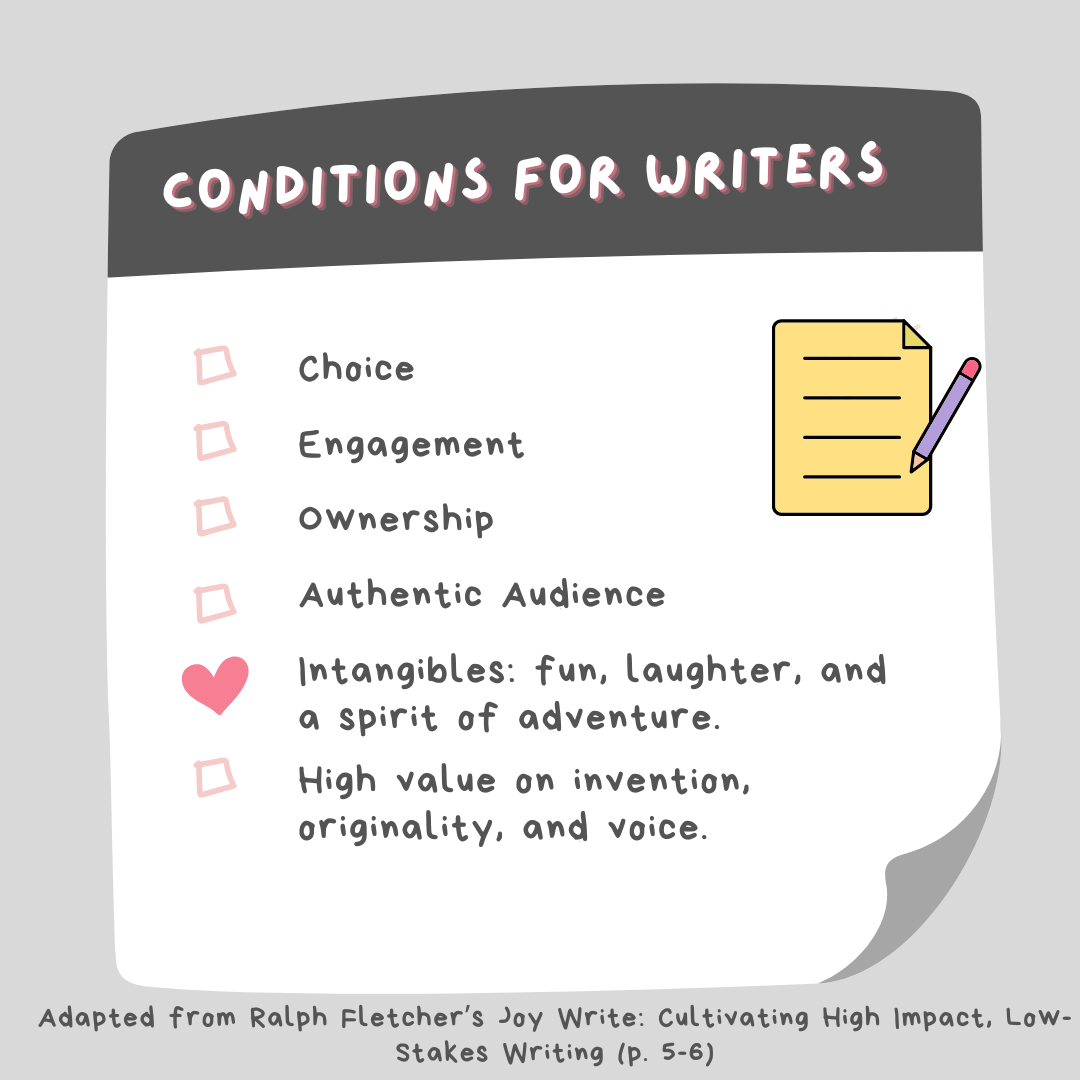
In his book, Fletcher outlines several key conditions that support joyful, authentic writing, conditions that can be created in any classroom, regardless of curriculum or resources. These include:
Routines For Getting To Know Your Writers
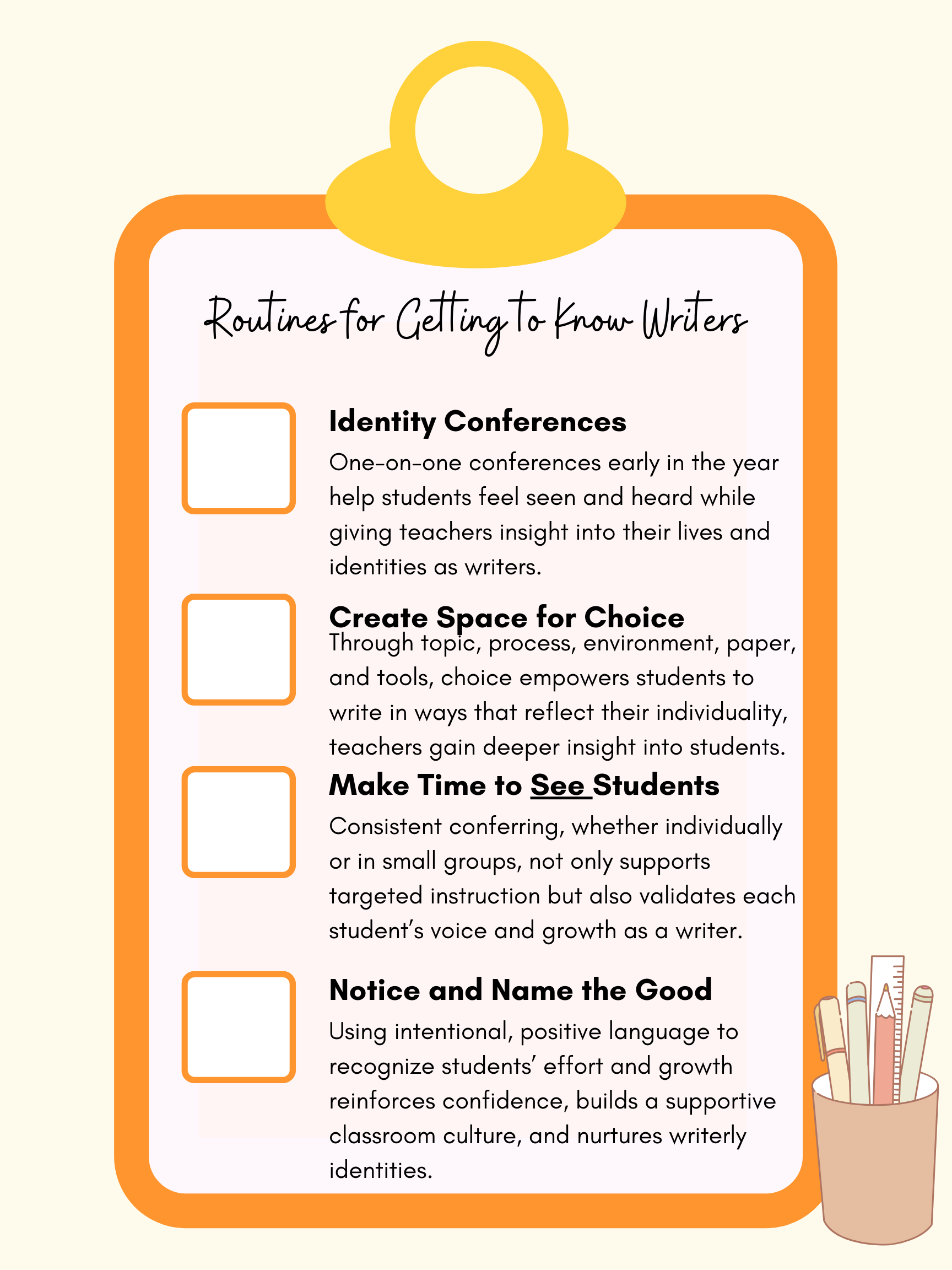
Once you have envisioned the kinds of writers you hope to nurture in your classroom and the conditions that will help foster them, it’s time to consider the high-leverage routines that can bring that vision to life. Here are a few ideas to get you started:
Identity Conferences to Get To Know Students as People and Writers
In the wake of the pandemic, Advancing Literacy staff developer Natalie Louis introduced a powerful structure called Identity Conferences, a one-on-one conversation designed to help teachers truly get to know students. These conferences provide a dedicated space and time for students to feel heard and seen.
While identity conferences can happen anytime, the beginning of the school year is an especially impactful time to communicate to your students: “I care about you, and I want to know you.” Natalie suggests asking questions like:
- If you could fix one problem in the world, what would it be? Why?
- What do you like to do at home or with your family?
- Tell me about your friends.
You can also add questions/prompts that help you understand each student’s mindset and identity as a writer:
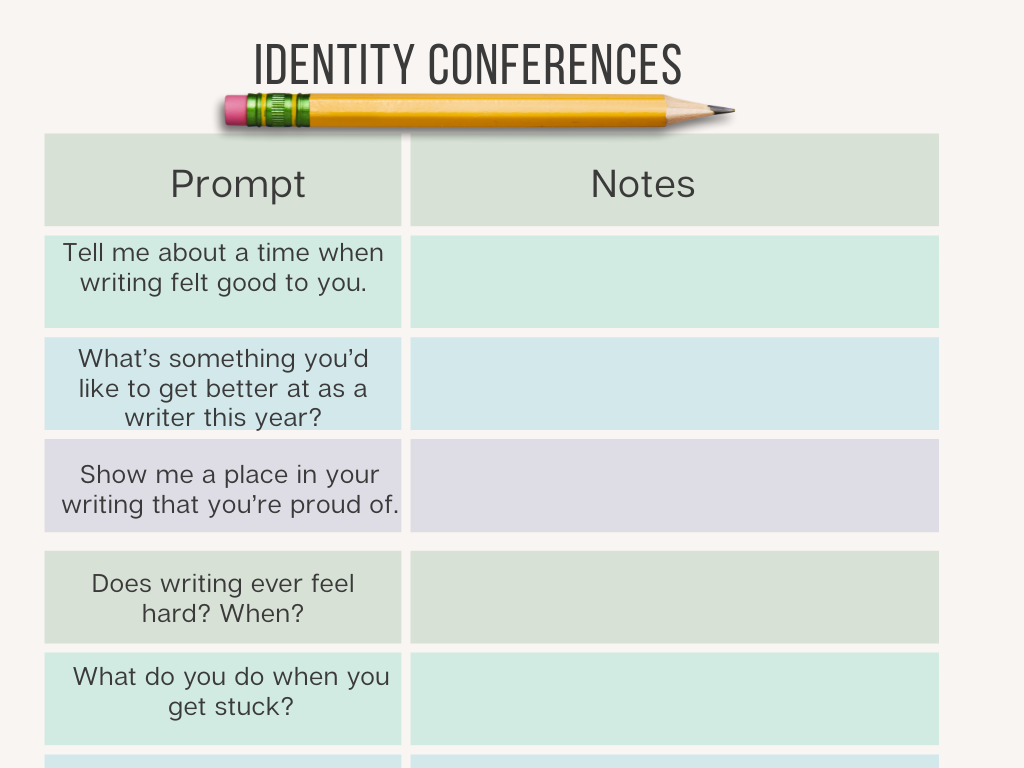
These simple conversations can reveal so much about your students’ passions, experiences, and writing goals.
Creating Space for Choice in Writing
One of the most effective ways to understand and nurture young writers is by giving them meaningful choices. While choice often starts with allowing students to select their own writing topics, through structures like “Free Choice Friday” or regular notebook time, it can and should extend beyond just content. These low-stakes, joyful opportunities not only help students build their writing identities but also give teachers valuable insight into students’ interests, voices, and creative instincts, an essential tool for thoughtful instruction and deeper connections.
But topic isn’t the only area where choice matters. As you plan for the kinds of writers you hope to nurture in your classroom this year, think about how offering choice in other aspects of the writing process, such as audience, format, or writing tools, can empower students, foster independence, and give you deeper insight into who they are as learners and individuals. These insights aren’t just interesting, they’re actionable. They can inform your instructional decisions, help you offer more personalized feedback, and support a classroom culture where student voice truly matters. Consider teaching students to learn more about themselves as they learn to make choices in some of the following areas:
- Process: Writing is not a linear process. Encouraging students to explore what process works best for them, whether that’s revising as they go or saving revisions for the end, helps build ownership and confidence.
- Writing Environment: Allowing students to choose where and how they write- standing, sitting, at a desk, on the floor, or in a quiet or more collaborative spot, honors their needs and preferences as learners.
- Paper Choice: Giving students options for the kind of paper they use, portrait or landscape, with or without picture boxes, or lined to match the length of their writing, supports both accessibility and voice.
- Tools: Providing a variety of writing tools, different pens, pencils, sticky notes, and other materials, encourages independence and experimentation. Access to various charts and tools can also support students in making decisions about structure, development, and conventions.
Making Time for Students to Be Seen
Creating consistent opportunities for students to confer with you, individually or in small groups, is invaluable. These moments not only allow for focused instruction, but also communicate to students that their writing and their voices matter.
As a school literacy coach, I love when I walk into a writing workshop and groups of students eagerly ask, “Are you pulling groups today?” Students want to be seen. Conferring ensures that every student gets time to discuss their writing and is celebrated as a growing writer.
Other routines that help students feel seen as writers include creating regular opportunities for them to share their work and reflect on their writing process with peers. This might take the form of an author’s chair, writing partner discussions, or even sharing with a buddy class in another grade. You may even offer students choice in how they prefer to share their writing. Some students may prefer a larger audience while others may feel more comfortable sharing with a trusted friend. These moments where students get to be seen, not only build confidence and community but also reinforce the idea that every writer’s voice and process matters.
Noticing and Naming the Good
Our teacher language is one of our most powerful tools. As Responsive Classroom reminds us, “What we say and how we say it permeates every aspect of teaching and learning” (Responsive Classroom, 2023, para. 1).
Years ago, a coach worked with me to use more reinforcing language to intentionally notice and name what was going well. That shift changed everything. It helped me see the strengths in students more clearly, gave me language to celebrate their efforts, and made my classroom a more positive and productive place.
During writing time, this habit can be transformative. Look for approximations, growth in habits, risk-taking, perseverance, and mindset shifts. When you name those moments aloud, you strengthen your relationship with students and help them see themselves as writers.
Why This Work Matters for Students
When we intentionally get to know students as people and as writers, we do more than build relationships, we create the conditions for real growth. Students who feel seen, valued, and understood are more likely to take risks in their writing, share their voices honestly, and engage deeply in the learning process. This kind of classroom environment supports not just academic success, but also emotional safety and identity development. These routines aren’t just good practice; they’re transformational. They shift the writing workshop from a place where students complete assignments to a space where students discover who they are.
Why This Work Matters for Teachers
When we build meaningful relationships with our students, our work as educators becomes more impactful. We begin to see the whole child, not just the writer struggling with conventions or the student reluctant to put pencil to paper. We gain a deeper understanding of their motivations, fears, and passions. That insight allows us to teach more responsively, plan with greater purpose, and celebrate growth in ways that feel authentic and empowering. One powerful way to deepen these connections is by writing ourselves. When teachers write, we model vulnerability, persistence, and the messy joy of the creative process. It helps us empathize with our students’ experiences and reminds us what it feels like to face a blank page, revise bravely, and share something personal. Writing alongside our students fosters trust and demonstrates to them that we are learners, too.
Digging Deeper
To read more about getting to know writers, check out these posts:
Getting to know the Writers in Your Classroom-Part 1: Academic and Linguistic Domains
Getting to Know the Writers in Your Classroom-Part 2: Cultural and Social-Emotional Domains
Getting to Know Your Writers: Three Assessment Ideas You May Not Have Considered
Exploring Identity in Writing Workshop: Identity Webs as a Conferring Tool
Responsive Coaching, Responsive Teaching: Straight From the Classroom
Giveaway Information:
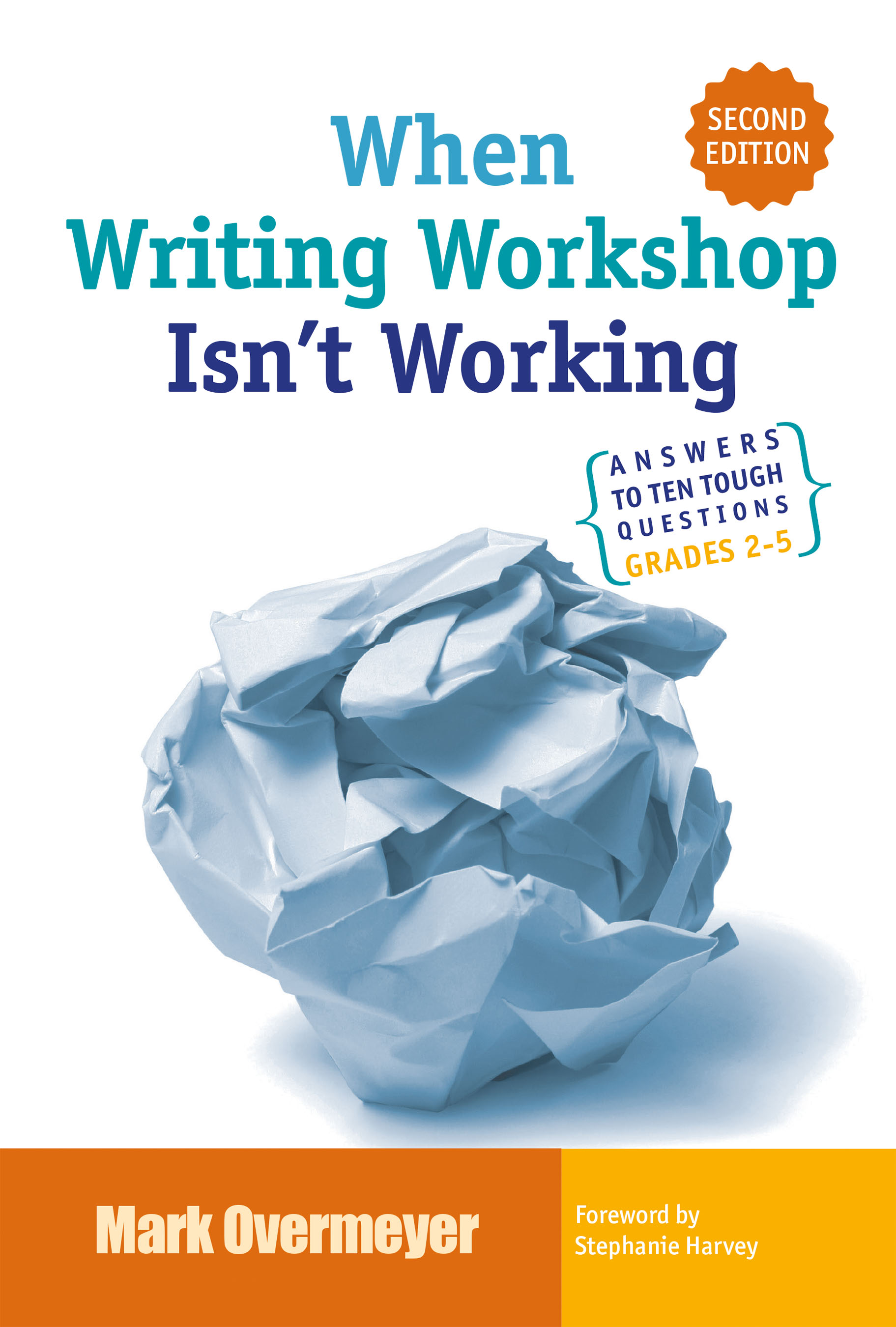
Want to win a copy of When Writing Workshop Isn’t Working (2nd Edition) by Mark Overmyer? Stenhouse Publishers (Routledge) has donated a copy for one lucky reader.
How to Enter:
- Comment on this post by Friday, 8/15/25, 11:59 p.m. EST.
Winner Selection:
- One winner will be chosen randomly and announced at the bottom of Sarah Valter’s post by Tuesday, 8/19.
Eligibility:
- You must have a U.S. mailing address to win this prize.
If You Win:
- You’ll get an email from Sarah with the subject “TWTBLOG – UNBOXING FRESH ROUTINES.”
- We’ll pick a new winner if you don’t reply with your mailing address within five days.
- Routledge will ship the book to you.
References
Howard, J. R., Milner‑McCall, T., Howard, T. C., Cruz, M. C., & Duke, N. K. (2020). No more teaching
without positive relationships. Heinemann.
Fletcher, R. (2017). Joy write: Cultivating high‑impact, low‑stakes writing. Heinemann.
National Council of Teachers of English. (2016, February). Professional knowledge for the teaching of
writing. National Council of Teachers of English.
Responsive Classroom. (2025). Our approach to teaching and discipline. Responsive Classroom.
https://www.responsiveclassroom.org/our-approach/
Responsive Classroom. (2023). Teacher language: Reinforcing, reminding, redirecting, and
envisioning. Responsive Classroom. https://www.responsiveclassroom.org/reinforcing- reminding-and-redirecting/
The Core Collaborative Learning Lab. (2024, August 6). The heart of learning: Connection and
relationship. The Core Collaborative. https://thecorecollaborative.com/the-heart-of-learning- connection-and-relationship/
Discover more from TWO WRITING TEACHERS
Subscribe to get the latest posts sent to your email.


This was the perfect post to start off the school year. Thank you for all that you do. Very inspiring. -Jay, 4th Grade Teacher, Washington, DC
LikeLiked by 1 person
“Notice and name the good”
Always need a good reminder to start from the writer’s strength!
LikeLiked by 1 person
Thank you, Jess, for continuing to inspire. Switching back to a younger grade than I have been in for a long time has felt overwhelming, but this has inspired me and reignited ideas, and I look forward to applying many of these with my incoming classes.
LikeLiked by 1 person
Thanks Lisa! I can’t wait to hear about how this transition goes for you! ❤️
LikeLike