What began as an offhand comment between a curriculum consultant (Patty) and an ELA supervisor (Tim)—”Wouldn’t it be cool to write a book that remodels grammar instruction?”—transformed into our successful collaboration on Not Your Granny’s Grammar: An Innovative Approach to Meaningful and Engaging Grammar Instruction.
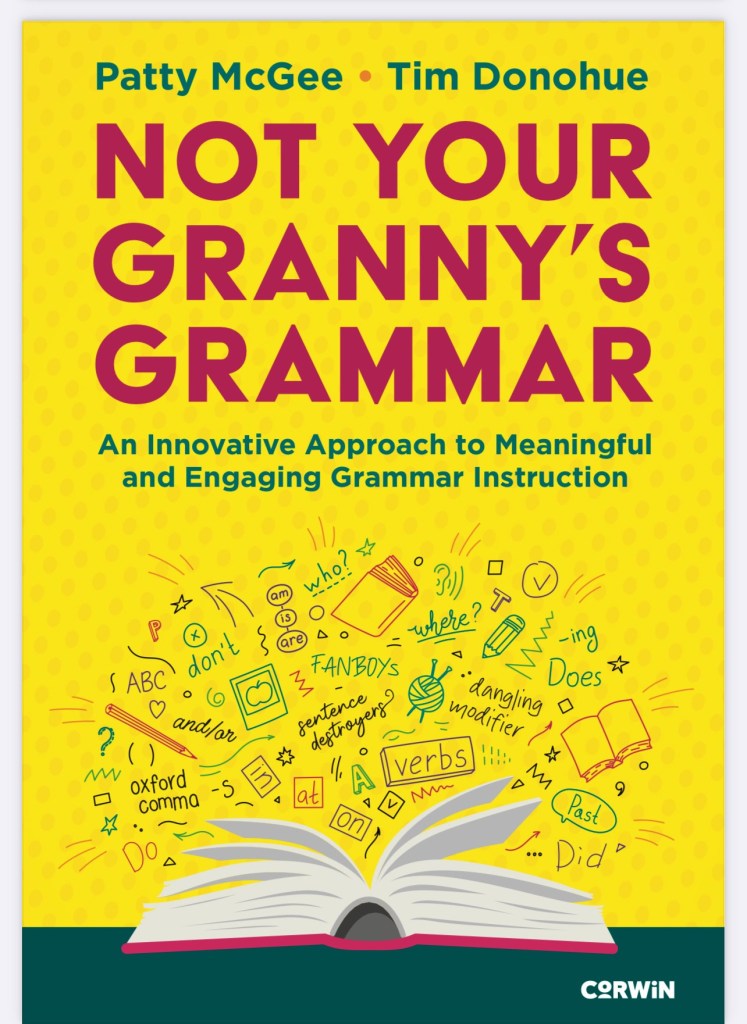
If you’re considering co-authoring, let us share what made our partnership work so beautifully. Think of these insights as some essential elements that turned our casual conversation into a published reality.
The Magic of Complementary Strengths
When reflecting on our partnership, we realized we were like minded yet brought different perspectives to the table. Tim contributed super-human grammar knowledge while Patty brought instructional design expertise (we also each had an understanding of both).
Tim’s journey took him from high school English teacher to ELA supervisor to Assistant Superintendent. Patty arrived with classroom-tested strategies through working with K-12 students and teachers, plus experience authoring two previous books. And, we approach instruction with similar values.
Collaboration advice: Have an honest conversation about what each person brings to the partnership before drafting a proposal. Look for complementary, not identical talents. We divided responsibilities based on natural strengths, creating a richer book than either could have written alone.
The Foundation of Established Trust
There’s a special creative freedom that comes from working with someone you already trust professionally. We had collaborated on curriculum and professional development about a decade before beginning our manuscript.
Our partnership had deep roots in years of developing materials and facilitating professional learning experiences together. We’d witnessed each other handle challenging educational questions with grace and explain complex concepts with patience.
Collaboration advice: Start with smaller collaborative projects before tackling a book. Build trust through joint presentations or curriculum development. Pay attention to your interaction tone—this reveals how you’ll work through challenges when the going gets tough.
The Flex of Flexibility
Successful co-authoring requires a beautiful balance of structure and spontaneity. Life happens when writing a book, and planning can’t anticipate everything.
When writing, Patty had what one might describe as “a doozy of a year,” changing our publishing timeline. Tim shouldered more of the manuscript than originally planned. In the end, we love our book because of, not despite, the necessary adaptations.
Collaboration advice: Build flexibility into your writing plan from day one. Establish communication processes that honor both voices. Remember that the best books often evolve beyond initial outlines as co-authors inspire each other throughout the process!
The Power of Defined Expectations
Frankly, we agreed on royalty splits upfront, decided who would communicate with our editor, and discussed name order on the cover—essential brass tacks that prevented future friction.
Collaboration advice: Have potentially awkward money and responsibility conversations before diving deep. Address royalties, credit order, and communication protocols upfront. Clear structures actually create more freedom to be creative!
The Heartbeat of Regular Check-ins
Communication is the lifeblood of co-authoring. We connected every few weeks and emailed or texted when something was pressing, creating a balance of conversation and writing time.
Collaboration advice: Schedule check-ins from the start and protect this time while recognizing that life interrupts plans. Create a simple framework covering progress, challenges, and next steps. Make a plan and set clear goals for each person until the next meeting.
The Fuel of Shared Passion
Without mutual delight, co-authoring quickly becomes a chore rather than a joyful collaboration.
Our shared commitment to making grammar accessible sustained us through challenging writing days. We both deeply believed grammar instruction shouldn’t create anxiety but illuminate the fascinating nature of language.
Collaboration advice: Before committing, have an honest conversation about your motivations. The most carefully crafted agreement can’t compensate for mismatched enthusiasm. Be sure the topic energizes both your professional spirits.
When we hear the words “Not Your Granny’s Grammar finally helped my students understand difficult concepts,” we share those victories equally—knowing our partnership created something stronger than our individual efforts could have produced.
Co-authoring success isn’t mysterious—it’s methodical. With complementary expertise, trust, flexibility, clear agreements, consistent communication, and shared passion, you too can transform an offhand comment into a published reality that makes a difference!

Patty McGee is a nationally recognized literacy consultant, speaker, and educator with a passion for transforming classrooms into spaces where language and learning come alive. With decades of experience as a teacher, coach, and advocate for delightful literacy practices, Patty has worked alongside educators across the country, partnering to unlock the full potential of their students through innovative and practical teaching strategies. Not Your Granny’s Grammar is her third book.

Tim Donohue is a second-generation grammarian at heart and a lover of all things language. Tim is passionate about empowering students, and his own children, to use language and writing as tools for self-discovery and critical thinking. He is a former English teacher and Curriculum Director who currently serves in the role of Assistant Superintendent, coordinating all aspects of district curriculum and instruction.
Instagram (https://www.instagram.com/pmgmcgee/)
Bluesky (https://bsky.app/profile/pmgmcgee.bsky.social)
Website (https://pattymcgee.org/not-your-grannys-grammar/)
Giveaway Information:
Kathryn Anastasio is the winner of a signed copy of Not Your Granny’s Grammar by Patty McGee and Tim Donohue (& and a 20-minute Zoom meeting with the authors), donated by Corwin.
Discover more from TWO WRITING TEACHERS
Subscribe to get the latest posts sent to your email.


I think grammar instruction needs to be timely and engaging, and I think it sounds like you’ve captured those two important elements in your book so I will be sure to read it. Thanks for sharing how you have worked together to create your book. I agree that sustaining the joy when creating can be daunting. Thanks for sharing such sage insights!
LikeLike
our district is lucky enough to have an amazing writing coach that has always supported great grammar instruction, this book likes a great way to add even more engaging grammar to our day!
LikeLike
You are the winner! Please check your email.
LikeLike
This looks like a promising way to bring some fun and excitement back to teaching grammar – for kids and teachers, both! I can’t wait to take a look at it!
Sarah McHugh
50 Shafer Road, New Hartford, CT
smchugh1819@gmail.com
LikeLike