Estimated Reading Time: 2 Minutes (420 words)
Primary Audience: Instructional Coaches and Classroom Teachers
A Backstory
“I hate the poetry unit!”
Every year, at least one grade-level team groans when the curriculum calendar signals it’s time to teach poetry. It’s a familiar refrain—poetry can feel intimidating, abstract, or just plain difficult to teach.
But years ago, a staff developer changed our perspective. She introduced a few simple, replicable moves that made poetry instruction more approachable, even for reluctant writers. Since it’s Poetry Month, I wanted to share these strategies with you. Hopefully, they’ll bring some joy—and ease—into your poetry instruction.
Three Strategies to Try
1. Copy Cat Poems
One of the easiest ways to get students writing poetry is to use mentor texts. Zoe Ryder White’s In My Heart and Eloise Greenfield’s Riding on the Train are two favorites.
Here’s how it works:
- First, read the mentor poem together, guiding students to notice its structure, rhythm, and craft choices.
- Then, engage in shared writing by composing a class poem that mirrors the mentor.
- Finally, encourage students to experiment on their own, using this approach with other poems they love.
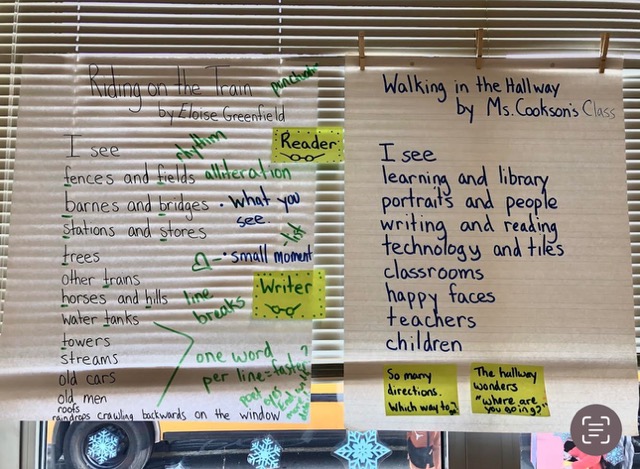
By studying and “copying” poets, students gain confidence in their own writing while internalizing poetic techniques naturally.
2. Picture Cards for Sensory Writing
This strategy focuses on helping students develop sensory details in their writing.
Here’s How it Works:
- Start by displaying an image—this could be a real photograph or an image found online.
- Have students jot down sensory details on sticky notes based on what they see, hear, smell, or imagine.
- Once they have several notes, invite them to rearrange the words and phrases, experimenting with line breaks to shape a poem.
This activity is especially helpful for students who struggle to find inspiration. The use of an image makes writing a poem concrete.


3. List Poems
Even the most hesitant poets can succeed with list poems. One way to get started? Ask a reluctant writer to list all the reasons they can’t write a poem.
Jot down their words as they ramble. Then, show them how their list—just as it is—has the rhythm and structure of a poem. Reading Shel Silverstein’s Sick as a mentor text makes this activity even more fun.
The simplicity of list poems helps students see poetry as a playful form or writing.
Poetry Can Be for Everyone
Poetry doesn’t have to be a dreaded unit—it can be a space for joyful, creative exploration. By providing accessible entry points, we can help students engage with poetry in ways that feel meaningful and fun.
If you try any of these strategies in your classroom, I’d love to hear about it!
Happy writing!
Discover more from TWO WRITING TEACHERS
Subscribe to get the latest posts sent to your email.


When I was new to poetry in 2004, I clung to list poems. (I was raised with a ‘poetry has to rhyme’ mindset. So damaging.) Glad to see it mentioned here as an entry point!
BTW: The Picture Cards for Sensory Writing idea sounds like fun!
LikeLike
These are some great ideas to get students (and adults) started. I think it would be powerful (and fun) to do more of this work with teachers. I bet we would get some pretty powerful poetry out of it!
LikeLiked by 1 person