
Estimated Reading Time: 3 minutes, 593 words
Primary Audience: K-12 classroom teachers, coaches, administrators
What’s Happening: Last summer, my principal returned from the annual Visible Learning conference fired up about student engagement and teaching students to drive their learning, a practice that John Hattie’s research found has a .96 effect size on student learning (Hattie et al., 2024). This year, my school has done a deep dive into this topic using the Continuum of Student Engagement developed by teacher and educational researcher Dr. Amy Berry.

Dr. Berry’s continuum outlines six ways that students engage with learning activities. The three categories on the right side of the continuum represent behaviors of engagement: participating, investing, and driving. The three categories on the left side of the continuum represent behaviors of disengagement: withdrawing, avoiding, and disrupting. Passive behaviors are found in the middle of the continuum, while the most active behaviors are found at the two extremes.
Why It Matters: Student engagement is critical to learning. The most carefully planned and executed lesson has no effect on a student’s learning if the student is not engaged. Student engagement, or lack thereof, is feedback to the teacher. In order for students to be engaged, teachers must be planned, prepared, have appropriate pacing, and provide clarity about the learning task. When many students are not engaged, it is feedback to the teacher to do something differently. When individual students are not engaged, teachers must find out more about the motivation behind the disengagement and adjust accordingly to meet the student’s learning needs.
What We Did: We started with each teacher introducing the continuum to their class and keeping the continuum posted in their room. Specialists, interventionists, and paraeducators also posted continuums in their teaching spaces. Each teacher personalized the examples for each category to fit the needs of their students.
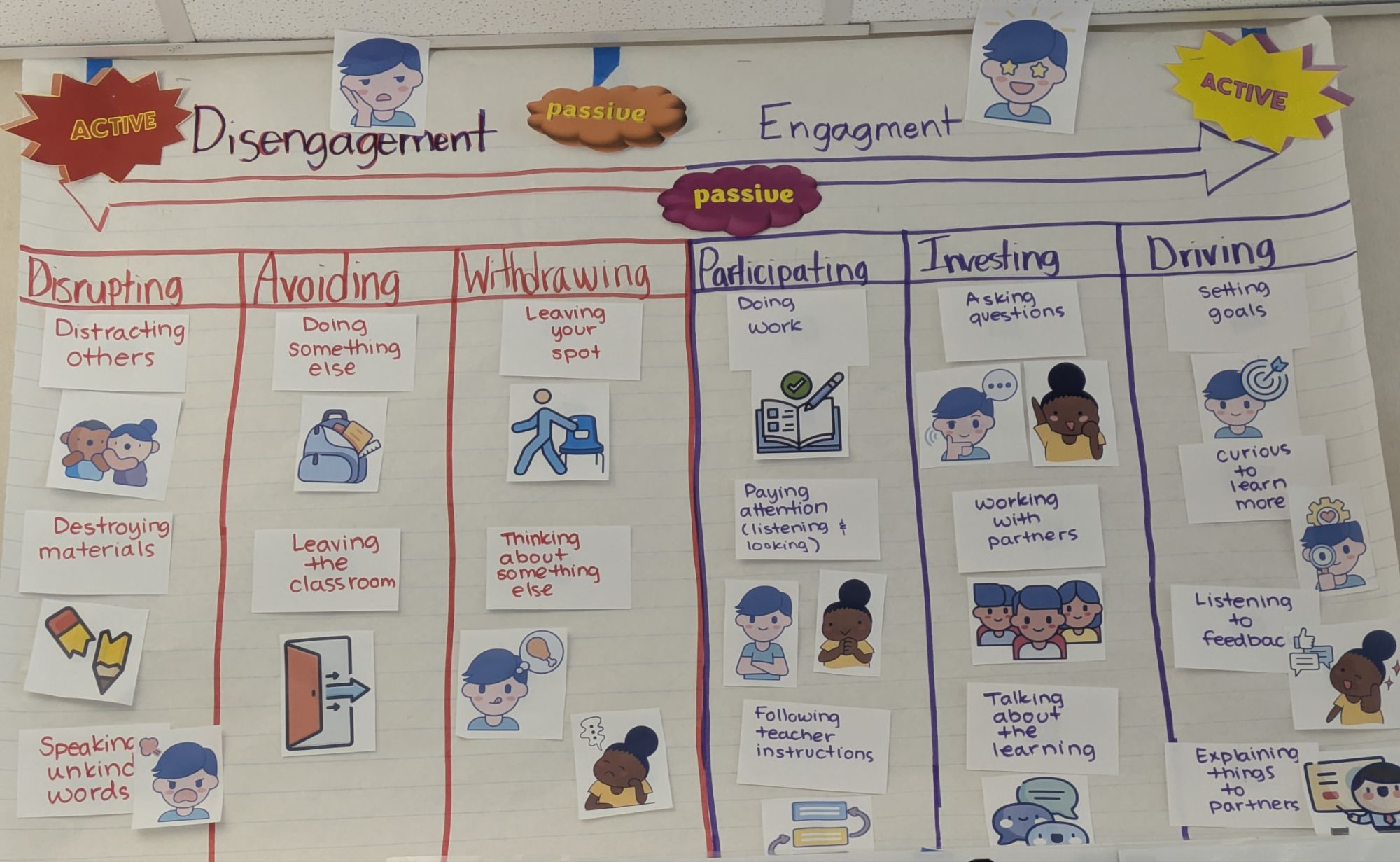
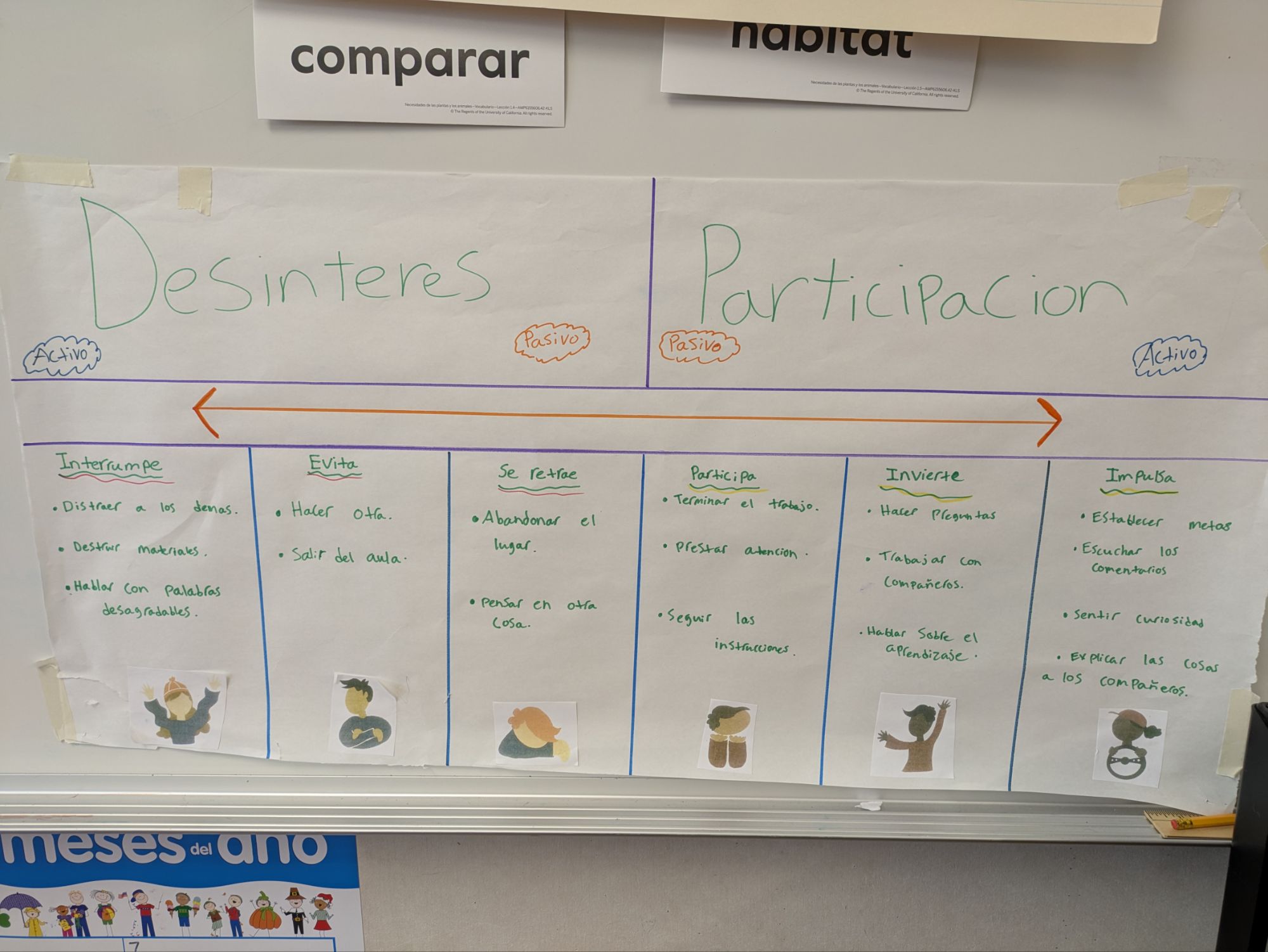
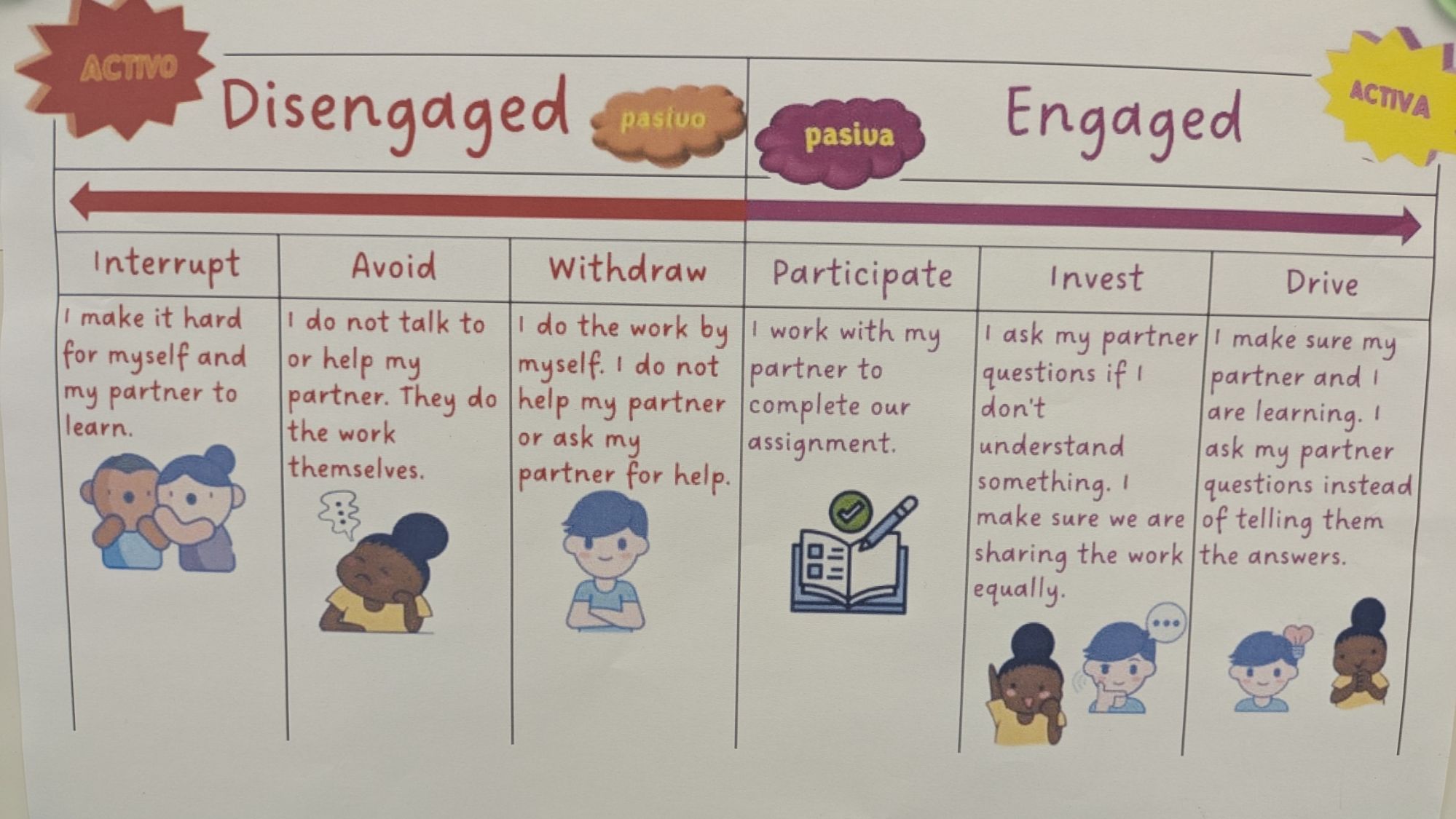
Next, we taught students to self-assess where they are on the continuum. This is hard! Students often rate themselves higher or lower than they actually are, but we have found that having lots of opportunities to practice with teacher feedback, as well as asking students to name why they are in that category, helps improve their accuracy.
Teachers are finding the engagement continuum especially helpful in promoting student success during independent and partner work times. Before sending students off to write, for example, teachers might have students set a goal for themselves and then check in on how it went at the end of the period. Some teachers have printed and laminated mini-copies of the continuum that students put in front of them during partner time to keep themselves engaged in their learning. Interestingly, we have observed that most partnership frustrations occur when partners are at different places on the continuum. When students are disengaged, we can use the continuum to help students identify what they need to do to shift back to the engaged side of the continuum. When we see students participating, investing, and driving their learning, we can use the continuum to call it out to the student and the whole group.
Go Deeper: Is your interest piqued? Learn more about student engagement and Dr. Berry’s engagement continuum with these articles:
- Reimagining student engagement as a continuum of learning behaviors, excerpt from “Reimagining Student Engagement: From Disrupting to Driving” by Amy Berry
- Students on the Margins: How Instructional Coaching Can Increase Engagement and Achievement by Jim Knight
Check out this video of students explaining the engagement continuum and what the different categories look like for them as learners:
References
Hattie, J., Fisher, D., Frey, N., Almarode, J. (2024). The Illustrated Guide to Visible Learning: An Introduction to What Works Best In Schools. Corwin.
Discover more from TWO WRITING TEACHERS
Subscribe to get the latest posts sent to your email.


Shawnda, this is brilliant! I can’t wait to give it a try.
LikeLiked by 1 person
Reading 2nd grade work posted in the hall, made me ponder the answer to their question http://doodadsanddoodles.blog/2025/03/07/who-would-you-invite-to-dinner-solc-day-7/
LikeLike
I love this slice! Be sure to post your link over on the call for slices post so other people see it!!
LikeLike
Sorry- posted to wrong place and can’t delete it. Meant to be for the Slice of Life Challenge
LikeLike
It’s no problem, I just wanted to be sure you got comments!
LikeLike
This is such great work and I really appreciate the way you have all made the continuum your own and are using it with students.
LikeLiked by 1 person