
Estimated Reading Time: 4 minutes, 755 words
Primary Audience: Primary Teachers and Coaches
A Backstory: Last week I had the opportunity to spend time in a first-grade classroom at the end of their writing unit. The first-grade teacher, Shannon, has worked hard with this group of students all year to build their self-awareness and engage them in goal-setting as developing writers. During my time in her classroom, she set students up to collaboratively evaluate their most recent writing piece, discuss their self-reflection with a partner, and share their progress with the entire class. It was smooth, student-centered, and effective.
Why This Matters: There are many days when the task of writing seems daunting, especially in the primary grades. Between composing messages, controlling their fine motor skills to attend to handwriting, and applying their early phonics skills to get a message onto the page, our youngest writers have a lot of balls to juggle. Asking them to be reflective seems like a big ask for a little learner, but my experience in Shannon’s room reminded me of two very important things: kids can engage in this work and, when they do, it has a tremendous impact on them as writers.
As I reflect on what Shannon does to make this work so natural for her class, there are three key things she provides for her students: tools, time, and language.
Resource #1: Tools for Reflection
Shannon’s classroom is filled with anchor charts and student-friendly tools that keep growth at the center of the work. Some of the tools her students accessed include:
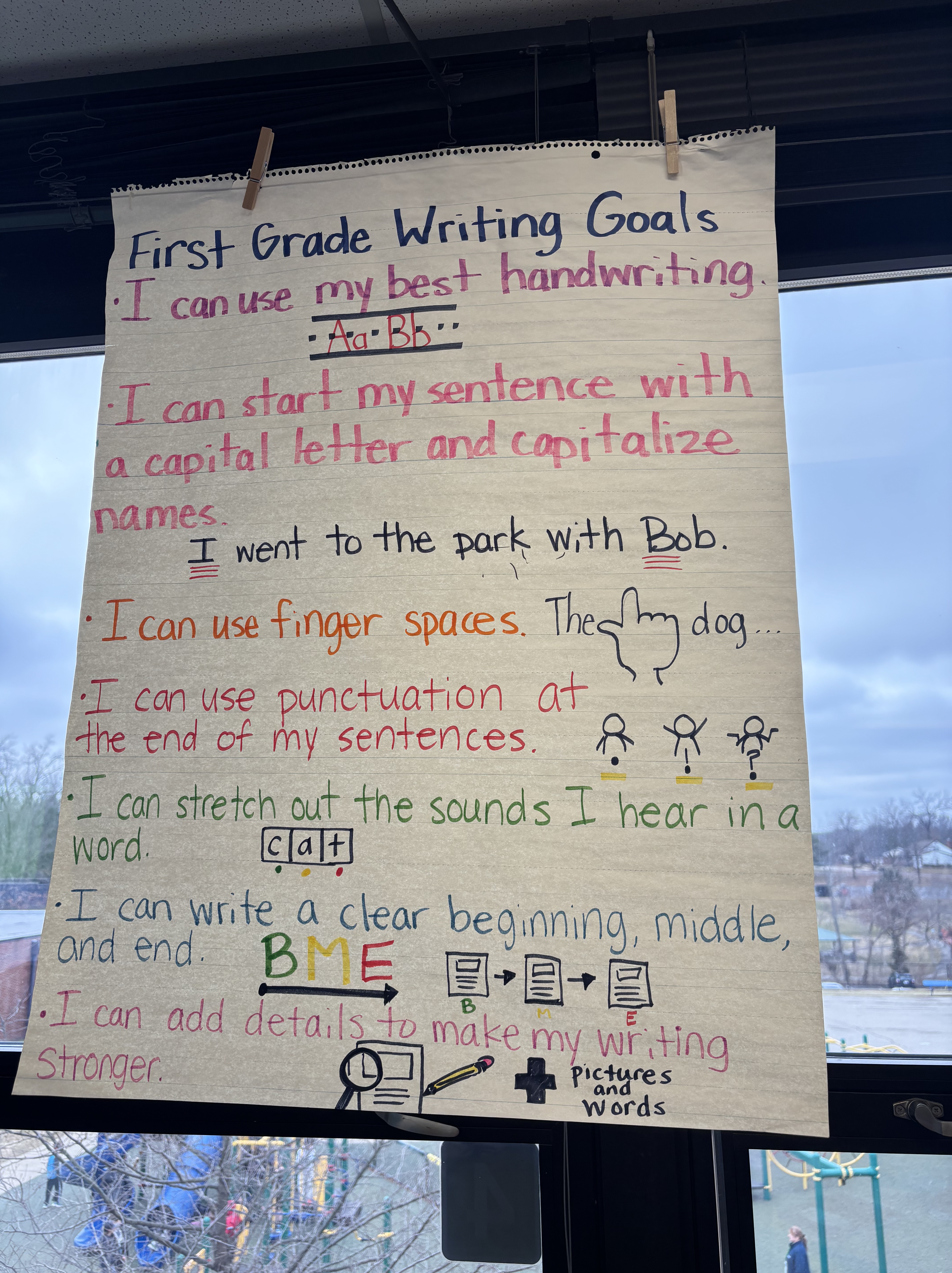
An anchor chart of the most important skills students are expected to master as first grade writers.
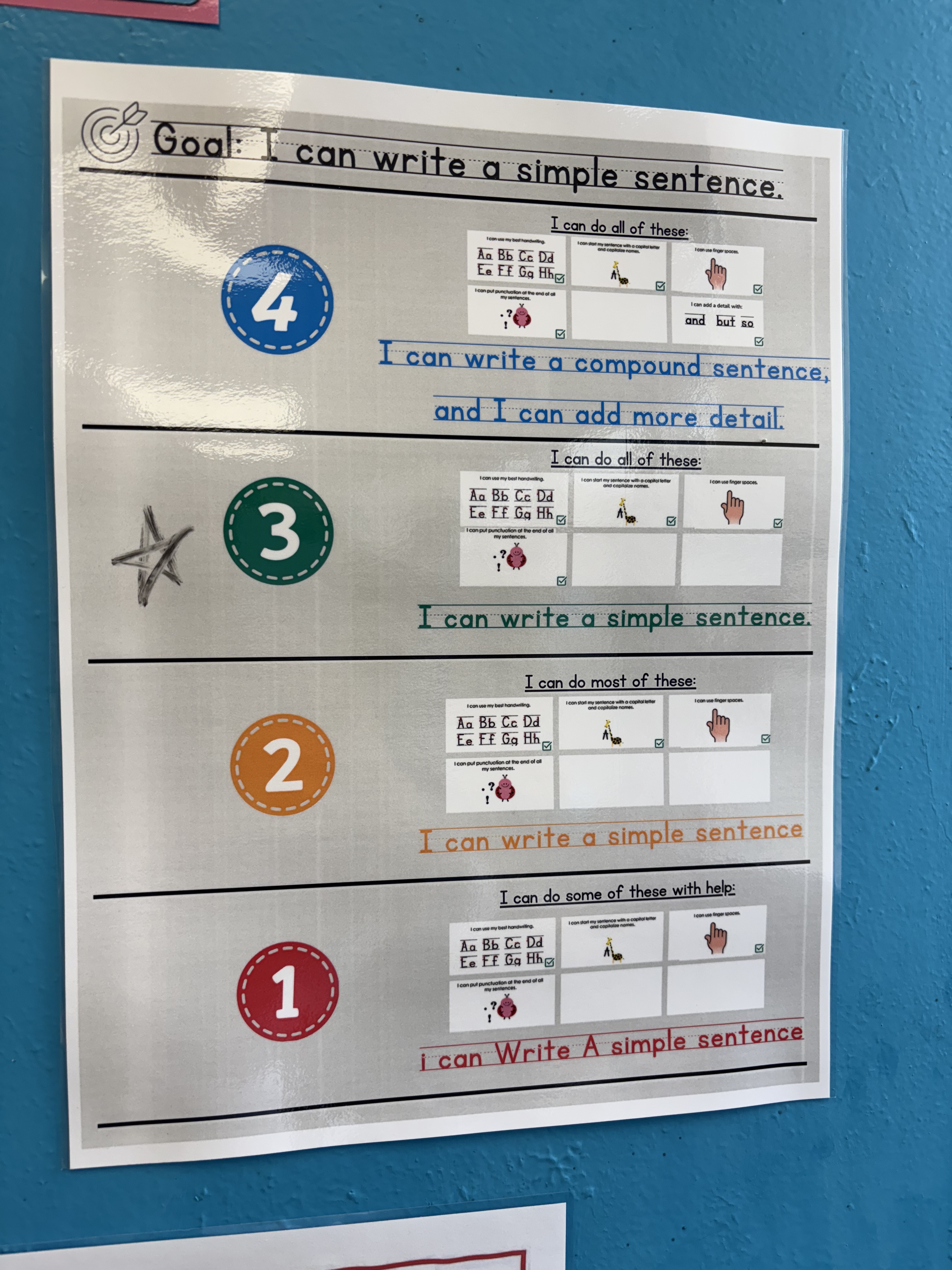
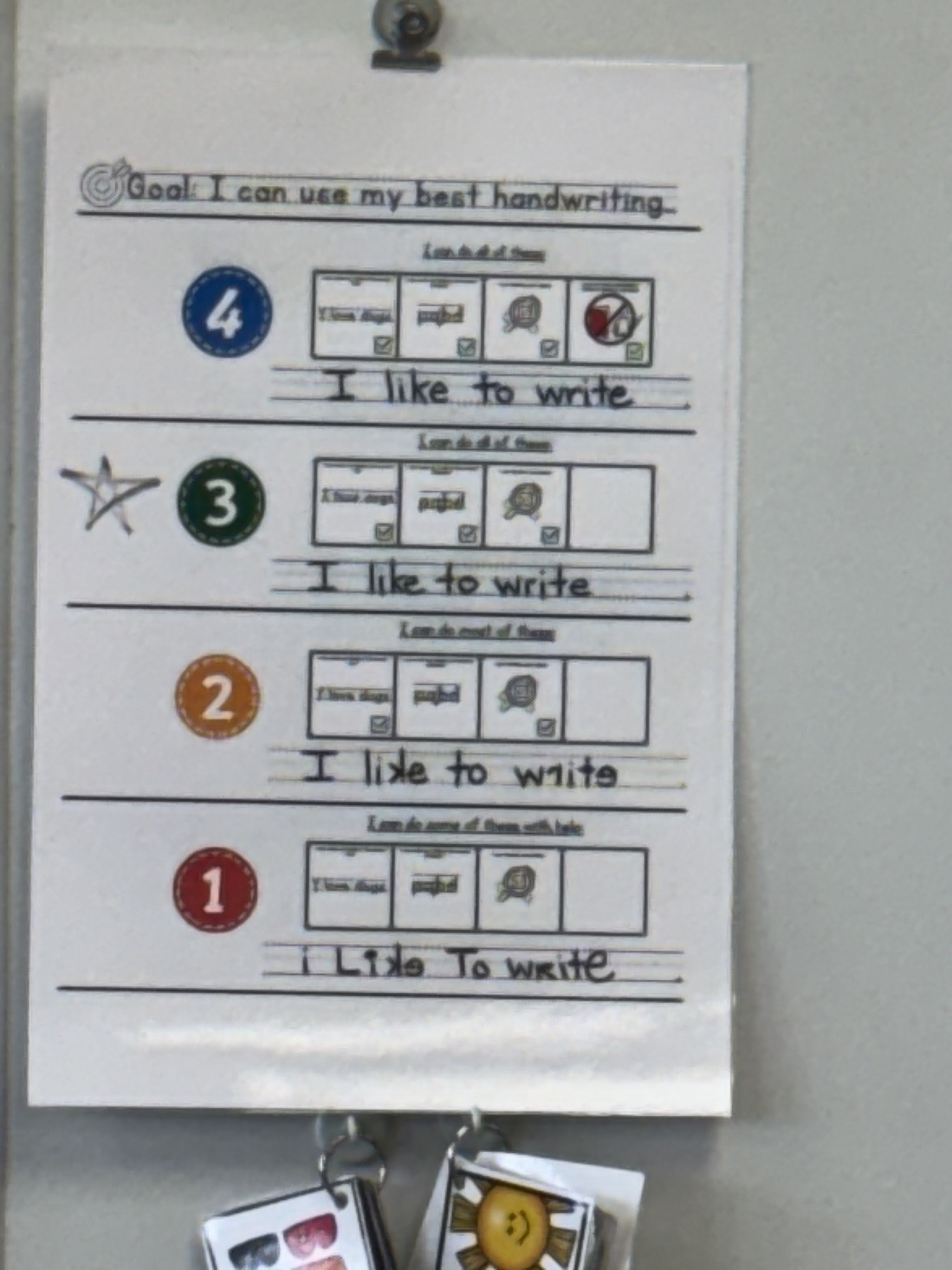
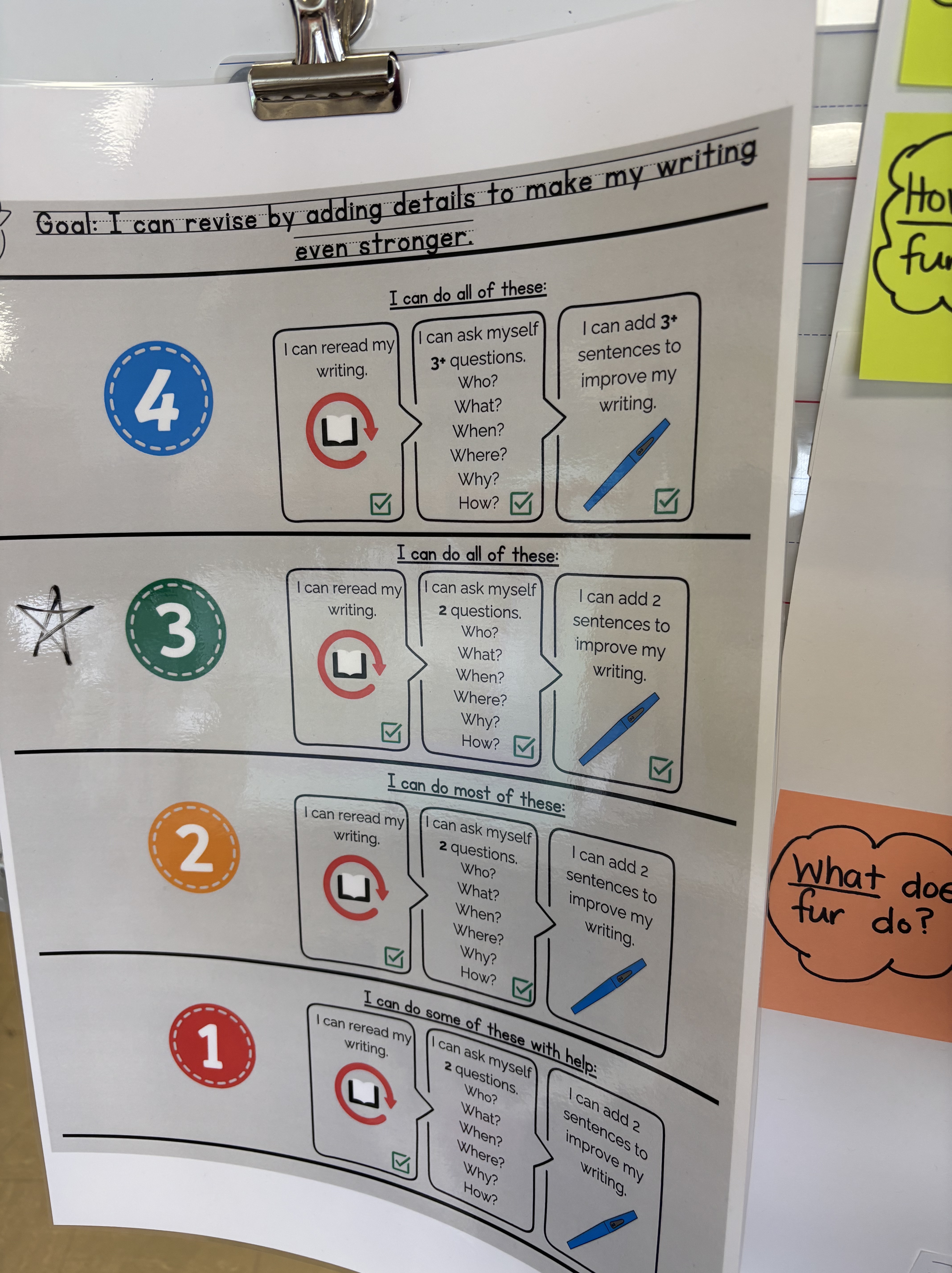
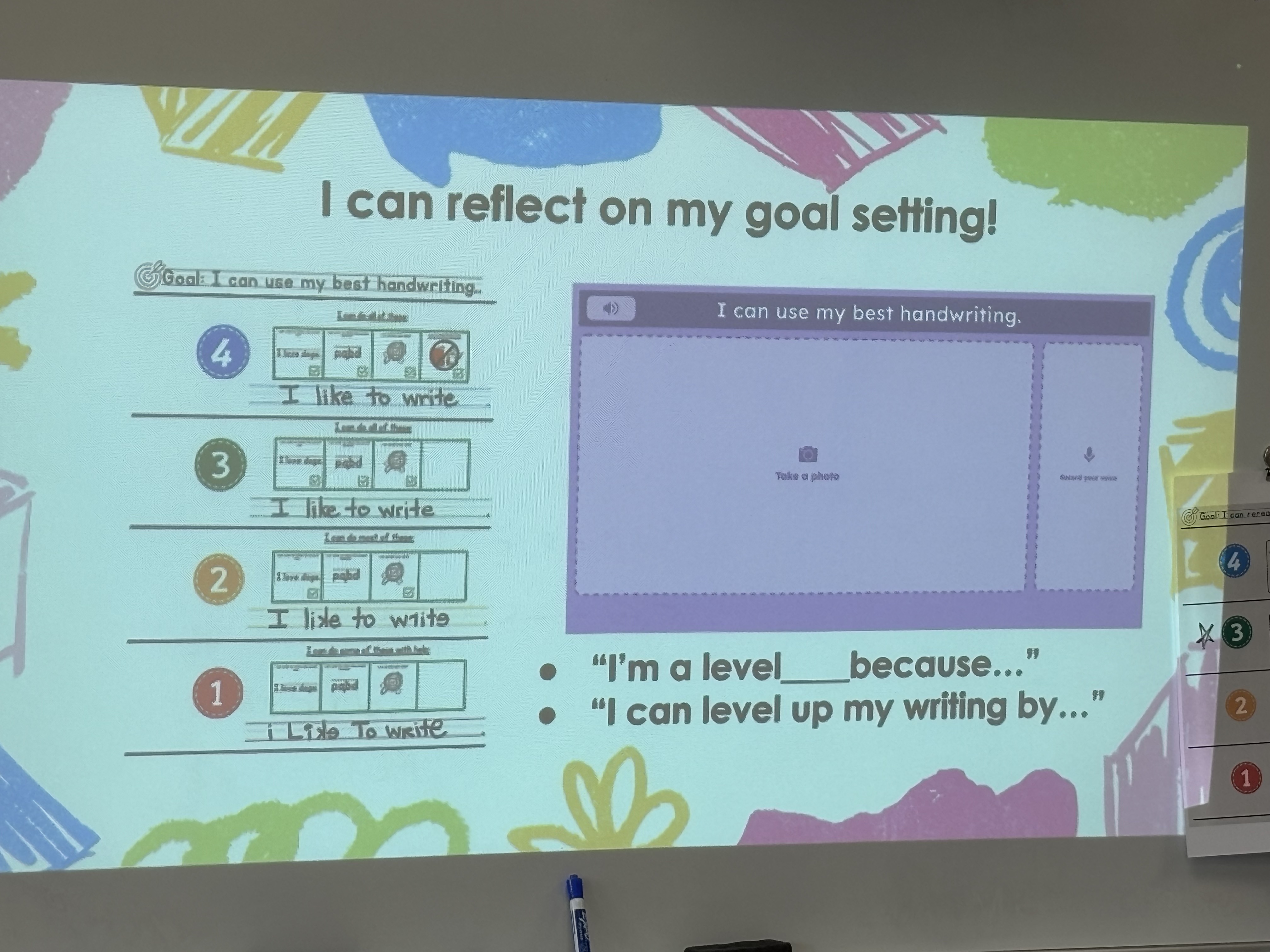
Micro-progressions that break each skill down into manageable steps with visuals that support each step.
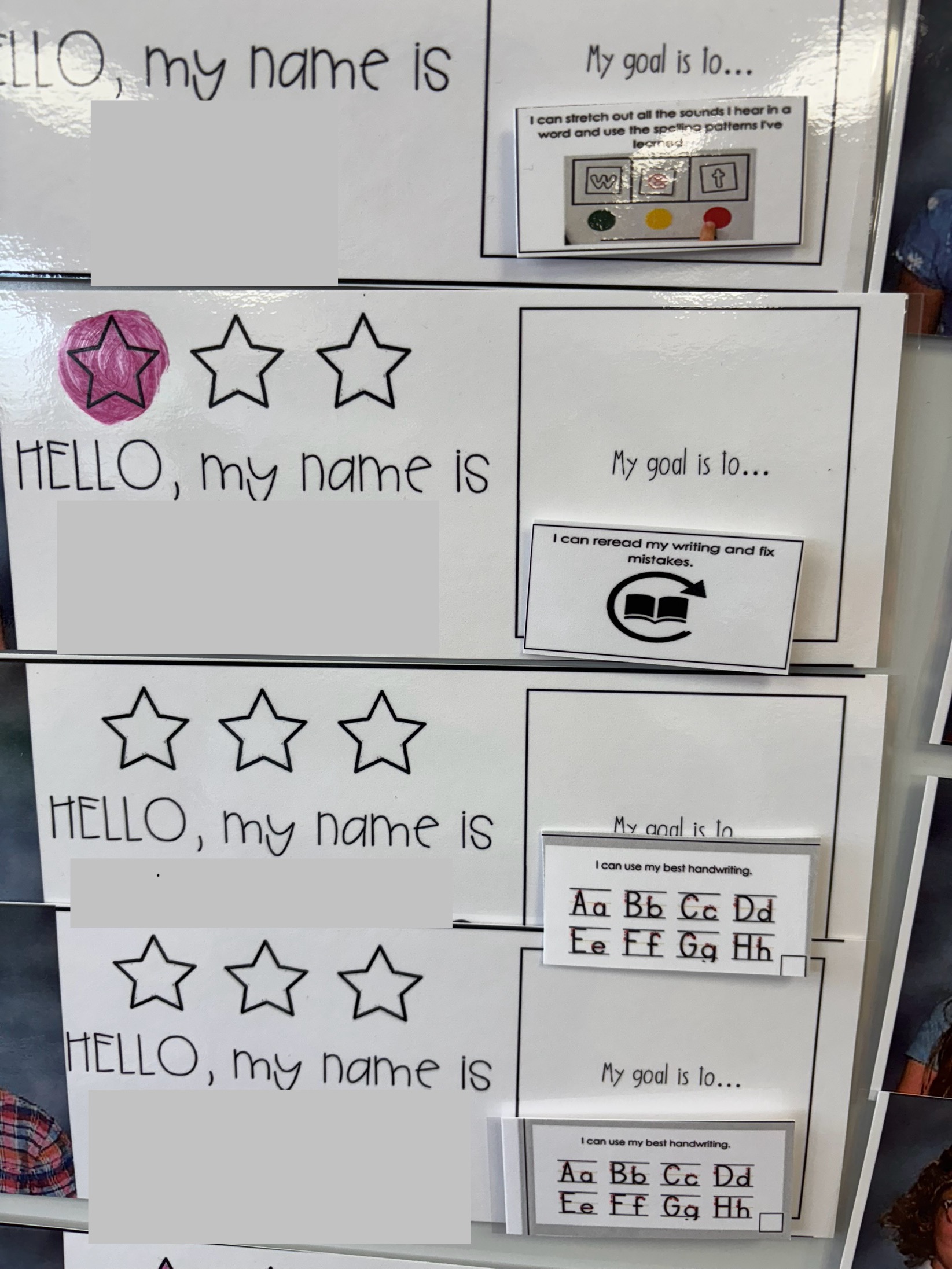
A student goal-setting board to help each child select and focus on one skill at a time.
Finally, students took a photo of their writing and then recorded an audio self-reflection in the Seesaw App. It was a purposeful use of technology that was accessible to everyone.
Resource #2: Time
This work occurred at the end of a unit, a “pause” day designed to help kids think about their learning, the growth they had made, and the things they still need to work on in the next unit. In the thirty minutes allotted for this work, students had the opportunity to:
- Engage in a whole class discussion on self-reflection and what was expected during their work time.
- Collaborate with a partner to reflect, record, and give one another feedback. Students had the space–and the previous practice–to be honest, open, and comfortable with the allotted amount of time.
- Gather as a whole class at the end to watch some of the Seesaw videos, showing how much Shannon values the time kids put into their reflections and affirming her investment in them as growing writers.
Resource #3: Language Structures
What struck me most during my time in Shannon’s classroom is the masterful way she empowers students with the language they need to do this work. She makes no assumptions about what she thinks students already know; instead, she purposefully models what students might say, invites them to practice the language together, encourages them to try it in their Seesaw recordings, and actively coaches into their reflections. For example, when asking students to rank their writing (with 3 as the goal) she asked them, “Is it OK to be a 2?” When students responded yes, she went on to guide them through the language they can use to navigate this: “If you are a 2, you might say, ‘I can do better by ____’ and name some tools and strategies. You can also say, ‘I can also level up by…’” Students practiced these statements, rehearsing before they began working with their partners and recording their Seesaw videos. Shannon’s language was consistent, affirming, and designed to help students comfortably identify their current level of performance while also looking ahead.
One Thing to Remember: The self-reflection skills I saw in Shannon’s classroom are incredible and are nothing less than the result of consistent and intentional work across the year. Reflection isn’t something that happens every once in a while; it is a skill that is cultivated and refined with every piece students write. With the investment of time, supportive language, and the right tools, even our youngest writers can name their own writing skills and chart a path for growth.
Discover more from TWO WRITING TEACHERS
Subscribe to get the latest posts sent to your email.


This is very cool! I really think we could implement this idea into your class for a student self-reflection piece. 🙂
LikeLiked by 1 person