
Target Audience: Teachers, Coaches, Specialists
Estimated Reading Time: 2 minutes, 42 Seconds (540 words)
A Backstory
Time is a precious resource in the classroom. As a teacher who mostly engages in pull-out Language Arts instruction, I have even less of it with my students. It’s overwhelming when I want to accomplish so many things with students, but don’t have the luxury of extending a lesson or returning to it later in the day.
Take my fifth graders, for instance. I see them each week for two 90-minute sessions. There’s a lot to pack into those sessions: an exploration of allegorical fiction, the study of the development of the English language, and (of course) writing. If I’m not careful, my instruction can feel fragmented.
Writing time is most precious to my students. During our weekly writing studio, they have grown to rely on – and demand! – time to work on writing and skills of their choosing. During this workshop, I offer individual and small-group instruction in response to their stated needs and goals.
And yet.
Writing studio leaves me wanting. There’s so much I’d like to teach the whole group: how narrative style or sentence structure affects a story. How punctuation (or lack thereof) changes tone. How characterization can turn on thoughtful word choice. But I don’t want to trespass on the time they’ve claimed.
Enter writing lab.
The Details
Recently, I’ve streamlined lessons to carve out a twenty-minute block each week. During that time, I focus on a single, targeted skill or craft move for a whole-class lesson.

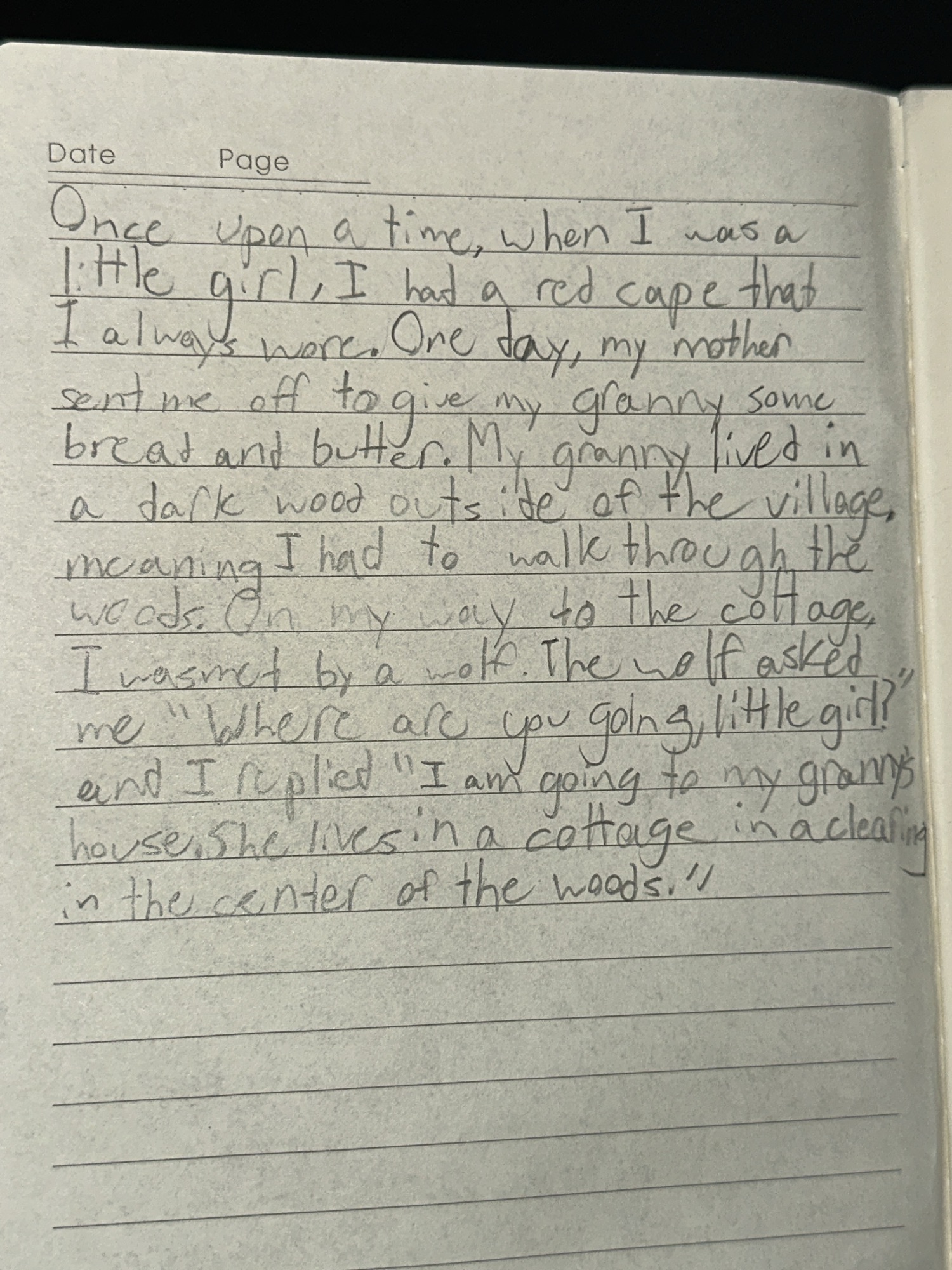
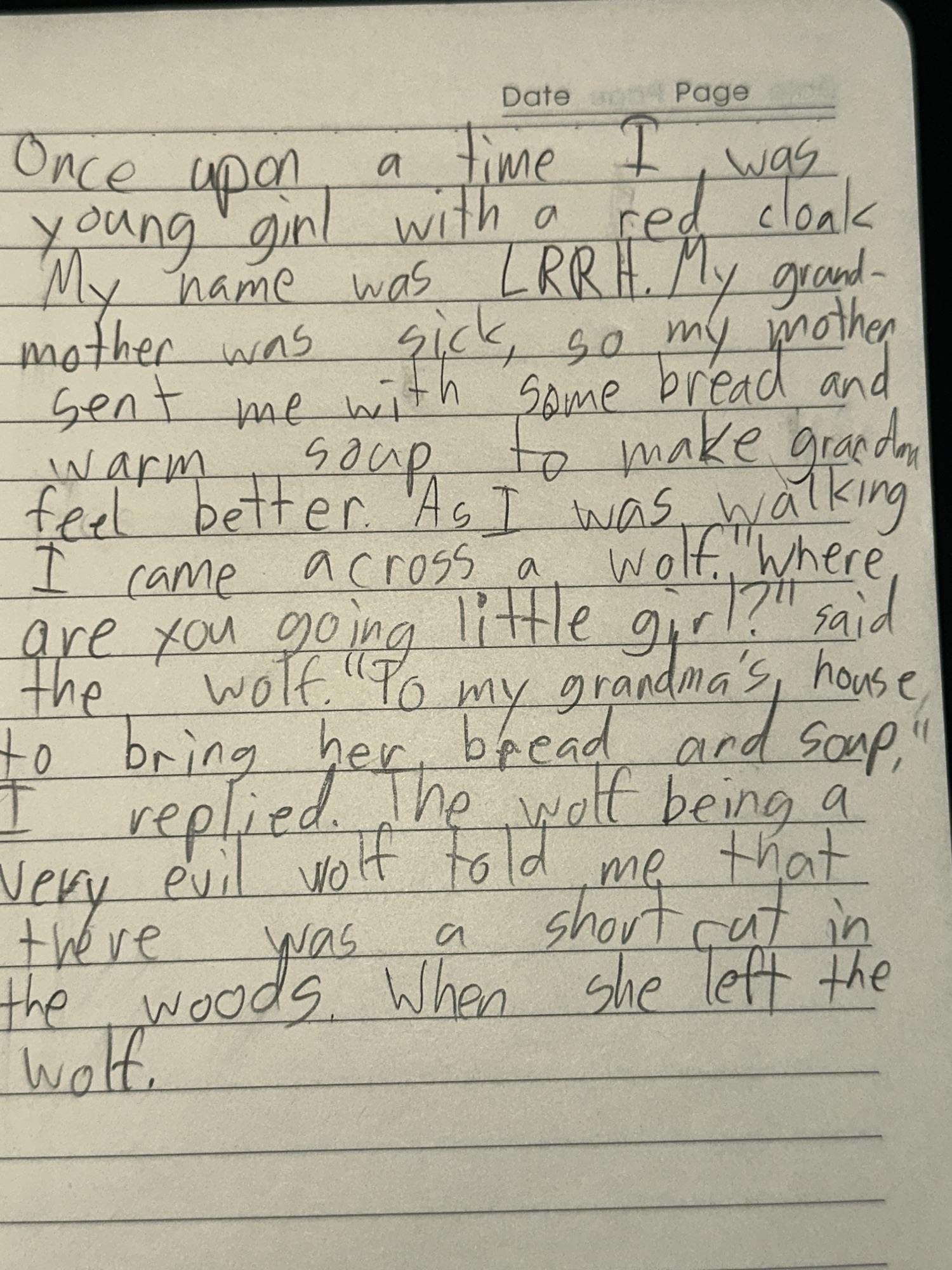
We all started with a retelling of “Little Red Riding Hood” in our lab notebooks. Why write the same story? A few reasons:
- Kids don’t have to spend writing time thinking of a story.
- I know their story will have the essential elements.
- Writing that’s not their original creation adds a level of objectivity.
- Students have a common experience to discuss.
Some of you science lovers out there have already recognized this first excerpt for what it is: an experimental control. And from week to week, we’ll adjust one variable after another. We’ll start from our own originals, retool it using one strategy, and discuss what it does for the story. Variables include:
- Narrative style / Point of View
- Use of present tense
- Short, simple sentences
- Long (perhaps a single!) sentences
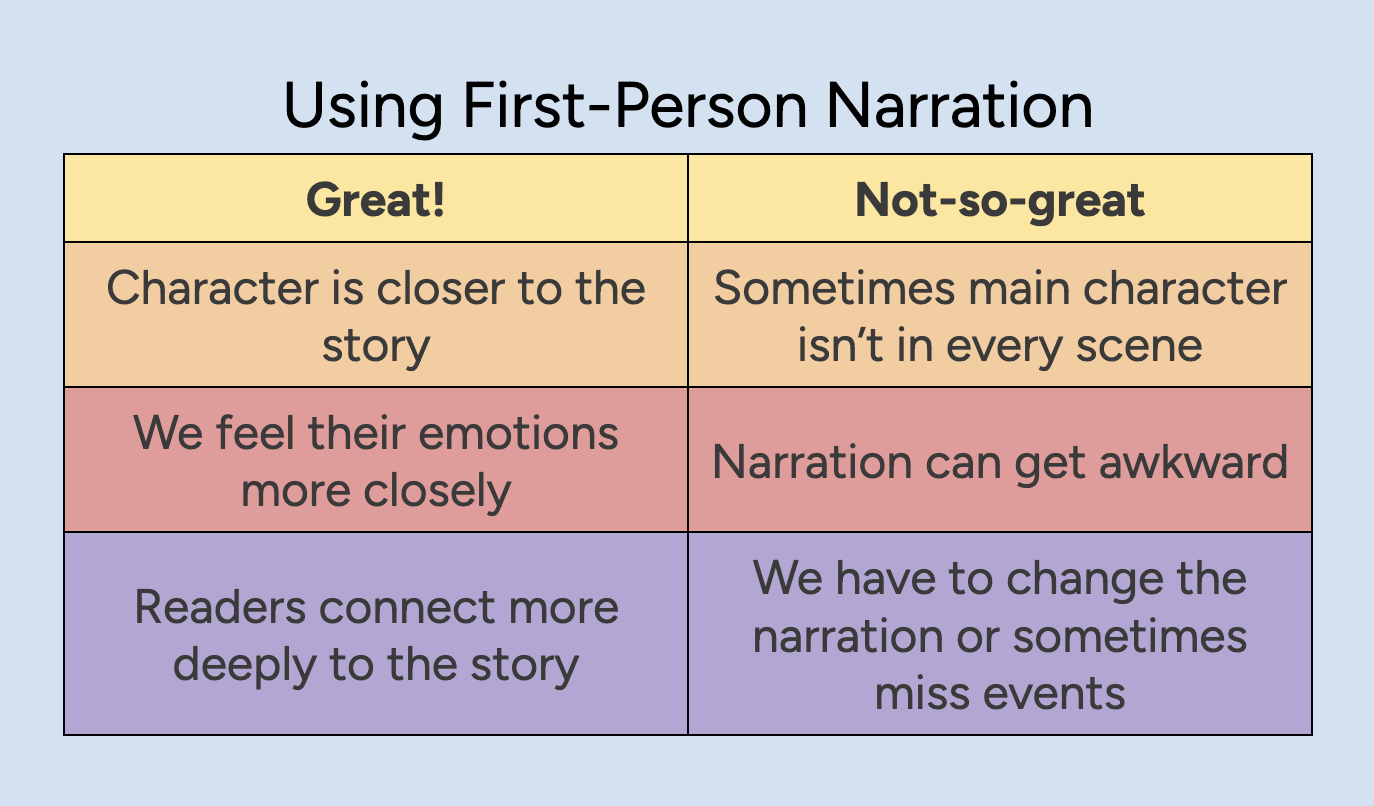
Recently, students were asked to rewrite their “Little Red Riding Hood” excerpt using first-person narration. Within minutes, this group saw several advantages and disadvantages to using first-person narration:
The Bottom Line
Students are excited about this approach, and so am I. My kids are learning firsthand how powerful a small adjustment can be for their writing. I’m able to teach them a wide array of craft moves that they might not get to play with otherwise. And we’re able to do it in an efficient, focused way. As time goes on, I hope to see students applying new skills to their independent writing, or within their home rooms.
I’ve long searched for a way to offer structured instruction and practice while honoring my students’ need for choice and independence. Trying to accomplish it within our very limited time has been an additional challenge.
I think we’re on to something good.
Discover more from TWO WRITING TEACHERS
Subscribe to get the latest posts sent to your email.


Thank you! I’d love to hear how it goes for you and your students.
LikeLike
Wow, you’re packing a lot into a short amount of time, Lainie. That’s impressive! You’re definitely onto something good.
LikeLike
Thank you! It feels especially good to see how the students respond to it. I’m also grateful for the chance to streamline my lessons. It’s good to give them a good “zhuzzing” from time to time!
LikeLike
What a great idea! I love how you used a common well-known narrative to be used for revision practice. It really focuses the writing in on the new craft strategy. I’ll definitely try this out with my small groups. Thank you!
LikeLike
What a great idea! I love how you used a common well-known narrative to be used for revision practice. It really focuses the writing in on the new craft strategy. I’ll definitely try this out with my small groups. Thank you!
LikeLike