
Estimated Reading Time: 6 minutes, 1210 words
Primary Audience: K-12 Teachers
In the first post of this blog series, Melanie describes learning to “read like a writer” instead of “reading like a reader.” For students to become independent and skilled users of mentor texts, they must read like writers. But in a classroom where students could still be learning to “read like readers,” how can we help them utilize mentor texts, a challenging skill for Melanie in her MFA?
Use this learning progression to identify where your class falls, and try these tips to take student independence to the next level.

1: Mentor-Novice: If you have a class of mentor-novices, you may be thinking, “I teach using mentor texts, but my students never seem to try what I’ve taught.”
One of the most complex parts of using mentor texts is getting kids to include something they learned from a mentor. I’ve had many instances where I teach what I think is a beautiful minilesson around a mentor text, yet at the end of workshop, no one can present an example of using the craft moves we just studied!

The biggest piece of advice I have is to start by highlighting mentor illustrators, rather than authors. It’s a more accessible entry point for kids if you pay attention to the illustrations and encourage them to try something in their drawings. This is fun and accessible for mentor-novices of all ages. I begin each school year studying Donald Crews’ illustrations in Freight Train, a book with minimal text. This year, we studied the impact of what we named “whooshy lines” to show that something is moving quickly. Students enjoyed adding “whooshy lines” to their work, regardless of genre.
Later, when I started teaching and trying language moves, kids could build on that earlier success by implementing a text move into their work. I can circle back and say, “Remember how we gave a name to ‘whooshy lines?’ What could we name this?” This helps set the stage for a classroom culture where we frequently learn from mentors. Naming the craft moves gives students ownership over the work.
Key Tip: Accessibility

For the mentor-novices, charts offer the most significant impact. Consider how you can make mentor texts omnipresent in your classroom.
- Charts depicting the craft moves you’ve found in mentor texts should hang in the classroom. I encourage students to walk up to charts to peruse and choose. You can even print mini-charts for their writer’s notebooks or folders.
- The writing center or shelf should include the mentor texts you’ve read (and post-it note annotations).
- Melanie Meehan has generously shared a treasure trove of mentor text charts for kids and teachers alike to use. Click here for a forty page document that will inspire your own collection! Thank you, Melanie!
2: Mentor-Master: A teacher of mentor-masters may think, “It seems like the same group of kids are the only ones applying mentor moves. How can I engage everyone?”
As I pulled out Behold the Octopus by Suzanne Slade, I announced, “Class, we read and enjoyed this book last week, but then we were enjoying it as readers. Today, we will read it like-” A student cut me off: “Like writers!” he excitedly announced. I chuckled to myself and thought, “This is one of those moments that I wish an administrator was watching!” But in reality, many students in my class did not have the mentor text independence as this exemplary student. How could I lift everyone’s level of independence?
One important shift to include and engage every writer in the classroom is to reflect on the kinds of mentor texts I’m presenting to the class. A common pitfall of writing teachers is solely highlighting books stocked with beautiful literary language. But this sends a message to the comedic or horror writers in the room, telling them that their writing style isn’t as worthy or valuable. Highlight a variety of voices, even Dav Pilkey or the “gross” books Stacey shared here, to engage writers of all styles and interests.
Key Tip: Accountability
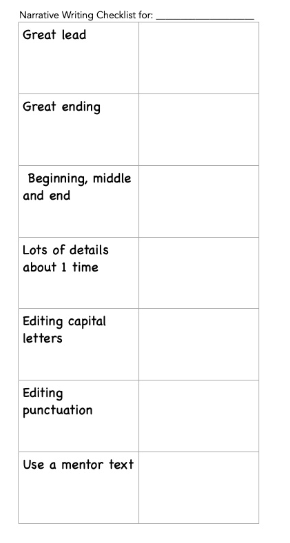
Get every writer to learn from a mentor by keeping kids accountable.
- Checklists are excellent accountability tools. When I offer students a writing checklist, I include something about mentor texts. This prompts students who haven’t tried a mentor move to check our anchor chart and revise so they can check it off of their checklist.
- Writing partners can check in with each other to share their progress in trying mentor moves. Ask partners. “Who did your partner learn from? What craft move did they try?”
- If I’m leading a small group lesson about a mentor text or craft move, I might say, “Before you leave this small group, you need to add a craft move from a mentor.”
- To encourage choice, I ask students to write their name on a sticky note and post it on the author or craft move they want to try on our chart. This helps me check in with students to see if they’ve done it or not.
3: Choose Your Own Mentor-venture!
If your students are experienced with mentor texts, it’s time to lift the level of independence to that of adult writers.
Adult writers research and choose their own mentors: let’s empower young kids to do the same!
Key Tip: Choice
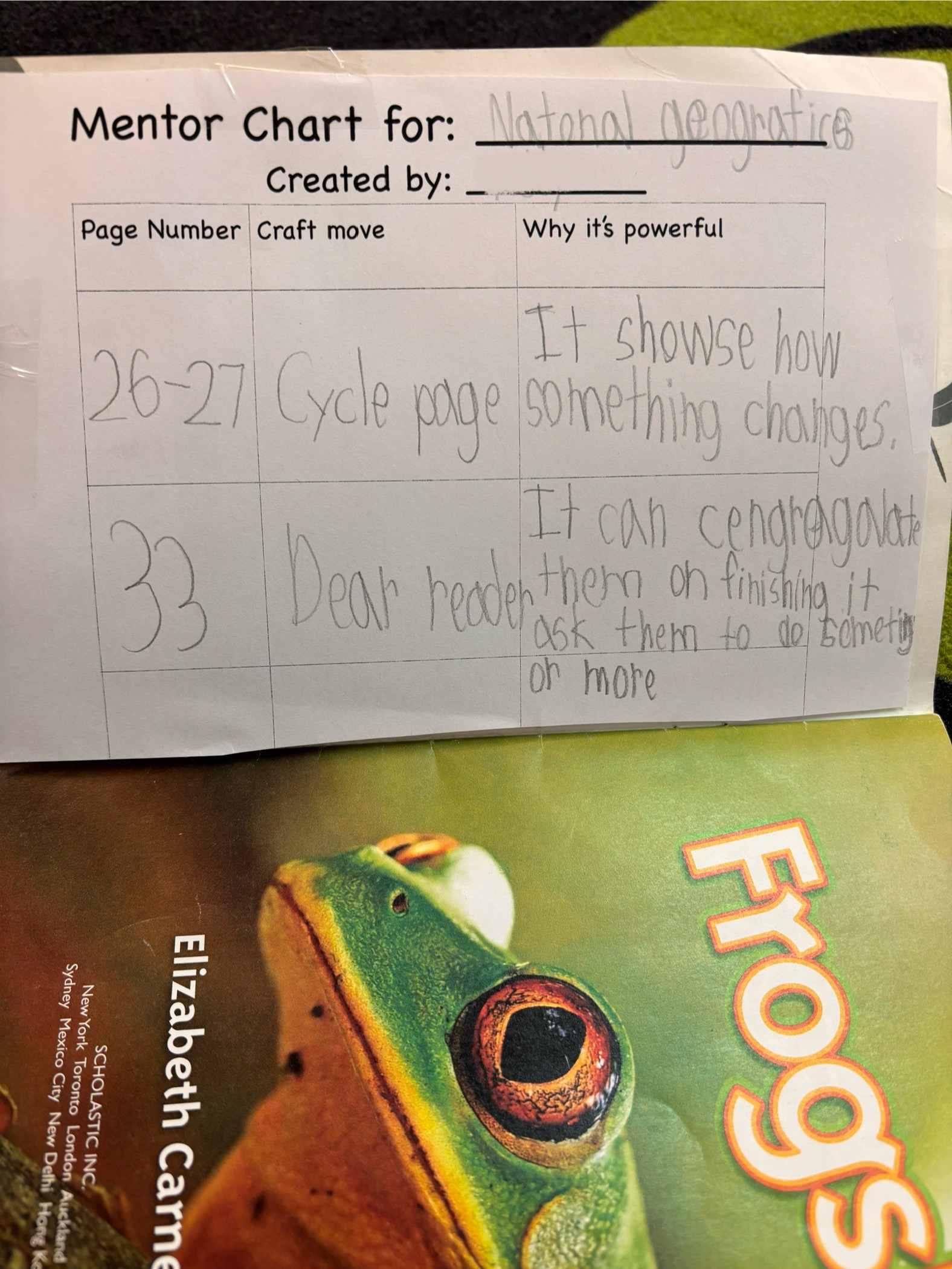
I gathered a small group of writers who’d successfully tried craft moves from teacher-chosen informational mentor texts. I told them they were ready to choose their own from our classroom library. The writers returned with a variety of books. I was pleased that they all chose books with different topics than their own writing. This demonstrates their readiness to read like writers, rather than reading like researchers.
The students then mined their chosen text for craft moves, using the chart below to reflect. Their ability to describe why a craft move is powerful—such as “The joke is powerful because it gives the readers a little break from all the facts,” or “The mini-glossary on every page is powerful because readers can define words without looking in the back of the book”—illustrates their skill level in using mentor texts.
Students taped their charts to the inside cover of the mentor text. The annotated texts are now on the writing shelf for other students to view.
Make a copy of this template for students by clicking here.
Key Tip: Leadership
If writers can apply the noticed-and-named craft moves to their own work, invite them to lead a small group around their chosen mentor text.
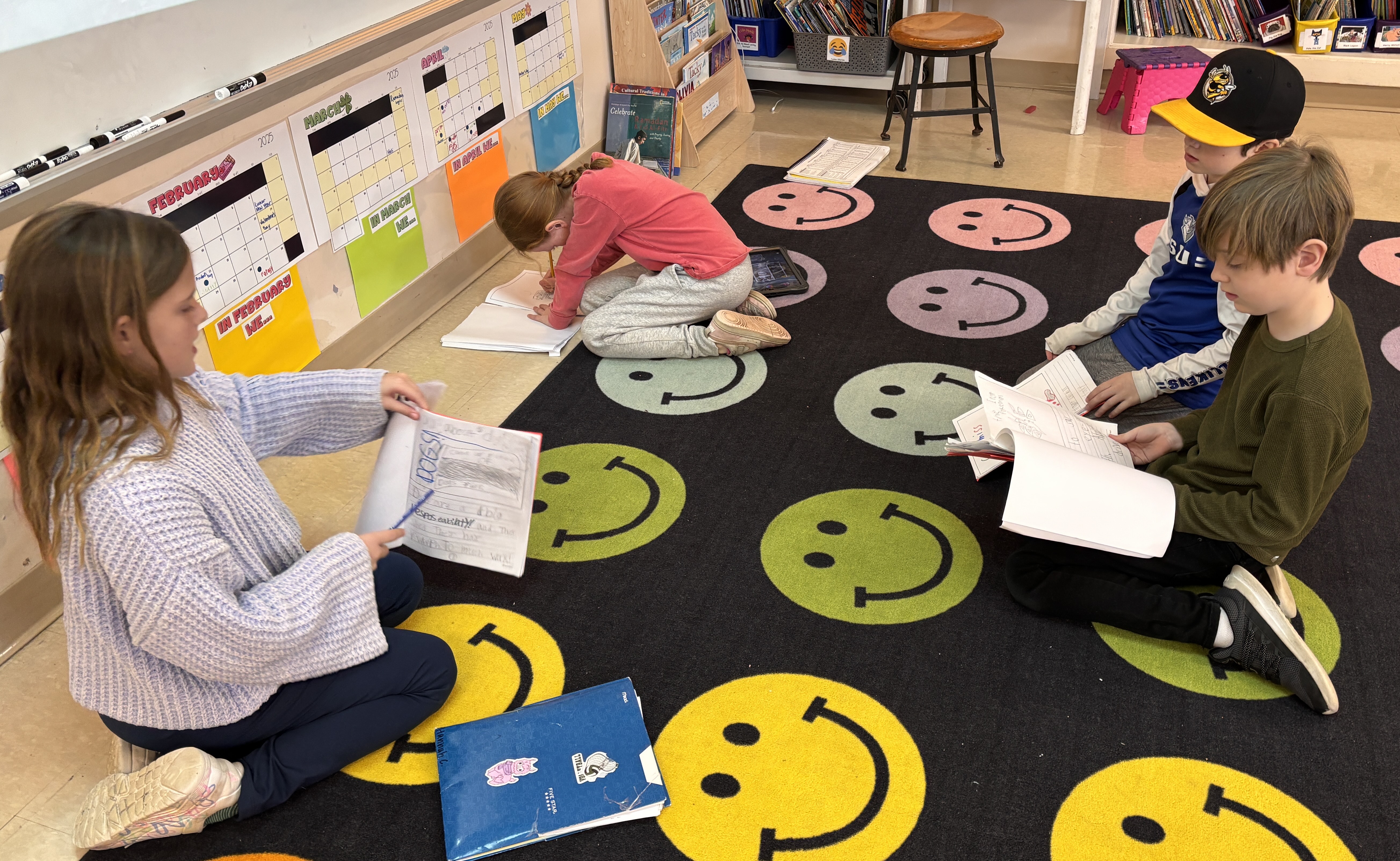
Here’s the structure the groups could follow:
- The leader introduces the book to participants and points out the craft moves on their chart.
- The leader models how they tried the craft move in their writing.
- The leader coaches participants through their own revisions inspired by the mentor, telling them, “Before you leave this small group, you need to try one of the mentor moves I found.”
In my classroom, student-led groups help writers learn from peers and improve their understanding of utilizing mentor texts. Students who participate often seek out their own mentor texts and ask to lead a group themselves.
I hope this progression helps you move students towards more independence with mentor texts. Use it to plan minilessons, small groups, and conferring sessions.

This is a giveaway of Craft Moves: Lesson Sets for Teaching Writing with Mentor Texts by Stacey Shubitz, donated by Stenhouse Publishers (Routledge). To enter the giveaway, readers must leave a comment on any MODERNIZING MENTOR TEXTS by Mon., 1/20 at 12:00 PM EST. The winner will be chosen randomly and announced on Thurs., 1/23. The winner must provide their mailing address within five days, or a new winner will be selected. While TWT readers from around the globe are welcome to leave a comment, you must have a U.S. mailing address to win the book.
Discover more from TWO WRITING TEACHERS
Subscribe to get the latest posts sent to your email.


Thank you for these wonderful tips! I’ll try them and share with other teachers.
LikeLike