Estimated Reading Time: 3 minutes (Contains 550 words)
Primary Audience: Early Childhood and Elementary Teachers
The Context:
It’s the fifth week of school for the children in my kindergarten class. Like so many of you, we have been working hard to build community, establish routines, and set the stage for learning and working together.
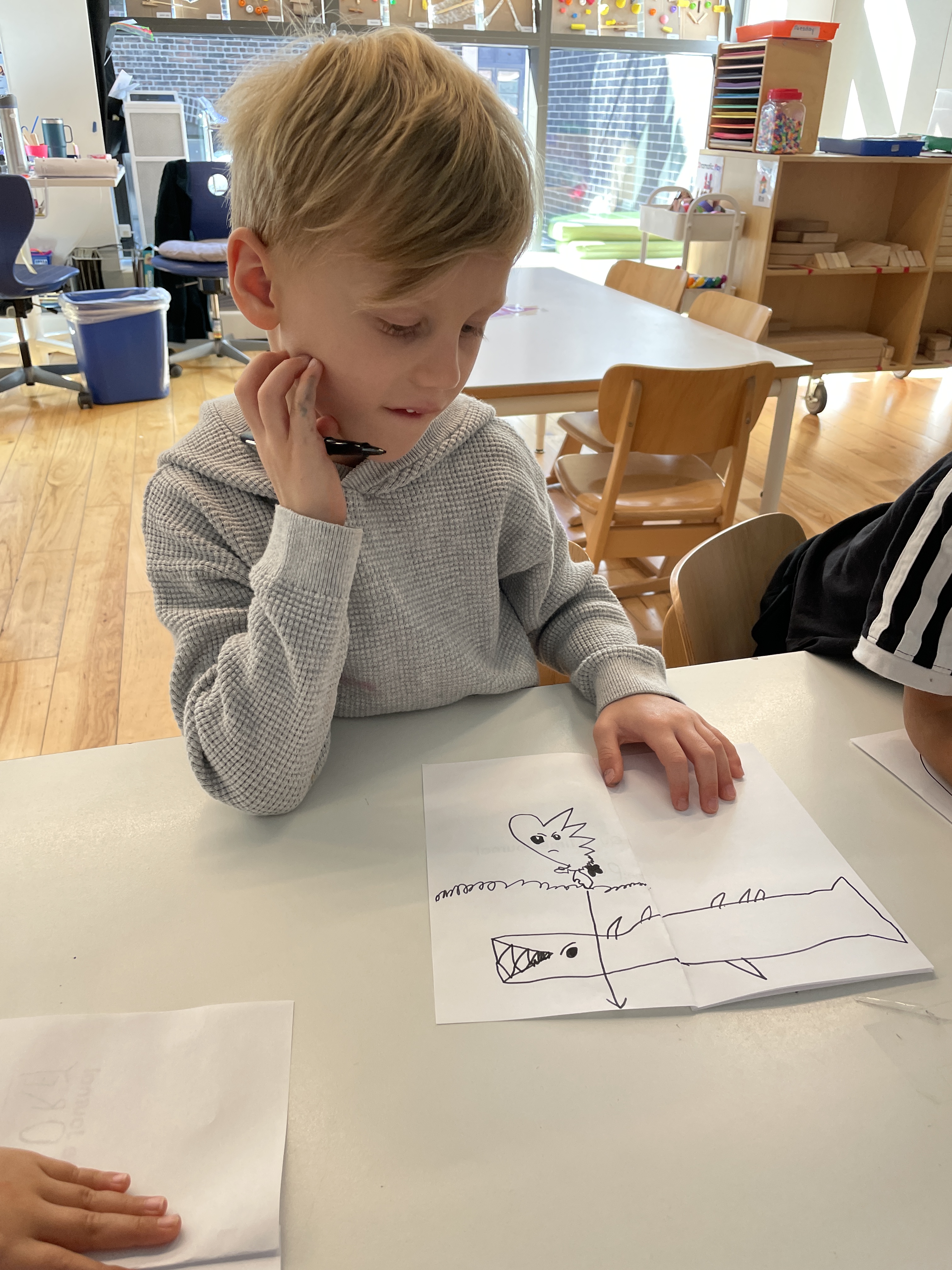
Our schedule is packed and busy, but there is a designated time each day when my students can choose to write. This happens during quiet time–a fifteen to twenty minute reprieve in between lunch and read aloud. I keep it simple. Every week children get a new Quiet Time Journal, which is a blank book with a cover on it. I let them use a black felt tip pen and they can either sit or stretch out on the carpet or work at a table.
I have not yet launched writing workshop and so the children have not yet received any formal writing instruction. There is no agenda or lesson objective for this activity. My only hope is that they will embrace the chance to draw and write in their journals while also spending some time quietly with one another. I am excited to see what they produce as time goes on, as they begin to understand the writing process better, and as they naturally incorporate the various craft moves they will learn.
Why it Matters:
When children are invited to write and draw freely, it gives us a window into their inner selves. If I stop to ask a child what they’re writing about in their Quiet Time Journal, I will hear a wide variety of things. It’s so interesting to know what’s on their minds and get a sense for the kinds of topics they’re thinking about and working through.
“It’s a story about two dogs. This is a kidnapper and this is her child. And this is powerful drops and this is a firebomb. And these are not that powerful (pointing to shapes like stars and hearts). They’re part of a shield.” -A.S.
“I’m making a tent with people on it. There are three tents. The people are just drawings.” -E.D.
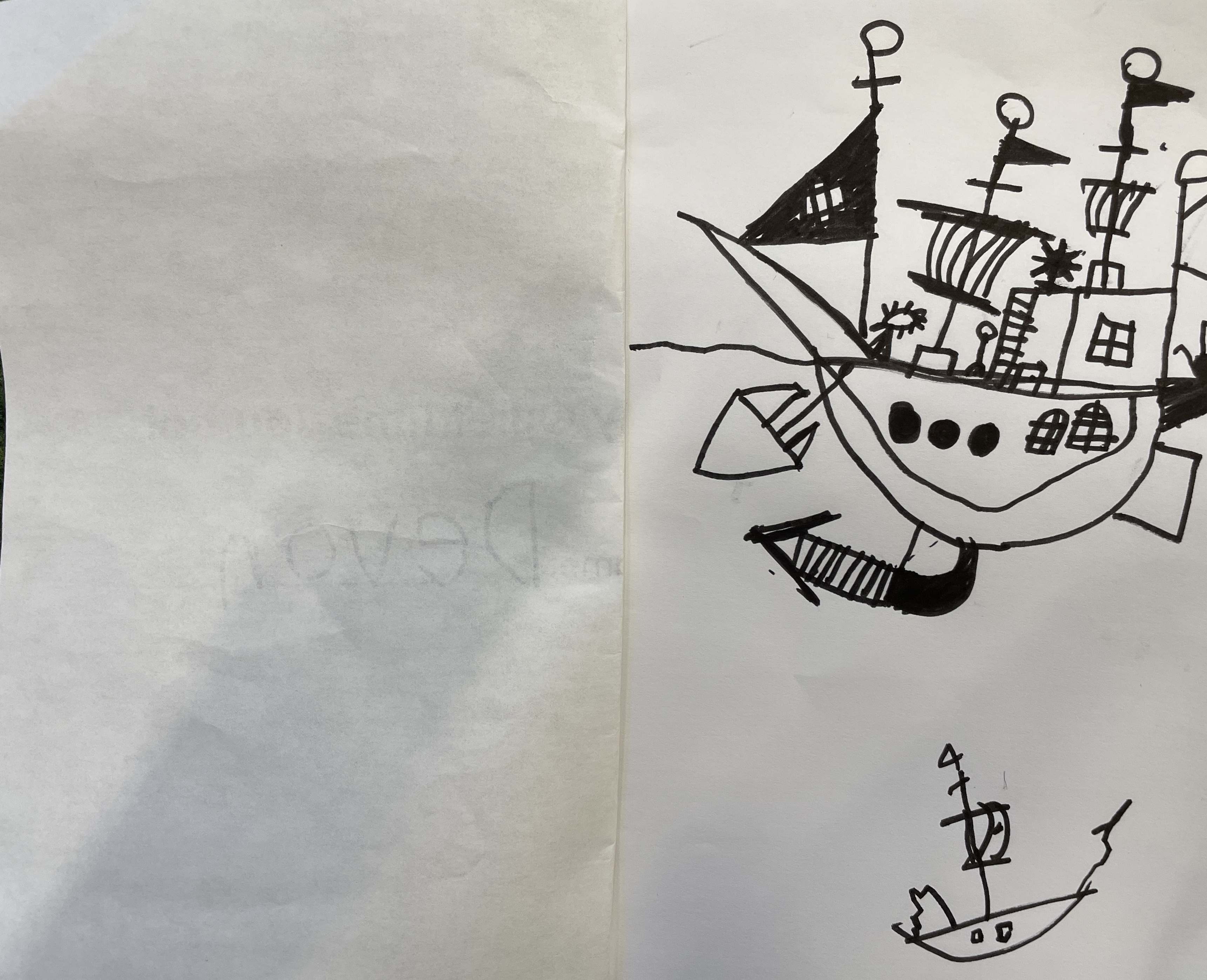
“I’m drawing a pirate ship.” -D.H.
“Some of these sharks are real. This is the longest shark ever.” -P.F.
“A ninja. People.” -A.P.
I also like to observe the way that children get comfortable in their space. Some choose to lay down, others sit at tables, and some huddle together. The social aspect of writing is so important in early childhood as they learn to develop language, collaborate, give and receive feedback, and build stamina. I invite them to be together as long as they can work and talk quietly.



Examples in Action:
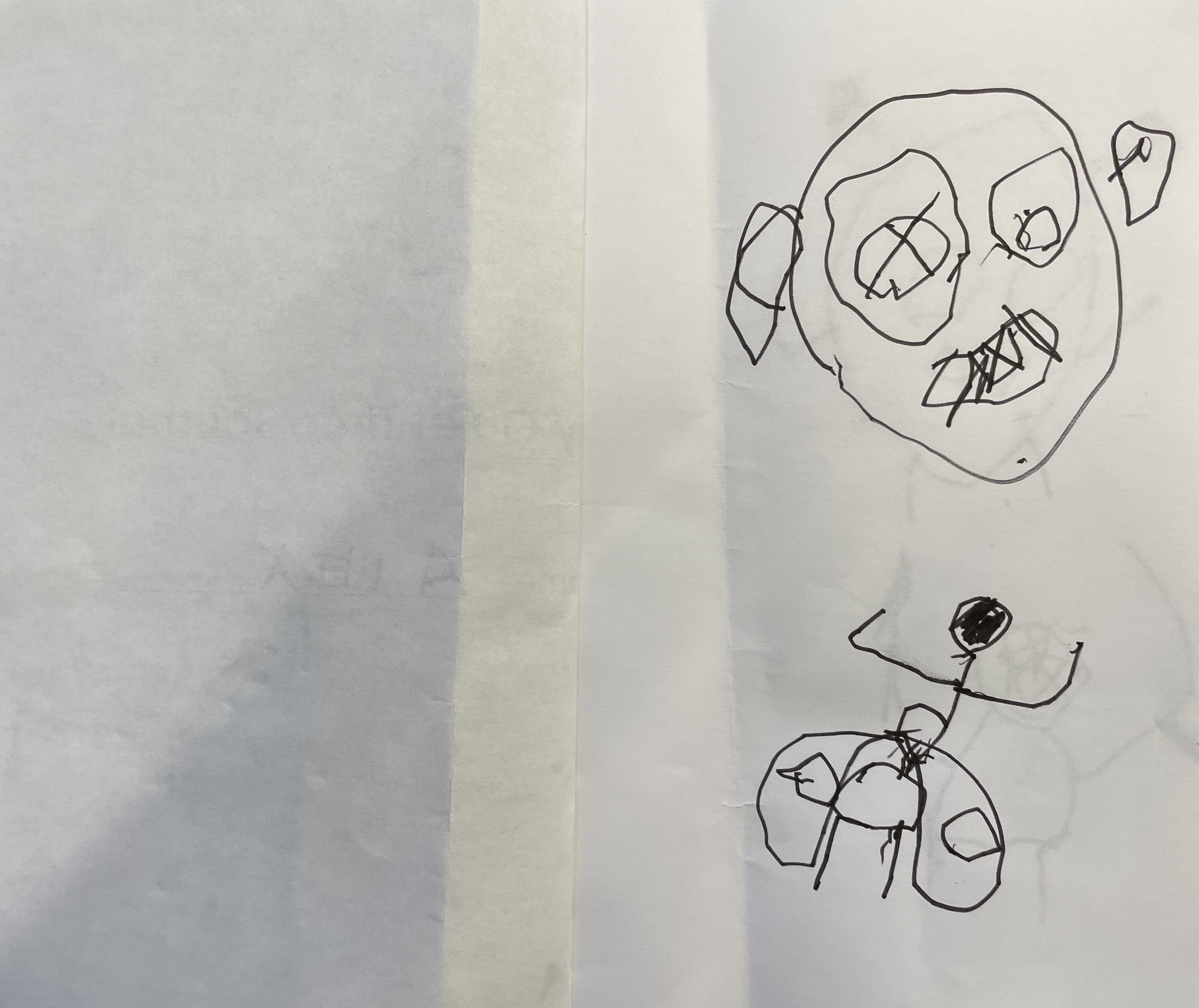
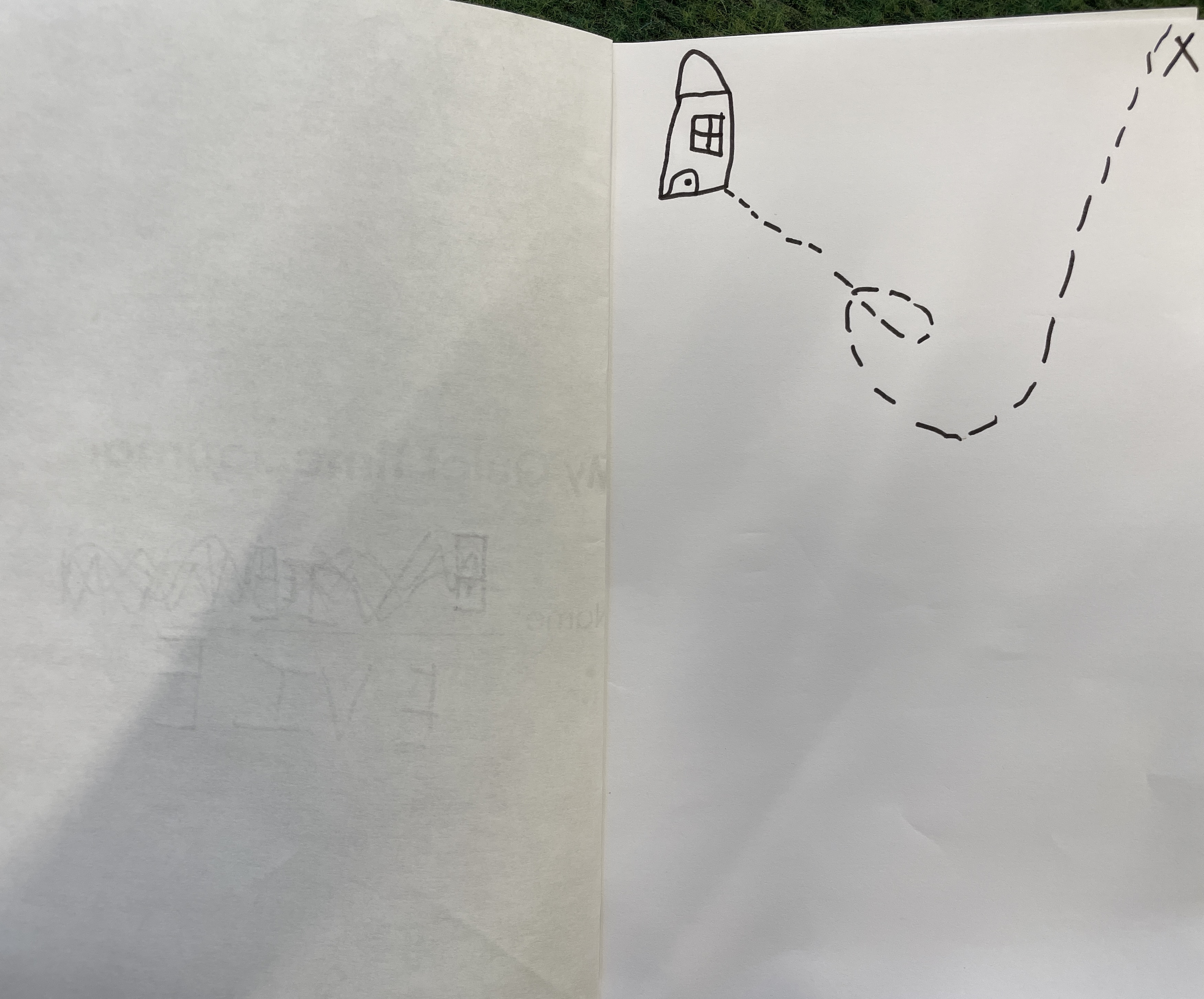
While I was only able to capture a few samples so far this week, the following shows the kinds of unprompted drawing (writing) that my students have been doing in their Quiet Time Journals. You can see the range of drawing abilities and the complexities of their narratives unfolding, even without a specific text for each.

One Thing to Remember:
Giving your students an invitation to write is a powerful tool you can use in conjunction with your existing curriculum and writing workshop. I find that when I offer my kindergarteners a designated time to write outside of writing workshop, it strengthens and deepens their relationship to it because they are free to imagine, invent, take creative risks, and explore the medium. As they begin to learn more about storytelling, labeling, sentence writing, and conventions, I eagerly anticipate seeing these components on the pages of their Quiet Time Journals too.
Discover more from TWO WRITING TEACHERS
Subscribe to get the latest posts sent to your email.


This is an elegant reminder to make simple space to invite writers in. Thank you, Melody
LikeLiked by 1 person
Thanks for reading, Melody!
LikeLike