
Estimated reading time: 3 minutes, 12 seconds. Contains 640 words.
Target Audiences: K-5 Classroom Teachers, Literacy Coaches, Administrators
Catching Up: Where It Started
Some longtime readers of Two Writing Teachers might recall I started a writing initiative in my district during the spring of 2022. You can read the full article at this link, but here were the major highlights:
- Focus on joy in writing, for students and teachers
- Development of a “Writer’s Creed,” an affirmation of writing for all
- Establishment of “Choice Writing TIme:” fifteen minutes a week of free writing
All these ideas were met with much enthusiasm, and teachers reported their students grew more confident as writers. The initial roll-out was successful enough that we expanded our cohort to two classroom teachers at each grade level starting in the summer of 2023.
What’s Happening Now
At the time I published the original article, our writing cohort had several goals, including:
- Writing material kits to support writing time
- Developing guides to make Choice Writing Time more rewarding for all
- “Writing Life” units to parallel the Lucy Calkins “Reading Life” units
- Narrative writing units driven by independent student practice
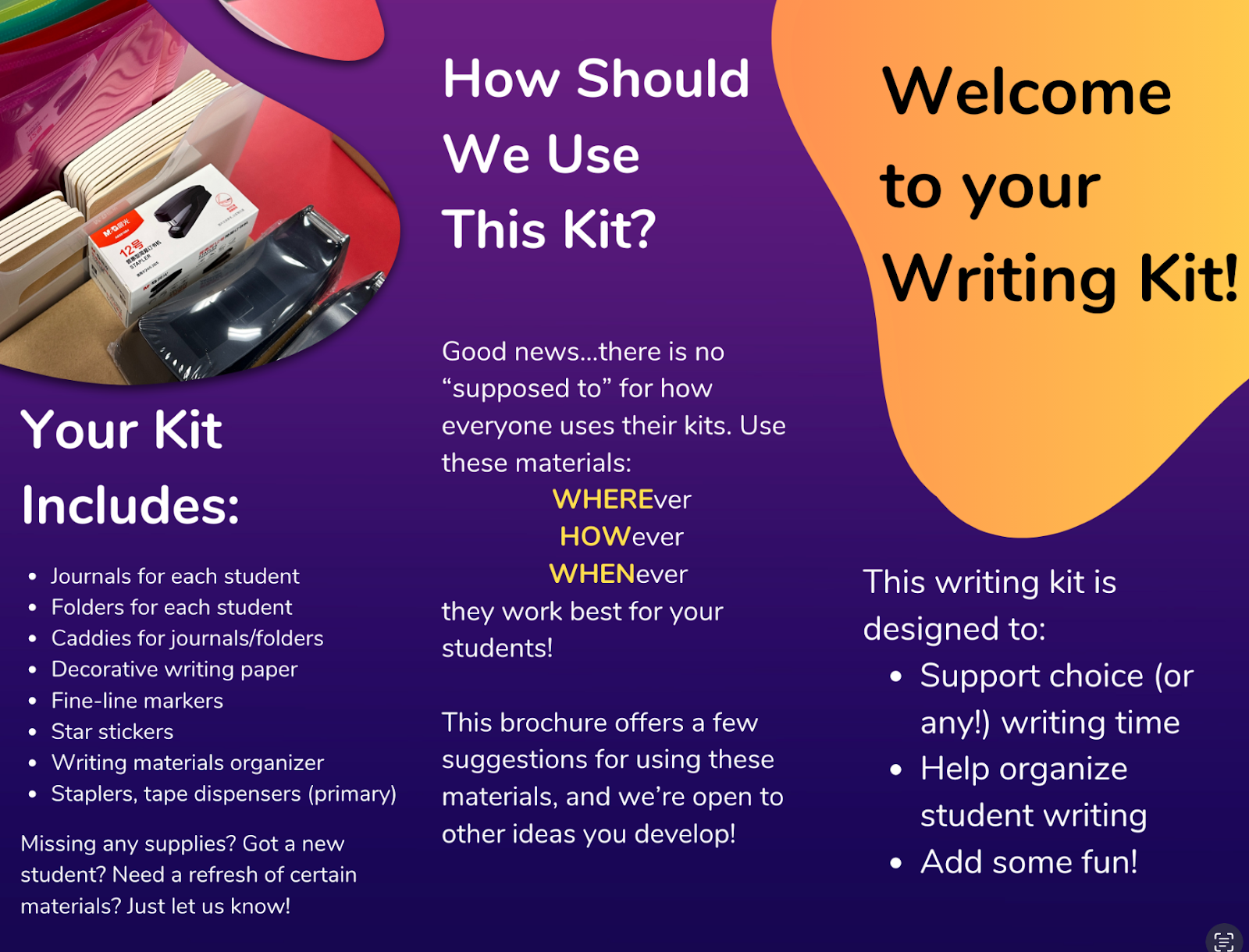
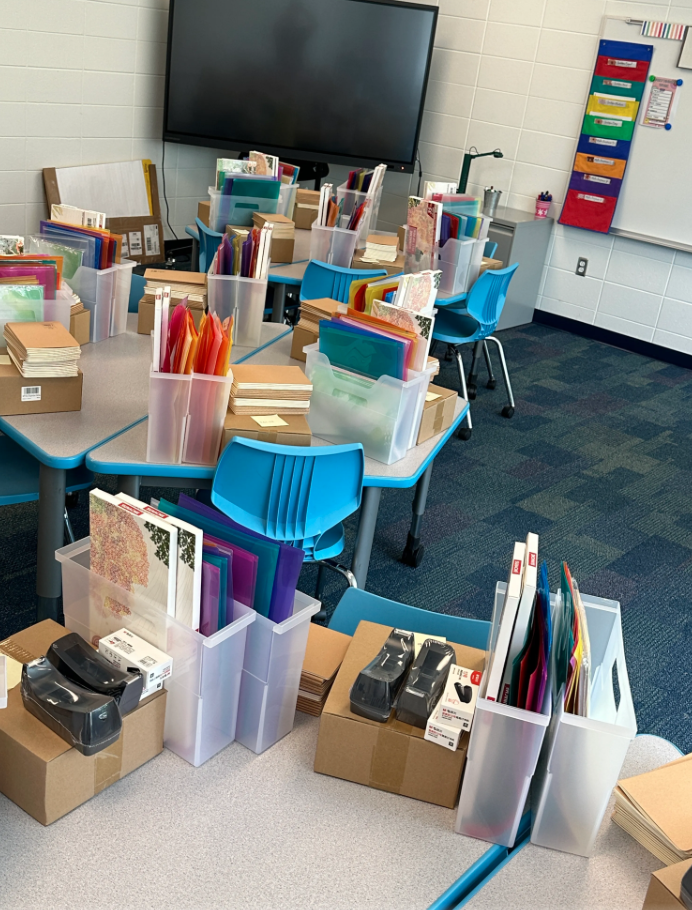
Writing Kits. We were able to secure funding so every K-5 classroom teacher had a writing kit to “spice up” choice writing time. Cohort teachers worked to develop a materials list, and this fall, teachers received writing journals, fun pens, portfolios, fun writing paper, staplers, tape dispensers and more! We also included a brochure on interesting or fun ways to use the materials.
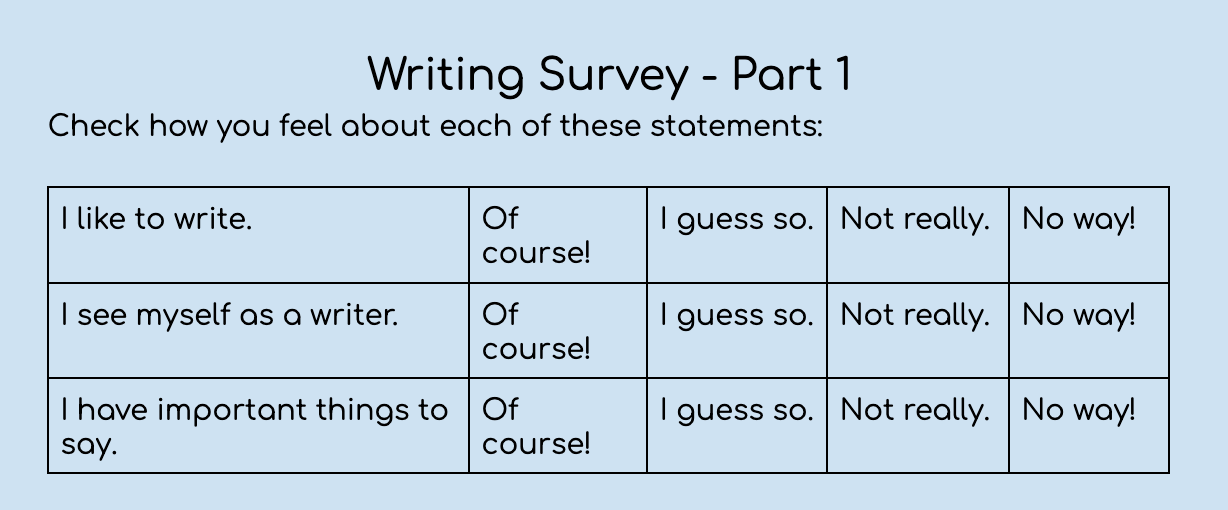
Writing Life Units. Just as classroom teachers took time at the beginning of the year to establish a reading community, our cohort developed units to do the same for writing. Students completed writing inventories (see graphic below), talked about what good writers do, and began developing the tools and strategies to work through writing challenges.
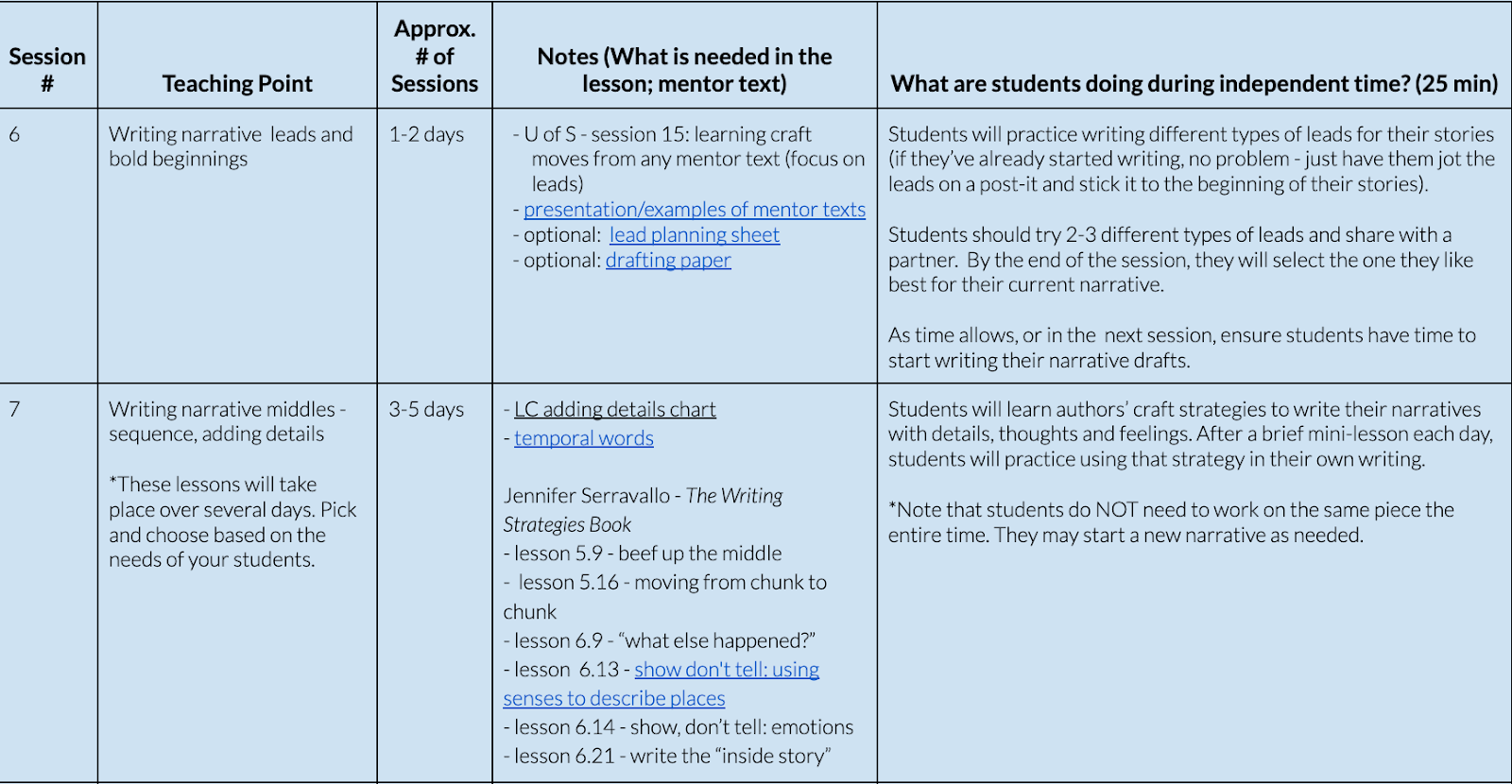
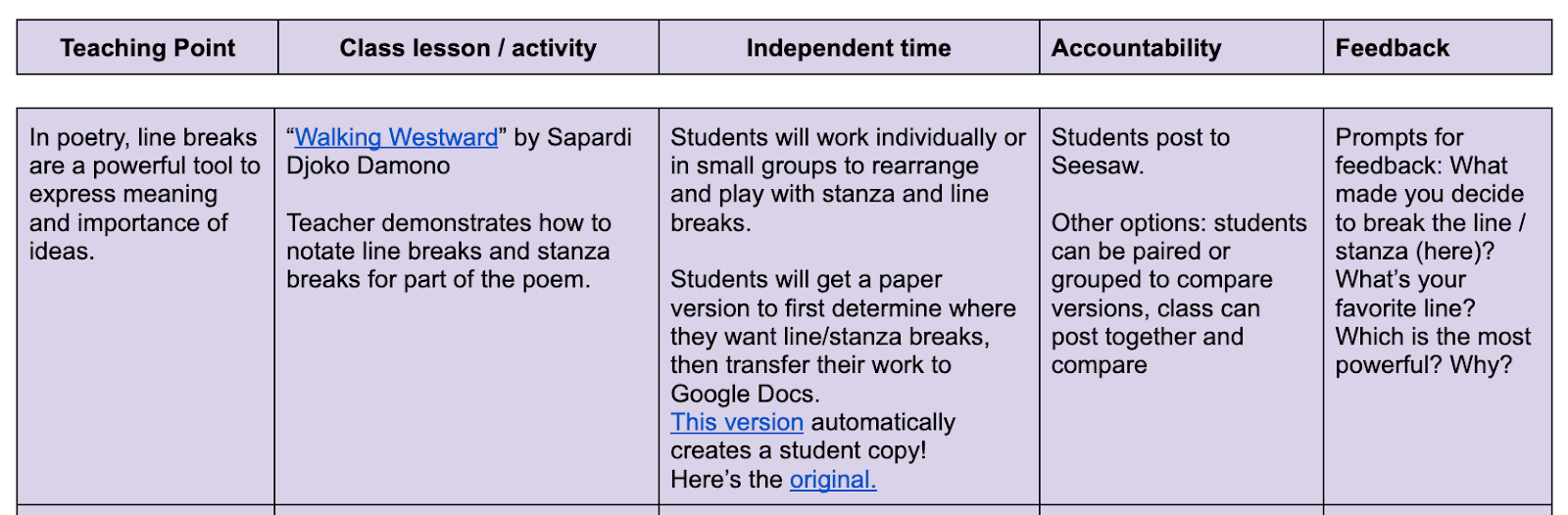
Unit Development. One of the most pressing tasks for our cohort was retooling our units for narrative writing. It was time to consider: What if all lessons were planned around the independent activity for students? While teachers in our district were used to crafting unit plans from given resources such as Lucy Calkins Units of Study, we had never done it through the lens of student independence and choice. Changing that focus for planning and instruction was both a big ask and a heavy lift.
It took long, sometimes difficult conversations to get ourselves to a place where we were ready to shift the way we planned, but the work was rewarding. We even continued to meet throughout the year to rework the rest of our units in a similar fashion. Here are a couple samples of how we structured our units, both within and beyond the Lucy Calkins framework:
By The Numbers
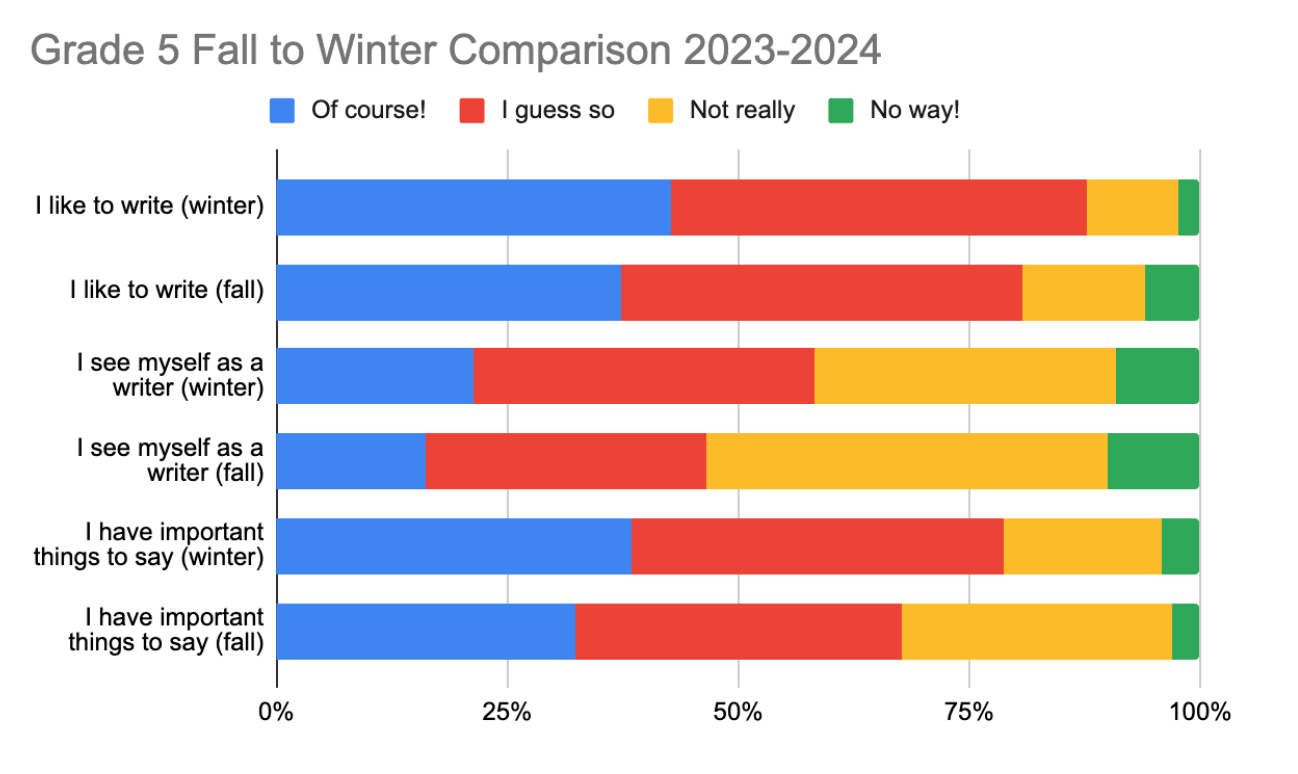
This fall and winter, all students in grades 3-5 took a writing inventory (see above). Students of all ages reported enjoying writing more, and they were more likely to feel they had important things to say. Fifth grade in particular saw marked growth:
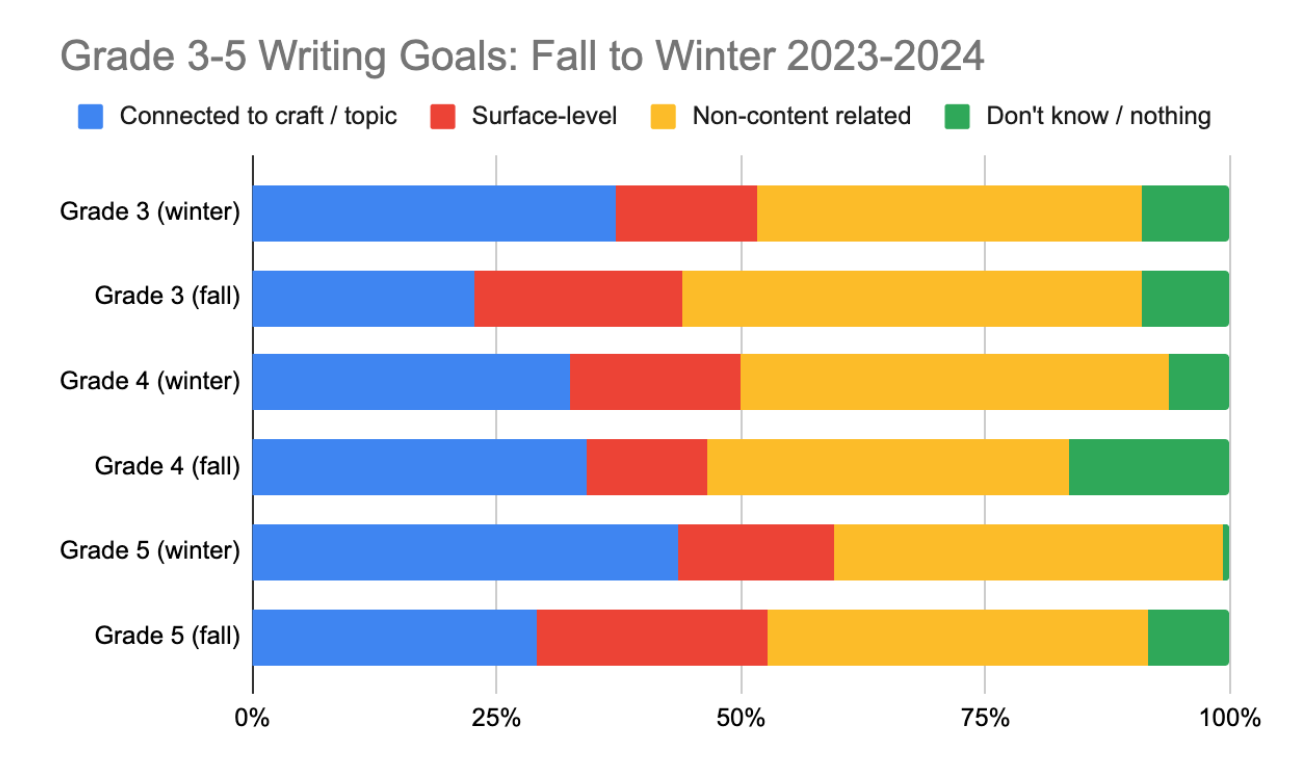
Furthermore, students were better able to articulate their strengths and areas for improvement. They were more likely to list genre- or craft- based goals, or related skills such as spelling, grammar, or mechanics:
What’s Next?
The writing initiative is at a crossroads. Our district is conducting a language arts curriculum review, and we will most likely pilot a reading and/or writing program in the coming year. We’re not quite sure, then, what our next steps as a cohort will be.
Might we continue crafting and refining units as we’ve been? Perhaps.
Will we prioritize which changes we’ll try and preserve? Maybe.
Would we pull back, allowing time and space to learn and implement a new program? Could be.
Here’s what we do know: Teachers now have more fun with writing instruction. Students are becoming freer and more confident as writers. Whatever the path we take in the coming years, whatever programs or materials we choose to follow, it will be with a renewed commitment to student choice, independence, and most of all…joy.
Discover more from TWO WRITING TEACHERS
Subscribe to get the latest posts sent to your email.


I applaud the initiative you and your colleagues took to introduce students(and teachers) to the joy of writing for themselves. I have a small suggestion: remove the adjective good from descriptions of writers. Change it to Writers do….
Some students may be discouraged or unable to picture themselves as good writers/readers, but can build their skills and confidence as writers.
I wish you well with the new adoption. Your data should support continuing and expanding the free writing practices you’ve established and can inform the selection of an updated curriculum.
LikeLike
I need a cohort like this!!
LikeLike
Thanks! They are incredibly amazing humans and educators, and I’m humbled that they are willing to spend their time and energy in support of what we’re trying to accomplish. I still pinch myself every so often that we’ve been able to accomplish what we have!
LikeLike