Estimated reading time: 2 minutes 23 seconds. Contains 479 words.
Target Audiences: Classroom Teachers and Literacy Coaches
A Backstory: Over the summer, I decided to try my hand at crocheting. My mom and niece had been doing Woobles crochet kits over Zoom, so I figured I’d try it, too. With my mom as my personal tutor, we started a small bunny project for beginners.
I was so impressed with the tools provided. Not only was the project started for me when it arrived, but there were several visual instructions, including videos. Each step of the project was broken down into manageable pieces, from how to hold the crochet hook and yarn for the best tension to explicit directions for each stage of a stitch. It gradually released me as a student to try things independently, but I could quickly revisit videos for review to build my confidence. I had to rip out many stitches in my first few rounds. I sometimes became frustrated, even with the good instructions, because I couldn’t quite get the hang of it.
After three video chats with my mom, slowing down the beginning process, and five rounds of crocheting, I started to feel like I could rely on my knowledge of the steps, not my mom or the videos.
Why it Matters: The Woobles projects are a fantastic teaching model. The repetition of skills builds stamina and fluency with crochet. It’s been a refreshing mentor for me as a teacher when I consider how students repeat skills to build stamina and fluency as writers. Many of the feelings I had learning to crochet match my students’ feelings when building up their writing skills.
How it Works:
Visual Tools
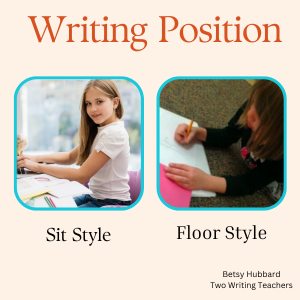
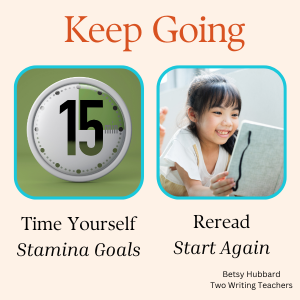
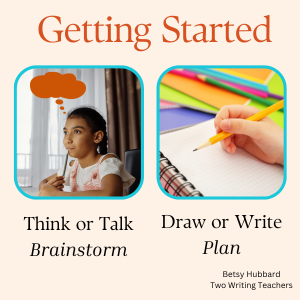
Using visual tools like videos and charts is nothing new, but each year, students remind us that their needs dictate the tools we use. Consider some of these visual tools and how they can last well after the lesson is over for repeated use.

Something Started
Giving students a start on their writing can remove the pressure of how to begin. Often times students get stuck right away, and before we know it, time is up! Using your modeled writing, sentence stems, or even a whole paragraph to build around can be the jumpstart a writer needs to get their own ideas to flow.
Explicit Instruction
Break your lesson into the smallest parts as you prepare. Students can gradually see the big picture when we can be explicit in our delivery of each step. I find my best rehearsals of a lesson are within a small group instruction model first. When I try it out with a few students, I can see the parts I need to slow down and determine what needs more detail.
The Bottom Line: Each day in our classrooms, we present students with new ideas and skills to practice. When we observe the needs of our writers and then respond with tools and materials of support, we build systems that support independence.
Discover more from TWO WRITING TEACHERS
Subscribe to get the latest posts sent to your email.


