Estimated Reading Time: 3 minutes (698 words)
Audience: Teachers and Coaches, Grades K-8
Why it Matters
In my past work with students, I’m not sure I ever gave much (enough) thought to the complexity of a capital “I”. Let’s think about the cognitive work that is involved in this letter. Creators have to know how to hold a writing utensil. They have to know where to begin the line, where to end the line, and how to maintain the pressure as they draw it. Then, if they’re going to use “I” instead of “I”, then they have to coordinate the visual and motor movement of the perpendicular lines. All of this happens in addition to remembering that when they are writing in the first person, they are to use the capital letter. (Depending on the allograph, the lower case “i” is the easier one to form.)
Allograph: any alternative form of an alphabet letter. These alternatives can be upper and lower-case letters, as well as various fonts.
Continuing That Thought…
One of the recurring messages that Maggie Beattie Roberts and I emphasize in our just-published (HOORAY!) book, Foundational Skills for Writing, is that cognitive energy is a limited resource. When you have to concentrate to complete or perform a task, you are expending cognitive energy. When learners achieve automaticity, they no longer have to expend the same amount of brain attention on that task. Therefore, the more that young writers can achieve automaticity with tasks like letter formation and spacing, the more they can direct cognitive energy to other tasks that writing demands.
Sidenote: I have stopped referring to transcriptive skills— handwriting, keyboarding, spelling…– as low-level since these skills require significant instruction and practice for many writers.
What Trouble Might Look Like
Children who might benefit from some visual-motor integration building could have writing that slants across the paper; they might begin their lines of writing closer and closer to the middle of the page. They might also have some core weakness, so they could be the students who lean on a wall or the back of a chair any chance they get. Sometimes, their handwriting floats with little regard for lines, and sometimes, there’s not much spacing. You might also see these students avoid activities like coloring, LEGOs, Wiki sticks, or even blocks since they all involve visual-motor coordination.
What You Can Do
I have had success in building visual-motor integration with several activities. Here are some low-cost or free ideas:
- Perfection is a game from Hasbro that involves sorting shapes in a gamified way. Because players have to position shapes based on size and orientation, you can learn a lot about what children need to work on by watching them play.
- Connect Four is another Hasbro game that requires visual-motor coordination.
- Any kind of dot-to-dot or maze activity helps to build this important coordination, but when students are completing these activities, remember that intentional practice leads to growth. Students should work hard to connect the dots and not go past them. Many children who would benefit from working on visual motor coordination may resist the cognitive effort it takes to complete the task– or they may not perceive the accuracy of their lines. Asking them to rate their connections helps to build that awareness.
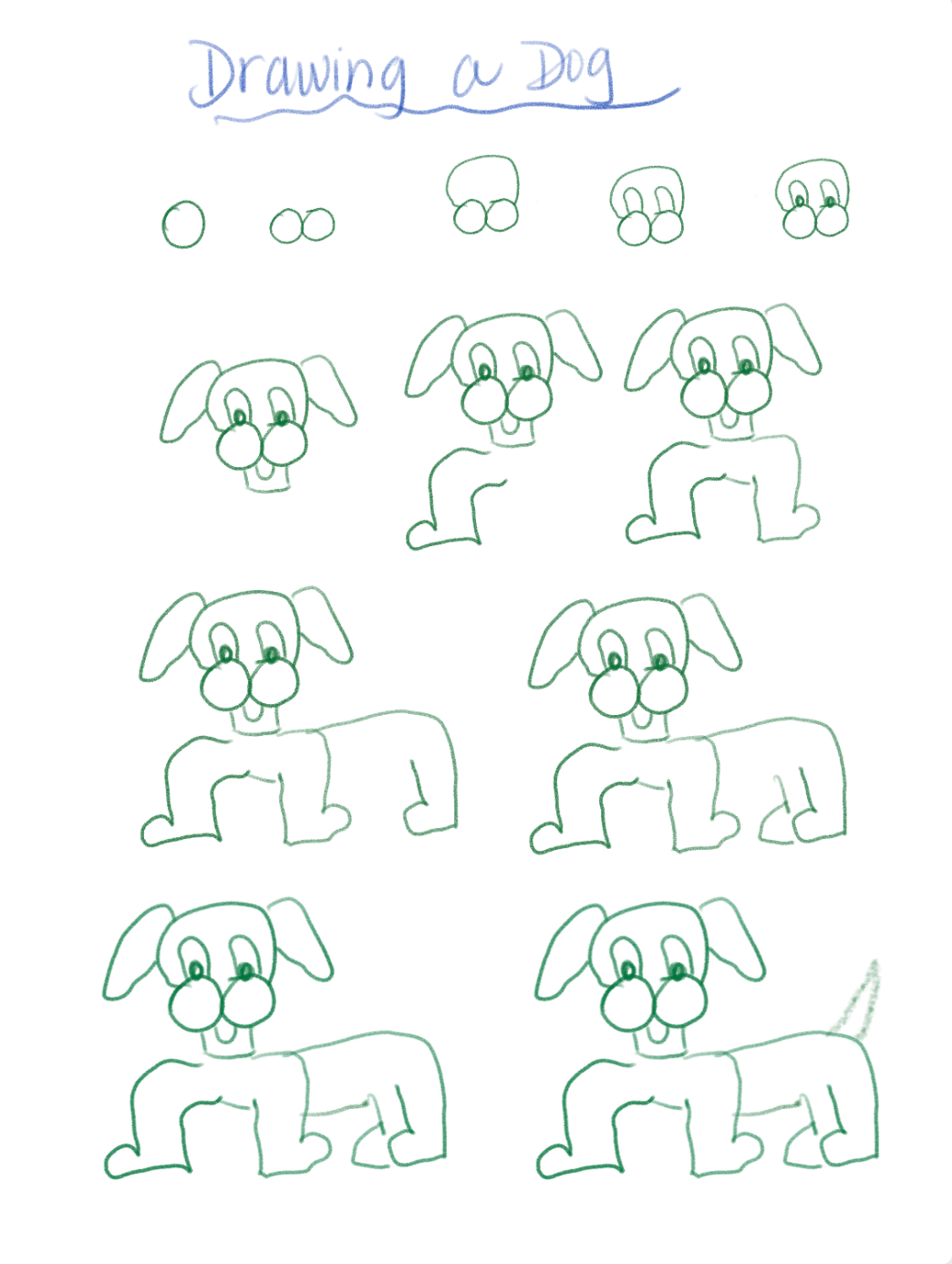
- I’ve had a lot of success with step-by-step drawing exercises. You can buy books, and you can also find online downloads. And, you can also create your own. Students love my step-by-step dog that I learned to draw when I was a child. (Chuckles are welcome!)
There are many step-by-step drawing books out there, and, since I have a student who loves dragons, this book has been as especially welcome resource. Sometimes the two of us take turns drawing the “next line”, so it is a collaborative and cooperative experience. We’ve both gotten better at our dragon drawing, and he has gotten much more attentive and precise about where to begin and end lines. And… his letter formation has improved dramatically!
Final Thoughts
Visual-motor integration is a critical component of successful handwriting, and ultimately, successful writers. Build it during any chance you have. And, if you have additional ideas to share, please leave them in the comments– we’re all better together!
Discover more from TWO WRITING TEACHERS
Subscribe to get the latest posts sent to your email.


This is great Melanie! Through our OG trainings throughout the years we e learned so much about that visual integration and how much ‘work’ some kids have to exert just form a letter. We’ve seen The investment in teaching them in those primary years is priceless. Your ideas for games is great! Thanks for sharing!
LikeLiked by 1 person
OMG you are preaching to this choir! As an early childhood educator I always placed high value on using hands on real objects, and introducing many media. And this may be provocative, but as a K and 1st grade teacher I also learned to value direct handwriting instruction. I love the Handwriting Without Tears program, which has friendly workbooks that help with other aspects of literacy as well as handwriting practice. Where I saw the most desperate need was in math. I saw/see many children actively inventing how to form a numeral each time they have to write it. To your point about cognitive bandwidth- what a distraction this is to their math thinking?! Handwriting Without Tears, for example, has a little story to guide the formation of each numeral. Minutes each day to build efficient habits and ease and confidence.
This may seem like a digression, but I’ll never forget hearing a father speak at his son’s funeral. Overdose, suicide, no one knew. What everybody knew was this boy had severe ADD. His father told of watching his son figuring out how to tie his shoes anew each time. The effort that took, the stress it added to his life. The cognitive load.
obviously you hit on a nerve with me, here. Sorry to go on. But kudos to you for this piece and your ongoing efforts with our young ones.
PS you asked for suggestions- one I loved and used was to occasionally tape paper underneath a table, having kids lie on their backs and reach up to draw. It builds arm, wrist and hand muscles and is silly fun.
LikeLiked by 2 people