Target Audience: Classroom Teachers, Instructional Coaches, and Educational Leaders
Estimated Reading Time: 5 Minutes (870 Words)
Remember When
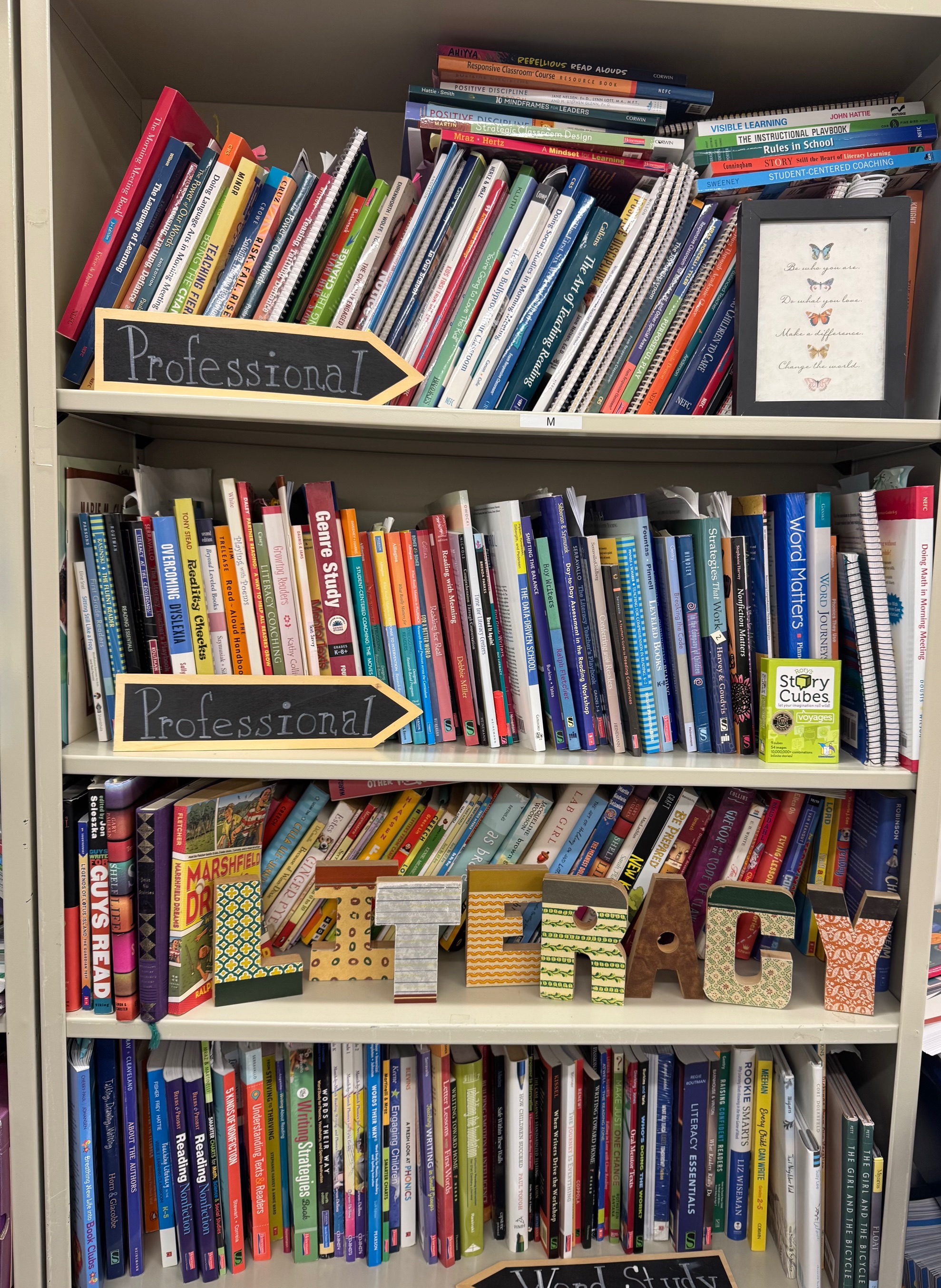
At the end of every school year, when I pause to clean up my office, I always find myself lingering at the bookshelf that holds my collection of professional texts. I sometimes wonder if it’s time to part with a few, since many of them have been with me for over twenty years. But as my finger traces familiar spines: Strategies That Work by Stephanie Harvey, Reading for Real by Kathy Collins, First Grade Writers by Stephanie Parsons, I know I’m not ready to let them go. These books are part of my story. These authors helped me imagine the kind of teacher I wanted to be and filled me with ideas to try as I worked to continually outgrow myself as an educator.
As a brand-new teacher, I was fortunate to be surrounded by educators who modeled what it meant to be learning always. My mentor, Caltha Crowe, showed me what it looked like to be a truly curious teacher. Even just two years from retirement, Caltha was constantly reading, writing, and collaborating with colleagues in order to troubleshoot, reflect, and respond to what she noticed in her classroom. That model has stayed with me. My to-be-read stack is often more ambitious than reality allows, but I’m a stronger teacher because I hold fast to one truth: teaching is something I will never fully master.
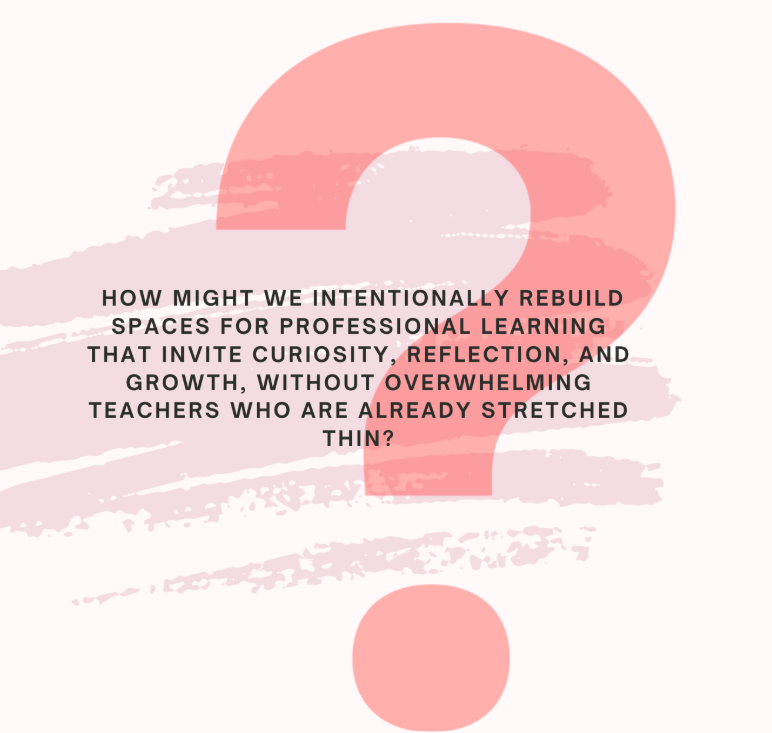
As teachers’ responsibilities have multiplied, I sometimes wonder if those responsibilities have crowded out curiosity. I remember evenings spent in Twitter chats with other educators, fueled by shared questions, ideas, and the joy of learning together. Those experiences make me wonder: how might we intentionally rebuild spaces for professional learning that invite curiosity, reflection, and growth, without overwhelming teachers who are already stretched thin?
Why it Matters
I have said it countless times in my posts: teaching is an art. And like any art, it can’t be reduced to a set of steps or ever truly mastered. It requires a willingness to keep reimagining what the work could look like, to meet the ever-changing needs of the students who enter our classrooms each year. This is where professional reading matters most, not as a source of quick strategies, but as a way to deepen how we think about teaching itself.
In his essay, “On the Virtue of Thinking Small: Reclaiming Teacher Research”, Tom Newkirk says, “…in practice we deal with highly specific situations and individuals. If there is one undeniable, scientifically validated fact, it is that humans differ.” At a time when teaching is often framed as something to manage, professional reading helps us hold onto the complexity of the work. It helps us to build our teacher judgment and remain rooted in human relationships. Reading thoughtfully gives teachers language, perspective, and confidence to resist oversimplified solutions and to teach in ways that honor both children and craft.
Professional reading is about staying curious. It is a reminder that teaching and learning is unfinished work, and that growing as an educator begins by finding time to think and reflect.
Imagine If…
Imagine if we recommitted to a culture that honored the idea that teaching and learning are inseparable, that learning is woven into the work of teaching.
- Imagine if we used the time we already have more intentionally. If grade-level meetings made room for teachers to read something thought-provoking together, something connected to a shared question or problem of practice, and linger there. Not rushing toward solutions, but talking, reflecting, and naming one small idea worth trying, with the expectation that the conversation would continue.
- Imagine if teachers were encouraged to wonder. Instead of being handed topics, teachers could ask their own questions: Why does this strategy work so well with some students and not others? What am I noticing about engagement this year? Professional reading would then become a response to real classroom curiosity.
- Imagine if there were low-pressure spaces for teachers to think together, such as optional moments before or after school to read, talk, and make sense of ideas.
- Imagine if professional learning felt necessary. Not another demand, but a pause. Imagine if coming together around a shared text and conversation was an opportunity to reconnect with the art of teaching.
Meaningful change takes time. Building a culture of professional learning isn’t about taking on more or checking something off the list. Fostering a professional learning community is about making room for curiosity to return.
Giveaway Information:
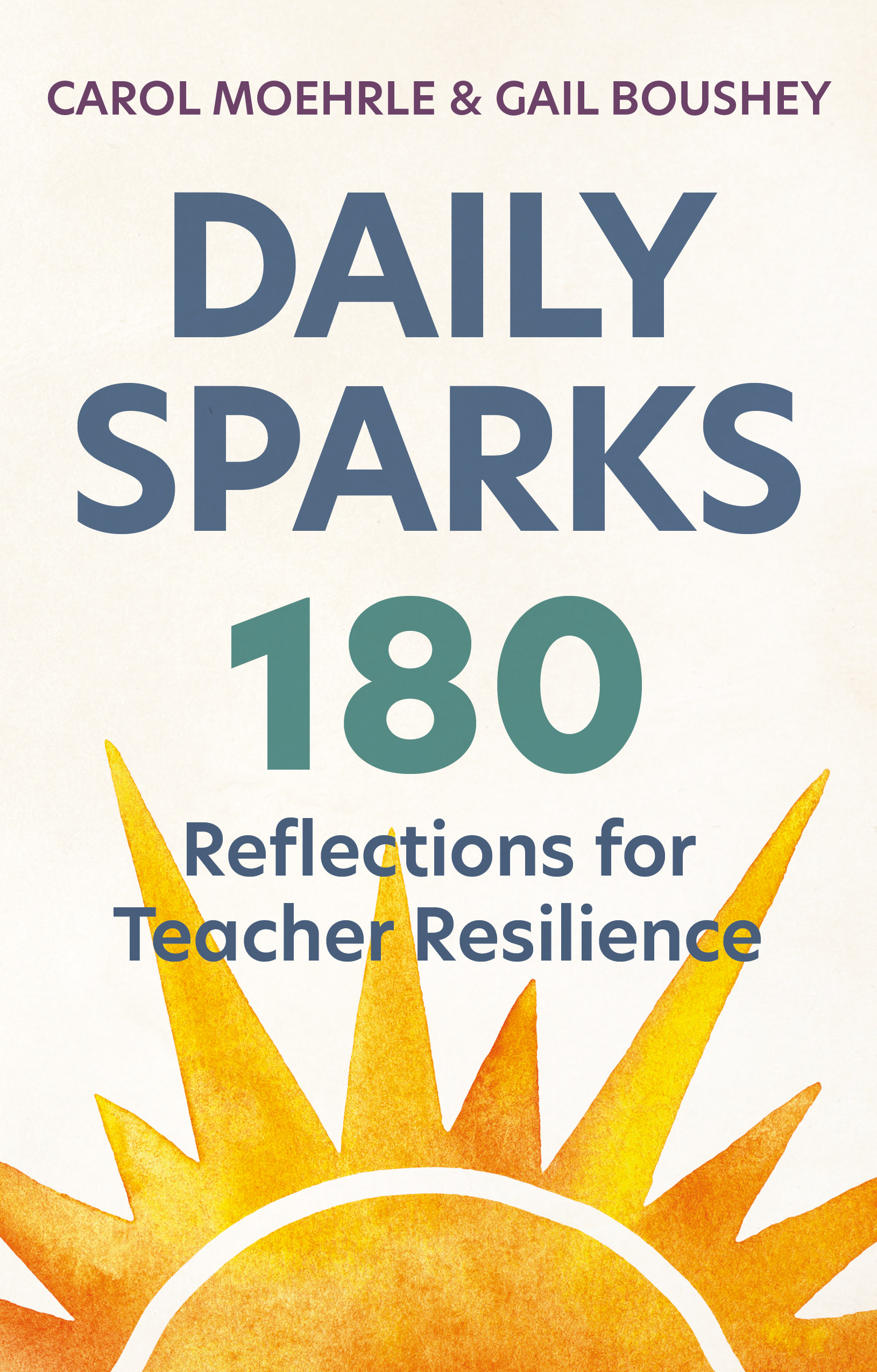
This is a giveaway of Daily Sparks: 180 Reflections for Teacher Resilience by Gail Boushey and Carol Moehrle, donated by Stenhouse Publishers (Routledge). Three copies will be given away to three separate winners. To enter the giveaway, readers must leave a comment on any Practices of Great Writing Teachers Blog Series post by Tuesday, Feb. 3 at 12:00 PM EST. The winners will be chosen randomly and announced on Thursday, Feb. 5. Each winner must provide their mailing address within 5 days; otherwise, a new winner will be selected. The publisher will ship worldwide so that anyone may enter.
Reference
Glover, Matt, and Ellin Oliver Keene. 2015. The Teacher You Want to Be. Portsmouth, NH: Heinemann.
Discover more from TWO WRITING TEACHERS
Subscribe to get the latest posts sent to your email.


Beautifully said, but very difficult to make happen. We need a culture that honors teachers as learners and writers—time to truly reflect on our practice. The school day does not typically go that way. It was a bit easier for me because my kids were grown (but there were still grandkids to attend to here and there). The younger women and men often had to rush out the door to their kids or to a second job, tutoring, or coaching to survive economically. And the school day rarely allowed time for building communities of learners. I don’t mean to be negative, just realistic. But creating a culture where the day is not harried, where we are not jumping from one initiative to another, where we can truly model learning, listening, sharing, and trusting each other is something we must continue to seek. So, thank you for reminding us!
LikeLiked by 1 person
This sentence haunts me a bit, “As teachers’ responsibilities have multiplied, I sometimes wonder if those responsibilities have crowded out curiosity. ” The role of curiosity in teaching, in life, is so vital, and when time is crunched it does get crowded out. I just joined a book club at school, but honestly, I did so in part because I’m concerned about the content of the book (about writing) and its potential impact in the classroom. I’m looking forward to being part of a learning community and I’m going in with my mind open, but I am a bit “on alert”. It sounds very structured and grammar focused. There’s definitely a need for that, but where better than writing to engage and nurture curiosity? There has to be some openness and choice to the process, even if/when it does get messy!
LikeLiked by 1 person
Oh! Agreed! I’m curious what you’re reading. I have an idea. Your voice will be important in this book club…a chance to remind others of all these important points you made about teaching writing!
LikeLike
Being in a profession in which we are able and encouraged to continue to grow professionally is one the best parts of teaching.
LikeLiked by 1 person
Oh how I needed this post. I have lived it. As I was reading, it was as if I were reading my own memories. I can’t remember a time in my 26-year (so far) teaching career that I haven’t been reading some sort of professional book. My shelves are not as full as yours, but they are overfull of professional books. I too remember teaching workshop style and engaging in those professional learning networks on Twitter (I really miss those days). I’ve taught science at the middle and high school level for the past 15 years, but I still hang on to Lucy Calkins seminal texts, The Art of Teaching Reading and The Art of Teaching Writing. A couple of summers ago, I started reading, Adolescent Literacy: Turning Promise into Practice. I felt like it was a gathering of old friends, professionals whose words had guided my early career and continue to influence my practice even still. Heinemann and Stenhouse were names I knew well when my focus was literacy. Now most of my professional reading has shifted to science, but I still manage to buy reading/writing texts yearly to connect to my past and to help me be the best teacher for my students. In fact, I’ve got a copy of Kelly Galagher’s forthcoming book preordered. Sometimes I feel like that was “of a time” and that time has passed, but I hope that today’s teachers get to experience how much professional reading and personal learning networks can support teachers in becoming true professionals.
LikeLiked by 2 people
Thank you for this thoughtful comment. I certainly hope professional reading isn’t a thing of the past! Thanks for reading.
LikeLiked by 1 person
Yes, I remember the days working with TCRWP (now Moss RWP) and their staff developers, when they were still transmitting the spirit of the “Project” rather than requiring strict adherence to the lesson architecture and the units, as I heard years later from friends in other districts. During the years I worked as a supervisor, I tried my best to model the reflective curiosity I learned from the books we read and from our own lives as readers/writers. I tried to build in time for that, but I was perpetually up against competing demands from other initiatives/programs/state mandates. But I loved that time. I got a lot of pushback from principals and teachers saying they needed more structure (and in some cases, that was true since not all teachers are at the same place at the same time, differentiation) to their PD and to our approach to reading/writing. It was quite daunting. But I was inspired by my university training and previous principals and supervisors who had done the same for me. One book I could not get enough of was Randi Bomer’s, “A Time for Meaning.” A well-written book can go a long way toward moving a teacher’s heart and mind about how they approach their students and their work. I liked Lucy’s book too, and a couple of Kelly’s as well. There are a dozen more I could name.
LikeLiked by 2 people
Thanks for this. Great write-up. I also realized that I wasn’t previously subscribed to your blog. That has been corrected. Love you ❤️🍑
LikeLiked by 1 person
Working with people who encourage curiosity and are always seeking to learn more and grow as professionals is so rewarding!
LikeLiked by 1 person
When we know better we do better. I’ve always found trying out new small tweaks to daily practice to be exciting and fun. That excitement always translates to excitement and engagement with the kids!
LikeLiked by 1 person
The most humbling, yet rewarding, part of teaching is that we’re never done learning! Thank you for reminding us what a privilege that curiosity is.
LikeLiked by 1 person
The art of teaching… always coming together to reflect, reshape and inspire each other. PD work has always been such an integral part of my growth as a teacher and learner. I have a similar stack of books in my classroom that travelled with me from middle school to elementary- they have provide my foundation. Thank you, Jess, for your inspiration to bring back what matters most. Feel so lucky to learn together everyday and hopeful for new opportunities in the future.
LikeLiked by 1 person
This post is so important…..We really have to work to make space for curiosity and learning. I loved this line – Reading thoughtfully gives teachers language, perspective, and confidence to resist oversimplified solutions and to teach in ways that honor both children and craft.
I also loved the imagine if…..
LikeLiked by 1 person
I couldn’t agree more! Some of the best PD I’ve attended has happened on days when there was teacher choice. Even better was a day when all teachers were invited to submit a topic to teach, based on their expertise. The rest of the staff chose which sessions to attend, based on interest and grade level. Choice made a huge difference in the level of engagement. I love to read, and love to learn, but professional and interest based relevance is important.
LikeLiked by 1 person
With just a couple of years left before retirement, I sitll seek out professional books, workshops, and conferences. I also miss those Twitter chats. I learned so much from other teachers and “met” some amazing educators. I still have that passion and drive to become a better teacher even this close to the end. I hope I never lose it!
LikeLiked by 1 person
Keep paving the way! The world of education is better because you’re in it! ❤️
LikeLike
Thank you for the reminder on the value of professional reading. I went back to teaching after almost 5 years of retirement. Instead of regular education, I am now a special education teacher providing dyslexia instruction to students. I’ve increased my knowledge through numerous videos, prepared courses and readings for state certification, etc., but good, hands-on non-screen professional reading sounds refreshing. I will be looking for reading material that nurtures my soul and passion of teaching writing to neurodiverse students.
LikeLiked by 1 person
“The imagine if” list warmed my heart. As an instructional code that would be my dream. Right now the prep time is so limited that when we do have time for professional development, teachers would like to be able to collaborate with their team to accomplish the immediate work. I totally understand this too! I am very curious what the book has for insights!
LikeLiked by 1 person