Estimated Reading Time: 3 minutes (519 words)
Target Audience: Early childhood educators
The Context

We have been doing a lot of observational drawing this year in my pre-k classroom: pumpkins, flowers, self-portraits, Fernando Botero paintings, and trees! The hope is that children will begin to look closely at objects, notice details, attempt to draw a variety of lines and shapes, and describe their work in their own words, usually revealing what matters most to them in the process. All of these skills build valuable connections between looking, thinking, drawing, talking, and ultimately, writing.
I happen to work at a school very close to the High Line, a public park built on a historic elevated rail line on the West Side of Manhattan in New York City. We are so fortunate to have this natural resource in the middle of our concrete jungle. In it, at least 500 different species of trees, shrubs, flowers, and grasses can be found. If you’re not familiar, I highly encourage you to visit it sometime!
On a particular expanse of the park called “The Flyover,” located between 25th and 27th Streets, live the Bigleaf magnolia trees (Magnolia macrophylla). These trees are known for their giant leaves, which can grow up to 30 inches long! The first time I saw these leaves, I was mesmerized. They’re like something out of the Amazon rainforest!
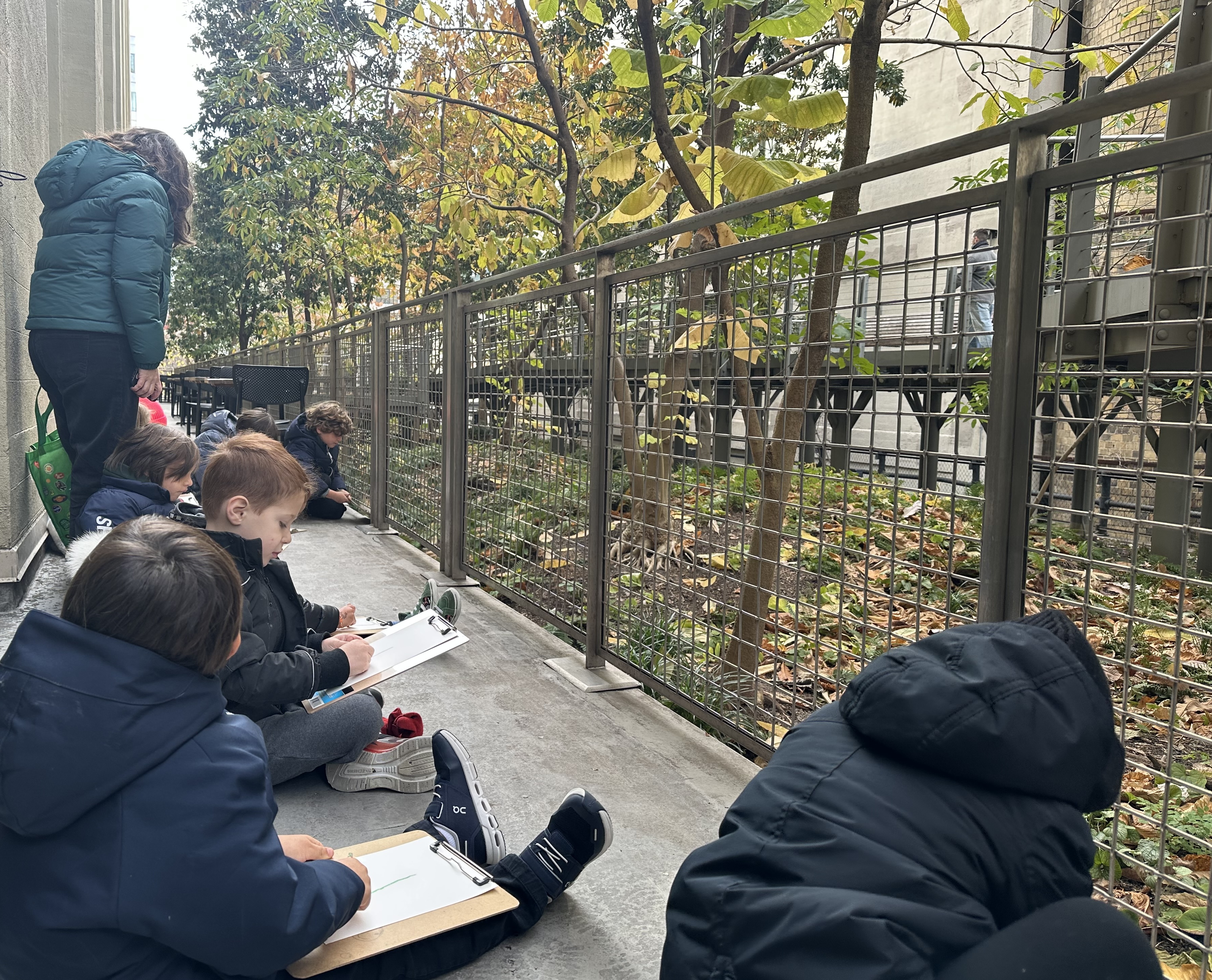
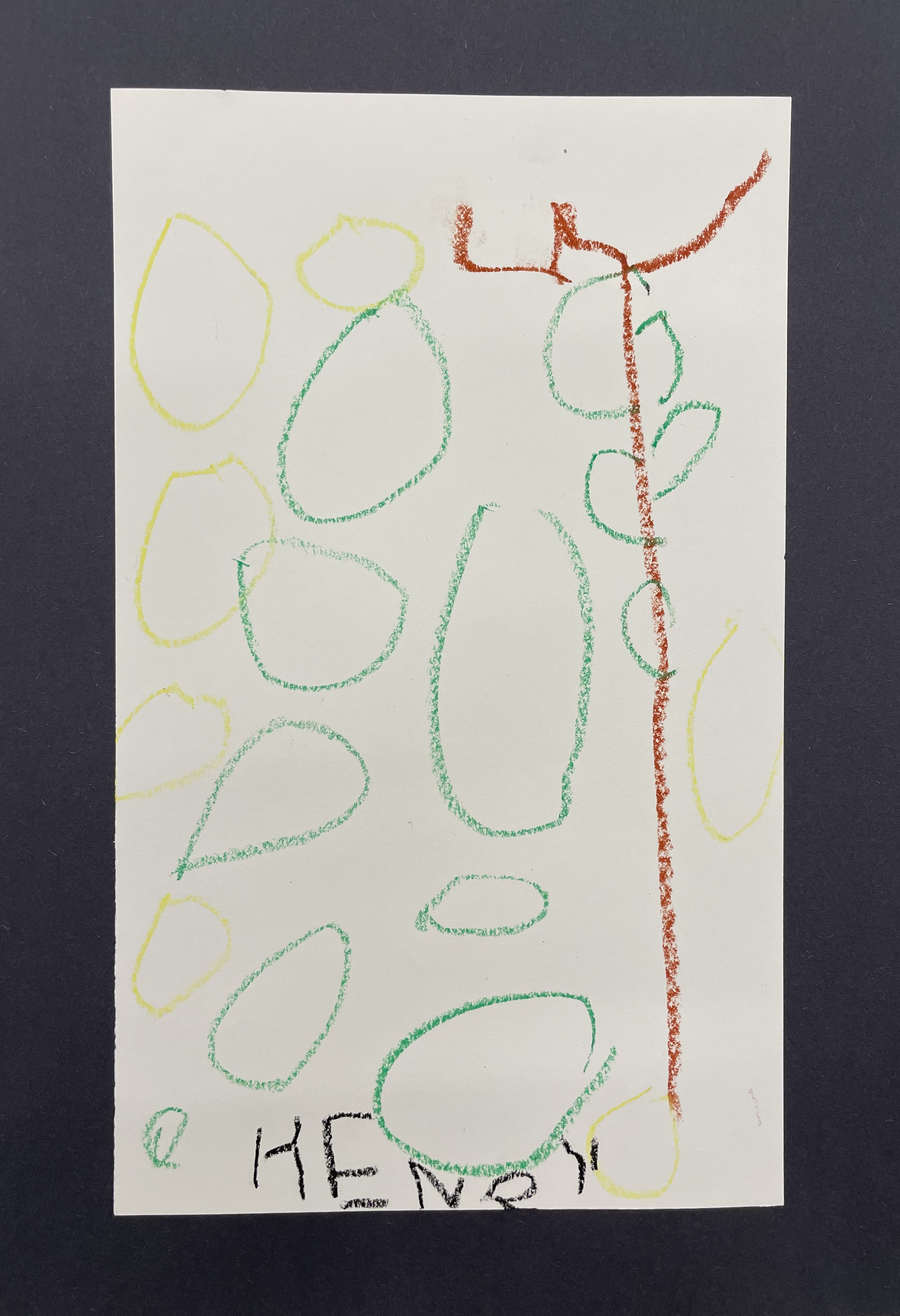
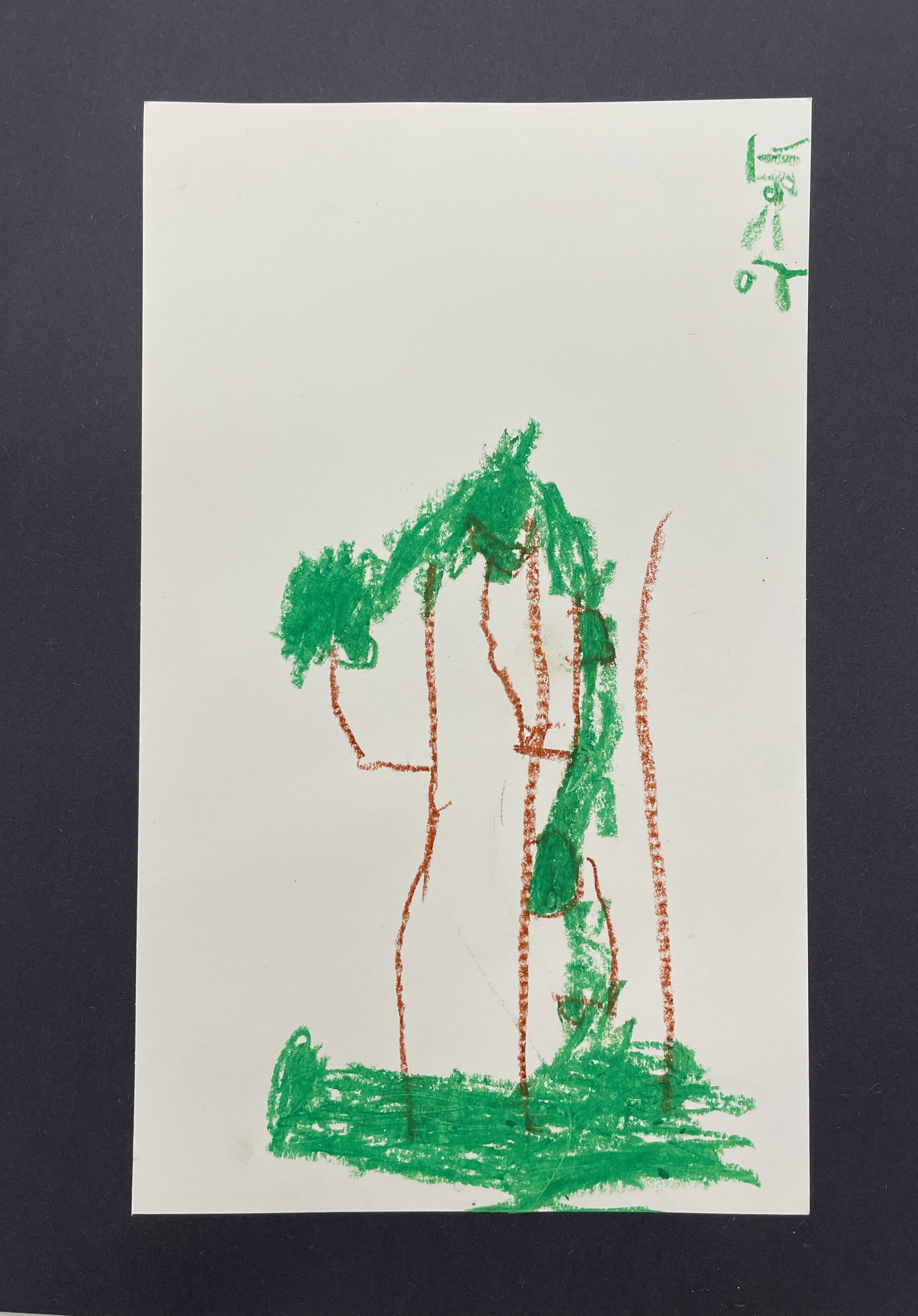
I decided it would be interesting to take my class to visit these trees periodically throughout the year to observe how they change with each season. This was our second trip, and my students noticed how the leaves had changed colors from green to shades of yellow, orange, and brown. They also noticed that many of the leaves had fallen from the trees and were now on the park floor. I asked everyone to try standing like one of the trees with their long, skinny trunks and curvy branches. Some reached their arms out wide while others leaned in together. Next, everyone sat down and began to draw the trees with oil pastels on paper.
Examples in Action
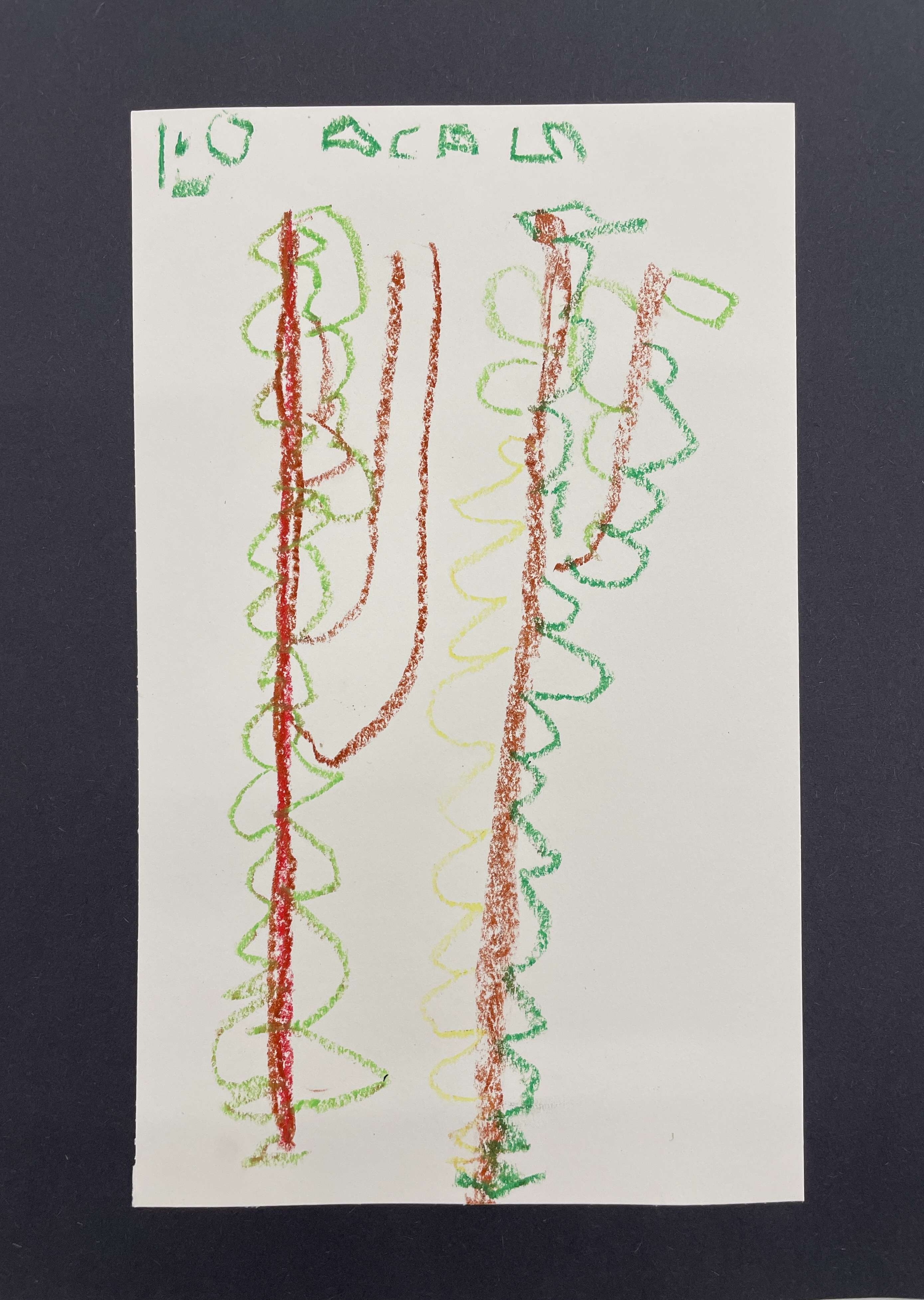
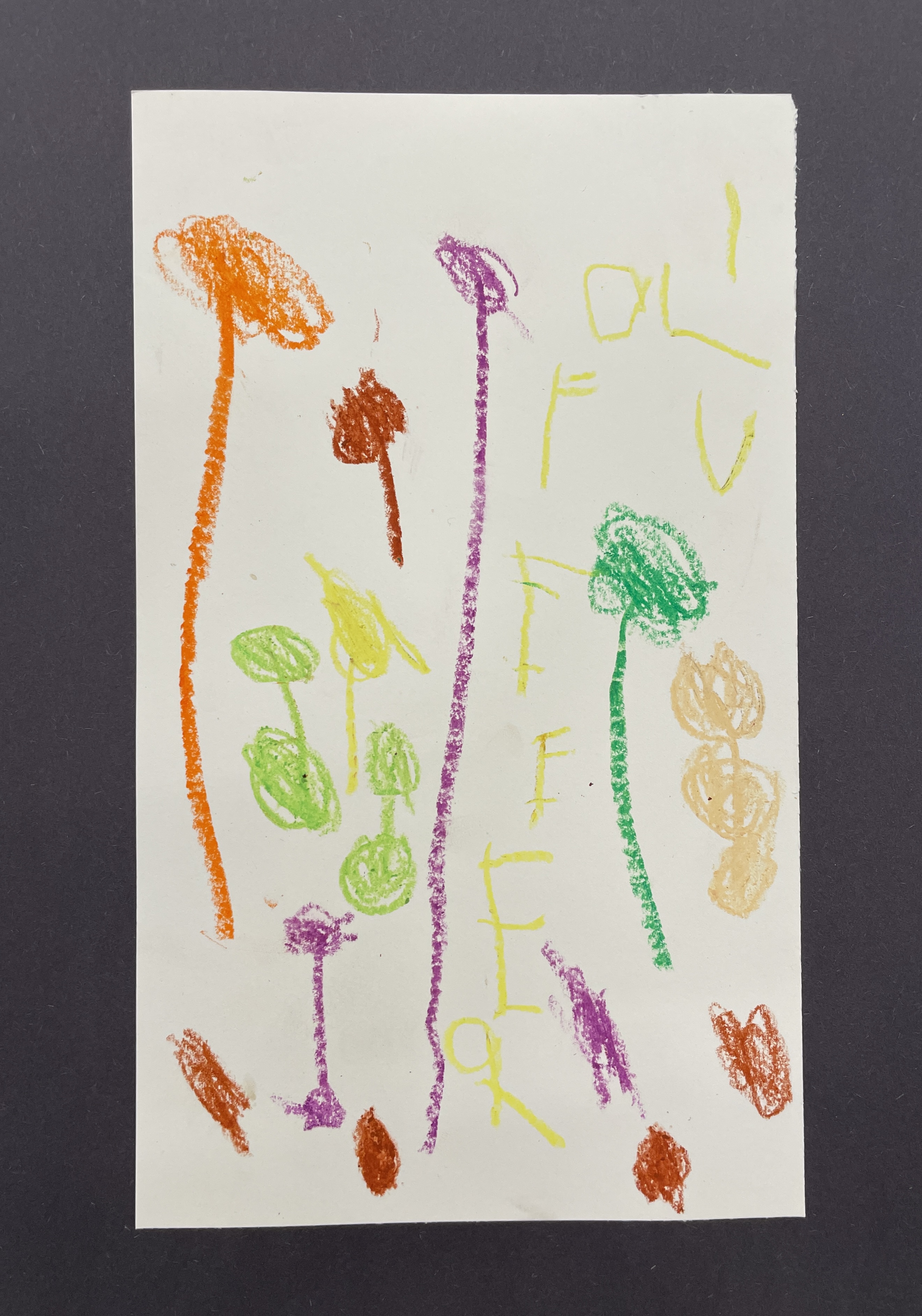
When we returned from our visit, I asked each student to describe their drawing in their own words. I wanted to hear what they could recall from the visit, and how they could express in words what they made with their hands. I hope you will enjoy hearing their little voices as they share about their work in their own unique ways.
The Bottom Line
Observational drawing provides many wonderful opportunities for young children to connect to the creative process that will eventually lead to writing. Noticing details, making a plan, going back and revising, solving problems, elaborating, and sharing their thinking with others are all things they will do once they learn to use letters and sounds to form words, write sentences, and express their ideas symbolicaly. There is joy and beauty in witnessing what four and five-year-olds make when asked to just sit with an object, observe it, and draw what they see.
I would love to hear about how observational drawing with young children has worked for you!
Discover more from TWO WRITING TEACHERS
Subscribe to get the latest posts sent to your email.


It is lovely to hear the children’s voices as they describe their work!
LikeLiked by 1 person
Thank you! I agree!
LikeLike