Estimated Reading Time: 3 minutes (605 words)
Target Audience: 2nd-8th grade classroom teachers, coaches

A Backstory
Whenever my conversations with colleagues focus on helping kids with dialogue or quotes in their writing, there’s almost always a defeated vibe. “Kids just struggle with using good quotes and punctuating them!” is a common refrain.
From convincing kids to craft (or select) meaningful dialogue to supporting the complex rules of punctuation, dialogue is definitely a skill with which many writing teachers have a love/hate relationship.
The Big Picture
Part of what makes dialogue (and the use of quotes) so tricky for students is that it is a big skill made up of several smaller tasks. To use quotes and dialogue well in their writing, kids have to be able to do the following:
- Craft (or select) dialogue that enhances the story or the content of the piece;
- Fit the dialogue into the draft in an effective way, using dialogue tags to convey tone; and
- Apply correct punctuation rules, including the use of quotation marks, commas, and ending punctuation.
For a skill that’s usually introduced as early as second or third grade, this is a heavy cognitive lift. Pair this with the fact that students often select graphic novels over more traditionally written prose, and one can assume that many students have less exposure to the conventions of dialogue than ever.
Here’s a Secret
Whenever a task is complex and challenging for students, my go-to approach is to break the skill down into concrete and manageable steps so I can scaffold when and how it best serves writers. When working with quotes and dialogue, my favorite “secret weapon” scaffold is the speech bubble.
How It Works
This skill needs to be taught over a few lessons and revisited frequently, often over multiple writing experiences and a span of grade levels. Here’s one way to approach helping students do this work.
Step 1: Draft the Dialogue. Decide what a character will say or find a meaningful quote. Jot it down in a speech bubble within the draft (or level up with speech bubble sticky notes). Like any skill, it’s important to model this for writers in a concrete way. Extension: Use multiple colors for different characters or quotes from more than one individual.
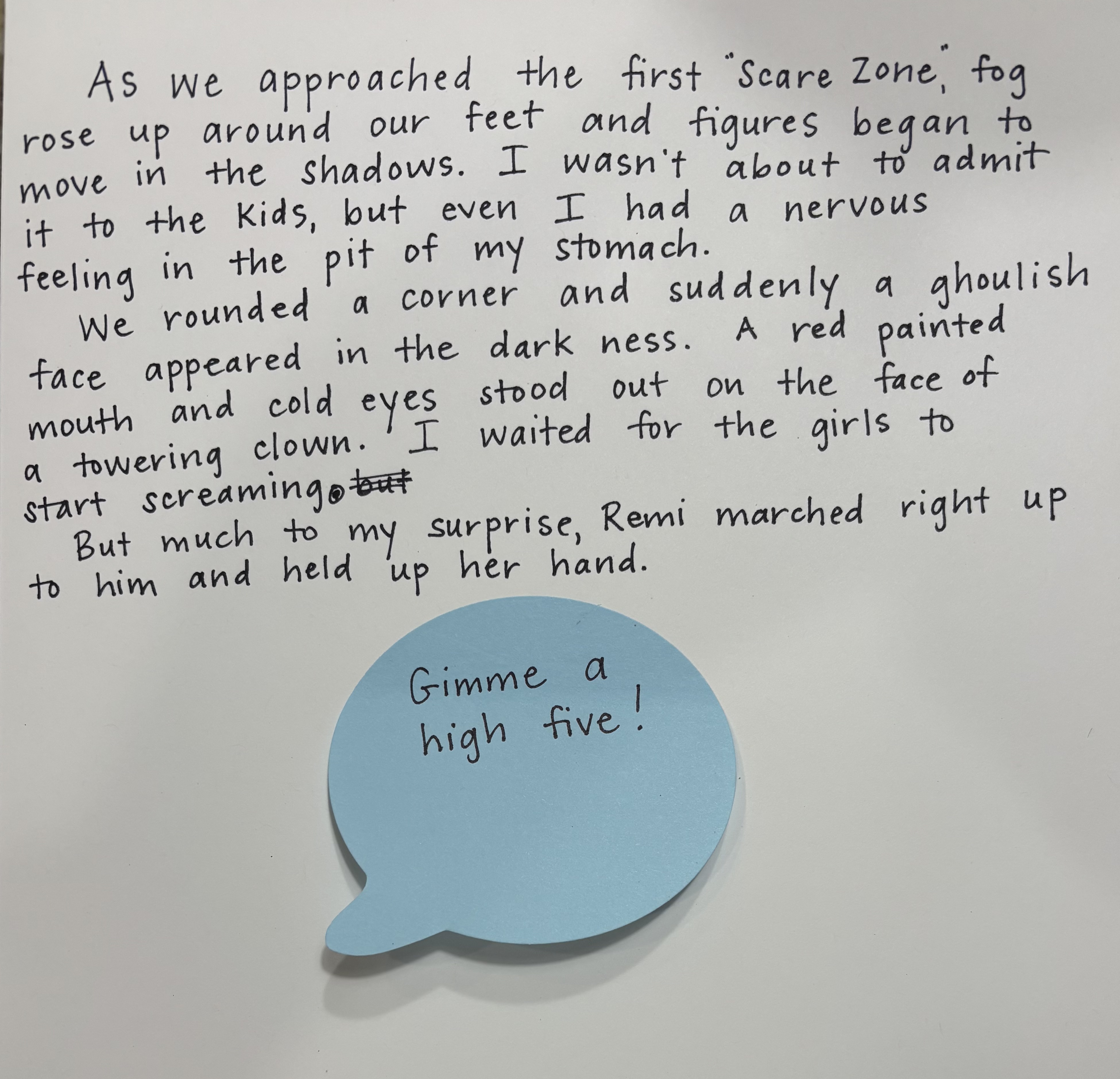
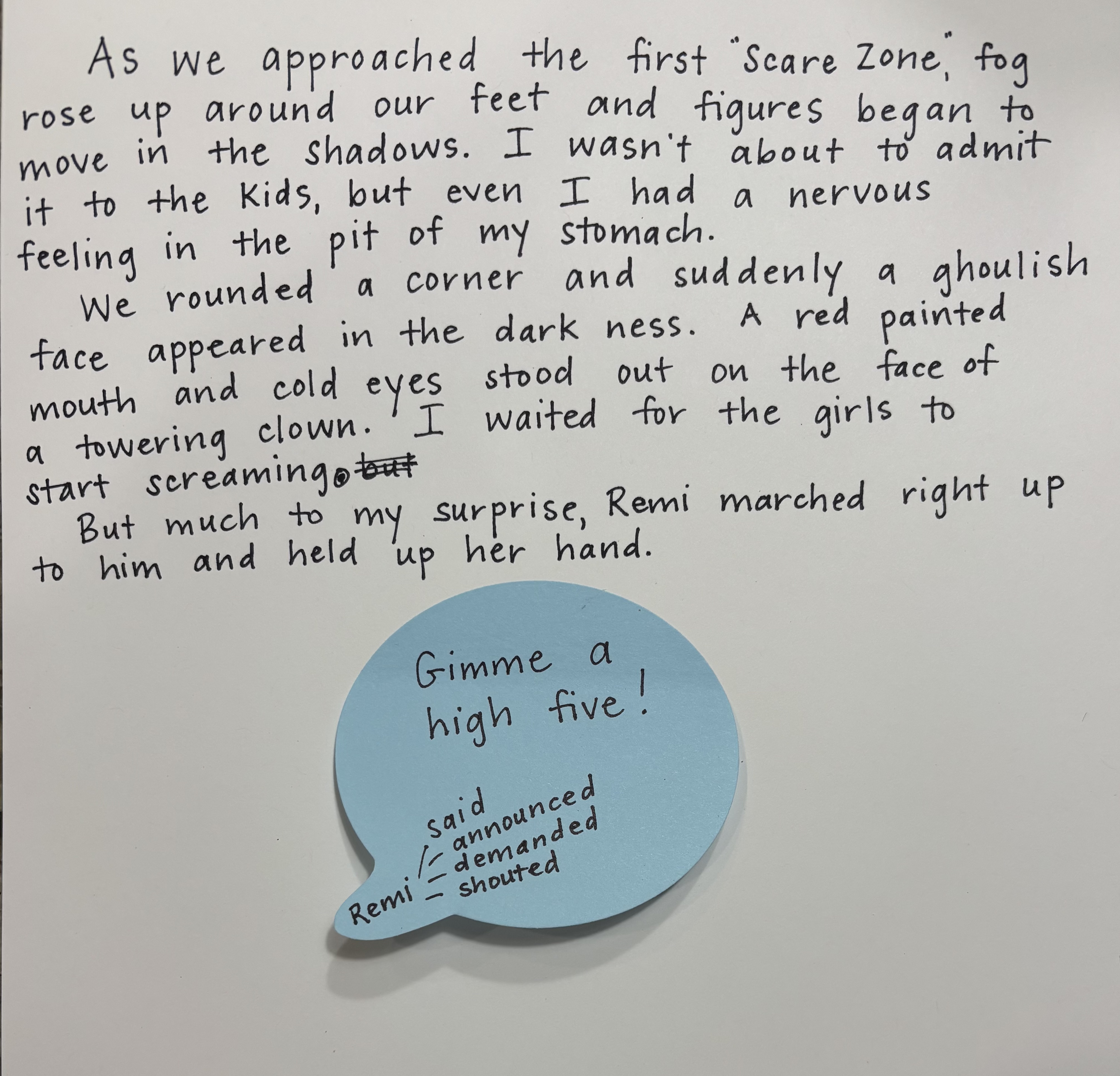
Step 2: Try Some Tags. How is the character or speaker delivering the message? Identify and jot down who said it and how it was spoken with a dialogue tag. Extension: Add actions or feelings.
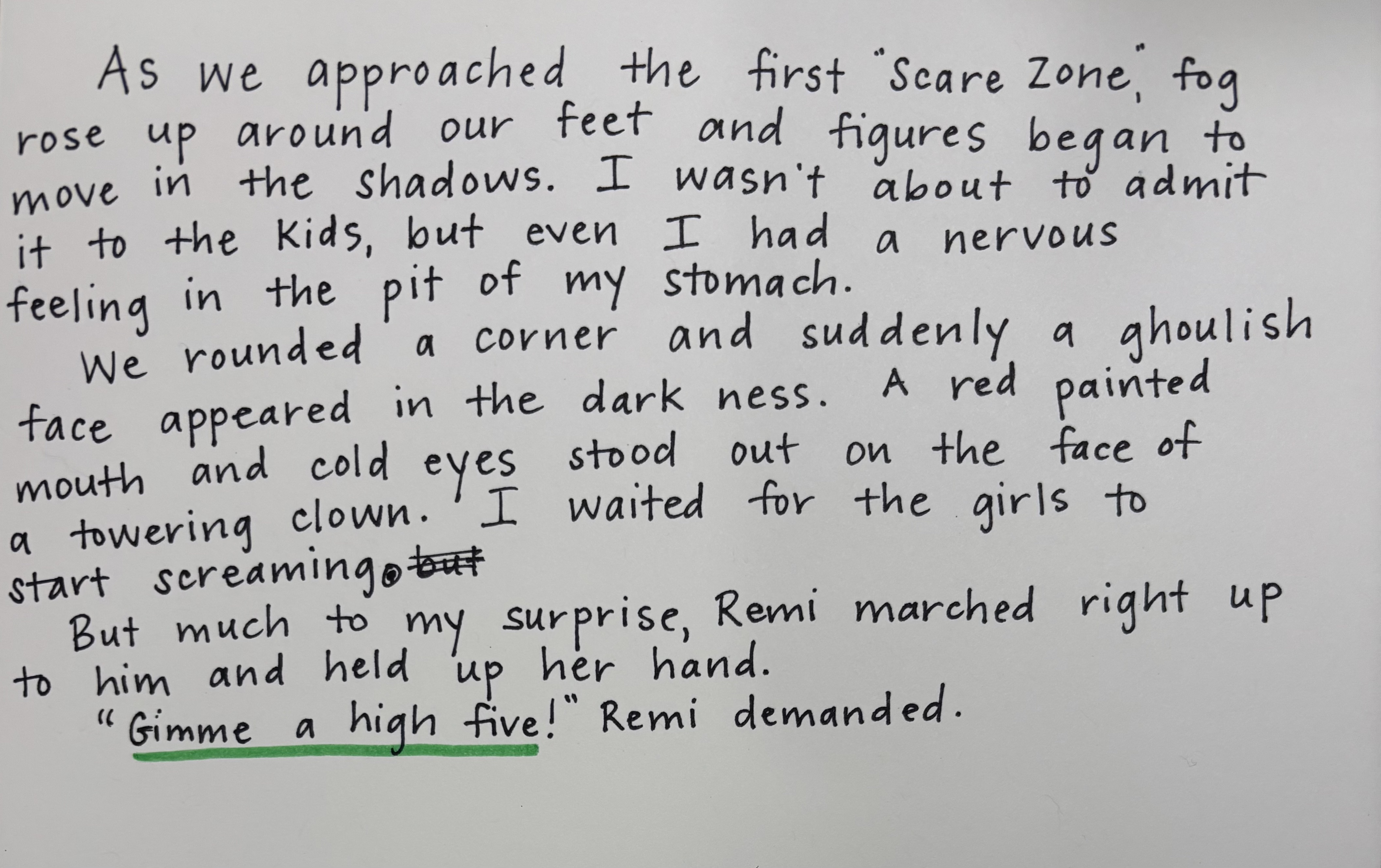
Step 3: Provide Punctuation. Model for students how to transition from speech bubble to punctuated dialogue. By this step, students should have freed up the “mental desk space” to focus on the conventions of dialogue rather than juggling craft and conventions. If kids need more practice (or as an entry point for modeling), use parts of their favorite graphic novels before diving into student writing. Extension: Teach multiple ways to punctuate dialogue by demonstrating the impact of the dialogue tag at the beginning, middle, and end of the quote.
The Bottom Line
Whether I provide speech bubbles or another scaffolding tool, dialogue is a writing skill that takes patience, repetition, and lots of support for student writers. By considering all of the layers of complexity that go into developing dialogue that is rich and grammatically correct, we have the opportunity to give kids the time and resources they need to integrate spoken language into writing.
Go Deeper
Here are some other #TWTblog resources on dialogue:
- “Can We Talk?: Teaching Dialogue in Narrative Writing” (Lainie Levin, 2023)
- “Where is the Dialogue? (Betsy Hubbard, 2016)
Discover more from TWO WRITING TEACHERS
Subscribe to get the latest posts sent to your email.


This scaffold is so innovative and usable. Naming and breaking dialogue into formation, tags, and punctuation makes the work feel teachable rather than overwhelming, and the speech-bubble step gives kids a concrete way in. I especially appreciate the reminder that this is work to spiral over years, not a one-and-done minilesson.
LikeLiked by 1 person