As a communicator and teacher, I use a lot of gesturing to convey my point. As an early elementary teacher, I encouraged students to use gesturing when rehearsing a story during the talking and planning phase of writing. As a middle school teacher, it turns out many of the same ideas still work to help students organize their thoughts and create meaning. They aren’t just random movements, but strategic decisions to help students better capture their message.
Why it Matters
Gesturing connects the brain and body, playing a role in the comprehension of language. As children begin to write, utilizing gestures as a form of full-body rehearsal can help students determine details such as who, what, when, where, and how.
People are particularly likely to remember an action that they have used their bodies to perform (Saltz & Donnenwerth-Nolan, 1981), and the body has been implicated in routine language comprehension. For example, when comprehending an action word that is semantically related to a body part (lick, pick, kick), the area in the brain that is associated with that part (the face, hand, or leg area, respectively) is activated (Pulvermuller, 2005). Doing an action thus provides an additional pathway that can be exploited during learning, one that gesturing may also activate (Goldin-Meadow, 2009).
In the classroom, this might look like a student who wants to write a narrative about a soccer game with their cousins. She might gesture and act out the scene, kicking the air, waving to her family, and cheering after a goal. This not only enhances the oral rehearsal of the writing plan but also facilitates a deeper comprehension, freeing up the cognitive load of idea generation once the pen hits the paper.
How it Works
Generating Ideas: Allowing students to “act out” and gesture their potential writing topics helps them to determine how much they have to say. This can be particularly helpful when choosing a topic in the planning phase before sitting down to write.
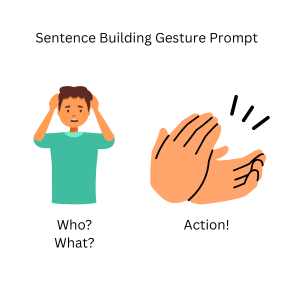
Sentence Building: Represent the parts of a complete sentence with hand motions. For instance, tapping your head while saying the “who/what,” and clapping in front of the body for the “action.”
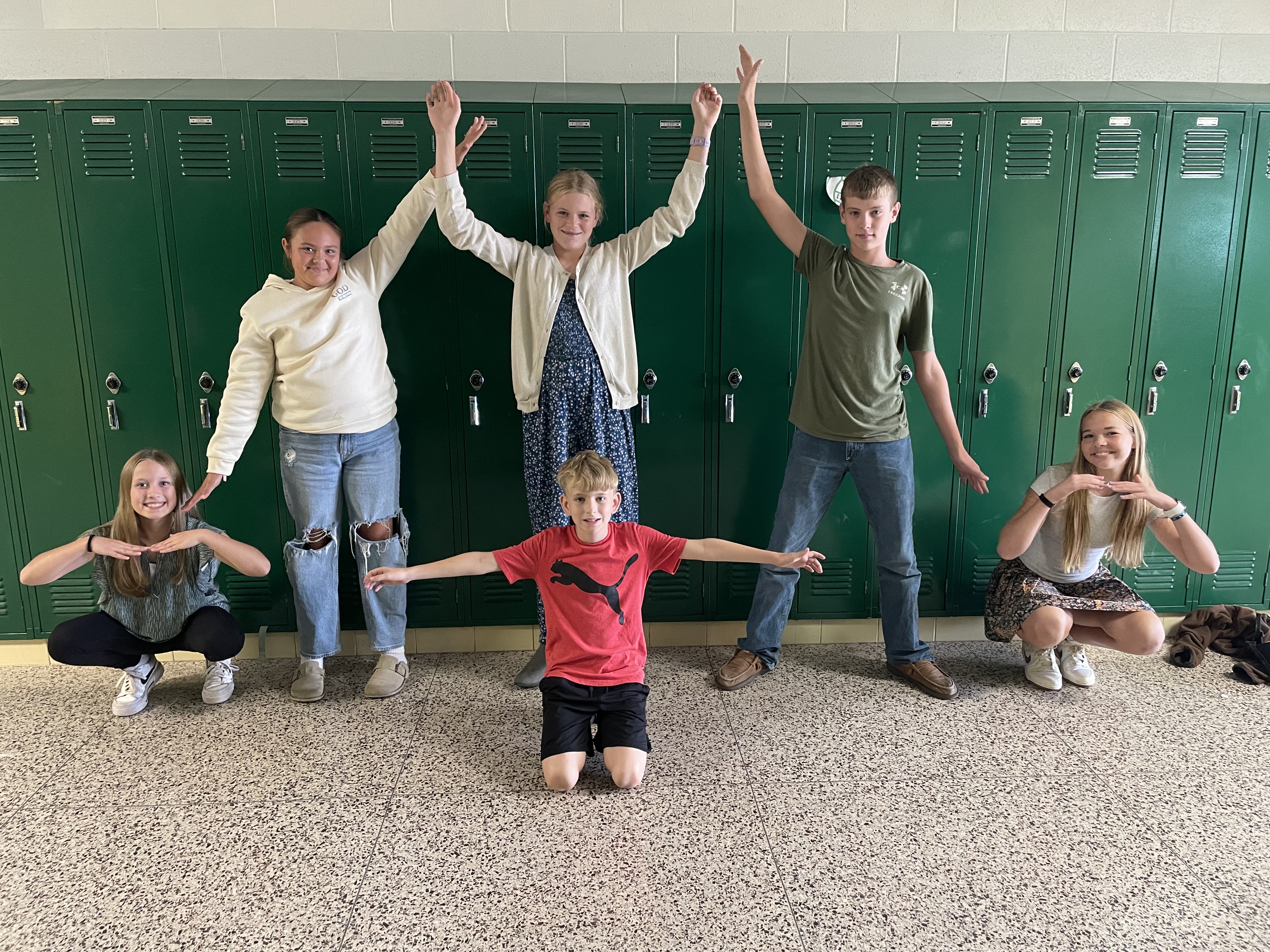
Story Sequencing: Using gestures or body movements to sequence a story can occur in multiple ways. Students might tell a story across their hand, or act out a scene similar to the example in the “Why it Matters” section of this post. Here is a middle school example of students using their bodies to represent the elements of a plot, as shown in a story mountain diagram from class. You can see the introduction/exposition, rising action, climax, falling action, resolution, and theme (front) represented throughout.
Here’s a Secret
When we normalize movement in the classroom, it naturally provides opportunities for students to regulate themselves and prepare for the writing process. It has often been noted that large movements (gross motor) help students with small movements (fine motor) when performed in that order. Pairing gestures with visuals and charts can also provide support and maximum impact.
What’s Next
This week, decide on one small area you could begin to incorporate gesturing into your writing instruction. Start small and watch for the impact. Give them space to explore, navigate their ideas, build stories, and organize their thoughts. Provide an environment that recognizes students’ needs and supports their learning processes with brain-to-body connections.
Resource:
Goldin‐Meadow, S. (2009). How gesture promotes learning throughout childhood. Child development perspectives, 3(2), 106-111.
Discover more from TWO WRITING TEACHERS
Subscribe to get the latest posts sent to your email.


I really appreciate the way you’re drawing on your early childhood expertise in your middle school classroom, Betsy. Seeing how you normalize movement and gesture into the writing process feels both innovative and essential for students at any level. Your examples make a strong case for connecting body and brain to support language and idea development in writing.
Have you read The Body-Brain Connection by Gravity Goldberg? I haven’t read it yet myself, but it was published earlier this year, and I have a feeling there’s probably a lot we could take from Goldberg’s book and apply to writing instruction.
LikeLike
Thanks for the book recommendation. Based on the title alone I’m super intrigued!
LikeLike