Estimated Reading Time: 3 Minutes (653 words)
Audience: Classroom Teachers and Literacy Coaches
Backstory: From Old School to Your School
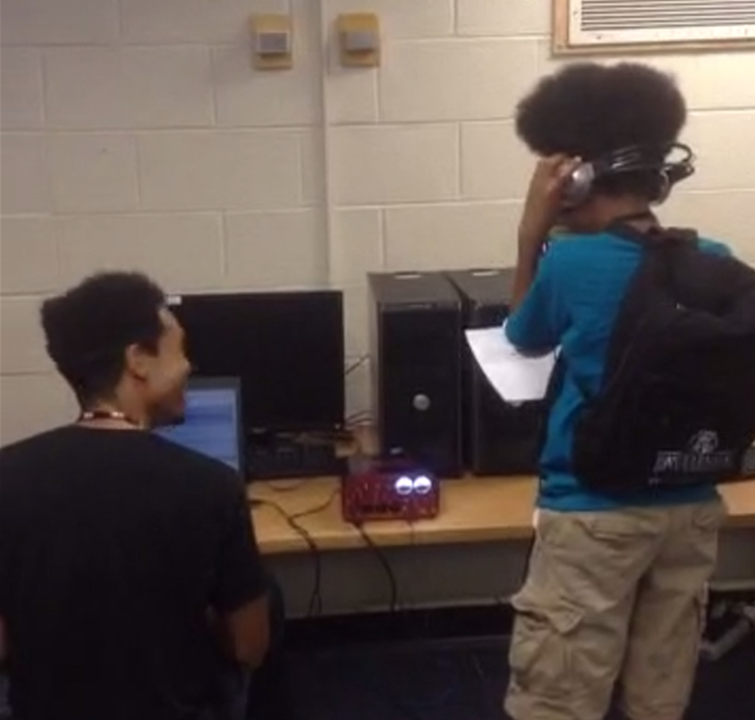
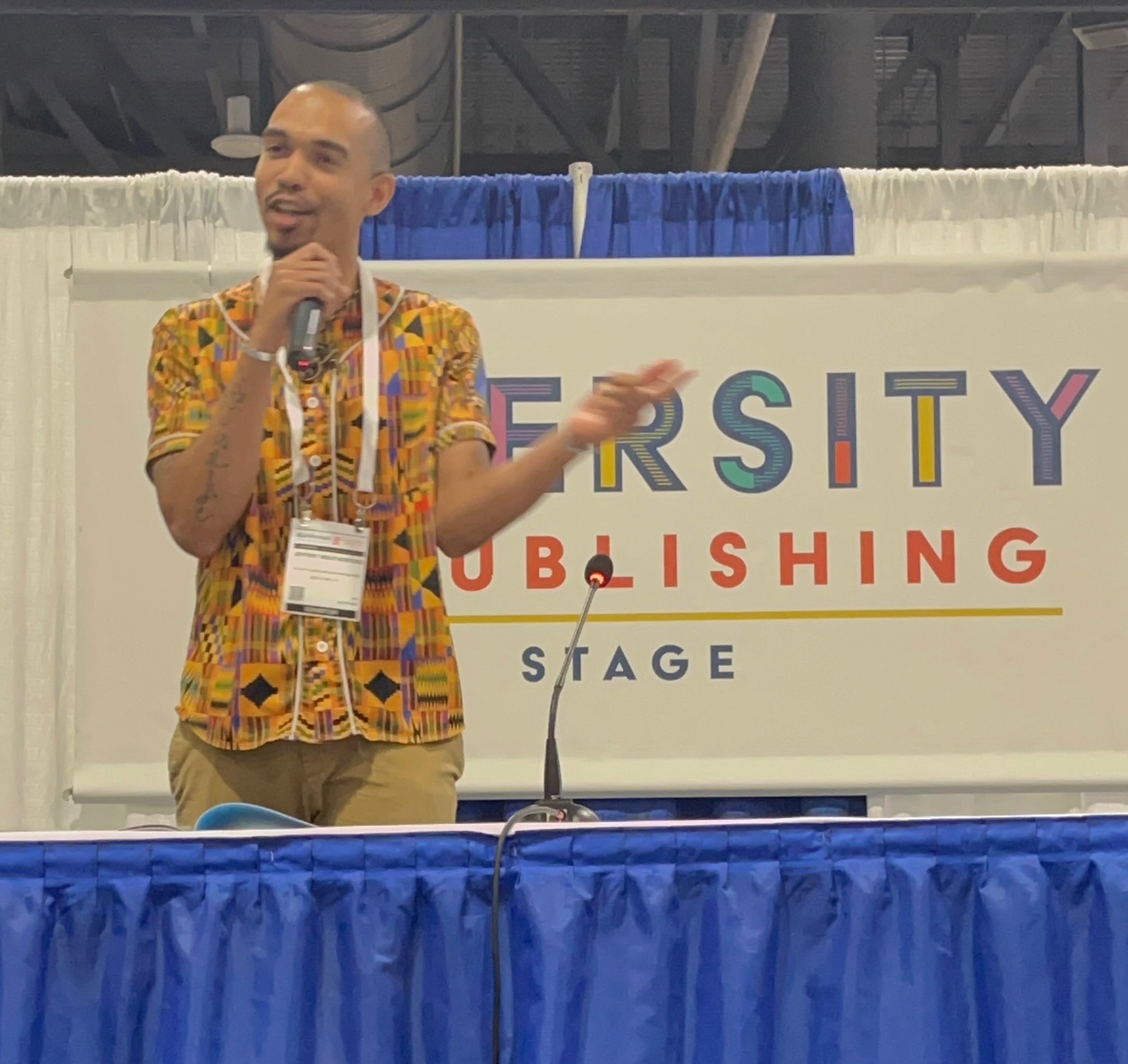
A year before our first collaboration—You Can Fly: The Tuskegee Airmen—my son Jeffery and I led a hip hop residency for youth. With a focus on multimodal learning, the content combined reading, writing, speaking, listening, rhythm and technology. Participants wrote, produced and performed rap, which resonated with them both personally and culturally. That first cohort of diverse learners inspired Jeffery to continue the workshops and led me to write The Roots of Rap: 16 Bars on the 4 Pillars of Hip Hop, illustrated by Frank Morrison. The closing bar notes, “From Atlanta to Zanzibar, youth spit freestyle freedom sounds. / Hip hop is a language that’s spoken the whole world ‘round.”

What’s New
Rap It Up!—which Jeffery and I co-authored—is a spin-off of Jeffery’s popular workshops. The how-to-book does not aim to turn kids into rappers but rather to empower them as writers and public speakers. Tailor-made for the classroom, the book implores young readers:
Rap speaks raw truth, so write what you care about:
Memories, mysteries, morals and your whereabouts.
Shout out your hopes and heroes. Boast and don’t be shy.
Write what matters most to you. Keep it fresh and fly!
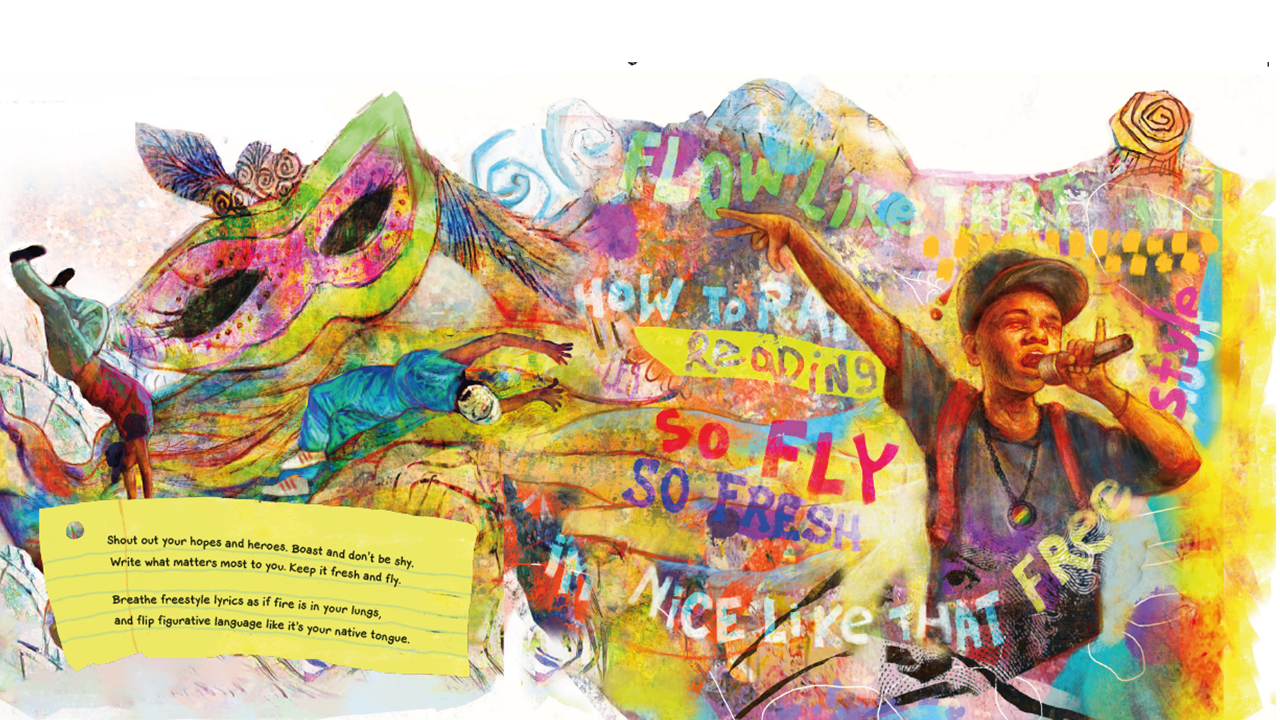
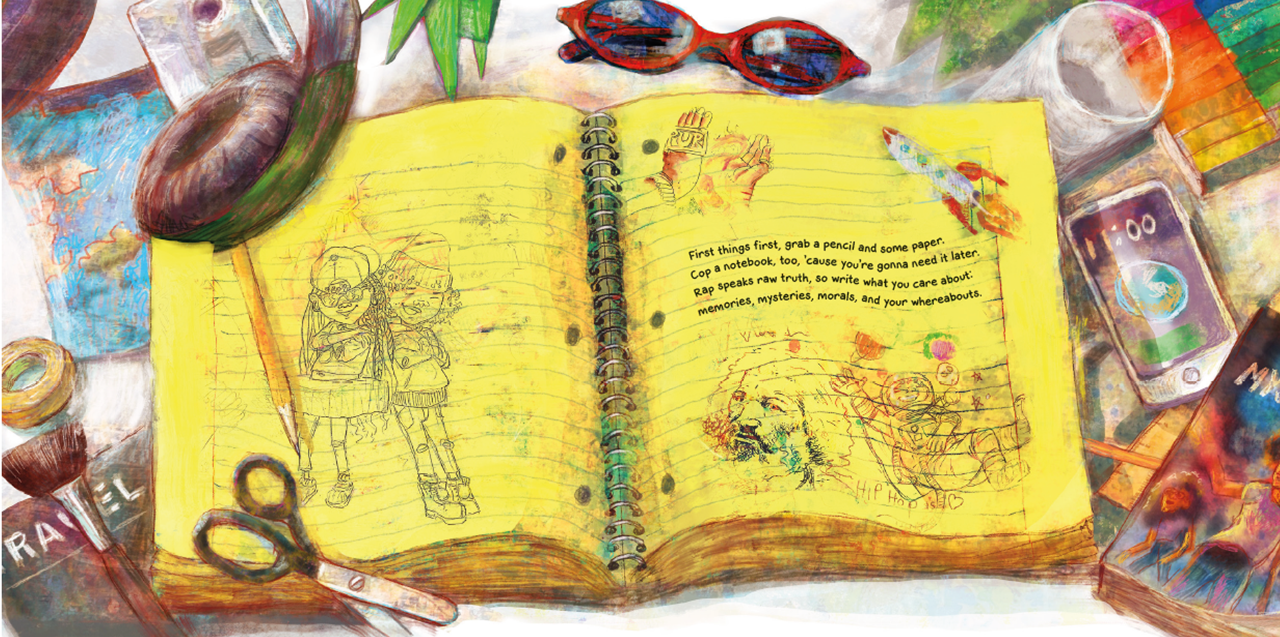
Illustrated by mural artist Ernel Martinez, the book, with its rundown of poetic elements, is a teaching in itself:
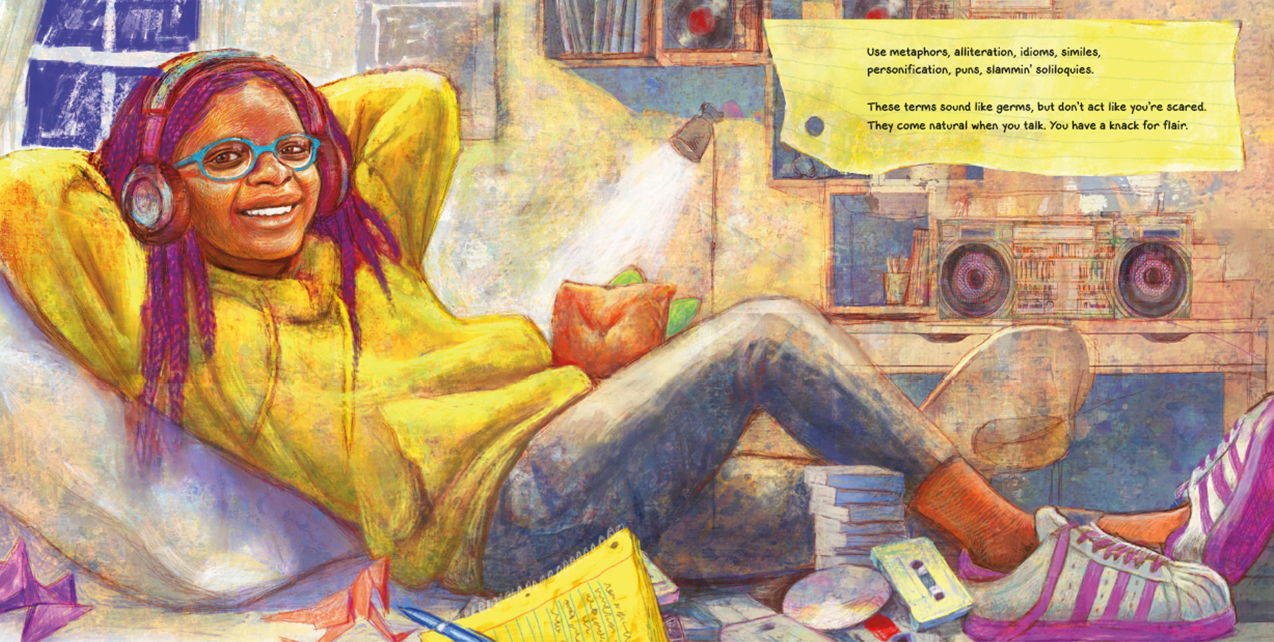
[F]lip figurative language like it’s your native tongue.
Try imagery, oxymoron, and onomatopoeia.
Devices, like decibels, banging outta speakers!
Use metaphors, alliteration, idioms, similes,
personification, puns, slammin’ soliloquies.
Why Rap Matters
Supporting diverse learners and multiple intelligences, rap uses many poetic elements studied in the English Language Arts (ELA) classroom. Further, rap can span elementary and middle school curricula to support standard skills, not only in ELA but also in social studies, music, and SEL (social-emotional learning). Rap’s rhythm, rhyme, and wordplay develop literacy, expand vocabulary, strengthen reading fluency, and build confidence in oral expression. Its storytelling structure lends itself to exploring history, social studies, and personal identity, while its cultural relevance fosters student engagement and inclusivity.
With origins in the Bronx in the 1970s, rap expands the literary canon to include voices that students connect with. Rap sends a message that all stories matter and makes the classroom a more dynamic, inclusive, and effective place for language learning. Rap can connect academic content with students’ lived experiences, promote critical thinking, and empower learners to use their voices in authentic and imaginative ways.
Six Steps to Infuse Rap in Your Classroom
- Grab the mic. Be a teacher who raps. Write a short rap introducing your rapper name.
- Break it down. Identify and analyze rhyme schemes in lyrics of kid-friendly rap songs.
- Give props. In social studies, write short raps in the voices of historical figures.
- Using the glossary in Rap It Up! find examples of figurative language in the book. Repeat the exercise using lyrics of kid-friendly rap songs.
- Do text-to-text comparisons of rap songs and poetry on urban conditions. Possible pairings include: “Ballad of the Landlord” by Langston Hughes and “The Message” by Grandmaster Flash and the Furious Five; and “We Real Cool” by Gwendolyn Brooks and “The Corner” by Common.
- Write collaborative raps about your school or community.
ABOUT THE AUTHORS: Carole Boston Weatherford, the author of 80-plus books, is the current Young People’s Poet Laureate, an American Library Association Children’s Literature Legacy Award winner and a retired English professor. Jeffery Boston Weatherford, an illustrator, author and rapper, has won the Boston Globe/Horn Book Award and the Claudia Lewis Poetry Award from Bank Street College of Education. The Weatherfords’ most acclaimed collaboration is the verse novel Kin: Rooted in Hope.
- cbweatherford.com
- @caroleweatherford on IG
- @hiphopshope on IG
Discover more from TWO WRITING TEACHERS
Subscribe to get the latest posts sent to your email.


