
Estimated Reading Time: 6 Minutes (1,150 Words)
Primary Audience: School Leaders, Classroom Teachers, and Caregivers

A Personal Backstory
At the beginning of August, I shared a Slice of Life titled Mourning the Loss of Something, where I reflected on the annual ritual of sorting through my daughters’ end-of-year schoolwork. In past years, I cherished flipping through their writing notebooks-admiring the stories they chose to tell, the craft moves they experimented with, and the growth that unfolded over time. But this year was different. Their notebooks were nearly empty, and I found myself grieving the loss of what writing instruction had become in their classrooms.
Let me be clear: my daughters had incredible teachers, dedicated professionals, who clearly cared deeply about their students and their work. But like many districts across the country, ours implemented a new, state-mandated reading program last year. My daughters came home talking about the changes, including more whole-class instruction, fewer opportunities to read books of their own choosing, and writing that had all but disappeared. They noticed the shifts. They felt the loss, too.
After sharing that post, I was encouraged by the responses from fellow educators who echoed these concerns and who also shared how they are fiercely protecting writing time in their classrooms, even amidst curricular changes and the introduction of AI in their schools. Their stories gave me hope. And they made me wonder, if more of us knew what was at stake, would more of us rise to protect it?
Today’s post is a call to action for educators and caregivers alike to stay curious, stay reflective, and stay committed to nurturing authentic writing experiences for our children.
Why it Matters
As classrooms and schools continue to explore the role of AI, writing instruction remains more important than ever. The What Works Clearinghouse emphasizes two key practices for strengthening elementary students’ writing: providing daily opportunities to write and explicitly teaching students how to use the writing process for a variety of purposes (Graham et al., 2012). Students thrive when they have regular time, supportive structures, and purposeful instruction that guide them in developing as writers. Beyond improving skills, writing helps children discover the power of their own voices, learn to communicate ideas clearly, and express themselves in ways that are both personal and meaningful. When we prioritize writing, we’re not just teaching a subject; we’re equipping students with a lifelong tool for thinking, creating, and connecting with others.
How Leaders, Teachers, and Caregivers Can Stay Curious

Educational Leaders play a vital role in the tone of a school community. Here are some ways school leaders can stay curious to help protect writing instruction:
- Study schedules: Take an honest look at how instructional time is being used. The National Council of Teachers of English’s Professional Knowledge Position Statement says teachers need to be able to “interpret curriculum documents, including standards, skills, strategies, concepts, and content that can be taught while students are actually writing” (NCTE, 2016). Key questions to consider include how often does writing instruction happen and how much of that time students are actually writing.
- Ask Open Questions in Walkthroughs and During Observations: Instead of focusing only on compliance (“Is the program being followed?”), ask reflective questions such as, “What are students learning here?” or “Where do you see joy and engagement in this lesson?”
- Invite Feedback: Regularly ask teachers and families what’s working, what’s missing, and what possibilities they see. Ask students too! Spend time listening as they share about their writing lives. Staying curious means making feedback a habit.
- Model Wonder: Share your own “I wonder…” questions with staff and students. When leaders are openly curious, it gives others permission to be, too.

Classroom Teachers: Regardless of the curriculum or resource your school uses, there is always room to consider ways to keep instruction fresh, student-centered, and connected to authentic learning. Here are some ways teachers can stay curious:
- Protect time for independent writing: If you notice limited emphasis on authentic writing, consider ways of incorporating it into your schedule. Could students have notebooks or journals for free choice or independent writing projects?
- Continue to develop your own writing life: Share pieces of your own notebook or drafts to model the real work of writing. This work will go a long way in “[creating] a sense of community and personal safety in the classroom, so that students are willing to write and collaborate freely and at length” (NCTE, 2016).
- Celebrate and Share Writing: Publish student work via bulletin boards, class blogs, or read-aloud days to give students a real audience.
Caregivers should pay attention to curriculum because what happens in classrooms deeply shapes children’s identities as readers and writers. The way in which children are exposed to writing influences not just skills, but also whether they want to keep reading and writing long after school ends.
- Ask Questions: It’s essential to understand how children spend their day at school. Many teachers and schools have websites outlining standards and curriculum. Others share learning goals through ongoing communication, including family newsletters. Read these materials or ask questions about what writing instruction looks like for your child.
- Advocate: Families are powerful voices in schools. When caregivers understand what the curriculum includes and what might be missing, they can ask thoughtful questions and advocate for balance.
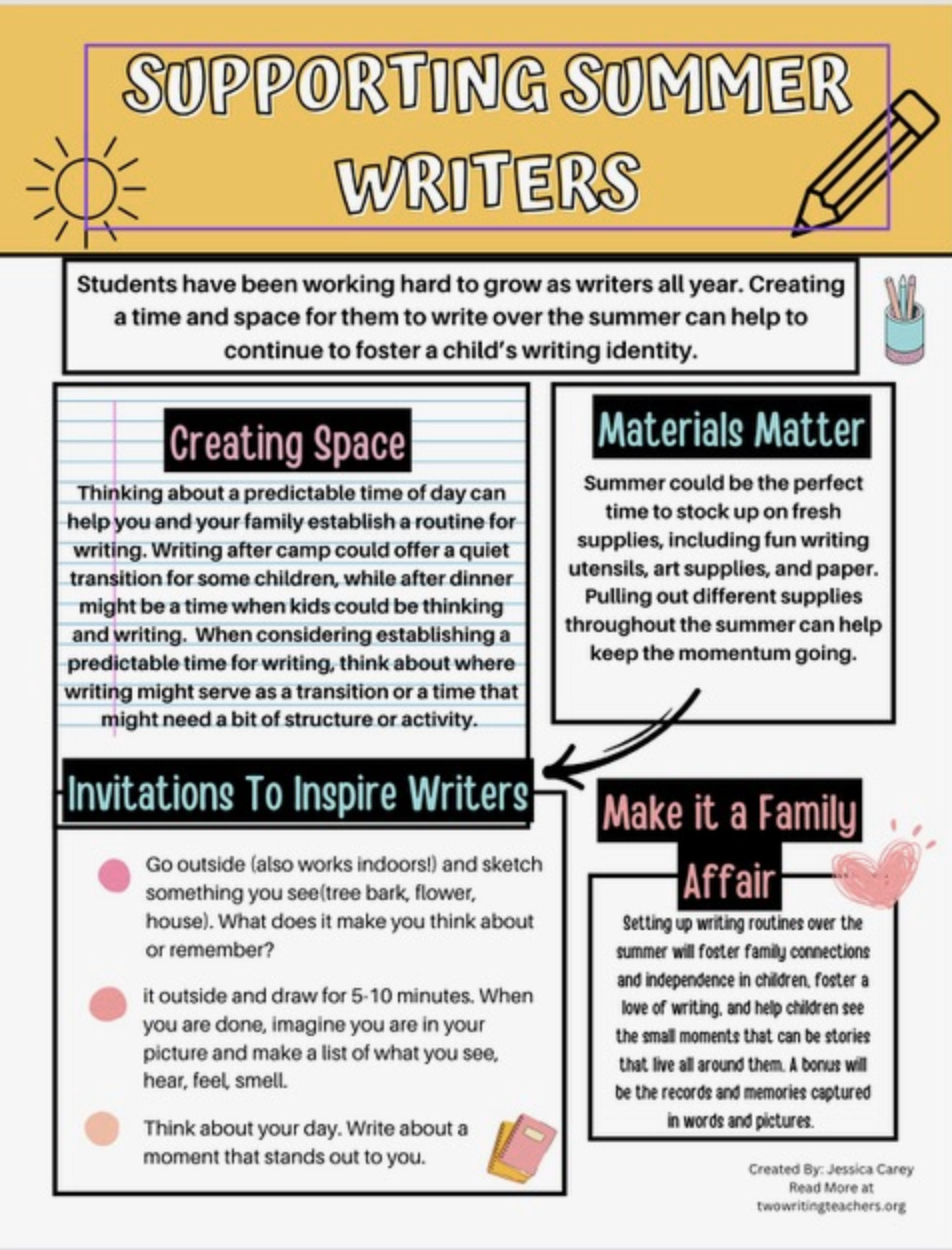
- Write Together: I once wrote a post called Supporting Caregivers in Setting Up Writing Routines for Summer. This post gave practical advice for keeping children writing over the summer. If your child is missing writing time at school or could use a boost, consider carving out time for writing at home, or even better, together with you, to continue fostering a love of writing.
A Shared Responsibility
Protecting time for writing is not the responsibility of teachers alone. Leaders set the tone by prioritizing writing, caregivers amplify children’s voices, and teachers nurture the daily habits that help students grow as writers. As AI becomes more present in classrooms and daily life, it’s worth remembering what these tools can and cannot do. They may offer support with efficiency and access, but they cannot replace the voice, reflection, and joy that come from students writing for themselves. By staying curious and keeping a watchful eye on writing instruction, we can ensure that all students have the time, support, and freedom to grow as writers and find their voices.
References
Graham, S., Bollinger, A., Booth Olson, C., D’Aoust, C., MacArthur, C., McCutchen, D., & Olinghouse,
N. (2012). *Teaching elementary school students to be effective writers: A practice guide*
(NCEE 2012-4058). Washington, DC: National Center for Education Evaluation and Regional
Assistance, Institute of Education Sciences, U.S. Department of Education. Retrieved from
https://ies.ed.gov/ncee/wwc/PracticeGuide/17
National Council of Teachers of English. (2016, February). Professional knowledge for the teaching of
writing. National Council of Teachers of English.
Discover more from TWO WRITING TEACHERS
Subscribe to get the latest posts sent to your email.


Our stories are our lives! Kids need to write their own stories now more than ever. Long live writing workshop!
LikeLiked by 1 person
Your call to action (i.e., encouraging all stakeholders to stay curious, reflective, and committed) is both timely and essential. Writing is more than a skill; it is a powerful means for students to find their voice, express themselves authentically, and develop lifelong communication tools. The practical suggestions you offer for each group provide a clear roadmap to safeguard and enrich writing instruction.
Now we just need to find enough stakeholders in our communities to give this some traction!
LikeLiked by 1 person
We can do it! ❤️❤️❤️
LikeLike