When I set up my classroom, I like to make things homey. I’ll have colorful pens, a wide variety of writing paper, and lots of options for seating and work time. Still, when I think of my writers and me, it won’t feel like home until we feel AT home. For us, that means establishing ourselves as a writing community. I want students to see themselves as writers—peers among peers. Classroom routines are one way to build that environment.
The Context
The first weeks of school feel like nothing but ROUTINES: hallway behavior, transitions, and expectations for academic work. The drudgery bores me. Still, I know routines set the tone and make things easier down the line. So, when it comes to establishing a writing community, I know that time invested in learning routines is well-spent. My writers benefit from me showing them:
- Support for idea generation
- Sounding board for appreciation, suggestions, and growth
- Teaching the power of writing for an audience
- Validation as writers: “I’m not alone”
Regardless of the Script
As a veteran teacher, I’ve been required to teach a spectrum of writing programs, from highly regimented and scripted to a “do it your own way” approach. I’ve come to like the routines I’m sharing because they complement writing instruction in any form. I’ve come to realize it doesn’t matter so much what program my district has adopted; these class routines and activities support my writers.
How It Works
The heart of a strong community is trust. Writing is a creative and personal endeavor, and it takes courage to share it. My approach is to gradually build trust by keeping experiences simple and positive. Students, especially those reluctant to share their work, need to know their work is in safe hands. I demonstrate vulnerability by modeling each routine with my own work. So, if they see me trusting their classmates, so can they.
How long do my classes spend on each routine? That depends on student readiness and class “chemistry.” Still, I’ve found that we go through general phases of development:

Phase One Routines
Step 1: Self-appreciation. At the end of each writing session, have students star, circle, or underline one phrase or sentence they’re glad or proud to have written.
Step 2: Sharing our pride. At the end of each writing session, students share a favorite phrase / sentence with a partner.
Step 3: “Idea shopping.” At some point mid-session, students walk around the room reading others’ work without feedback (doubles as a movement break!). Students might see ideas they’d like to try, and they get to know the writing of others. The point is, there isn’t any conversation here, it’s just get up, read and gather ideas, then get back to it.
Phase Two Routines
Note: There are many ways to implement these routines. I’m partial to students taking photos of their work and sharing them on Seesaw or a similar platform, but students can also participate orally or quietly, with partners or in groups, as long as it works best for them. I’ve broken down the process for how I teach these routines, but you can find the full, customizable set of conversation starters here,
Step 1: Compliments. During an “idea shopping” session, students walk around with sticky notes, leaving compliments or encouragement by the work of others. I watch for students who notice and compliment specific elements, as this builds our next routine.
Step 2: Getting specific. Writers comment on one another’s work, but this time more specifically. I speak with students about sincere compliments and empty ones, and the difference in how they make us feel. Feedback such as “nice job” and “I like your story” gets replaced by:
- “I like the way you…”
- “I wish I had thought to…”
- “You really got my attention with…”
- “You did a nice job of…”
Step 3: Varying responses. Once students begin responding in a more meaningful way, they can add in other types of responses, including text connections or appreciation of craft:
- “This reminds me of the time when…”
- “Your work reminds me of…”
- “This makes me think of…”
- “As I read, I kept thinking about…”
- “This (word / phrase / character) made me feel (emotion) when…”
- “Now that I’ve read (part of the story), I am thinking/feeling wondering…”
Step 4: Probing Deeper. This routine is critical, as it opens the door to conversation about writing, and it pushes students to consider their choices as writers where it comes to their audience. For this step, I’d encourage oral practice in partners or small groups to start, as it promotes easier dialogue and more immediate response. Some good prompts for questions might include:
- “What made you decide to…?”
- “What are you thinking of next with…?”
- “What was your inspiration for…?
What’s Next
Once my students and I have established our community as a place where everyone’s writing is seen, thought about, and valued, it’s time to go about the business of strengthening and improving our craft. If, like us, you’re feeling ready to expand the scope of student feedback, I’m providing a collection of ideas and activities to try:
Leah Thomas shared several brilliant ways to encourage student-driven feedback.
I offer additional ideas in my article on crowdsourcing. It’s a great way to give students control over the kind of support they’d like for their writing, and it encourages them to view their work through the lens of their readers.
Another routine for helping students improve their craft is Trusted Reader Circles. This article shares ways to set up and implement Trusted Reader Circles in a classroom.
One Final Thing
Just as writers are unique, every classroom writing community is different. Routines and pace of instruction will vary depending on the personalities in the room. Still, some ideas are universal:
- A strong writing community supports a strong classroom community.
- Students feel safer about sharing writing when they can trust others with their work.
- Students develop that trust through judgment-free response and appreciation.
Building the writing community through classroom routines will take time, but it’s an investment with solid returns. Here’s wishing you and your writers a strong and smooth start to the school year!
Giveaway Information:
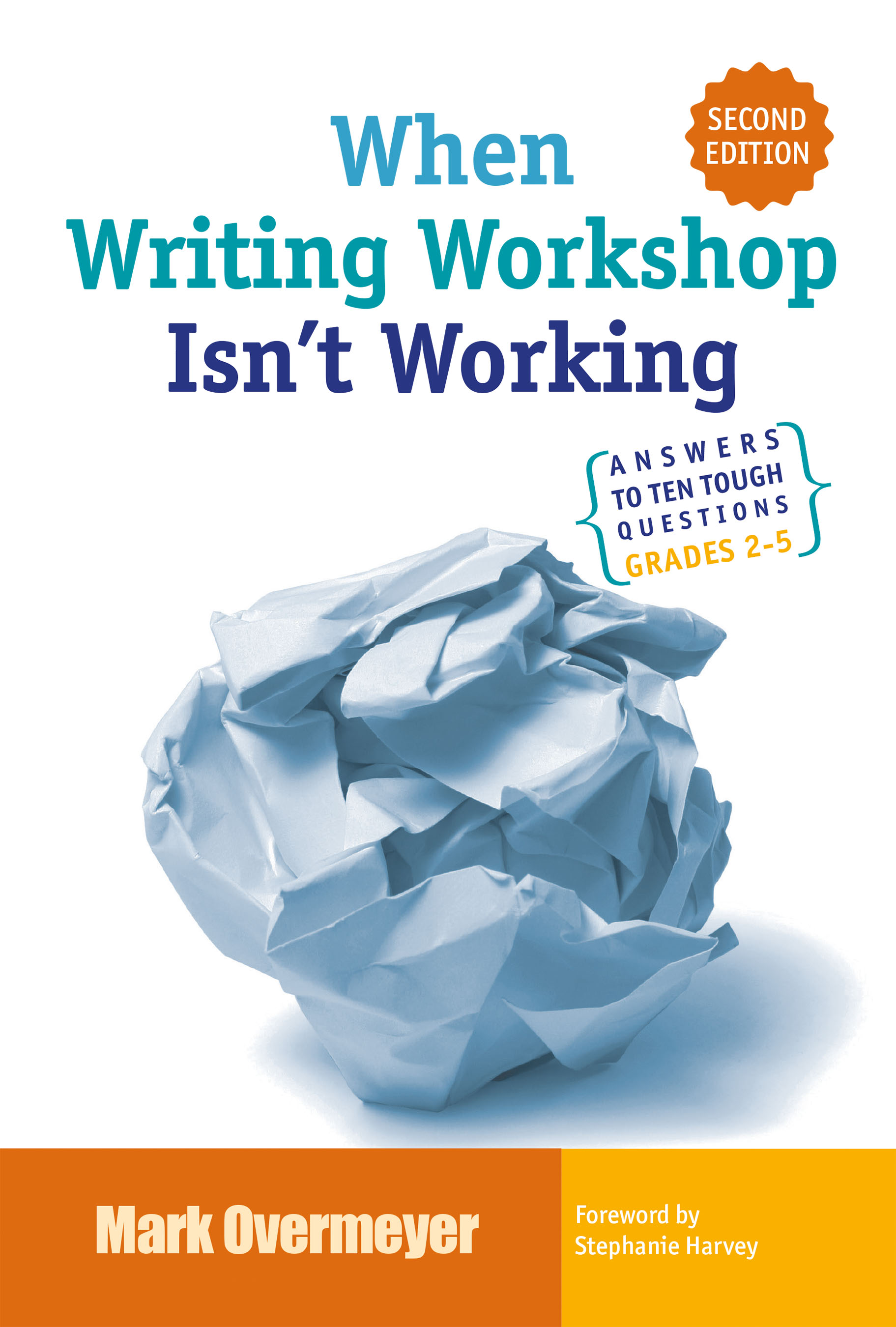
- When Writing Workshop Isn’t Working: Answers to Ten Tough Questions Grades 2 – 5, 2nd Edition by Mark Overmyer (Stenhouse Publishers)
- Image was updated to media gallery on 6/17. Here’s the URL: https://twowritingteachers.org/wp-content/uploads/2025/06/wwwiw2-cover.jpg.
- I wrote the alt-text.
- Text to embed at the end of your post:
We want to hear your thoughts throughout the week, and there’s a book giveaway for those who share comments!
Want to win a copy of When Writing Workshop Isn’t Working (2nd Edition) by Mark Overmyer? Stenhouse Publishers (Routledge) has donated a copy for one lucky reader.
How to Enter:
- Comment on this post by Friday, 8/15/25, 11:59 p.m. EST.
Winner Selection:
- One winner will be chosen randomly and announced at the bottom of Sarah Valter’s post by Tuesday, 8/19.
Eligibility:
- You must have a U.S. mailing address to win this prize.
If You Win:
- You’ll get an email from Sarah with the subject “TWTBLOG – UNBOXING FRESH ROUTINES.”
- We’ll pick a new winner if you don’t reply with your mailing address within five days.
- Routledge will ship the book to you.
Discover more from TWO WRITING TEACHERS
Subscribe to get the latest posts sent to your email.