Estimated Reading Time: 6 minutes (Contains 1,017 words, minus the links and giveaway information.)
Primary Audience: Elementary Teachers + Literacy Coaches

Why It Matters: Exploring a genre with rich mentor texts before beginning to write opens up a world of creative possibilities for students. This immersive experience inspires students to adopt powerful writing techniques authors use and helps kids grasp the essential conventions of different genres. By prioritizing immersion days, teachers can nurture passionate and skilled writers with a clear vision of quality writing.
What Professional Books Recommend:
(Bomer 2010; Caine 2008; Eickholdt 2015; Fletcher, 2011; Ray 2006; Shubitz, 2016)
- Spend a Few Days Immersing Students in the Genre
- Before students begin writing, let them read and explore examples of the type of writing they will be doing. Immersing students in the genre shows them what’s expected and helps them recognize what good writing in that genre looks like.
- Use Strong Examples as Mentor Texts
- Good mentor texts help students develop ideas for their writing. These can be published books, but often, the best examples are written by other students, such as those from your previous students or others. Kids relate well to peer writing and can see what’s possible.
- Include Picture Books and Student Writing
- For many writing units, picture books are an excellent way to introduce students to the features of a genre in a concise and engaging format. Student-written texts also make wonderful mentor texts, especially when they are clear, focused, and demonstrate the qualities you want to see.
What the Research Says:
“[W]riting requires an enormous fund of specialized knowledge which cannot be acquired from lectures, textbooks, drill, trial and error, or even from the exercise of writing itself.”
Smith, F. 1983. Reading Like a Writer. Language Arts 26(5): 558-67.
IMPLICATION: Just like children learn to speak by listening to others, they learn to write from reading. When children read like a writer, they connect with the author’s work.
“In the category labeled approaches to writing assignments, teachers valued and taught personal writing more than any other genre. Although valued across grade levels, personal writing was more prevalent in the lower grades, with a trend to a larger variety of genres in the upper grades. The relatively low ranking of persuasive writing was surprising in light of the fact that the genre is used on the Utah statewide writing assessment in intermediate grades. The item indicating use of six traits ranked low considering the emphasis that many in the state have placed on teaching writing using this emphasis.”
Susan Simmerman, Stan Harward, Linda Pierce, Nancy Peterson, Timothy Morrison, Byran Korth, Monica Billen & Jill Shumway (2012): Elementary Teachers’ Perceptions of Process Writing, Literacy Research and Instruction, 51:4, 292-307.
IMPLICATION: Immersing students in a genre before assigning writing tasks is essential because it helps them understand the genre’s conventions and techniques. Without this exposure, students may struggle to write effectively in new genres. Providing rich experiences with different genres better prepares them for quality writing and confident learning transfer.
Regardless of Your Script: Whether you have an open-ended or scripted curriculum, you can and should immerse your students in every genre they’re expected to write. Talk to your principal or curriculum director about adding two immersion days to your calendar before every new writing unit you teach.
While immersion days may seem like a significant time investment, providing students with a clear vision of the genre upfront leads to stronger, more focused writing. When students understand what is expected of them, they approach their work with greater confidence and purpose.
The Benefit for Students: Kids know what they’re expected to produce. Students gain a clearer understanding of the genre, see real examples of strong writing, and build confidence before they start. This approach enables all children, including those who require additional support, to actively engage in discussions, analyze texts, and apply writing techniques effectively.
The Benefit for Teachers: By setting aside a couple of days before jumping into your writing unit, you can expose your students to multiple mentor texts quickly. This makes it easier to model writing strategies, address common misconceptions early, and differentiate instruction to meet a variety of learning needs.
How It Works:
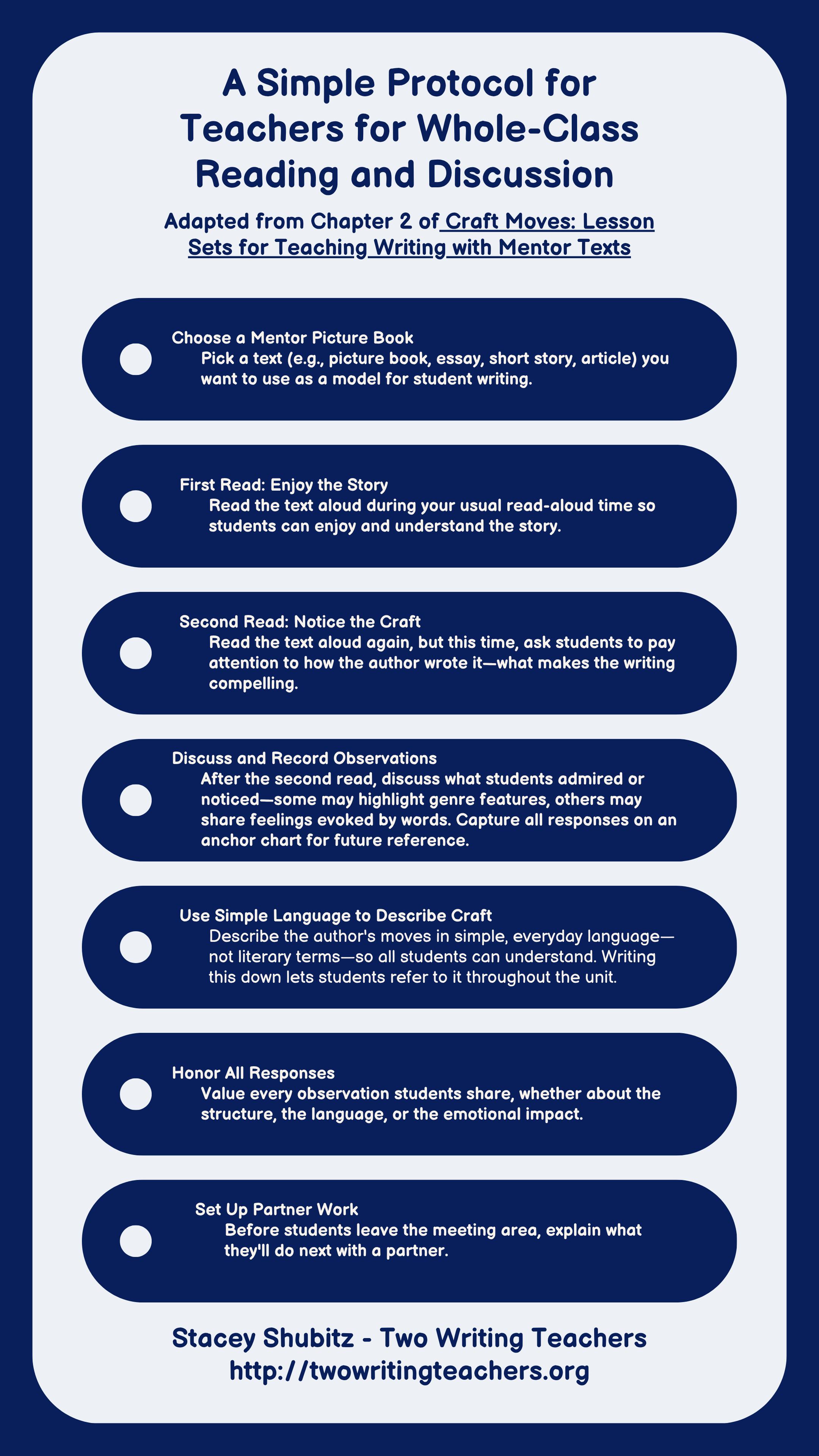
A Simple Protocol for Teachers for Whole-Class Reading and Discussion (adapted from Chapter 2 of Craft Moves: Lesson Sets for Teaching Writing with Mentor Texts)
- Choose a Mentor Picture Book
- Pick a text (e.g., picture book, essay, short story, article) you want to use as a model for student writing.
- First Read: Enjoy the Story
- Read the text aloud during your usual read-aloud time so students can enjoy and understand the story.
- Second Read: Notice the Craft
- Read the text aloud again, but this time, ask students to pay attention to how the author wrote it—what makes the writing compelling.
- Discuss and Record Observations
- After the second read, discuss what students admired or noticed—some may highlight genre features, others may share feelings evoked by words. Capture all responses on an anchor chart for future reference.
- Use Simple Language to Describe Craft
- Describe the author’s moves in simple, everyday language—not literary terms—so all students can understand. Writing this down lets students refer to it throughout the unit.
- Honor All Responses
- Value every observation students share, whether about the structure, the language, or the emotional impact.
- Set Up Partner Work
- Before students leave the meeting area, explain what they’ll do next with a partner.
A Simple Routine for Partner Work: Reading Like Writers

- Have students work in pairs to review mentor texts and discuss what they notice as writers.
- You can provide a simple checklist or guide to help them focus on how the text is written, rather than just the piece itself (i.e., how to read like writers).
- Encourage students to share anything that stands out to them, from interesting word choices to the piece’s organization.
One Final Thing: By dedicating a few days to immersion right at the start of every unit, you give students the vision, confidence, and craft they need to write well in any genre. This intentional approach provides both a model and a map, ensuring that all writers, regardless of their background or skill, begin their work knowing what’s possible and how to achieve it.
Go Deeper:
- A Peek Into the Start of an Information Unit
- Build Writing Confidence with the “Ready, Do, Done” Model: A Tip for Tomorrow
- Immersion in Writing Workshop is Always Worth the Time
- Pre-Unit Immersion: Involving Students in Noticing, Noting, and Naming
- Shaking Up Immersion: Reimagining Playful (& EFFICIENT) Ways to Launch a Unit
- The Immersion Phase of a Unit: Reading and Writing Collide
- Unlock Strategies for Task Initiation: A Tip for Tomorrow
- What’s the Big Idea?
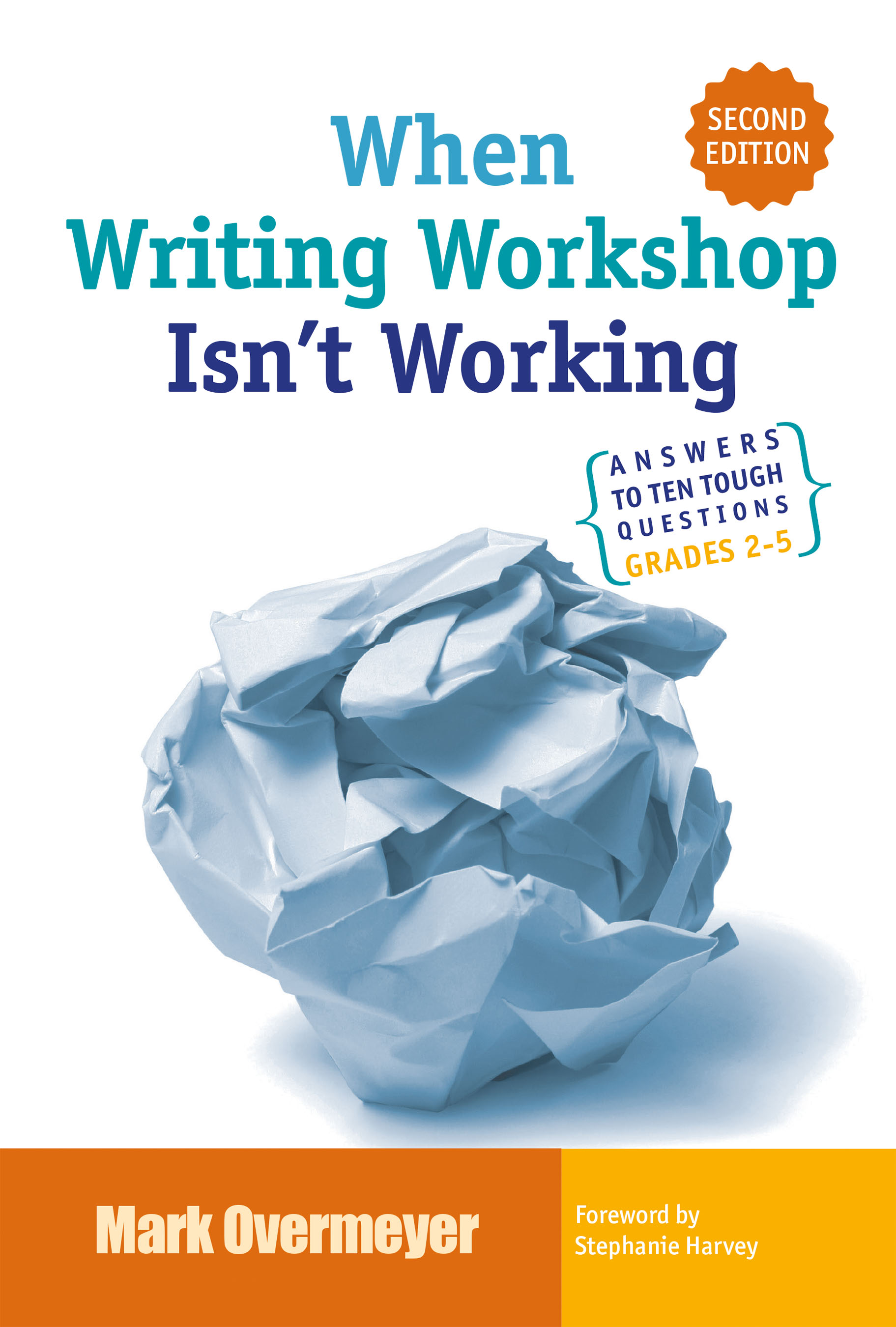
Giveaway Information: Want to win a copy of When Writing Workshop Isn’t Working (2nd Edition) by Mark Overmyer? Stenhouse Publishers (Routledge) has donated a copy for one lucky reader.
How to Enter:
- Comment on this post by Friday, 8/15/25, 11:59 p.m. EST.
Winner Selection:
- One winner will be chosen randomly and announced at the bottom of Sarah Valter’s post by Tuesday, 8/19.
Eligibility:
- You must have a U.S. mailing address when you comment.
If You Win:
- You’ll get an email from me with the subject “TWTBLOG – UNBOXING FRESH ROUTINES.”
- We’ll pick a new winner if you don’t reply with your mailing address within five days.
- Routledge will ship the book to you.
Discover more from TWO WRITING TEACHERS
Subscribe to get the latest posts sent to your email.


Have always found immersion to be a critical part of workshop instruction.
LikeLike