Estimated Reading Time: 4 minutes, 57 seconds. Contains 991 words
Primary Audience: Instructional Coaches and Classroom Teachers
Why It Matters
With an increased focus on reading that has been happening in many schools, writing instruction has been less of a priority from the lenses of both instructional minutes and professional development. Therefore, it is critical to make the most of every available chance to build students’ writing skills. Regardless of the units, scripts, or minutes you have, the more you can weave evidence-based practices into the writing lives of students, the more they are likely to grow their abilities to communicate.
Regardless of the Script
The instructional core consists of curriculum, instruction, and assessment. While you might not be able to change the curriculum, you can adjust instructional delivery, as well as opportunities for formative assessment throughout the units you teach.
- Include explicit instruction of the writing process, emphasizing its individuality, recursiveness, and overlap. Students’ understanding of the writing process and participation within it leads to more proficient writers. Consider teaching students:
- Options and choices within each part of the writing process
- Different ways to come up with ideas
- Choices for planning
- Options for drafting
- Questions to ask that align with where they are in the process. You could use the chart below as a starting point for teaching students routines around writing processes, including beginning with the question: Where are you in your writing process? Depending on the answer, there are relevant questions.
- Options and choices within each part of the writing process

- Unpack the standards and big goals of the overall unit
Review the current learning plan to seek out connections between standards and assessments. Use this as preparation to build efficacy and student learning opportunities while looking for redundancy or spiraling possibilities. With these understandings in place, you can establish assessment routines that emphasize growth and not perfection.
TIP!- Learning Target Collection Sheets are a helpful instructional routine that allows you to track growth and form intentional small groups for instruction. A sample one is available here.
- Balance scaffolds and feedback with growing independence and agency. Scaffolds help writers grow, but there should always be a plan for removing them. If scaffolds are too much, then students learn to rely on them without learning to become independent writers. Sometimes when teachers correct too much or provide too much feedback, writers learn to depend on adults and learned helplessness sets in.There’s a delicate balance between challenging students to grow and over-managing to the point of overwhelming the learning process. Overscaffolding can build a dependence that makes removal challenging.
- implement guidelines of Universal Design for Learning. UDL Guidlines emphasize three pillars, and one of those pillars encompasses access. Most writing environments include visual charts, whether those charts are commercially made, hanging in classrooms, or within slidedecks. Jess Carey’s post about the power of anchor charts is worth rereading and sharing!
Anchor charts may wield even more power depending on how you create access to them for students. Since some students integrate visual information better when it’s closer at hand, some routines that might help charts be more accessible to students include:
- Making individual sized ones that students keep in their own set of personal supplies.
- Making tabletop charts for students to share with others.
Along similar lines, some students will be more engaged with and therefore use charts more if those charts:
- Are created or co-created with students
- Contain pictures, work samples, or students’ handwriting on them
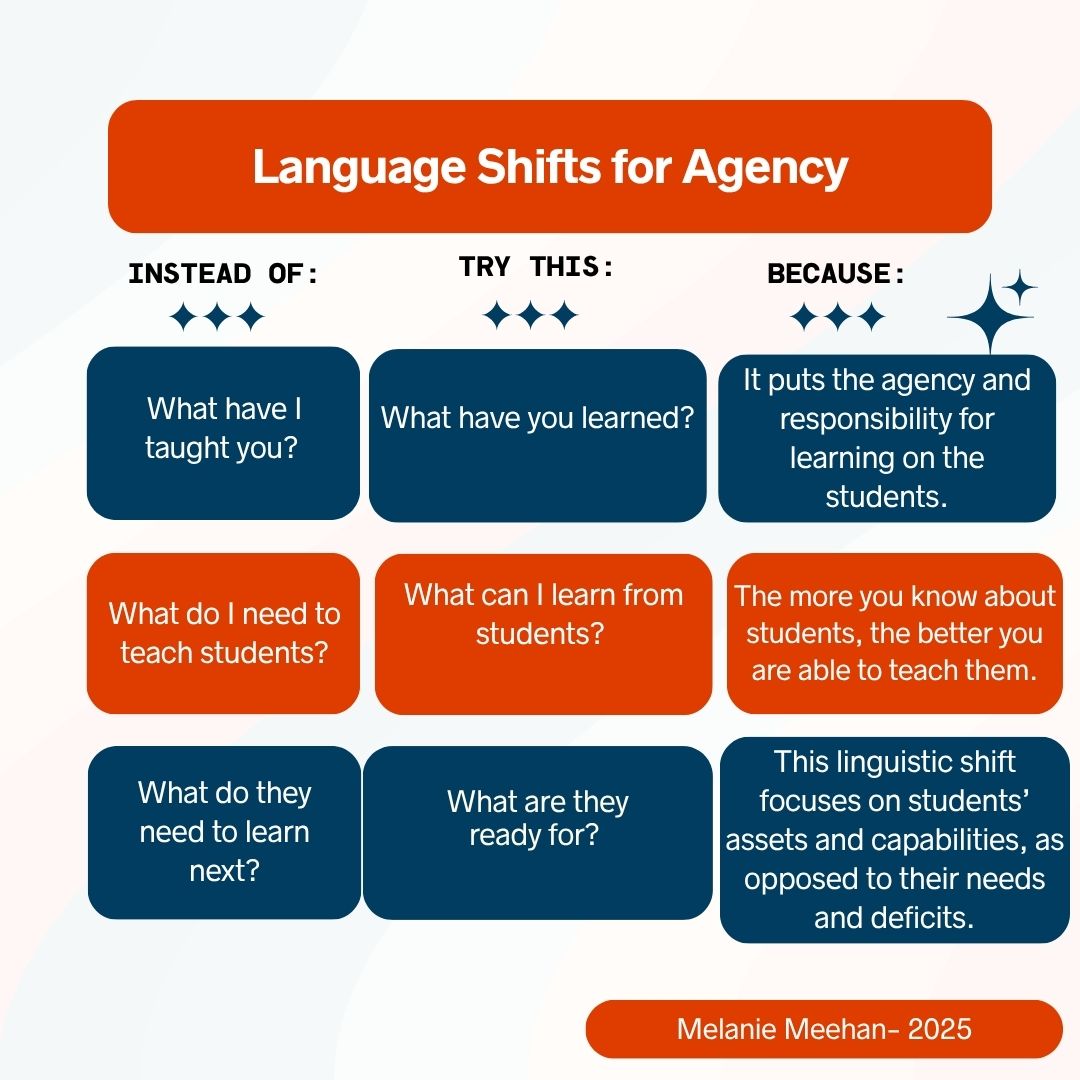
- Shift agency from teachers to students. Ultimately, teachers are responsible for student learning, but agency and engagement have positive impacts on learning rates. Therefore some subtle but powerful linguistic and mindset shifts are included below.
- Weave in and improve real-time corrective feedback, especially when it comes to transcription skills. Transcription skills encompass the use of punctuation, spelling, handwriting, and some grammar. If students have orthographically mapped words and are reading them without decoding, then they should also be spelling those words accurately. Holding them accountable for the spelling will help students become more secure with their knowledge of the words. Likewise, if they know rules around capitalization and punctuation, work on the application of those rules becoming automatic. Editing is NOT synonymous with using known conventions. As they master skills and become proficient writers, they should use what they know as they draft. Just as a coach reminds players to hone an athletic skill, you can nudge writers to demonstrate skills they have learned in authentic writing.
Why This Work Matters for Students
What Works Clearinghouse provides important practices of effective writing instruction (Graham et al, 2018) through the metastudy of many research studies. It’s worth knowing these research-based practices so you can creatively consider how to embed them within whatever curricular resource you use. Writing is a fundamental skill that students will need throughout their lives, and the more effective instruction you can provide, the better for students. The four main recommendations are below, but much more elaboration exists about each of them in the report.
- Provide daily time for students to write.
- Teach students to use the writing process for a variety of purposes.
- Teach students to become fluent with transcription skills.
- Create an engaged community of writers.
References
What Works Clearinghouse (WWC) Practice Guide: Teaching Elementary School Students to Be Effective Writers (Graham et al., 2018
Giveaway Information
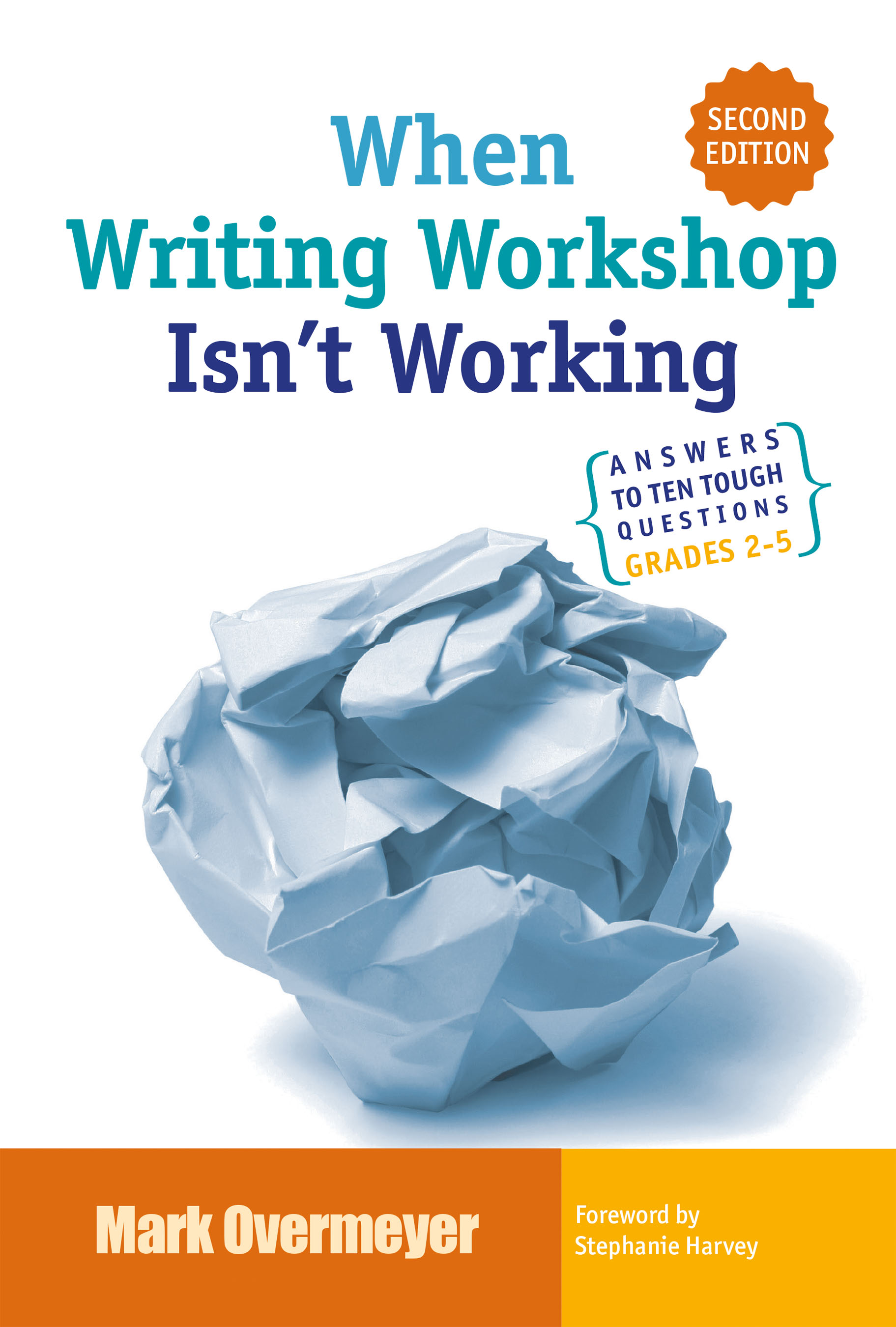
Want to win a copy of When Writing Workshop Isn’t Working (2nd Edition) by Mark Overmyer? Stenhouse Publishers (Routledge) has donated a copy for one lucky reader.
How to Enter:
- Comment on this post by Friday, 8/15/25, 11:59 p.m. EST.
Winner Selection:
- One winner will be chosen randomly and announced at the bottom of Sarah Valter’s post by Tuesday, 8/19.
Eligibility:
- You must have a U.S. mailing address to win this prize.
If You Win:
- You’ll get an email from Sarah with the subject “TWTBLOG – UNBOXING FRESH ROUTINES.”
- We’ll pick a new winner if you don’t reply with your mailing address within five days.
- Routledge will ship the book to you.
Discover more from TWO WRITING TEACHERS
Subscribe to get the latest posts sent to your email.


